
- When do raspberries ripen?
- Depending on the variety
- Early
- Mid-season
- Late cultures
- In what months is the harvest from remontant varieties collected?
- Ripening time of wild raspberries in Russia
- Depending on the growing region
- Signs of fruit ripeness
- Is it possible to pick unripe berries?
- Harvesting Rules
- A device for quick harvesting
Raspberries are a subshrub native to forests, though cultivated varieties are grown in gardens. They contain vitamins, pectin, and salicylic acid, essential for rapid recovery from infectious diseases. The fruit's delicate structure, composed of juicy drupes, spoils quickly, bruises, and releases juice. They are suitable for making jam, preserves, and drying and freezing. Let's consider when raspberries begin to ripen so we can prepare for harvesting and preserves for future use.
When do raspberries ripen?
The ripening period of raspberries depends on the following factors:
- raspberry varieties (regular or everbearing) and cultivars;
- region of cultivation and place of collection;
- developing weather conditions.
Let's take a closer look at the ripening times of our favorite berries.
Depending on the variety
Common cultivated raspberry varieties are divided according to ripening time into:
- very early;
- early;
- mid-early;
- mid-season;
- mid-late;
- late-ripening.
The beginning of the raspberry growing season in different regions falls between the end of March and mid-April. To conveniently determine the ripening period of a variety, the number of days from bud break to the first harvest is used.
Early
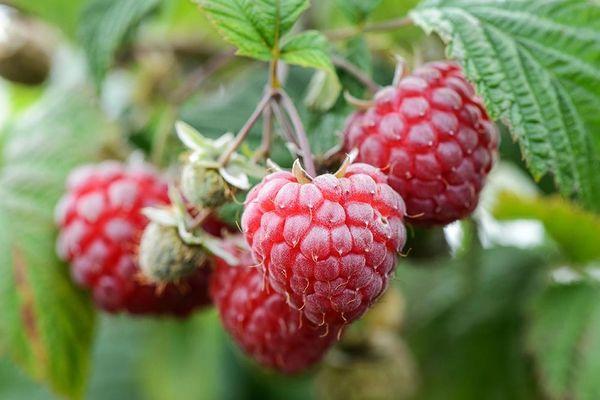
Raspberries are considered very early if the time from bud break to first harvest is less than 65 days, such as Blesk. Early varieties include those that ripen in 66-70 days, such as Ugolek, Rovnitsa, Novost Kuzmina, Gusar, Kaskad Bryansky, and Beglyanka (yellow-fruited).
Mid-season
Mid-season raspberries ripen in 71-75 days, including Barnaulskaya, Brigantina, Zorenka Altaya, Malakhovka, and Prelest. Mid-season varieties ripen after mid-season varieties (76-80 days from bud break), such as Muza, Peresvet, and Fregat.
Late cultures
Late raspberry varieties require more than 80 days from bud break to ripen. These include the Samara Dense, Priobskaya, and Koralovaya varieties.
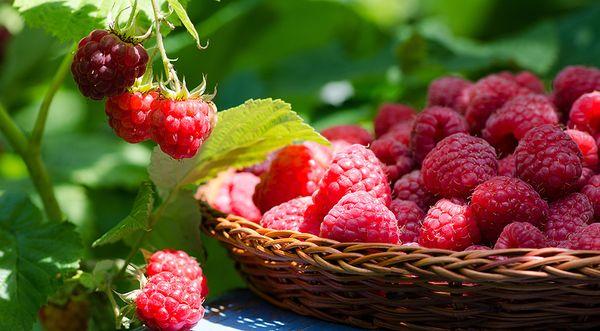
The raspberry harvest ripens over a long period of time. The first berries to ripen are those from flowers that formed early in the growing season and bloomed earlier than others.
Harvesting should be done every three days; the total duration of fruiting on high-yielding bushes can reach one month.
In what months is the harvest from remontant varieties collected?
Everbearing varieties yield twice a year. They are also divided into early, mid-season, and late:
- early remontant raspberries produce their first harvest in mid-June, the second – from mid-August to the end of September;
- average - first harvest at the beginning of July, second - from the end of August until frost;
- late - the first harvest is in mid-July, the second - from the beginning of September until frost.
Many gardeners and commercial plantation growers practice cutting back shoots before winter, thus foregoing the first harvest in order to obtain a high-quality second one.
Ripening time of wild raspberries in Russia
In the European part of Russia, the raspberry harvest season begins around July 20th. In the Urals and Siberia, wild berries are usually "ready" in the first ten days of August. Wild raspberries are smaller than garden raspberries, but they contain more vitamins and nutrients due to their higher juice concentration.
Depending on the growing region
In the southern regions, early raspberries ripen in mid-June, mid-season raspberries in late June, and late raspberries in the first half of July. In the Volga, Central, and Altai regions, early raspberries ripen in late June, mid-season raspberries in the first half of July, and late raspberries in late July. In Siberia, early raspberries can ripen in early July, mid-season raspberries in the third ten days of that month, and late raspberries in early August.

Weather conditions influence the ripening of this healing delicacy. If warm, sunny weather follows flowering, raspberries can ripen 7-10 days earlier than average. In damp and cool weather, berry ripening is delayed by 7-12 days.
Besides the weather, the location of the bush also plays a role. Bushes that are fully or partially shaded are harvested 5-10 days later than those grown in full sun.
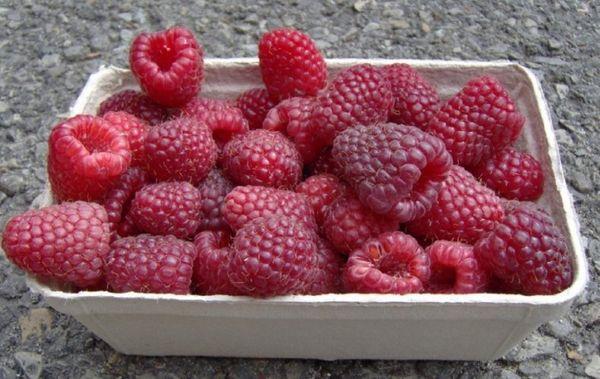
Signs of fruit ripeness
Raspberry ripeness is checked by tearing. Fully ripe berries have a light, dry tear. Large-fruited cultivated varieties tear off as a whole berry, without breaking into individual drupes.
Forest fruits, especially those from dry regions, may fall apart.
Is it possible to pick unripe berries?
Unripe fruits should not be picked during the peak season. They quickly lose moisture, remain sour, and do not ripen outside the bush. At the end of the season, before frost sets in, the remaining unripe fruits are cut off along with the outer leaves, dried, and brewed as tea in the winter. This decoction can be used as a gargle for sore throats.
Harvesting Rules
When picking raspberries, it's important to have both hands free, so buckets, trays, or picking stools are usually tied to a belt to prevent the containers from tipping over or swinging. If you're picking in one spot for a long time, you can place the picking container nearby.
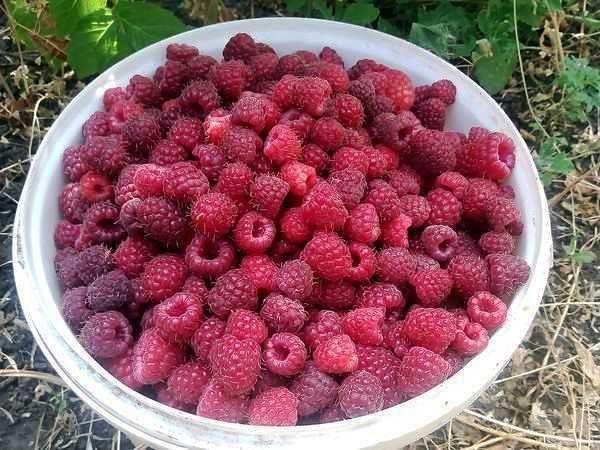
With one hand (usually the left), lift the shoot with the clusters, and with the other (the right), pick the berries using a sweeping motion. If there are still few ripe berries, pick them one at a time; if the clusters are ripe, pick several at a time.
A device for quick harvesting
The industry produces special berry-picking scoops. The bottom is made of rods with a slight curve toward the top of the scoop. The berries are picked by moving them from the bottom up, like combing twigs. These scoops can be designed with additional berry bags. On commercial farms, raspberries are harvested using large and small top-lifting combines. In all cases, the berries are minimally damaged and remain dry.
During raspberry season, it's highly recommended to pick as many berries as possible for fresh consumption and winter storage. The healing properties of this plant will help improve your health and maintain your strength during the long winter.
Related posts:
 Step-by-step instructions for planting and caring for raspberries in summer, tips from gardeners
 Description and characteristics of the Hussar raspberry variety, care and cultivation
 Description of the remontant raspberry variety Atlant, planting technology and care
 The best raspberry varieties for the Moscow region with descriptions and characteristics
 Description of the remontant raspberry variety Orange Miracle, planting and care
 Description of the Balsam raspberry variety, the intricacies of growing and caring for it
 Description of the Maroseyka raspberry variety, propagation, planting and care
 Planting and caring for Tibetan raspberries, variety description and propagation methods