
- Everbearing raspberries: advantages and disadvantages
- Main differences from regular varieties
- The best varieties and types
- Early ripening
- Mid-season
- Late-ripening
- Necessary conditions for growing
- Climate conditions and growing area
- Suitable soil composition
- Illumination of the area
- Favorable and unfavorable neighbors
- Specifics of planting work
- Planting dates for crops
- In the greenhouse
- In open ground
- Selecting a site and preparing the beds
- Schemes of seedling placement and planting technology
- Rules for caring for a remontant variety
- Regularity of watering
- Fertilizer
- Removing the shoots
- Loosening the soil
- Tying up
- Formation of bushes
- How to properly treat for diseases and pests
- Covering and mulching for the winter
- Problems encountered during cultivation
- The bush doesn't grow
- Lack of flowering
- It doesn’t bear fruit: why?
- The bushes often get sick
- Conclusion
Everbearing raspberries are among the most popular varieties of raspberries. Before you begin growing these plants, you need to understand how to care for them to ensure a good harvest.
Everbearing raspberries: advantages and disadvantages
Before planting this type of berry, it's important to familiarize yourself with its main advantages and disadvantages. The advantages of everbearing berries include the following:
- Pest and disease resistance. These raspberry bushes are virtually disease- and pest-free.
- Large fruits. Each ripe berry is distinctly large in size.
- Taste. Ripe fruits of everbearing varieties are much tastier than those of other varieties.
The main drawback of this berry is its high fertilizing requirements. It requires twice as much fertilizer as regular raspberry varieties.
Main differences from regular varieties
There are several characteristics that distinguish everbearing berries from regular varieties. These include the following:
- Ripe berries are much more aromatic and yield larger yields than other raspberry varieties. Once ripe, the fruits have a sweet-tart flavor.
- Unlike common raspberry varieties, fruiting occurs only on two-year-old stems.
- It has a short fruiting period, which ends in mid-September.
The best varieties and types
There are several different types of raspberry varieties that you should familiarize yourself with in advance.
Early ripening
Those who want to harvest the ripened fruit early plant early varieties. The fruiting period for these plants begins in July and ends in early August. However, with proper care, they will bear fruit until the first frosts. Popular early-ripening raspberry varieties include:
- Hercules. A tall shrub with large fruits. Hercules yields three kilograms of berries per plant.
- Bryansk Miracle. A variety with low bushes and large berries that grow up to ten grams.
- Gvardia. A medium-sized variety, the bushes grow up to one and a half meters. The berries weigh up to 10-12 grams.
Mid-season
Mid-season berry plants begin to ripen in mid-August and finish ripening in October-November. The following varieties are popular:
- Ruby Necklace. A high-yielding raspberry variety that yields 2-3 kilograms of berries per bush.
- Atlant. This variety produces large, oblong berries weighing 10-11 grams. They are distinguished by their rich red color and excellent transportability.
- Polyana. A compact variety with resistance to fungal diseases and pests. Suitable for growing in a small garden.
Late-ripening
Berries that begin to ripen in October and finish in November are considered late-ripening:
- Yaroslavna. This is a small shrub whose fruits turn orange when ripe.
- Brusvyana. A productive berry, the bushes reach two meters. Each fruit weighs 12-15 grams.
- Polka. This variety is considered a low-growing raspberry, as the bushes don't grow taller than 60 centimeters.
Necessary conditions for growing
To grow bushes and get a good harvest, you need to familiarize yourself with the optimal growing conditions.
Climate conditions and growing area
Raspberry bushes were once grown only in Italy. However, today's climate allows for the berry to be grown in other countries as well. This plant is most often grown by gardeners living in the southern regions of Russia, Ukraine, and Belarus. Raspberries' resistance to temperature fluctuations allows them to be grown in northern latitudes, where temperatures can drop below zero degrees.
Suitable soil composition
To ensure raspberry bushes grow well and produce fruit, they need to be planted in the most suitable soil. The soil should be light and rich in nutrients. Heavy soils are unsuitable for berries, as they are poorly aerated and do not absorb moisture. The soil should contain mineral components, humus, and well-rotted compost.
Illumination of the area
Some people believe that when choosing a suitable site, you should only consider the quality of the soil, but this is not true. It's also important to consider the level of light in the garden. Planted shrubs need to be exposed to sunlight throughout the day.
Raspberries are considered to be light-loving plants, and therefore experts do not recommend planting them in shaded areas.
Favorable and unfavorable neighbors
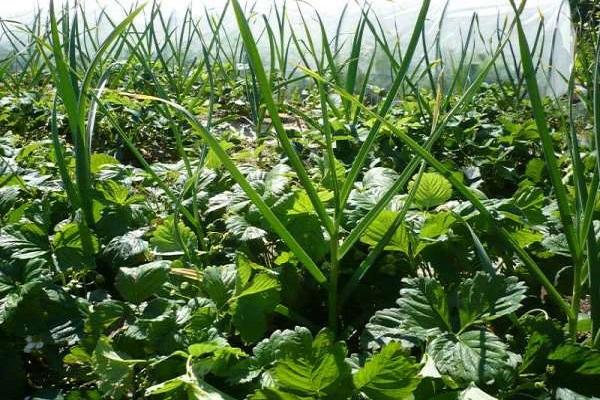
Anyone planning to plant raspberry seedlings should familiarize themselves with all the undesirable and favorable neighbors. The following plants are recommended for planting near common and everbearing raspberries:
- cucumbers;
- beet;
- garlic.
However, there are some vegetable crops that are contraindicated for planting near raspberry bushes:
- potato;
- tomatoes;
- pepper.
Specifics of planting work
To plant and grow raspberries, you need to understand the specifics of planting work.
Planting dates for crops
First, you need to decide on the timing of planting raspberry seedlings. Berries are planted in the spring, after the first tenth of April. Experts recommend planting the seedlings before mid-May, before the buds open. If dry weather persists in the spring, planting will have to be postponed until the fall.
In the greenhouse
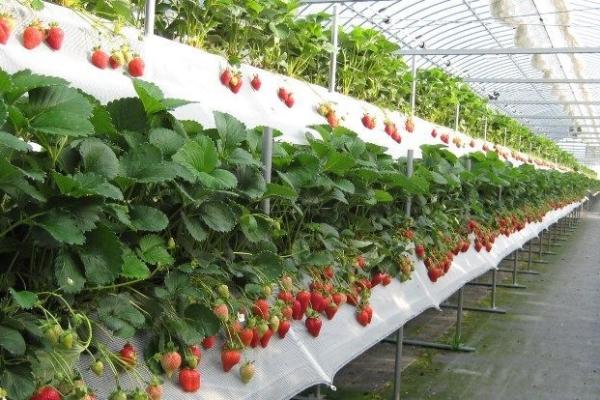
Some people choose to plant raspberry seedlings in greenhouses. The advantage of this method is that berries can be planted in both spring and fall. The main thing is that the greenhouse structure is heated.
In open ground
People living in southern regions can plant berries outdoors. It's recommended to plant berries outdoors in the spring, when the soil and air temperature have warmed to 5-10 degrees Celsius. Planting can also be done in the fall, in September or October.
Selecting a site and preparing the beds
Raspberries should be grown in the most suitable location. Those who have been growing these berries for a long time recommend planting them in sunny spots. Also, choose sites with a west or east exposure.
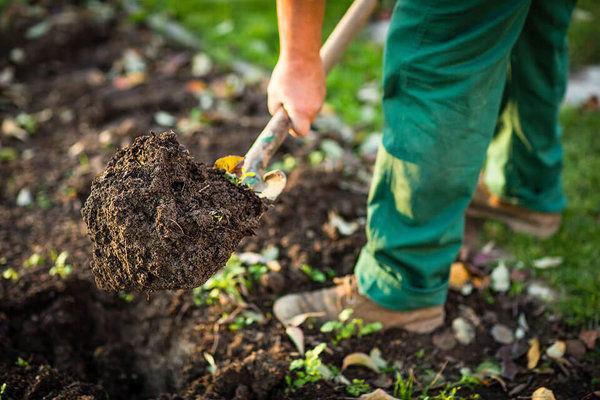
Once a site has been selected, the beds are prepared. The area is dug up beforehand and fertilized with organic and mineral fertilizers.
Schemes of seedling placement and planting technology
Before planting, it's recommended to understand the seedling placement plan. The seedlings should be spaced fifty centimeters apart in the bed, with a distance of one and a half meters between each bed.
After marking the planting sites, dig holes 8-10 centimeters deep. Carefully place the seedlings in them and cover them with soil.
Rules for caring for a remontant variety
Planted bushes must be properly cared for so that they bear fruit better.
Regularity of watering
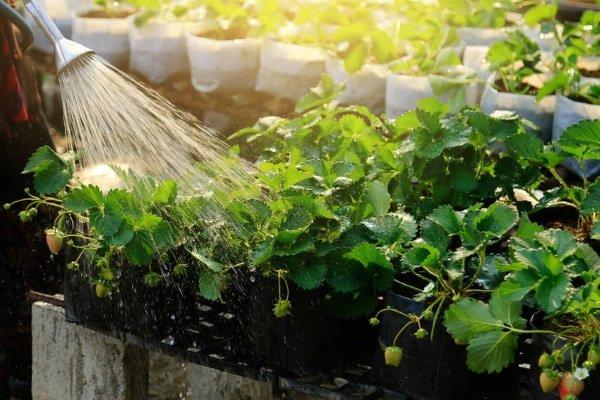
Growing raspberry seedlings requires regular watering. Berries are most often watered in the summer, in June and August. During this period, the soil will need to be moistened daily. Three to four liters of water are needed per bush.
Fertilizer
To speed up the ripening of raspberries, it's necessary to periodically feed the seedlings. Fertilizer is added to the soil in the spring, before flowering. Experts recommend fertilizing raspberries with cow manure, compost, and other nitrogen-containing mixtures. In the fall, seedlings are fed with potassium and phosphorus fertilizers.
Removing the shoots
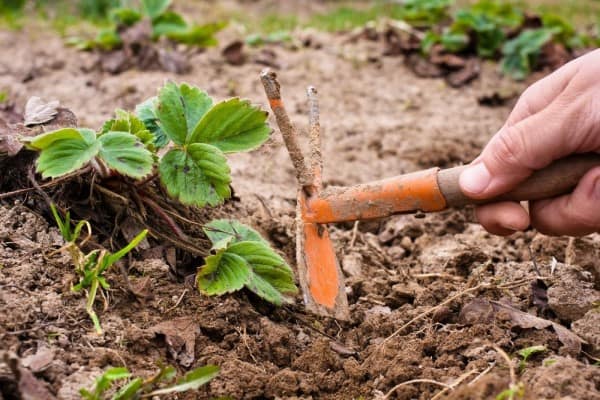
In the garden, shoots may appear near raspberry bushes. These need to be removed, as they begin to draw moisture and slow the growth of the seedlings. To remove the shoots, use a regular shovel to dig them out along with the root system. Pulling them out is useless, as they will eventually grow back.
Loosening the soil
After each watering, the soil must be loosened. Without loosening, the top layer of soil will become covered with a dense crust, which will slow down the passage of air and moisture. To loosen the soil around raspberry bushes, use a regular hoe.
Tying up
Tall raspberry varieties need to be tied to special supports. Otherwise, the branches of the planted plants will begin to break under the weight of the ripe berries. It's important to tie down the thinnest branches, as they are weaker than the others. Two-year-old shoots are tied to one trellis, and one-year-old shoots to the other.
Formation of bushes
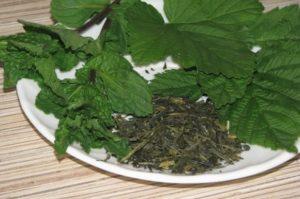
Gardeners who grow raspberries recommend regularly pruning their seedlings. In the fall, the bushes are cut back to the roots to prevent the plant from dying over the winter. In the spring, one or two main shoots are left, which will form the fruit-bearing stems. Fruit-bearing branches should also be regularly removed.
How to properly treat for diseases and pests
Before harvesting, raspberry bushes should be treated several times with pest and disease protection products. The following products are used during treatment:
- WDG. These are special granules used to make a liquid for spraying seedlings.
- VRP. These products are sold in powder form, which is dissolved in ordinary water.
- MME is an emulsion containing mineral components.
Raspberries need to be treated at least three times per season.
Covering and mulching for the winter
Before frost, raspberry bushes should be mulched. Use humus, dry grass, compost, and peat as mulch. Make the mulch layer thick, at least ten centimeters high. Remove the mulch in the spring after the weather warms up.
Problems encountered during cultivation
Beginning gardeners often encounter problems when growing everbearing berries. There are four common issues.
The bush doesn't grow
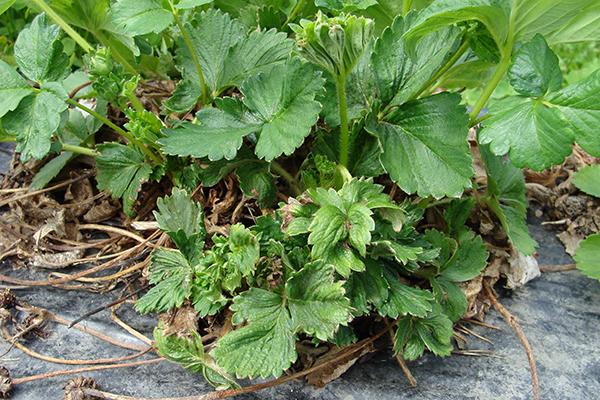
Sometimes planted seedlings grow very slowly, which negatively impacts yield. Advice from experienced gardeners can help overcome this slow growth. To speed up the development of shrubs, add more mineral fertilizers and organic components to the soil. Watering is also increased to prevent the soil from drying out.
Lack of flowering
Some gardeners are experiencing raspberry bushes that don't bloom at all. There are several possible causes for this problem:
- Climate inconsistency. Seedlings may fail to bloom due to low temperatures.
- Lack of fertilizer. Raspberry bushes won't bloom if they're not fed.
- Pests. Sometimes flowering does not occur due to pest attacks.
It doesn’t bear fruit: why?
Problems with fruiting arise due to the following reasons:
- Soil compaction. If the soil is too dense and does not drain well, the root system stops developing.
- Drought. Yields decrease if temperatures exceed 30-35 degrees Celsius.
- Ants. Bushes are often attacked by ants, which weaken the plant and prevent it from bearing fruit.
The bushes often get sick
Bushes can often become diseased due to a lack of preventative treatments or pest attacks. They can also become diseased due to soil containing pathogens.
Conclusion
Some gardeners decide to plant raspberry bushes in their garden. Before doing so, it's important to familiarize yourself with the main varieties of these berries, as well as recommendations for planting and caring for them.
Related posts:
 Step-by-step instructions for planting and caring for raspberries in summer, tips from gardeners
 Description of the remontant raspberry variety Atlant, planting technology and care
 Description and varieties of the everbearing raspberry variety Penguin, planting and care
 Description and characteristics of the 50 best raspberry varieties for Siberia
 Description and characteristics of the Hussar raspberry variety, care and cultivation
 Description of the Maroseyka raspberry variety, propagation, planting and care
 Description of the Polka raspberry variety, yield, planting and care
 Description of the Balsam raspberry variety, the intricacies of growing and caring for it