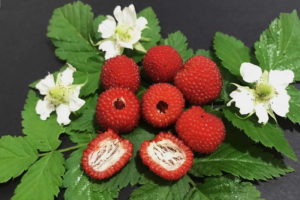
- Useful and medicinal properties of raspberry leaves
- What leaves can be collected?
- Collection terms and rules
- Methods of preparation
- Drying
- Fermentation
- Duration and storage conditions of the sheets
- Recipes for delicious and healthy tea
- Raspberry leaves during pregnancy
- Cosmetic use
- Are there any contraindications?
When harvesting raspberry leaves and twigs, it's important to know when to properly pick them and how to prepare them for drying, ensuring a supply of delicious and healthy herbal tea for the entire winter. A decoction of dried greens refreshes, soothes, detoxifies the body, and simply reminds you of fine summer days on long winter evenings.
Useful and medicinal properties of raspberry leaves
Everyone knows that raspberry jam helps against colds, but few know that not only the fruit but also the leaves and twigs are beneficial. So, what are dried raspberry leaves used for? Due to their rich content of vitamin C, vitamins E and K, folic acid, tannins and astringents, micronutrients and macronutrients, this remedy effectively helps with many problems, including the following:
- treatment of colds;
- strengthening the immune system;
- treatment of gynecological diseases;
- assistance in case of poisoning;
- cleansing the body of toxins.
What leaves can be collected?
To collect the right leaves to make a healthy and aromatic drink, you need to remember a few subtleties.
- It is better to harvest material that is closer to the top - such leaves receive more sunlight.
- It is necessary to carefully inspect the shoots for insects and diseases: affected leaves are not suitable for drying.
- The plates are taken fresh, without dried parts, mechanical damage, sunburn and signs of wilting.
- Wild raspberry leaves have the best medicinal properties.
- The bush should be located away from busy highways, landfills and hazardous industries.

Collection terms and rules
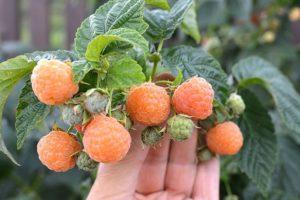
To ultimately obtain a fragrant tea, the first step is to harvest the herbs at the right time and correctly, ensuring maximum nutrient content. The best time is considered to be the first weeks of June, before the bush begins to bloom, as during this period, all the plant's energy is focused on growing foliage.
Many gardeners harvest raspberry leaves throughout the season, starting in May and ending in September, sometimes combining this process with sanitary pruning of plants.
It's important to remember that harvesting leaves en masse in July, during the fruiting season, can weaken the bush and lead to the loss of some of the harvest. Leaves are harvested by hand, and you can also pluck the stalk or cut off the entire top of a young shoot. It's important not to strip the entire bush of its leaves.

Methods of preparation
There are several ways to harvest raspberry leaves. Gardeners dry the shoots or individual leaves, and also ferment the leaves to make tea.
Drying
Drying cut stems is conveniently done by tying them into "brooms" and hanging them in a sun-protected, well-ventilated area. Once dry, break off the shoots and store them.
Individual leaves are laid out in a single layer for drying and turned regularly for a more even and successful drying process.
Greens dry well when placed on a stretched net, as this allows for better ventilation and eliminates the need to move them.

Fermentation
Fermentation is a special processing method that involves fermentation followed by drying. The advantage of this method is that insoluble substances are converted into easily digestible ones, as the leaf structure is destroyed during the processing. Tea made from material prepared through fermentation is highly aromatic.
Greens are processed manually or mechanically, using a meat grinder.
The manual method is more labor-intensive: each leaf must be crushed between the palms, twisted into a tube, and then finely chopped with a knife. The prepared, crushed leaves are placed in a container, covered with a damp cloth, and left to ferment for several hours at 25-27 degrees Celsius (77-80 degrees Fahrenheit). After this, the raw material is dried in the oven.


Duration and storage conditions of the sheets
Dried raspberry leaves can be stored in cloth or paper bags, and glass jars are also convenient for storing raspberry infusions. Ceramic and enamel containers with tight-fitting lids are suitable for herbal tea.
Store dried herbs in a cool, protected from direct sunlight. The shelf life of prepared raspberry herbal tea is 24 months.
Recipes for delicious and healthy tea
To make a delicious, healthy, aromatic drink, add 2 tablespoons of dried leaves to a glass of hot water and let steep for 3 hours in a warm place or thermos. When serving, add sugar or honey to taste.
The basic recipe can be varied by adding other fresh or dried herbs and berries. For example, brewing mint with raspberries creates a wonderful calming cocktail.
Drinks with added raspberry leaves can be served both hot and cold. In summer, to quench your thirst and refresh yourself, add a few ice cubes to your glass.

Raspberry leaves during pregnancy
During the first and second trimesters of pregnancy, it is recommended to avoid herbal tea, as it may increase the risk of premature birth. Subsequently, consuming raspberry leaf infusion is possible after consultation with an obstetrician.
Cosmetic use
Raspberry leaves are often used in cosmetology. They are used to strengthen hair roots by washing your hair with a cooled decoction. Washing with the infusion can help get rid of acne and pimples.
Are there any contraindications?
Raspberry tea should not be consumed by people with an individual intolerance to the plant. The infusion should not be taken with aspirin. Furthermore, decoctions are strictly not recommended for those with the following conditions:
- ulcer;
- renal failure;
- frequent constipation;
- gout;
- asthma;
- increased acidity.
Drying raspberry leaves for the winter is quite simple, but drinking tea with this aromatic preparation will provide an incomparable pleasure. To ensure the drink is as aromatic and beneficial as possible, follow these simple guidelines when harvesting and processing the leaves, as well as when storing the finished product.
Related posts:
 The best eggplant varieties for growing in a polycarbonate greenhouse: planting and care
 Causes and treatment of eggplant pests and diseases, how to combat them at home
 Growing and caring for hazelnuts in open ground, rules for planting hazelnuts
 Why plum tree leaves turn yellow and fall off, and the best control measures
 Methods for planting and propagating cherries at home
 Why do cucumber leaves curl inward and what to do about it?
 Causes and treatment of cherry diseases, methods of pest control
 Why cabbage leaves wilt in the garden and what to do