
- What is characteristic of yellow-fruited raspberries?
- The main difference from the usual
- Growing area
- Soil and climate suitable for growing
- The best yellow varieties
- Golden autumn
- Golden assortment
- Apricot
- Orange miracle
- Morning dew
- Yellow giant
- Pineapple
- Specifics of planting on the site
- Optimal timing
- Selecting a site
- Diagrams and step-by-step planting guide
- Care instructions
- Watering
- Fertilizing bushes
- Tying up
- Weed control
- How to prune a crop
- Protection from pests and diseases
- Covering yellow raspberries for the winter
- How to propagate yellow raspberry bushes
Growing and caring for yellow raspberries is a pressing issue for many gardeners. This is a relatively easy-to-grow plant that can thrive in any conditions. However, it's important to follow a few rules. To ensure a bountiful harvest, it's important to water the plant regularly, fertilize it, and treat for diseases and pests. Timely pruning is also crucial.
What is characteristic of yellow-fruited raspberries?
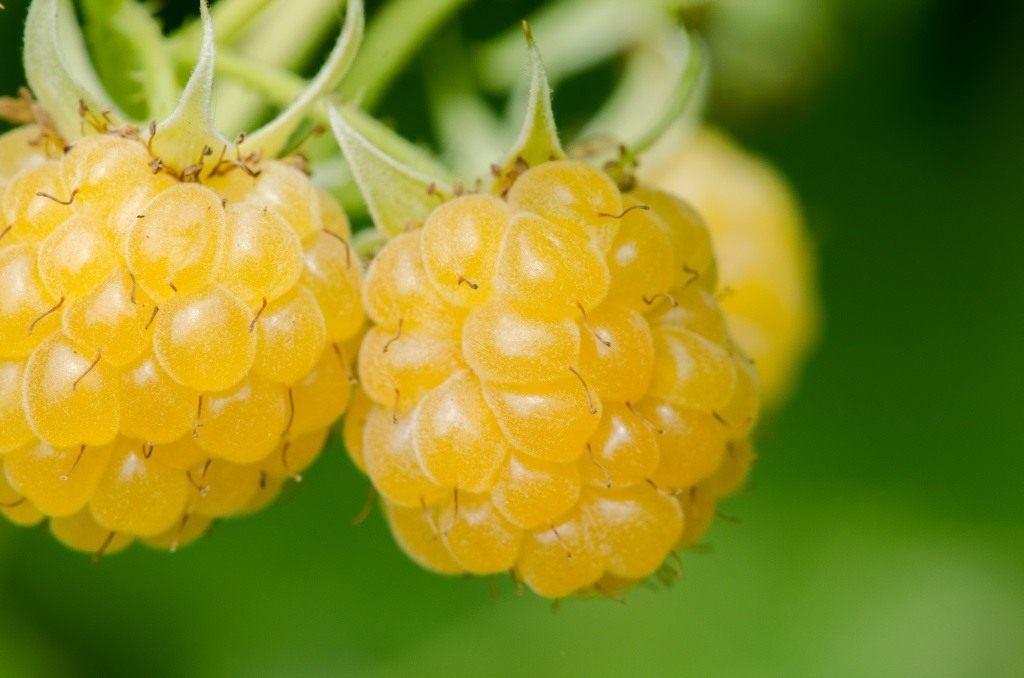
Yellow raspberries are considered a rather unusual berry. They have distinctive characteristics, making them very popular among gardeners.
The main difference from the usual
Yellow raspberries look more distinctive than red ones. They also differ in taste. They are less acidic. Yellow raspberries, however, have a delicate, not cloying sweetness.
Amber raspberries are as nutritious as red raspberries. However, they have a significant advantage: they contain significantly less anthocyanins. This makes them suitable for young children, allergy sufferers, and pregnant women.
Growing area
Yellow raspberries are suitable for growing in the Moscow region and central Russia. The plant also produces well in the Altai Krai. They can also be cultivated in Siberia and the Urals. However, in these cases, mid-early varieties are preferred.
Soil and climate suitable for growing
To obtain a good harvest, the following conditions are required:
- in summer the temperature should be +20-25 degrees;
- in regions with severe frosts, it is worth covering the plantings;
- It is important to apply fertilizers in a timely manner;
- cover the bushes with snow.
The best yellow varieties
There are many varieties of yellow raspberries, each with its own unique characteristics. Gardeners often grow everbearing varieties, which produce multiple harvests per season.
Golden autumn
This plant is characterized by a mid-late ripening period. It produces fairly large berries weighing up to 5 grams. They have a firm texture and are easy to transport. The fruits have a sweet taste and a distinct aroma.
Golden assortment
This large-fruited variety is characterized by yellowish berries. They reach 12-15 grams in weight and have sugary flesh. The fruits take a relatively long time to ripen, within 1.5 months.
Apricot
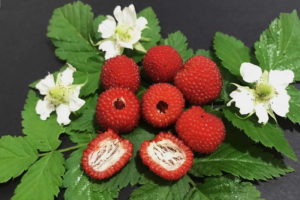
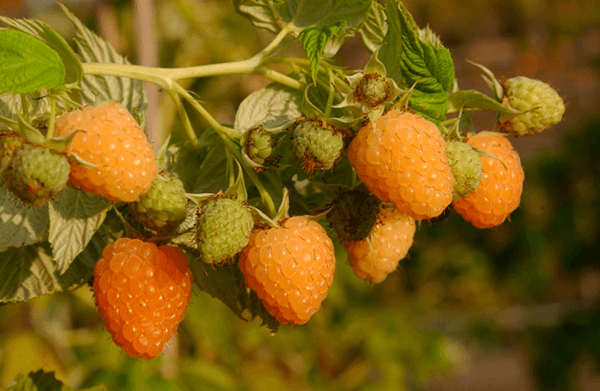
This everbearing variety produces fruits weighing up to 7 grams. They are distinguished by their orange-yellow hue. The bush is compact, making it suitable for small plots. The plant is easy to care for and has good frost resistance.
Orange miracle
This is a remontant variety, but it is recommended to harvest it only once. It is resistant to frost, diseases, and pests. The conical berries are elongated and weigh about 6 grams.
Morning dew
This is an industrial variety whose berries have a distinct aroma. The fruits have a characteristic sweet and sour taste. They weigh approximately 5-10 grams. The bushes reach 1.8 meters in height. A single bush can yield 3-3.5 kilograms.
Yellow giant
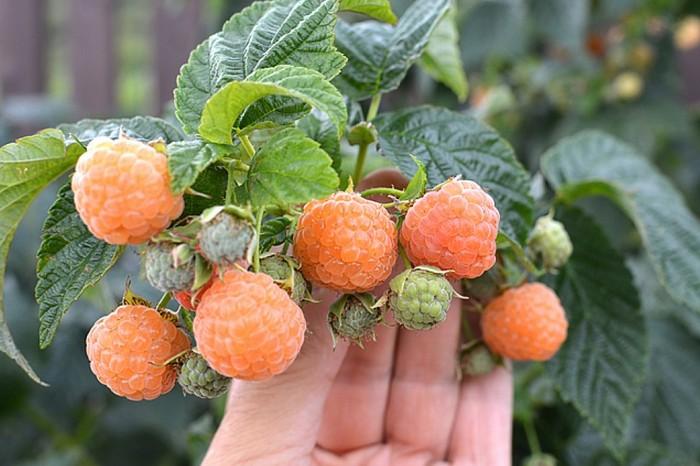
This variety is characterized by moderately spreading plants that can reach 2.5 meters in height. The fruits are large. With proper care, a single bush can yield 3-6 kilograms of berries.
Pineapple
This large-fruited raspberry is characterized by high yields. Its flavor is somewhat reminiscent of pineapple. The bushes reach a height of 2 meters. The shoots are not prone to spreading. The berries weigh up to 5 grams.
Specifics of planting on the site
To ensure that the plant takes root well and produces a bountiful harvest, it is important to carry out planting work correctly.
Optimal timing
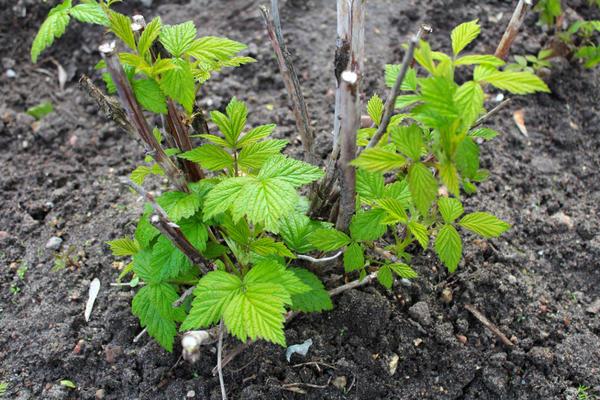
Everbearing varieties are recommended to be planted in early spring, before the buds swell. They can also be planted in the fall—in late September or early October. Sometimes the plant is planted in the summer, using young shoots less than one year old.
Selecting a site
Slopes for planting are selected based on climate conditions. In arid regions, the north side is preferred, while in colder regions, the south side is preferred. The groundwater table should be 1.5-1.7 meters deep.
When choosing soil, sandy loam and loamy chernozem are preferred. It's important that the slope receives moderate sunlight. Before planting, the area should be cleared of weeds and dug to a depth of 30 centimeters.
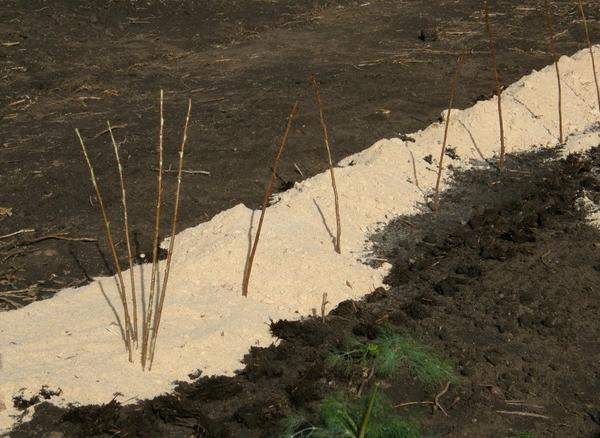
Many gardeners wonder if they can be planted next to each other. The minimum distance between raspberry bushes should be 0.5-0.75 meters.
Diagrams and step-by-step planting guide
One-year-old root suckers are suitable for planting. The stem thickness at the root collar should be 1 centimeter. The roots of the bush should be at least 10-15 centimeters long. The seedling should be pruned, leaving a stem measuring 15-20 centimeters. It is important that it contains 4-5 buds.
Yellow raspberries can be planted in rows or nests. The distance between rows should be 1.5 meters. Leave at least 0.5-0.75 meters between bushes.
With the nest planting method, 2-3 one-year-old raspberry bushes are placed in a hole. This method quickly produces strong raspberries that produce a good harvest.
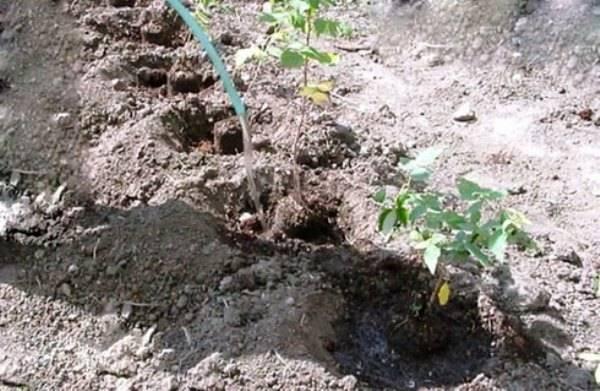
When carrying out planting operations, the following steps should be taken:
- Dig holes measuring 35 x 35 x 30 centimeters. Add a quarter bucket of compost to poor soil, adding 5-7 grams of superphosphate and 2-3 grams of potassium salt. Mix this mixture with the soil.
- The bushes should be placed vertically in the hole. The surface roots are buried 4-5 centimeters deep.
- Cover the shoot with soil and compact the soil.
- Pour half a bucket of water under each bush.
- Mulch the hole with straw, humus, or sawdust. This layer should be 6-8 centimeters thick.
Care instructions
To ensure abundant fruit production, the plant requires proper care. This includes watering and fertilizing the soil regularly.
Watering
Initially, after planting, the beds should be watered every 3-5 days. In dry weather, an additional 2-3 waterings will be necessary. Subsequently, the berry crop should be watered in early July, and then twice more during fruiting. The final watering should be done in early October, after harvest. Each bush requires 2-3 buckets of water.
Fertilizing bushes
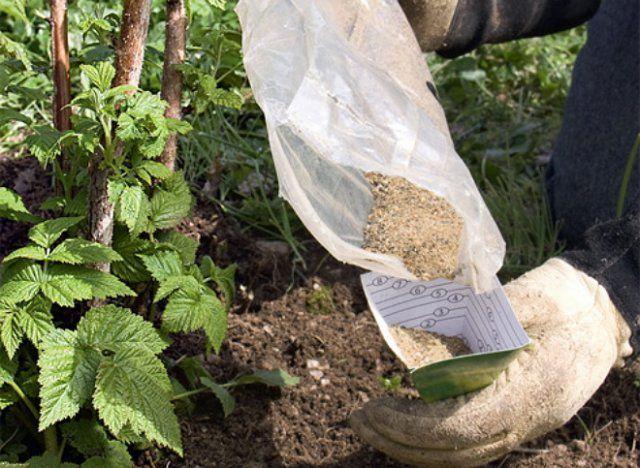
To increase raspberry yields, they need to be fertilized regularly. The plant receives organic nutrients through mulching. If mulching is not used, 3-4 kilograms of compost per square meter is used. You can also add 4-6 kilograms of cow manure.
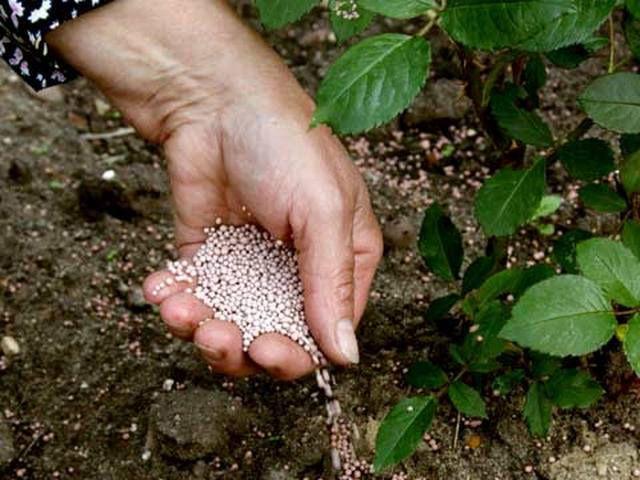
With the arrival of spring, raspberries are fed with ammonium nitrate. Mix 15-20 grams of the substance with 5 liters of water. Ten days before harvest, the bushes should be watered with slurry. Mix mullein with water in a ratio of 1:6. One bucket of the solution is required for 2-3 plants.
The plant also requires mineral fertilizer. For this, use 15 grams of potassium salt and 10 grams of ammonium nitrate per 10 liters of water. In the fall, adding wood ash is recommended.
Tying up
There are various methods for tying up bushes. To ensure the plant receives sufficient light, it is loosely pressed against the stakes. When wire is stretched along the bushes, the bushes are tied in a fan-shaped pattern.
Weed control
To control weeds, mulch the garden beds. If couch grass appears in the area, the soil should be dug up. This procedure is repeated 4-5 times during the summer.
How to prune a crop
When growing bushes, formative pruning is performed. Three- to four-year-old raspberries should have 10-15 one-year-old shoots. The remaining branches are cut off at the ground. The distance between shoots should be 40-50 centimeters.
The number of root suckers should be no more than 15. They are placed 15-20 centimeters apart. The rest should be broken off.
Protection from pests and diseases
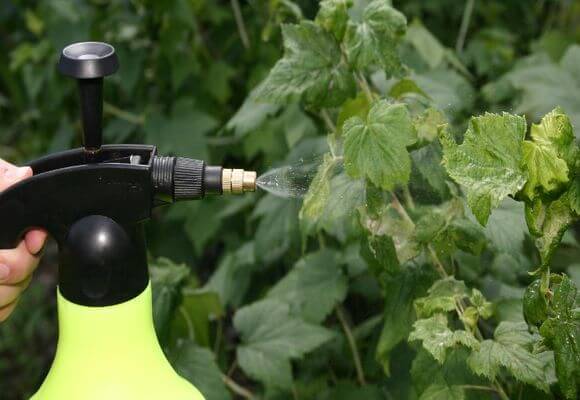
Raspberries are susceptible to various pests. They are often attacked by the raspberry beetle. Larvae and adults feed on leaves, fruit, and buds. To destroy the pest pupae, dig up the soil in August.
It is recommended to shake beetles off the bushes. Insecticide treatments are applied three times during the season.
The plant can also be damaged by weevils, which gnaw at the flower stalks. Products containing sodium fluorosilicate can help control these pests. An infusion of onion peels can also help kill spider mites. Raspberries rarely experience fungal infections. If the disease does appear, spray the beds with Bordeaux mixture.
Covering yellow raspberries for the winter
In regions with harsh winters, young plants should be protected. For this purpose, it is recommended to bend the shoots to the ground. Sprinkle the ends of the branches with soil. Cover the top of the plant with non-woven material. In winter, you can additionally cover the raspberries with snow.
How to propagate yellow raspberry bushes
Raspberries are typically propagated by root suckers. Strong shoots should be dug up in the fall and transplanted, along with the root ball, to a new location. Cuttings can also be used for propagation. Planting material is prepared in the spring or fall. Initially, it is planted in a greenhouse, but after roots and leaves appear, it is transplanted into the garden.
The plant is rarely propagated by seeds. Before planting, they must be soaked, disinfected, and hardened off. After this, the seedlings can be placed in moist soil.
Yellow raspberries are a popular plant that produces delicious and sweet fruit. To grow them successfully, it's important to provide them with proper care. This includes watering, pruning, and fertilizing.
Related posts:
 Description of the remontant raspberry variety Orange Miracle, planting and care
 Methods for planting and propagating cherries at home
 Conditions for growing mandarin at home and rules for caring for the tree
 The best grape varieties for growing in the Urals, planting and care rules in summer
 Description and cultivation of the 15 best cherry plum varieties for the Moscow region, planting and care rules
 Rules for planting and caring for pears in open ground, how to grow them correctly
 40 of the best varieties and cultivars of red raspberries with descriptions
 The best raspberry varieties for the Moscow region with descriptions and characteristics