
- Advantages and disadvantages
- Preparatory stage in the first year
- Inspection and selection of root crops
- You can't use a hybrid
- Resistance to flowering
- Appearance
- Special storage conditions at home
- How to plant in the second year
- Inventory
- Shovel
- Container with mulching material
- Manual hiller or motor tiller
- Planting material
- Soil
- The landing process
- When and how to plant
- Mulching
- Aftercare
- Watering
- Weeding
- Top dressing
- When the flower stalk appeared
- Collection period
- Preparing an umbrella
- Appearance of seeds
- The collection process
- Selection of suitable from unsuitable
- Storage
- How to use the collected seeds in the future
When buying seeds, you can't be 100% sure that the purchased material will perform well in the garden. It turns out that even experienced gardeners have no idea how to grow vegetables and where to find excellent planting material. Seeds collected and prepared at home often fail to disappoint and yield a rich harvest, especially if you follow all the rules. First, you need to carefully study how to grow carrot seeds yourself before proceeding.
Advantages and disadvantages
The benefits of harvesting carrot seeds at home are that:
- planting material with high germination rates when planted with seeds, which can be used over the next three years;
- no risk of purchasing counterfeit or mixed products at retail outlets;
- saving on expensive planting material for popular varieties;
- the ability to harvest marketable fruits with excellent nutritional qualities.
Despite the impressive advantages, it is also worth highlighting certain disadvantages:
- there may be a risk of a gradual reduction in the valuable characteristics of the variety;
- if mistakes are made, independent selection will lead to the degeneration of the culture;
- There is a risk that carrots will not bloom even if a proper and complete set of necessary measures is followed.
Preparatory stage in the first year
Carrots, as we know, are biennial plants. They produce roots in the first year, but seeds in the second.
It is recommended to select carrot seeds for planting in the fall of the first season.
Inspection and selection of root crops
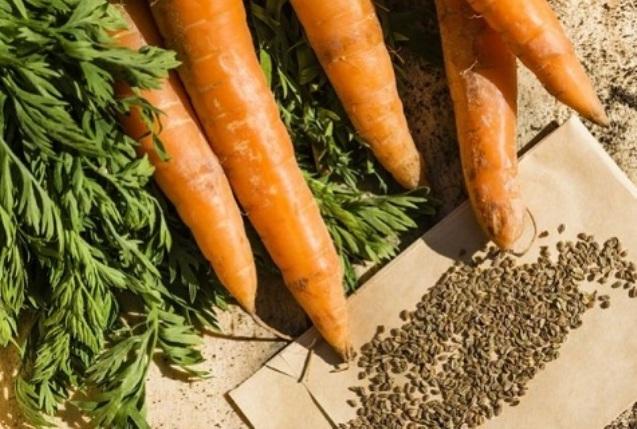
It is not recommended to randomly set aside the fruits for further extraction. All root vegetables should be carefully inspected and the most suitable ones selected based on their appearance.
You can't use a hybrid
Carrots should be of the correct variety, not a hybrid, as the seeds may be infertile or, when grown, may produce unpredictable results in the form of specimens that are not similar to their parents.
Take a look Also

Resistance to flowering
To ensure long-term storage and resistance to flowering, it is necessary to follow the storage rules, as well as the preparation of fruits for storage.
Appearance
To obtain a high-quality harvest, it is necessary to select fruits that match the varietal form. They should be bright, juicy, and uniform in appearance.
Special storage conditions at home
They should be cleared of tops, trying not to damage the tops with the buds of the second year's embryos.Store carrots in conditions of low humidity and temperatures ranging from +1 to -2 degrees.
How to plant in the second year
The next step is to familiarize yourself with the specifics of planting carrots in the second year, after they have successfully survived the conditions provided to them.
Inventory
First, you need to prepare the necessary equipment for proper planting. You'll need the following tools.
Shovel
A device for forming and initially shaping beds.
Container with mulching material
This tool should be used for mulching and composting the soil.
Manual hiller or motor tiller
The device is useful for reproducing soil hilling after planting.
Planting material
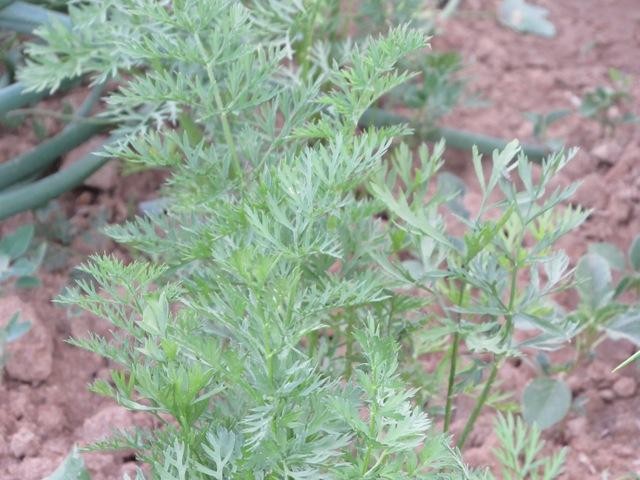
Unlike first-year carrots, second-year carrots prefer warmth and moisture. Even during storage, one of the carrots may sprout. These carrots are also suitable for planting, so there's no need to discard them. If the carrot is large, you can leave just the top third. The remaining portion is used for culinary creations.
 To achieve complete pollination, it is necessary to use about 10-15 fruits of the same variety, since the plant is considered cross-pollinated.
Soil
The soil for spring planting should be prepared in the fall, adding humus or compost. If the soil requires more micronutrients, add ash in the spring.
The landing process
Two days before planting, sort the carrots and disinfect them using a weak solution of potassium permanganate.
When and how to plant
Planting begins when there's no further frost risk. The soil should warm to at least 10-15 degrees Celsius. The approximate date is late April.
To do this, dig holes in advance and lightly moisten them before planting. The standard distance between rows should be 60-70 cm. Planting units should be spaced at least 30 cm apart. The vegetable is planted vertically, with the pointed end in the soil. The other end of the root should be level with the soil.
The carrots need to be placed in the soil along their entire length, leaving only the greens exposed.
Mulching
Immediately after planting, apply mulch around the seedlings, after thoroughly watering them. Compost, manure, green manure, nettles, and grass clippings can all serve as mulch.
Take a look Also

Aftercare
To obtain high-quality seed material, it is necessary not only to plant it correctly, but also to provide proper care.
Watering
Throughout the growing season, it's important to water the plant moderately, ensuring adequate humidity and regulating temperature fluctuations throughout the day. The frequency of watering depends on the soil structure. Loose soil requires watering once every 3-5 days, while loamy or sandy loam soil requires watering only once a week.
Weeding
Weed the area as needed, removing weeds and loosening the soil. Weeds can slow flowering and reduce seed quality.
Top dressing
Fertilizer should be applied only when necessary:
- nitrogen-containing substances during active growth of the upper part;
- potassium and phosphorus based products at the time of bud formation.
If the soil is sufficiently saturated in the first year of germination, you can do without fertilizing at all in the second year.
One and a half months after planting, you can use lime milk for watering; this will increase the quality of the seeds.
When the flower stalk appeared
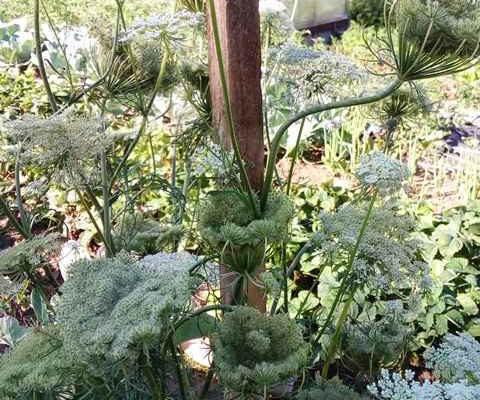
After two months, the plant will develop a central stem with a flowering umbel. When this appears, trim off all the side shoots of the foliage that bear additional inflorescences. This will help the main inflorescence receive more nutrients.
Collection period
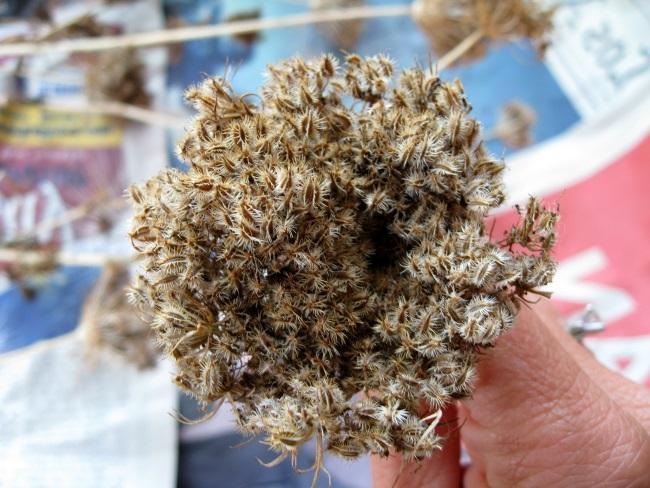
Carrot seeds are harvested when the inflorescence turns dark beige; don't wait until the umbels dry. Harvest time is August.
Preparing an umbrella
Carefully cut the umbels with 20-25 cm long stems for the bunch. Hang the inflorescences formed into bunches to ripen in a dry and well-ventilated area. To prevent the carrot seeds from scattering, wrap the umbels in paper bags.
Appearance of seeds
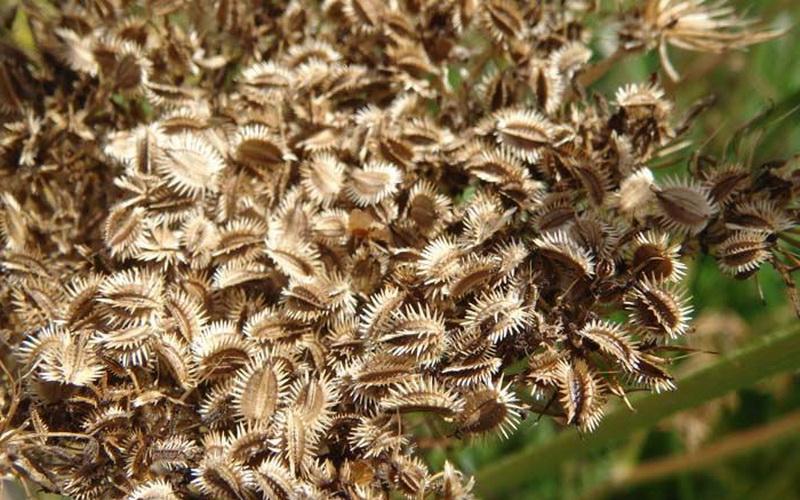
Carrot seeds, characterized by their large size and maturity, are located along the edges of the inflorescence; in the central part they are small and immature.
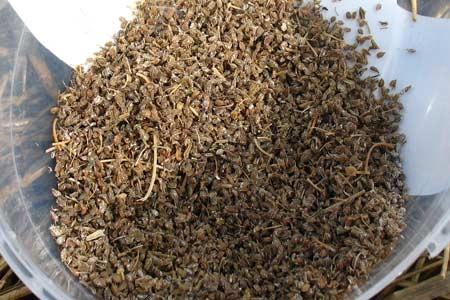
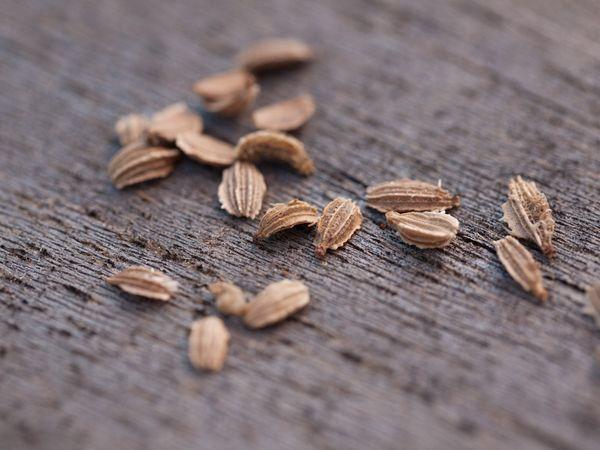
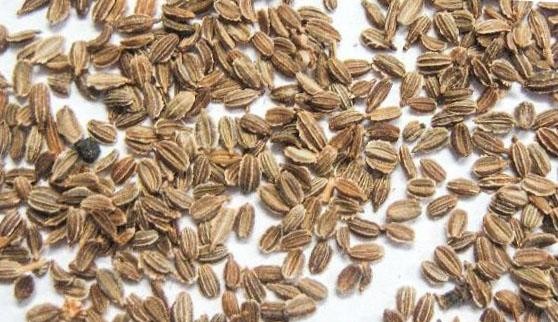
The seeds are small, bright brown, and covered in white hairs. Some varieties have lobed stripes. When ready for harvest, the seeds fall easily from the umbel and have a slight sheen due to the essential oil on their surface.
Take a look Also

The collection process
Carrot seeds can be harvested from formed buds by hand. Rub the completely dried umbels by hand, separating the seeds and placing them in a specially prepared dry container.
Selection of suitable from unsuitable
Pour cold water into the container with the carrot seeds, stir, and let sit for 2 hours. Mature, full-bodied carrots will sink to the bottom, while light, low-quality carrots and small husks will float to the surface and should be removed. Rinse the seeds until the water is clear of suspended matter.
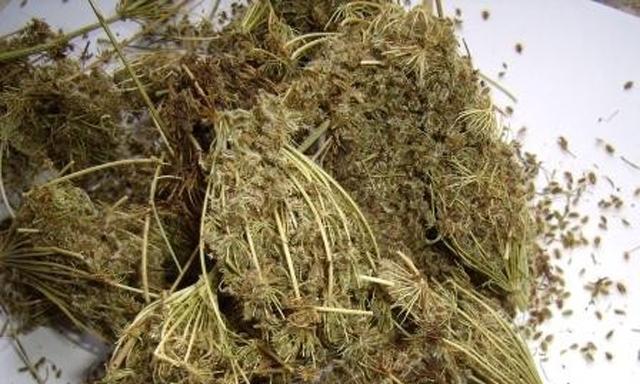
Drain the water, place the carrot seeds on a paper towel, stir, and dry at room temperature.
Storage
Carrot seeds can be stored for 2-3 years without losing their viability if stored in a dry, dark place at a temperature of 12-18 degrees Celsius. For storage, use small canvas bags or cardboard boxes. Avoid plastic containers or polyethylene bags, as they don't allow the air to pass through, which is essential for carrot seeds.
How to use the collected seeds in the future
The seedlings are ready for planting. The first shoots should appear within two weeks.
Maintaining varietal purity requires selection and spatial isolation of varieties, and obtaining carrot seeds with superior sowing qualities requires excellent agricultural practices and optimal sowing and harvesting times. This will determine the germination rate in the early stages, as well as the quality of the fruit in subsequent stages.
Related posts:
 How to control carrot flies with medications and folk remedies
 Is it possible to plant carrots in July or at the end of June? What are the best days and care instructions?
 Timing and rules for planting carrots in winter, which variety is best to choose
 Carrot care guidelines for outdoor cultivation to ensure a good harvest
 Description of carrot pests and diseases and methods of control
 How and when to thin carrots in open ground
 How to plant carrot seeds in open ground, timing and sowing methods
 What is the best way to feed carrots? Fertilizers and preparations, using folk remedies.