
- Features and characteristics of indeterminate varieties
- The best varieties for planting in a greenhouse
- Esaul
- Monastic
- F1 Suitor
- Pharaoh F1
- No hassle
- Bobrik F1
- Bouquet F1
- Sugar baby
- Picnic F1
- Volzhsky F1
- Chupa shchups
- Happy Friends F1
- Ladies' Whim F1
- Harmony F1
- Miracle F1
- Appetizing F1
- Monica F1
- The nuances of growing and caring for the crop
- Reviews from experienced vegetable growers
Breeders have developed hundreds of cucumber hybrids that don't require pollination but do require specific care. Some require pinching at the top to encourage side shoots. Indeterminate cucumber varieties set their ovaries on the main stem, so there's no need to restrict their growth. They thrive in protected soil and don't produce barren flowers.
Features and characteristics of indeterminate varieties
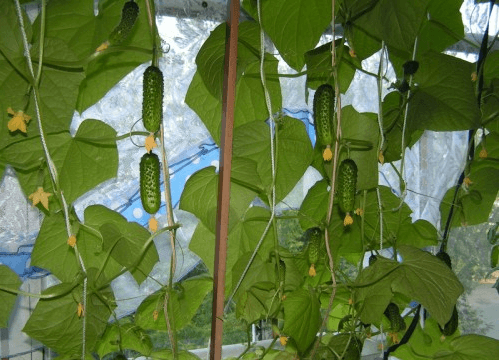
Cucumbers thrive in warmth and respond well to good light, but to ensure a rewarding harvest, you need to select the right seeds. Indeterminate hybrids reach a height of 2 meters but do not spread widely. Under favorable conditions, cucumbers develop quickly and form new fruits. There is no need to pinch them, as the ovaries are formed on the main stem, not on the side branches.
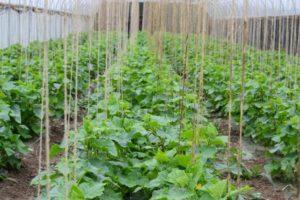
Indeterminate hybrids are planted 30 cm apart in a greenhouse with warm temperatures and no drafts. The bushes develop long vines that are regularly tied up.
The best varieties for planting in a greenhouse
Breeders have already developed enough varieties from which you can choose cucumbers for growing in different conditions.
The Siberian Garland bears fruit until autumn. The compact plant, pollinated without the help of bees, produces tiny, ripe cucumbers.
It is distinguished by early ripening. cucumber MurashkaThe Emerald City variety is prized for its resistance to powdery mildew and is suitable for growing in a plastic greenhouse. Each bush produces approximately 14 kg of firm, crisp cucumbers.

Esaul
This early parthenocarpic variety delights with its long, tuberculate fruits. Ovaries are set without pollination, and a node can contain up to ten flowers. The cucumbers ripen 40 days after sprouting. Up to 15 cucumbers are harvested per bush, which are distinguished by:
- bright green color;
- oblong shape;
- crispy pulp;
- sweet taste.
The Esaul variety is immune to the mosaic virus and is not affected by olive spot. The gherkins are used for pickling.

Monastic
This mid-season cucumber is grown indoors from seedlings. In southern regions, it bears fruit in a garden bed, and the seeds are sown directly into the ground. Monastyrsky cucumber requires the removal of side shoots, as the bush branches extensively. The plant produces beautiful cucumbers about 8 cm long, covered with light stripes. The cucumbers do not turn yellow and are suitable for pickling.
F1 Suitor
This insect-pollinated hybrid, created by Russian breeders, produces both male and female flowers. It is grown in a greenhouse using seedlings. The cultivar produces medium-height vines, which produce oval-shaped cucumbers nearly 20 cm long after two months. Individual cucumbers, covered in white spines, weigh up to 220 grams. The plant is resistant to viral infections, resistant to powdery mildew, and rarely suffers from root rot.

Pharaoh F1
This hybrid is grown commercially in Moldova, where a hundredweight yields 250–350 kg of cucumbers. The flowers are pollinated by bees; while not suitable for greenhouses, the Pharaoh variety excels in open ground:
- the presence of immunity to diseases;
- resistance to adverse environments;
- high productivity.
Cucumbers are picked every other day, otherwise they become overgrown. Each cucumber weighs no more than 90 g.
No hassle
This variety is insect-pollinated but is suitable for growing under plastic. The cucumbers ripen early, but the fruit set doesn't begin until almost autumn. The cylindrical cucumbers are free of voids, have few bumps on the surface, and the flesh has a sweet taste. Crispy gherkins weighing up to 100 grams fit in jars and are used for pickling. Caring for these cucumbers is easy.
Bobrik F1
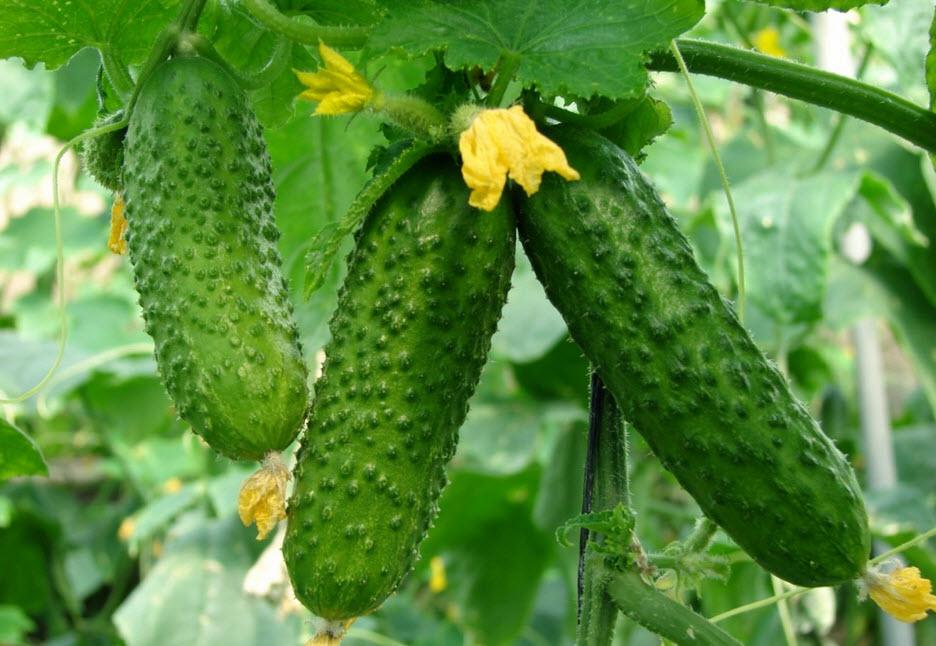
Many cucumber varieties only bear fruit for a couple of weeks, requiring the addition of other plants. Russian breeders have created the Bobrik hybrid, which blooms for a fairly long time, requires no pollination, and after a certain period produces new fruits that hang on the bushes like garlands. The cucumbers never stop producing and do not turn yellow. A single indeterminate plant yields approximately 6 kg of cucumbers.
Bouquet F1
Gardeners value this parthenocarpic hybrid for its early ripening. Ovaries are formed without pollination. Several nodes form within the inflorescence. The Bouquet variety produces cucumbers as early as the 39th day. The plant bears fruit both in the greenhouse and in the garden, and is immune to:
- to powdery mildew;
- Cladosporiosis;
- mosaic.

One bush produces up to 7 kg of delicious cucumbers weighing 90 g. The gherkins rarely exceed 3 cm in diameter, are not bitter, and have no voids in the pulp.
Sugar baby
This variety is distinguished by its miniature size, the plant branches sparingly, and its stems are 30 centimeters long. Four to six fruits are set at the nodes. Fifty cucumbers weighing 60–70 grams are harvested per bush, their surface covered with dense, large tubercles. The flesh of the Sugar Baby is sweet and aromatic, but the thin, delicate skin becomes tough as it matures. Although the bush produces numerous fruits, the yield is no more than 2.5 kg, with gherkins only 7 cm long.
Picnic F1
This bouquet-type hybrid is highly productive, producing up to 10 fruits per node. Flowers bloom at different times, and the bushes are often covered with both ovaries and ripe cucumbers up to 12 cm long. A bush produces 8–9 kg of cucumbers per season. Picnic is grown in a greenhouse; the hybrid does not require pollination.

Volzhsky F1
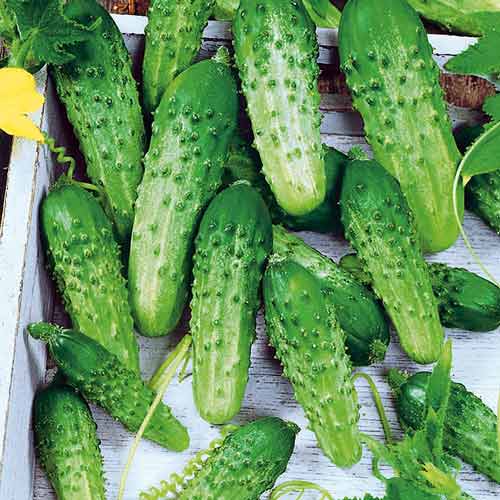
This Russian-developed variety is adapted to temperate climates and northern regions, is immune to viral infections, and is resistant to powdery mildew. The self-pollinating Volzhsky hybrid grows not only in greenhouses but also on balconies. Fruits are set in clusters and ripen within a month.
Ripe cucumbers have a beautiful dark color, decorated with white stripes.
Chupa shchups
This hybrid variety produces branched bushes that require proper training. The plant produces only female flowers, with the ovaries forming a bouquet. Chupa schups fruit in a plastic greenhouse, yielding up to 9 kg of short, barrel-shaped cucumbers weighing approximately 50 g per square meter.
Happy Friends F1
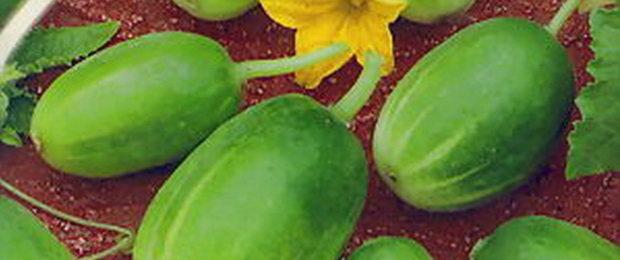
Gardeners grow this self-pollinating variety to produce early cucumbers. The medium-branched bushes are resistant to olive spot and powdery mildew, and require top pinching to increase yield. "Vesyolye Druzya" ripens in 40 days. Ripe cucumbers are oblong in shape and weigh 70–95 g.
Ladies' Whim F1
This parthenocarpic hybrid is grown by farmers in Moldova and Ukraine, where they harvest up to 9 kg of gherkins per square meter. In Russian greenhouses, 2.5-meter-tall bushes produce a good harvest two months after sowing. The gherkins weigh only 60 g and are a rich green color. Damsky Kapriz is resistant to bacterial infections and is not affected by anthracnose.

Harmony F1
This early-ripening variety bears fruit in gardens across the Central Region. Farmers who follow proper agricultural practices harvest 190–200 kg of cucumbers per hectare. The cucumbers are covered with small tubercles, are suitable for pickling and preserving, and have an excellent flavor. The Harmony F1 hybrid tolerates cold temperatures, is virtually immune to viruses, and powdery mildew infections are rare.
Miracle F1
This parthenocarpic variety produces female flowers and thrives in greenhouse conditions. When grown properly, Chudo produces a bountiful harvest of cucumbers with crisp, sweet flesh and a delicate aroma. The cucumbers, weighing 60–70 grams, fit whole in a jar and retain their flavor after canning. This variety is prized for its excellent transportability, shelf life, and resistance to fungal infections.
Appetizing F1
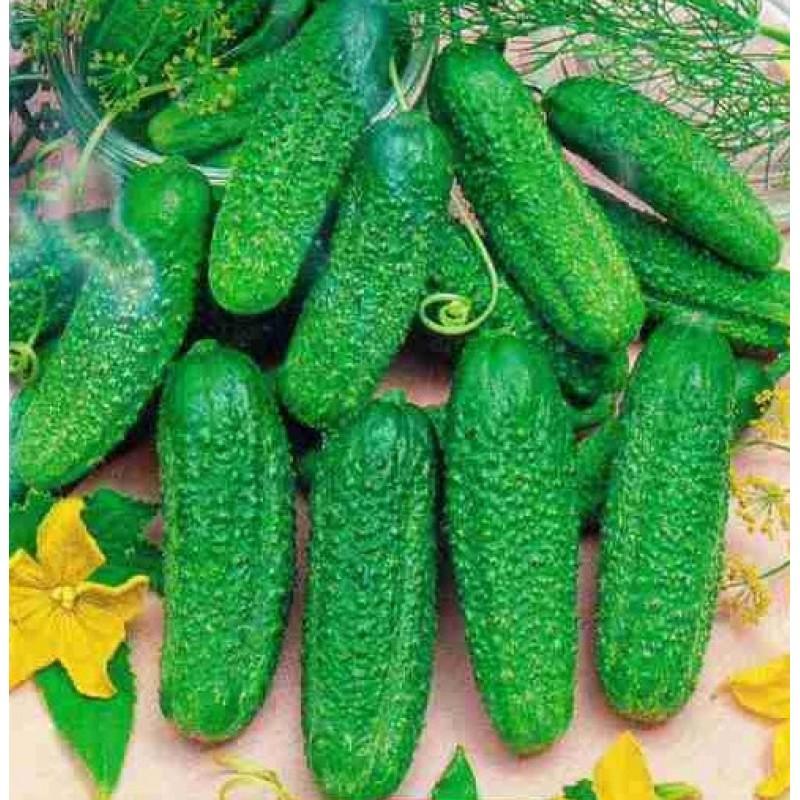
This insect-pollinated hybrid is suitable for greenhouse planting, requires regular fertilizing, and does not thrive in highly acidic soil. The attractive cucumbers of the Appetizing variety ripen early, do not yellow when overripe, and do not become bitter. They are cylindrical in shape and covered with small tubercles. The average length of the cucumbers is 11 cm.

Monica F1
Polish-bred cucumber seeds germinate in a maximum of 6 days. In temperate climates, this parthenocarpic hybrid is grown without seedlings. Monica's fruits ripen in 60 days and retain their marketable appearance during transport and long-term storage. The short, cylindrical cucumbers do not overripen, weighing only 70 g.
The nuances of growing and caring for the crop
Indeterminate cucumbers require plenty of light and warmth, but to ensure a bountiful harvest, in addition to optimal conditions and proper agricultural practices, the plants require care. Care includes:
- Regular irrigation with warm water.
- Application of organic and mineral fertilizers at least twice a week.
- Correct formation of shoots.
- Disease prevention.
- Protection from pests.
Long shoots of tall bushes are not pinched, but are secured to a trellis, which helps form a large number of ovaries, prevents dense plantings and the proliferation of pathogenic microorganisms, and increases yield.
Reviews from experienced vegetable growers
Many gardeners often grow the same cucumber varieties, while others like to experiment, reading the description of a new hybrid and immediately buying seeds for planting.
Igor Timofeevich, 64, from Kasimov: "I heard positive reviews about Ukhazher cucumbers from my neighbors at the dacha, who had been growing them for several seasons. I decided to try them myself and planted them directly in the greenhouse. The bushes grew strong and tall, and I had to tie the stems frequently. After two months, I began harvesting large, long cucumbers, some weighing up to 150 grams. I liked the taste of the cucumbers, but they're not suitable for whole-plant canning."
Inna Vasilyevna, 47, Tula: "I've been growing Picnic cucumbers in a greenhouse for four seasons. The plants bloom for a long time, setting fruit at different times. I harvest the fruits almost all summer long. The cucumbers don't turn yellow, have a sweet taste, and are good for pickling. One plant produces 6 or 7 kg of cucumbers per season."
Related posts:
 TOP 30 best determinate cucumber varieties with descriptions
 Description of the best varieties of Chinese cucumbers, planting, growing and care
 TOP 30 best varieties of cold-resistant cucumbers with descriptions and characteristics
 Top 50 Best Cucumber Varieties for Polycarbonate Greenhouses with Descriptions
 35 Best Powdery Mildew-Resistant Cucumber Varieties with Descriptions
 Description of unusual methods for planting and growing cucumbers
 TOP 40 best late-season cucumber varieties for open ground with descriptions
 Description of the best, most productive and new varieties of cucumbers for 2025