
- Why do cucumbers turn yellow in a greenhouse and what to do about it?
- Lack of light
- Dense plantings
- Insufficient air humidity
- Nutrient deficiency or excess
- Watering mistakes
- Pollination problems
- The bush grows without shaping
- Too many ovaries
- The bushes got too cold
- Overheating in the sun
- Problems with the root system
- Diseases and pests
- Melon aphid
- Spider mite
- Fusarium wilt
- Fungal infection of crops
- Downy mildew
- How to combat this and save the harvest
- Treatment with folk methods and store-bought products
- Fertilizing when yellowing occurs
- Preventing yellowing of cucumbers
Growing crops doesn't always go according to plan, and gardeners often encounter problems during the productive season. For example, when growing cucumbers, it's not uncommon for the leaves to turn yellow and die. Why cucumbers turn yellow when grown in a greenhouse and what to do about it are discussed below.
Why do cucumbers turn yellow in a greenhouse and what to do about it?
There are many possible causes of this problem. Experienced gardeners who have been growing cucumbers for years identify the following reasons for cucumber yellowing:
- the plant does not have enough sunlight;
- thickening of plantings;
- air humidity does not meet required standards;
- unbalanced amount of nutrients in the soil;
- improper irrigation;
- problems with crop pollination;
- excessive number of ovaries;
- hypothermia;
- overheat;
- the root system is damaged;
- the fetus is infected with a parasite or is sick.
Treatment methods vary in each case, so let's look at them in more detail.
Lack of light
If the summer is cloudy, cucumbers grown in a greenhouse will receive virtually no sunlight, which they so desperately need. This problem can be solved as follows:
- phytolamps are installed in the greenhouse;
- The wavelength emitted by the lamp should be in the range of 400 to 500 nanometers during the growth stage and up to 700 nanometers during flowering;
- During the day, the lamp should work for at least 12 hours, after which it should be turned off to allow the plant to rest.
Please note! To ensure proper rest, the plant needs to be in the dark for at least 6 hours.
Dense plantings
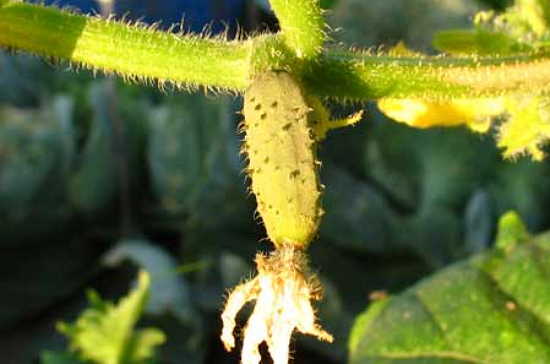
When planting too densely, the amount of sunlight received by the plants is further reduced. To prevent this, maintain a balance when planting and avoid planting cucumber seeds too close together. For harmonious development, no more than four cucumbers should be grown per square meter.
Most seed sellers provide planting plans on the packages. Read them, and you shouldn't have any problems.
Insufficient air humidity
To thrive, seedlings require air with a relative humidity of at least 85%. If this condition isn't met, the plant begins to absorb water from the soil more intensively than usual. If watering is also insufficient, the leaves and buds begin to turn yellow. Humidity can be increased by irrigating the soil between plantings. This will allow the water to evaporate, maintaining the necessary balance.

Nutrient deficiency or excess
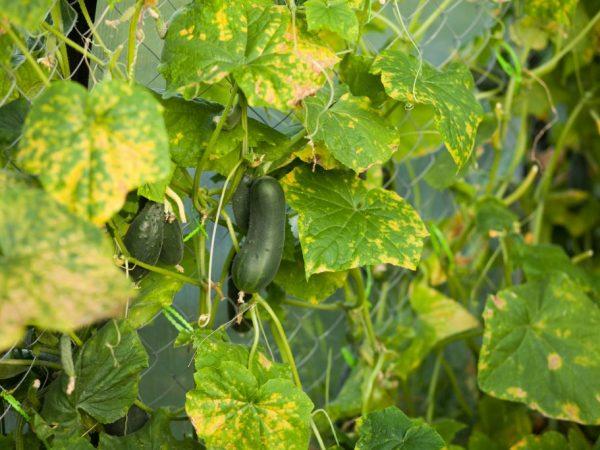
An imbalance of fertilizers in the soil leads to the drying out of green foliage and reduced growth rates. To maintain the correct proportions, use the following information:
- During fruiting, cucumbers require more nitrogen-containing fertilizers;
- during the flowering period – fertilizers containing phosphorus.
Don't constantly use fresh manure as a fertilizer. Alternate its use with complex fertilizers sold in specialized stores.
Watering mistakes
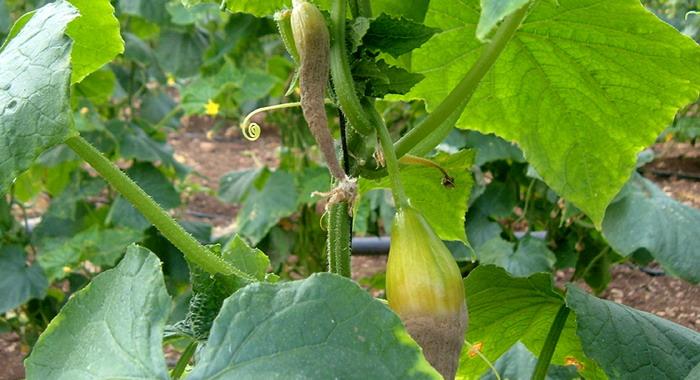
Improper watering is another reason why leaves quickly begin to turn yellow and dry out. Cucumbers are moisture-loving vegetables, and a lack of moisture will quickly affect their development. Follow these watering recommendations:
- do not water plantings with cold water;
- too frequent watering of bushes, when water pours directly onto the roots, causes them to rot;
- ventilate the greenhouse after each watering;
- if the top layer of soil is wet after the previous watering, it is recommended to skip the next irrigation session;
- It is better to water in the morning or in the evening.
Pollination problems
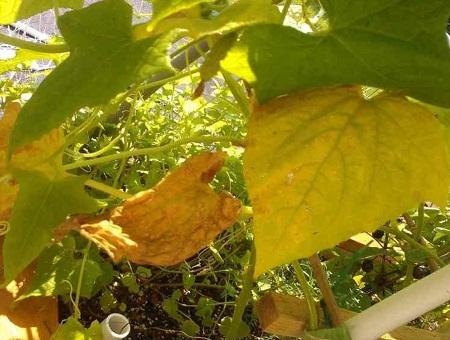
Pollination problems, which cause ovaries to turn yellow and die, can arise from choosing the wrong cucumber variety. Self-pollinating hybrids, which don't require bees, are generally used for greenhouse cultivation. If hybrids requiring pollination are planted in a greenhouse, the only solution is frequent ventilation. This will allow bees access to the cucumber and facilitate its reproduction.
The bush grows without shaping
Greenhouse cucumbers, due to favorable growing conditions, produce a lot of foliage, to the detriment of the harvest. If the bush is not trained, the ovaries lose strength and turn yellow. Training is carried out according to the following algorithm:
- remove lateral shoots;
- remove the first ovaries;
- We remove excess leaves.
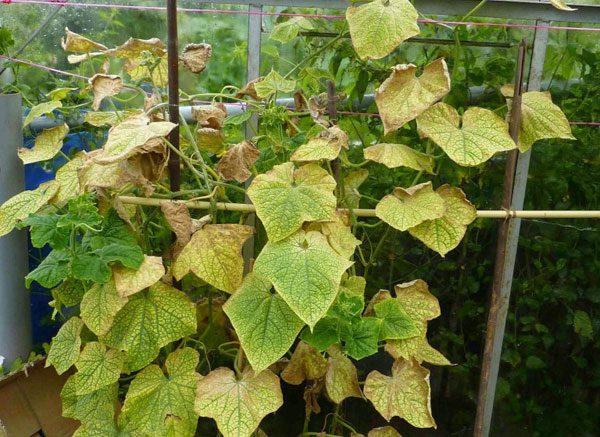
The first 5-6 nodes should be removed. Subsequently, it's only necessary to maintain the overall shape of the bush by removing old, worn-out leaves and side shoots.
Too many ovaries
Beginning gardeners think that a large number of ovaries guarantees a bountiful harvest. This isn't entirely true. While many ovaries are good, too many will result in the bush not having enough energy to produce each one. This causes the ovaries to turn yellow, and the final yield leaves much to be desired. Experienced gardeners advise leaving no more than 25 ovaries on a single bush.
Please note: If the summer is dry, the number of ovaries may be reduced even further.
The bushes got too cold
Comfortable growth of cucumber seedlings occurs at a temperature of 18-35 O. Temperature drop below 15 O has a dramatic effect on the development of the crop - its growth slows down, and the formed ovaries and leaves begin to turn yellow and fall off.
A solution is to install a large container of water with black walls. A barrel works well for this purpose. During the day, the water heats up and at night, it releases its accumulated heat, raising the temperature inside the greenhouse.
Overheating in the sun
A hot, dry summer threatens cucumber seedlings not only with dehydration. The fact is that cucumber pollen loses its ability to fertilize if the indoor temperature exceeds 35°C. O.
When this situation occurs, many empty flowers form on the bush, and the tops begin to fade and turn yellow.
Ventilation can help remedy the situation, but it must be done carefully. Sudden temperature changes are just as damaging to cucumbers as overheating.
Problems with the root system
Yellowing leaves may be caused by the bush's root system being cramped or overgrown. In the first case, a lack of nutrition is due to a weak root system that lacks the strength to support the entire plant. In the second case, the roots consume too much, and the aboveground portion doesn't have time to develop properly.
Diseases and pests
If none of the above occurs, the problem may lie in diseases and pests attacking the young plant's immune system. These include:
- melon aphid;
- spider mite;
- Fusarium wilt;
- fungal infection;
- downy mildew.
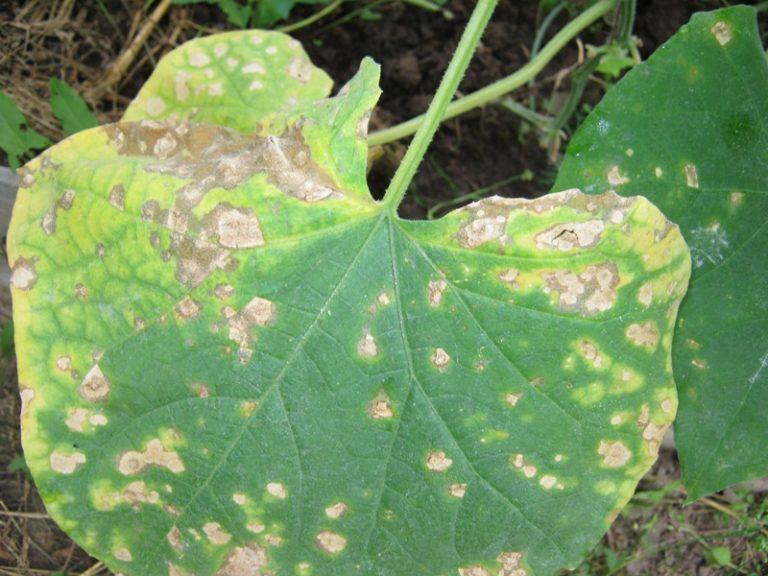
Melon aphid
Melon aphids most often affect crops planted outdoors, but greenhouse crops can also be attacked. The aphids' main food source is plant sap. This leads to plant depletion and yellowing of the leaves. If the pest isn't detected promptly, the crop may die altogether.
Spider mite
Another lover of the plant's nutritious juices, it often appears in greenhouses and hotbeds made of polycarbonate, and signs of its harmful activity include:
- decrease in bush growth rate;
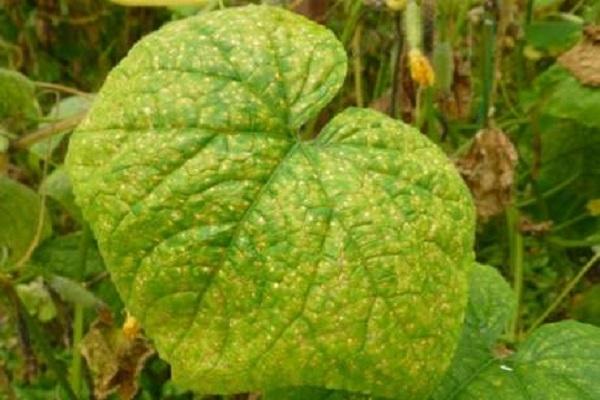
- the leaves begin to fade and white or yellowish spots appear on their surface;
- a web-like film forms on the plant's stems.
Fusarium wilt
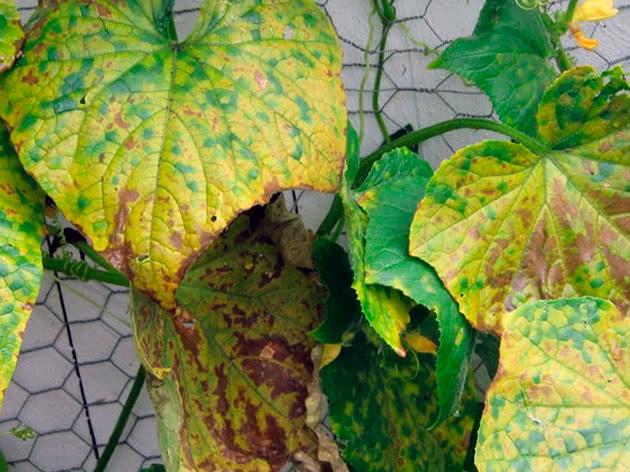
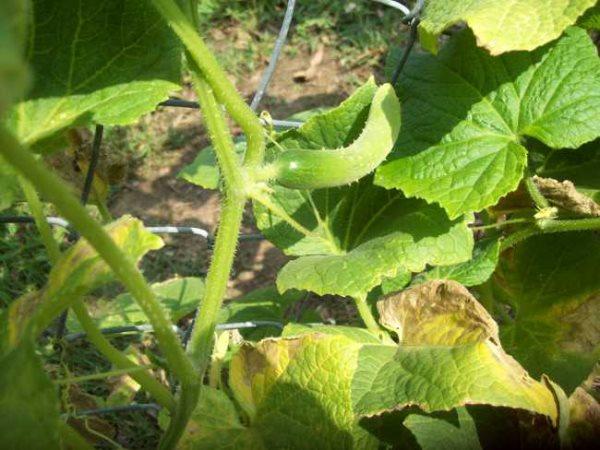
The disease manifests itself in hot years, when the air temperature reaches a critical level of 35 OThe infection begins at the cucumber roots, gradually spreading to the leaves. Detecting the disease in its early stages is difficult, as the initial symptoms are subtle. Yellowing begins with small spots, resembling small dots, which then spread to cover the entire leaf surface.
Symptoms characteristic of fusarium include:
- yellowing of leaves;
- drying of the ovaries;
- formation of rot on the roots of the plant;
- the bush stops blooming.
Fungal infection of crops
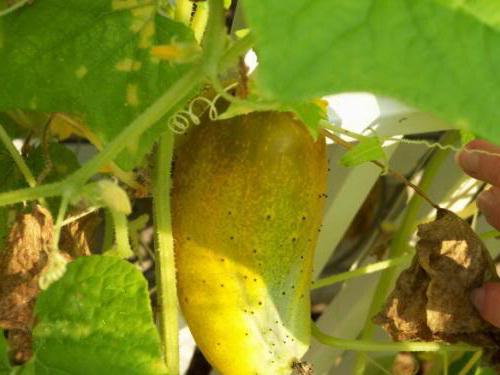
Powdery mildew is a fungal disease that develops due to high temperatures and humidity inside a greenhouse. It manifests as a whitish coating on the leaves. It gradually spreads, and the infected parts begin to die. Don't delay treatment, otherwise you risk losing your entire harvest.
Downy mildew
It affects not only the leaves but also the crop. Infection occurs during the planting stage, when undisinfected seeds are introduced into the soil. Excessive use of chemical fertilizers can also cause the disease. Downy mildew develops rapidly and can destroy seedlings within 7 days.

How to combat this and save the harvest
There are only two methods of pest control:
- use of folk remedies or store-bought chemicals;
- proper feeding.
Treatment with folk methods and store-bought products
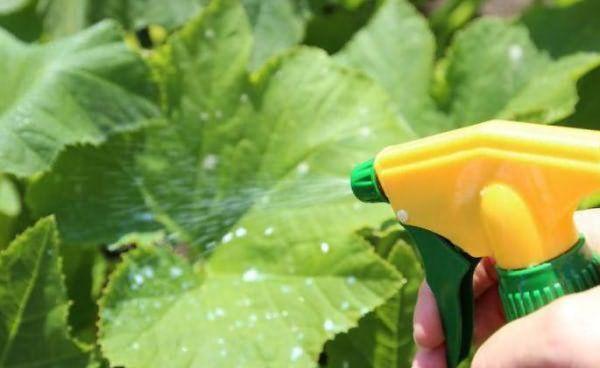
Among folk remedies that effectively combat yellowing leaves, a homemade onion infusion stands out. To make it, pour boiling water over onion peels and let them steep for 24 hours. The cooled solution is applied to the affected leaves, and the remainder is poured under the roots.
It's best to choose store-bought products with caution. They should only be used if you're certain of the cause of the yellowing leaves.
Fertilizing when yellowing occurs
When the leaves turn yellow, the following can be used as fertilizer:
- Urea. Foliar feeding.
- Fertilizers with a high nitrogen content. Apply to the soil in small doses.
- If the roots turn yellow, the plant lacks phosphorus.
- If yellowing begins at the edges of the leaf and from its tip, gradually spreading towards the center, fertilizing with potassium fertilizers will help.
Preventing yellowing of cucumbers
The following measures are used as a preventative measure:
- systematic ventilation of the greenhouse;
- timely irrigation;
- indoor temperature control;
- To prevent fungal diseases, treatment with a 1% solution of Bordeaux mixture is suitable.
Related posts:
 The best eggplant varieties for growing in a polycarbonate greenhouse: planting and care
 Causes and treatment of eggplant pests and diseases, how to combat them at home
 Why do cucumber leaves curl inward and what to do about it?
 Reasons why cucumber leaves turn yellow and what to do, how to treat and feed them
 What to do if the leaves of zucchini in open ground turn yellow and how to deal with it
 Reasons why beet leaves turn yellow, care mistakes, what to do, and how to treat them
 Why are cucumber leaves turning yellow on the windowsill? What to do and how to treat them?
 Why do pumpkin ovaries turn yellow, fall off, and rot in open ground, and what can be done about it?