
- History of the variety's development
- Pros and cons of the variety
- Description and characteristics of the cucumber Claudia
- Bush and leaves
- Productivity and fruits
- Resistance to drought and low temperatures
- Disease resistance
- What's special about Klavdiya Agro F1?
- Where is it preferable to grow the crop: a greenhouse or open ground?
- How to plant a variety in a plot
- Method of germination by seeds
- Growing from seedlings
- How to properly care for a plant
- Watering and loosening the soil
- What to feed Claudia F1
- How to tie up and shape a bush
- Disease prevention
- Reviews from experienced gardeners
Scientists around the world are conducting breeding work to improve the quality of vegetable crops. The Klavdia cucumber variety has become popular due to its flavor and ability to bear fruit in a variety of climates. It is one of the varieties that served as the foundation for the development of modern hybrids.
History of the variety's development
Dutch breeders developed the Klavdiya F1 variety. They crossed several varieties. The primary goal of the cross was to produce cucumbers that were disease-resistant and capable of consistent fruit production. In 2008, the hybrid was introduced to Russia and added to the State Register.
Pros and cons of the variety
In Russia, Klavdiya F1 appeared as a variety recommended for cultivation in the Krasnodar Territory and the Caucasus Federal District, but over time, it became clear that the cucumbers thrive under plastic cover in Siberia and the Urals, and are also capable of bearing fruit in the central and European parts of the country.
The main advantages of the variety are considered to be:
- belonging to the parthenocarpic category (ability to self-pollinate);
- high rates of early stable yield;
- The fruits have a minimal seed content and are versatile in use;
- not prone to outgrowing;
- can be stored for a long time;
- resistant to infections;
- tolerates temperature fluctuations.
Among the variety's disadvantages is the impossibility of collecting seeds independently, due to their minimal quantity and immaturity. Cucumbers Klavdiya can be affected by cucumber mosaic disease without preventive treatments.
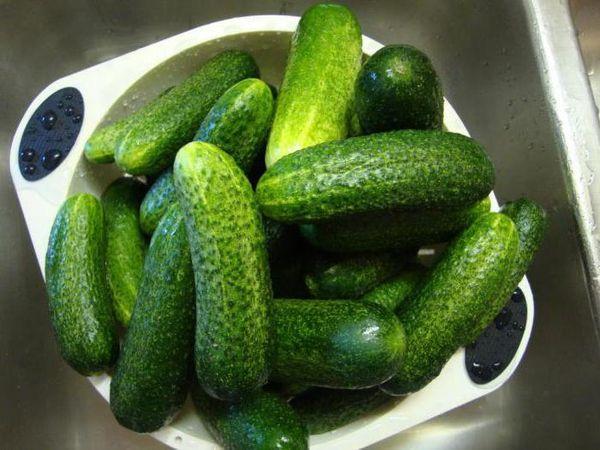
Description and characteristics of the cucumber Claudia
The primary analysis is based on the plants' appearance during the growing season, as well as the variety's yield indicators. A key characteristic in the crop description is the listing of maintenance requirements.
Bush and leaves
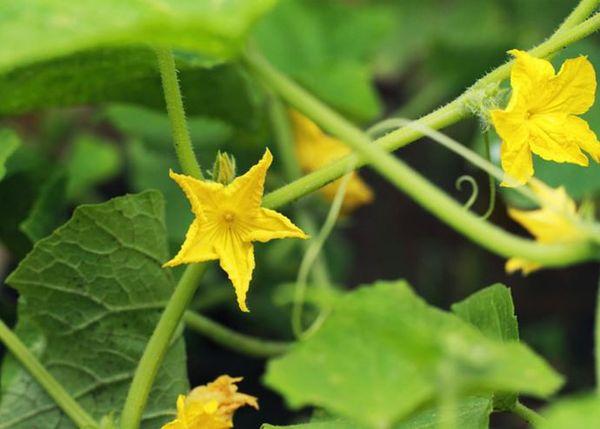
A distinctive feature of this variety is the formation of cluster-shaped inflorescences. The hybrid has almost no empty flowers.

The bush can grow indefinitely, so gardeners recommend pinching the main shoot at a height of at least 2 meters. Tall shoots allow for trellis-based or staking cultivation. Claudia's leaves are small, rich, bright green, and have longitudinal wrinkles.
Productivity and fruits
The hybrid has received recognition due to its yield indicators:
- in open ground, up to 10 kilograms of cucumbers are harvested from 1 square meter;
- The yield of greenhouse cucumbers is determined by collecting 20 kilograms per 1 square meter.
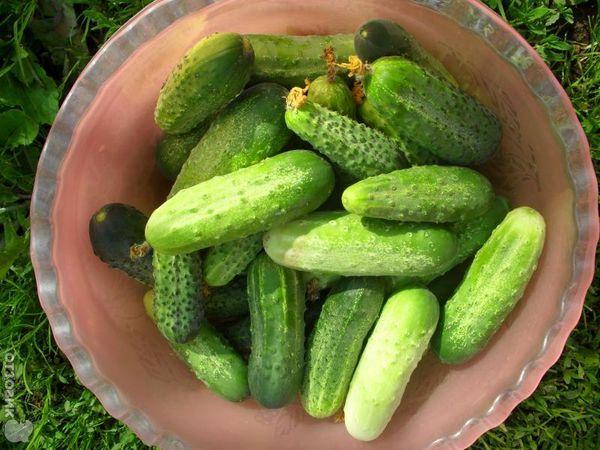
Fruit characteristics:
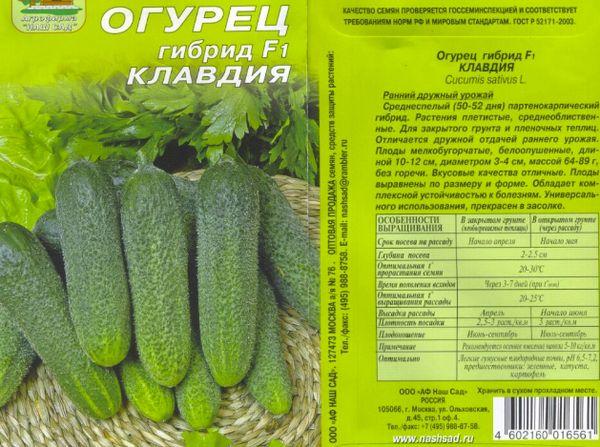
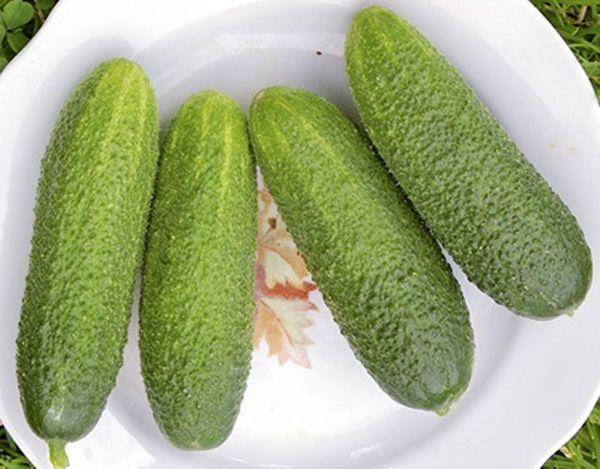
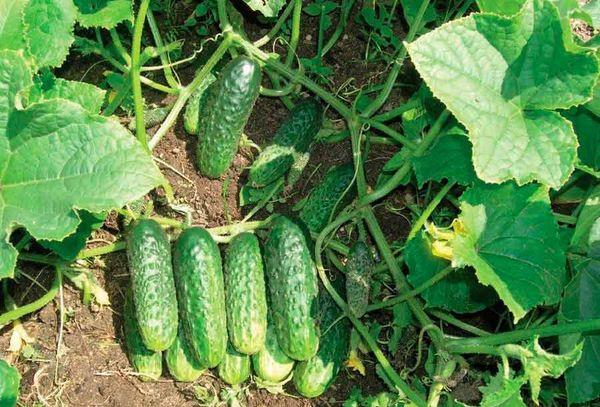
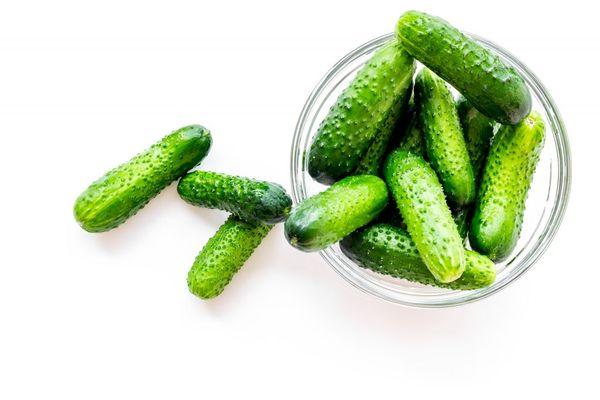
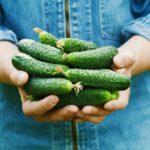
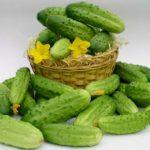
- maximum length – 12 centimeters with a diameter of 3.5 centimeters;
- the weight of the fruit can reach 100 grams;
- the fruits have thin skin;
- no bitterness;
- Hooked, twisted, poorly developed cucumbers make up 10 percent of the total harvest.
Resistance to drought and low temperatures
Claudia is one of the varieties that is not prone to suffering from temperature fluctuations; it is considered frost- and winter-resistant.
When growing in a greenhouse, there's no need to worry about reduced yields. For open-ground plants, gardeners recommend providing additional plastic covers to prevent frost damage during unexpected frosts.
The hybrid can survive several days without watering. However, for consistent flowering and fruiting, it requires regular irrigation.
Important! This variety does not tolerate over-watered soil; excess moisture will significantly reduce frost resistance.
Disease resistance
Claudia is considered a disease- and pest-resistant variety. The hybrid's only drawback is susceptibility to powdery mildew and cucumber mosaic.
To prevent these occurrences, gardeners recommend planning preventative measures in advance. This will preserve the harvest and prevent soil contamination.
What's special about Klavdiya Agro F1?
Some time ago, Klavdia cucumber seeds disappeared from the market. A few years ago, they were replaced by Klavdia Agro seeds. This was an attempt by the grower to pass off the variety as a new, recently developed one. Experienced gardeners say such tactics are completely unnecessary. The varieties have identical characteristics and are popular.
Where is it preferable to grow the crop: a greenhouse or open ground?
Klavdia F1 is considered a mid-early hybrid with a female flowering pattern. It was developed for cultivation in open ground and greenhouses. In the Central Black Earth Region and the Krasnodar Krai, it is grown using the field seed method. The rest of the country's climate zones are suitable for planting seedlings in late spring or early summer.

The variety's yield depends on growing conditions. Planting in heated greenhouse soil allows for double the yield.
How to plant a variety in a plot
There are two planting methods for growing cucumbers. The choice depends on the weather conditions in your region.
Method of germination by seeds
Planting Klavdiya F1 cucumber seeds is recommended only when the soil has warmed to 18-20 degrees Celsius. This is possible in the southern regions of the country.
Before sowing, the seeds are processed in stages:
- calibrate;
- disinfect;
- soak.
Some gardeners recommend hardening off seeds to help them adapt more quickly to new conditions. This procedure is especially important in areas prone to recurrent frosts.
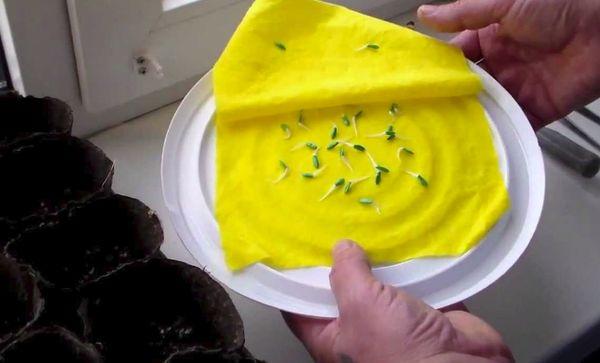
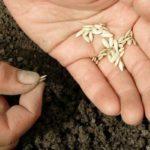
The seeds are placed in pre-dug holes no more than 2 centimeters deep. Space the seeds 30-40 centimeters apart. For planting, choose one of the recommended patterns: rows or nests.
The holes are then filled with soil, lightly compacted, and moistened with a spray bottle. The seedlings are covered with plastic film to create a greenhouse effect. Once the seedlings emerge, the film is removed.
Growing from seedlings
In most parts of the country, cucumber seedlings are grown indoors. For this purpose, cucumber seeds are sown starting in March. The exact timing may depend on temperature conditions and daylight hours in a particular region.
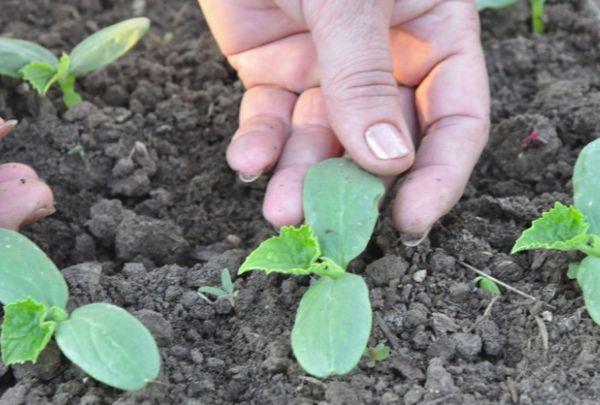
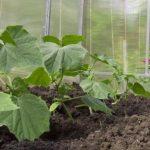
The crop doesn't like being pricked out, so cucumbers are planted in individual containers and placed on windowsills or enclosed balconies. By the time of planting, the seedlings should have grown tall and formed at least 3-4 true leaves.
Important! The timing of greenhouse and ground plantings differs significantly. When planning, take soil warming into account.
How to properly care for a plant
After planting, an important period of plant care begins, during which agricultural practices should be alternated.
Watering and loosening the soil
It's recommended to water the Claudia F1 hybrid in the evening, after the daytime heat has subsided. Water should be settled beforehand. Cold water can damage the root system. Use a watering can for irrigation, but avoid getting moisture on the leaves to avoid burning or disease. The Claudia variety requires regular, moderate watering.
Soil loosening is a cultivation technique that provides additional air to the root system. The soil between cucumber rows should be loosened once every 14 days. Loosening is performed after evening watering to a depth of no more than 5-8 centimeters.
What to feed Claudia F1
Due to its high fruiting rate, the Klavdia F1 hybrid requires additional fertilizing. Mineral complexes are applied as root fertilizer 10-15 days before fruiting begins. During fruiting, cucumbers are fed up to three times per season with phosphorus and potassium-rich fertilizers.
Before planting, the soil is fertilized with organic fertilizers. Ammonium nitrate granules are added to the soil during hole preparation.
How to tie up and shape a bush
Being an indeterminate variety allows the vine to form on its own. To stop the bush from growing, pinch it at a height convenient for gardeners.
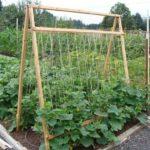
Trellis are used to train the vines. Greenhouse bushes are carefully tied at intervals of 30-50 centimeters. This training method makes harvesting convenient.
Disease prevention
Although the Klavdiya F1 variety is disease-resistant, it is susceptible to cucumber mosaic and powdery mildew. To prevent these diseases, it is recommended to spray the bushes with fungicides regularly.
Cucumber mosaic is a fungus that causes yellow spots on leaves and dry, mummified fruits. If one of your vines shows signs of cucumber mosaic, it's best to uproot it and treat the remaining vines with fungicides.
Reviews from experienced gardeners
Gardeners call the hybrid a consistently fruitful variety. To increase yields, many grow cucumbers in manure beds with raised edges.
According to gardeners, Klavdia F 1 is suitable for pickling and canning and can be stored fresh for a long time without losing its flavor.
Related posts:
 When to plant cucumbers in open ground in Siberia, how to grow them, and the best varieties
 Description of unusual methods for planting and growing cucumbers
 Description of the best varieties of Chinese cucumbers, planting, growing and care
 How to make a cucumber trellis with your own hands from scrap materials
 How to care for cucumbers in open ground from planting to harvesting
 How to properly plant cucumbers in open ground with seeds, and at what depth
 How to properly plant cucumber seedlings in a greenhouse and care instructions
 Description of the best, most productive and new varieties of cucumbers for 2025
What I like most about this variety is that the cucumbers don't taste bitter at all, even after severe drought. I don't need anything special for feeding or fertilizing; the seedlings grow quite quickly anyway.