
- Characteristics and description of Connie cucumbers
- The main advantages and disadvantages of the variety
- The nuances of growing a hybrid
- Soil requirements for planting
- Choosing a location
- The landing process
- Caring for the variety after planting
- Watering and fertilizing
- Diseases and pests
- Harvesting and storage rules
- Reviews from gardeners
Russian-bred cucumber varieties and hybrids are especially beloved and trusted by gardeners. They were developed by specialists with in-depth knowledge of weather and soil conditions, yielding good yields and adapting well to any region. Connie hybrid cucumbers are especially popular with gardeners. Let's look at the main characteristics of this variety and its cultivation.
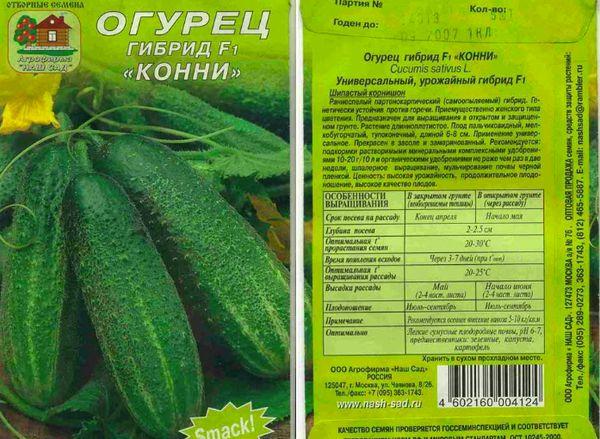
Characteristics and description of Connie cucumbers
The Connie F1 hybrid was developed at the end of the last century and included in the State Register. It is recommended for planting in all regions of the country. Breeders from the St. Petersburg Union of Seed Producers worked on this hybrid.
Gardeners are grateful to breeders for the Connie cucumber variety – it produces fruit beautifully in all regions and is little affected by the vagaries of the weather.
Hybrid characteristics:
- Fruit ripening begins 47-50 days after uniform germination. Connie is recommended for spring and summer cultivation in gardens and small farms. It is conveniently grown in unheated greenhouses and in the ground under plastic cover.
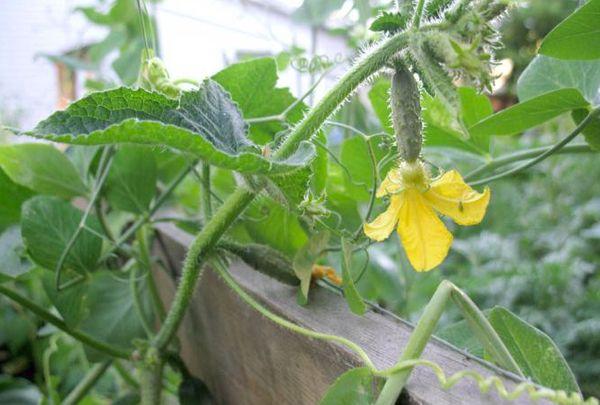
- The bush is vigorous, but without many lateral stems. After the ovaries have formed, it continues to grow. The leaves are bright, small, and slightly wrinkled.
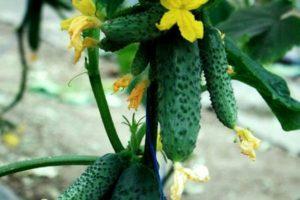
- Parthenocarpic – flowers are only female. Each node contains 3-9 ovaries, all of which form gherkins. No additional pollination is required.
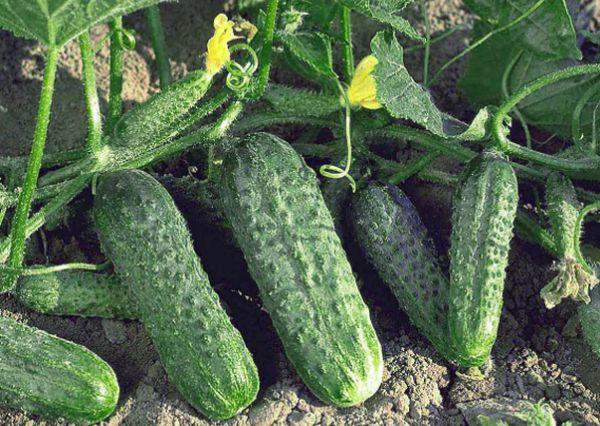
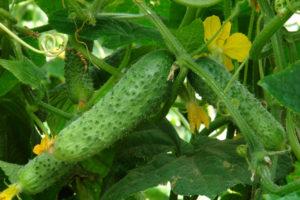
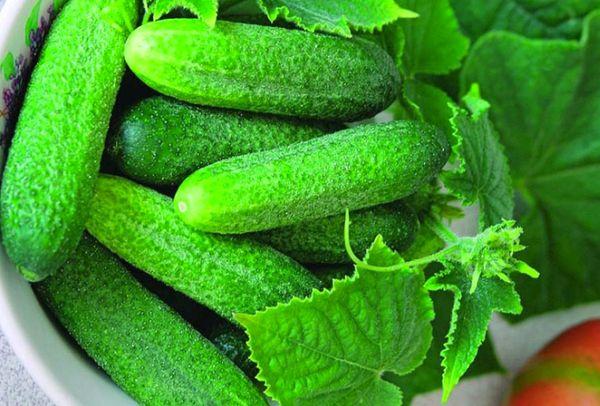
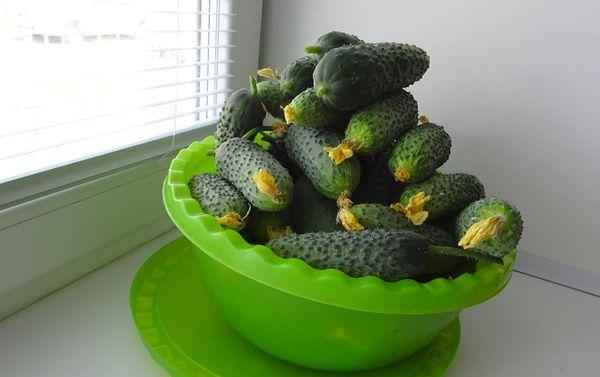
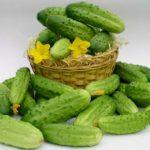
- The cucumbers are 8-10 centimeters long, brightly colored, and cylindrical. They weigh 80-100 grams. They are slightly bumpy and not prickly. They have a slight white pubescence. The flesh is fragrant and firm; the seed embryos have no hard shell, so they are not noticeable inside the cucumbers.
- Yield. Spring-summer harvest – 8-9 kilograms, seasonal – 13-16 kilograms.
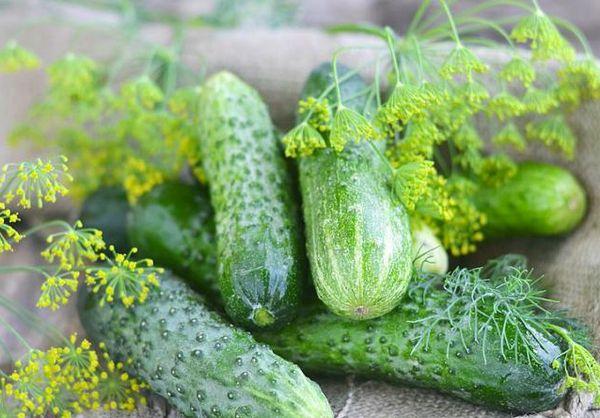
A remarkable quality of Connie's cucumbers is their lack of internal voids. This prevents them from filling with brine during pickling and canning, and they remain firm and crisp.
The main advantages and disadvantages of the variety
The description of the Connie hybrid cucumber matches the opinions of gardeners. Most Connie lovers note its low maintenance and good fruit quality. They highlight the following undeniable advantages:
- Long fruiting period, during which you can harvest up to 16 kilograms of cucumbers.
- The fruits are consistently small and even, with a node containing up to 9 cucumbers that are easy to collect.
- They have no bitterness, no internal holes, and the seeds are not felt while eating.
- They are good in any preparations and fresh.
- They can withstand any weather fluctuations.
- Do not require additional pollination.
- They rarely get sick – they are resistant to fungal root infections and powdery mildew, the main disease of cucumbers.
- The harvest is stored for a long time without loss of quality and tolerates transportation well.

Gardeners who prefer compact bush varieties complain about the need for trellises to grow Connie. Since the stem grows throughout the season, it requires care and support.
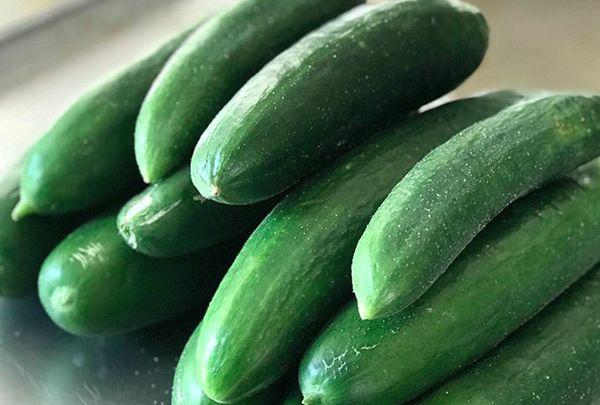
Some consider the small size of the fruit and its bumpy texture to be disadvantages. Some gardeners prefer long, smooth cucumbers, considering growing small fruits a waste of effort.
The nuances of growing a hybrid
Overall, the Connie hybrid requires adherence to standard agricultural practices. Let's take a closer look at the specifics of growing this popular variety.
Based on extensive experience planting cucumbers, most gardeners believe that Connie cucumbers are best planted in the central part of the country as seedlings. When sown in open ground, the growing season is longer, germination is weaker, and some seeds are lost.
Soil requirements for planting
Preparing the soil for planting Connie cucumbers:
- Remove the top layer of soil – up to 30 centimeters.
- Remove weeds, insect larvae, and debris from it, and lighten it with peat or sawdust.
- Place a fertile mixture of manure, peat, coniferous mixture, and sawdust on the cleared surface.
- Cover it with removed and processed soil.
These activities are carried out when the ground has thawed and warmed up, its temperature has risen to 15 °.
Advice: cover the area under the beds with dark film to warm the soil and protect against weed growth.
Choosing a location
Cucumbers prefer open, sunny areas that are shaded only for a small portion of the day. The beds should be oriented east to west for optimal sun exposure.
The location of the beds should be changed every year. When planting, follow crop rotation rules; the best predecessors are tomatoes, greens, beans, peas, and cabbage.
A significant amount of space is essential if the beds are laid out horizontally. When growing on trellises, remember that cucumbers grow well in one spot for 1-2 years. The soil in permanent greenhouses should be changed regularly to prevent crop decline.
The landing process
When using the direct-seeding method, the beds are prepared in advance (2-3 days) and the soil is warmed under plastic. For the Connie variety, the distance between the holes is 40 centimeters. The seeds are selected and tested for germination using salt water. Some gardeners plant already sprouted seeds in the soil.
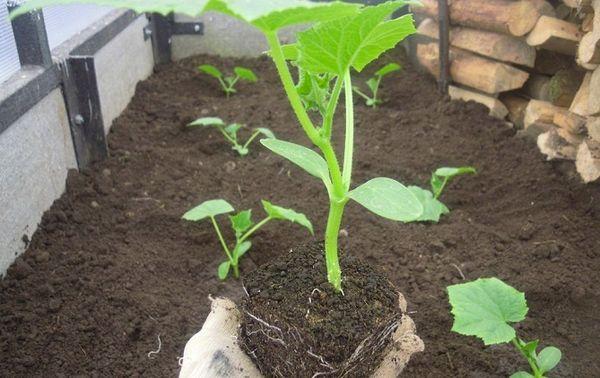
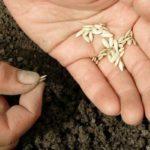
The seed is planted 2 centimeters deep; gardeners recommend planting 2-3 seeds per hole to ensure the best sprouts are left.
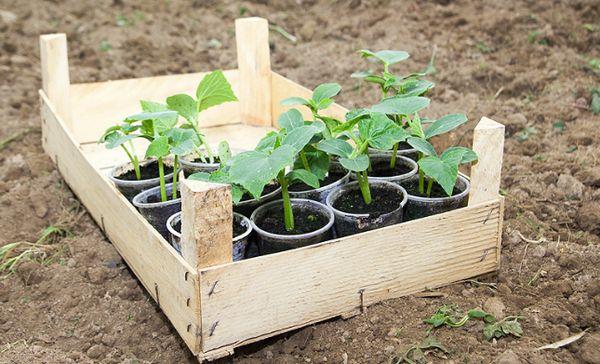
Seedlings are planted at the same distance: 40 centimeters between plants, 50 centimeters between adjacent rows if using double-row beds. The row spacing is 80 centimeters.
Young seedlings or sown seeds are covered with plastic film or a greenhouse, stretching the fabric or film over arches. The film is removed when the seedlings reach the surface, or if warm weather allows them to grow without insulation.
Tip: Tall sunflower and corn bushes planted nearby help protect young cucumber seedlings from the wind.
Caring for the variety after planting
Cucumbers require high humidity and regular watering. Only then will Connie produce the harvest promised by the breeders. A convenient way to grow the Connie hybrid is vertical beds, or trellises. The bush is easier to pinch, the cucumbers receive more light, are ventilated, and are always clean. Forming the bush significantly increases the yield.
Pinching is done in the first axils of 3-4 leaves. Removing excess shoots helps the cucumbers grow faster and promotes the formation of new ovaries.
Connie cucumbers grow best at temperatures of 25-30°C, so when grown in a greenhouse, avoid significant deviations from these parameters. In hot weather, ventilate the greenhouse by lifting the edge of the film or opening the transoms and vents.
An important element of care is weeding and removing weeds. Pests and diseases often spread to cucumbers from neighboring weeds. When growing cucumbers vertically, the soil under them should be mulched with organic materials to prevent drying out and the formation of a soil crust.
Watering and fertilizing
Connie cucumbers don't like excess water or drying out. Excessive soil moisture can cause root rot. Therefore, gardeners recommend watering sparingly.
After planting, cucumbers are not watered for several days to allow them to adapt to the new conditions. Subsequently, water every 2-3 days, once the fruit begins to set and grow, then water daily.
Cucumbers are watered with warm water that matches the soil and air temperature. Drip irrigation systems, which provide water without excess and ensure constant moisture, are available to help gardeners. The best time to water is morning and evening, so the moisture is absorbed into the soil rather than evaporated in the sun.
As a reminder, mulching helps conserve moisture and reduce the need for watering. Mulch should be regularly renewed, removing the top layer; it will act as fertilizer when loosened.
Fertilizing cucumbers can help increase their yield and facilitate plant growth. Follow this schedule:
- during the period of growth of the green part - nitrogen fertilizers, for example manure;
- during flowering – potassium, phosphorus;
- when growing cucumbers - complex mineral fertilizers.
You can use special fertilizers for cucumbers and chelates.
Diseases and pests
Connies are resistant to most diseases and pests, but the bushes should be checked regularly. Treating the soil with fungicides and copper sulfate before planting is a good protection. Seeds should also be treated with potassium permanganate before sowing.
If signs of pests appear – spider mites, aphids, or others – the cucumber bushes are sprayed with insecticides, diluted according to the instructions.
If the plant is affected by rot, spray it with fungicides; if the infestation is severe, remove it. The best method of control is preventative treatment once a month with a weak pesticide solution. Don't wait for an infestation to occur.
Harvesting and storage rules
Connie cucumbers should be harvested as soon as they reach 8-10 centimeters. This gives the plants the strength to set and grow new cucumbers.
The harvest is stored in the refrigerator. To prolong shelf life, the stems are left uncut and the cucumbers are not touched unnecessarily, protecting the bloom and bumps. For longer storage, the stems of the cucumbers are immersed in water.
Reviews from gardeners
The Connie hybrid has many fans among experienced gardeners. Here are some typical reviews of this cucumber variety.
Anna
"I've been growing the Konya variety on trellises for seven years now. The cucumbers are even, uniform, and don't overgrow. They're easy to jar; they're crisp and firm."
Ivan
"We tried the Connie cucumber variety this year, on a neighbor's recommendation. Previously, we planted bush cucumbers because we had limited space at the dacha. Compared to bush cucumbers, they yield a large harvest and last a long time. They're delicious for pickling."
Irina
"I've been growing Connie cucumbers on trellises for five years now, and we don't even change the location. I remove the top layer of soil and replace it with fresh soil. The cucumbers are small, don't turn yellow, and the seeds are almost invisible. It's an excellent variety; they're resistant to powdery mildew and don't require much care."
Most gardeners are satisfied with the quality of Connie hybrid cucumbers, their yield, and the ease of cultivation.
This hybrid has been grown in Russian gardens since the beginning of the century. During this time, it has gained many fans who enjoy planting Connie every year. The cucumbers' advantages are undeniable: high yields, a long fruiting period, and ease of care.
Related posts:
 Description of the best varieties of Chinese cucumbers, planting, growing and care
 Description of unusual methods for planting and growing cucumbers
 The best cucumber varieties for growing in polycarbonate greenhouses in the Moscow region, planting and care
 TOP 30 best determinate cucumber varieties with descriptions
 TOP 30 best varieties of cold-resistant cucumbers with descriptions and characteristics
 Description of the best, most productive and new varieties of cucumbers for 2025
 How to properly plant cucumbers in open ground with seeds, and at what depth
 How to care for cucumbers in open ground from planting to harvesting