
- When to plant cucumber seedlings in 2025
- Planting cucumbers according to folk beliefs
- Favorable and unfavorable days for planting according to the lunar calendar
- How does sowing time depend on the cucumber variety?
- How to properly sow cucumber seeds for seedlings
- Selecting high-quality seed material
- Seed preparation and stratification
- We decide on the soil composition and container for seedlings
- Technology and seed sowing density
- Caring for cucumbers after planting
- Watering
- Top dressing
- Shaping and garter
- Pest and disease control
- The best varieties of cucumbers grown in greenhouses near Moscow
- Chupa-Shchups F1
- Murashka F1
- Tumi F1
- Connie F1
- Masha F1
- Zozulya F1
- Tom Thumb F1
- Claudia F1
- Crispy Cellar F1
- Surprise
- White Angel F1
Success growing cucumbers in a polycarbonate greenhouse In the Moscow region, fruiting depends on many factors. For an early harvest of cucumbers, the timing of planting seeds for seedlings is crucial. The choice of variety is equally important. It determines the time and duration of fruiting, as well as the yield.
When to plant cucumber seedlings in 2025
The timing of planting seedlings depends on where the cucumbers will be grown: in a greenhouse, a hothouse, or in the open ground. Furthermore, the length of the growing season, which varies for each variety, also influences the timing.
Planting cucumbers according to folk beliefs
Few people know folk omens these days. They used to be respected. To prevent cucumbers from becoming bitter, they were planted on Wednesdays and Fridays.
It was believed that the cucumber season would be more successful if a man sowed the seeds.
There were also certain superstitions regarding planting times. It was believed that cucumbers should be planted when the apple blossoms had fallen, or when the dandelions were in full bloom. May 21st and 27th were considered good days. preparing cucumber seeds for planting They started on May 19, the day of Denis the Cucumber.
Favorable and unfavorable days for planting according to the lunar calendar
The moon influences all living things on Earth, including cucumbers. When it's in its growth phase, the flow of plant sap is directed upward. This promotes vigorous growth of the above-ground parts. Seeds planted at this time germinate more quickly.
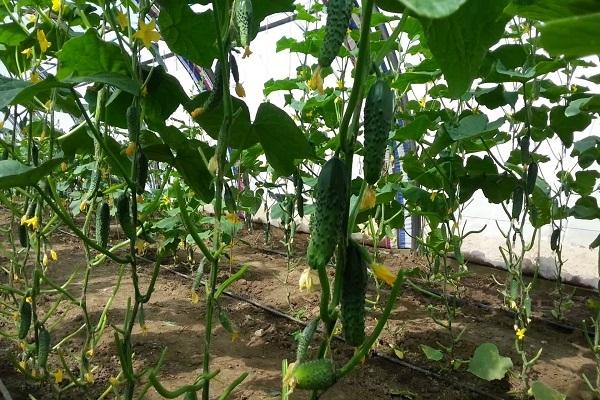
During the waning moon, sap moves to the roots. Cucumbers transplant more easily during the full moon. In 2025, greenhouse seedlings should be sown in March, when the moon is waxing. Lucky days are March 10, 11, 12 (Moon in Taurus) and March 15, 16 (Moon in Cancer).
For an earlier cucumber harvest, seeds can be sown in February. Favorable days are during the waxing moon in Taurus, Cancer, and Pisces, and during the waning moon in Scorpio: 7th-8th, 11th-13th, 16th-17th, 24th-25th.
How does sowing time depend on the cucumber variety?
Each variety has an important characteristic—its ripening period. Using this information, you can calculate the optimal time for planting seeds for seedlings. Early cucumbers ripen in 32-40 days, mid-season cucumbers in 40-50 days, and late cucumbers in 50-70 days.
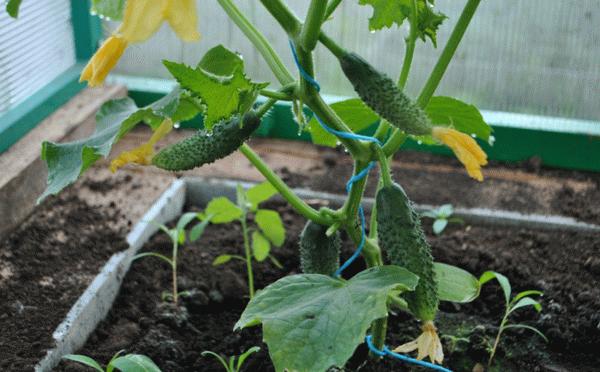
Knowing this and the age of the seedlings ready for transplanting (25-30 days), calculate the cucumber planting time. Subtract 32+25, 40+25, or 50+25 from the estimated harvest date. For example, to harvest the first cucumbers on June 15, early cucumbers should be sown for seedlings on April 18, mid-early cucumbers on April 10, and late cucumbers on April 1.
How to properly sow cucumber seeds for seedlings
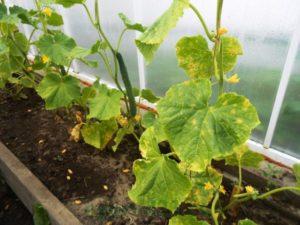
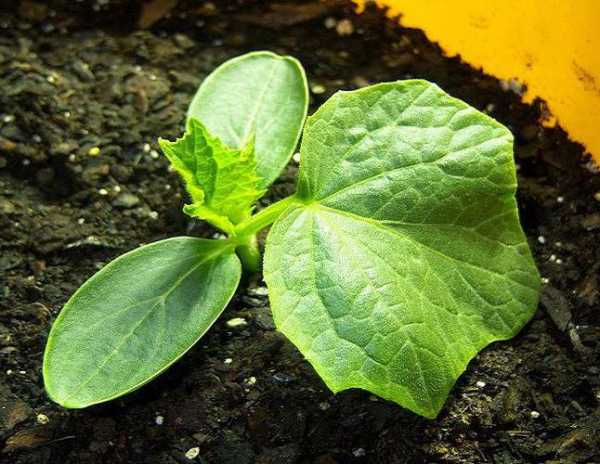
The quality of the seedlings is indicated by the stem thickness, leaf color, and the development of the root system. Not everyone succeeds in growing strong seedlings for greenhouses. It's important to know some of the specifics of growing cucumber seedlings.
Selecting high-quality seed material
When purchasing seeds, read the description carefully. It's best to choose those marked as treated. They don't need to be soaked in a potassium permanganate solution before sowing; they've already been treated with a fungicide. Always check the expiration date, as it determines the germination rate of cucumbers.
Seed preparation and stratification
Seeds can be a source of infection. To eliminate this possibility, disinfect them before planting by soaking them for 15-20 minutes in a strong solution of potassium permanganate. Then rinse them in plain water and wrap them in a damp cloth.
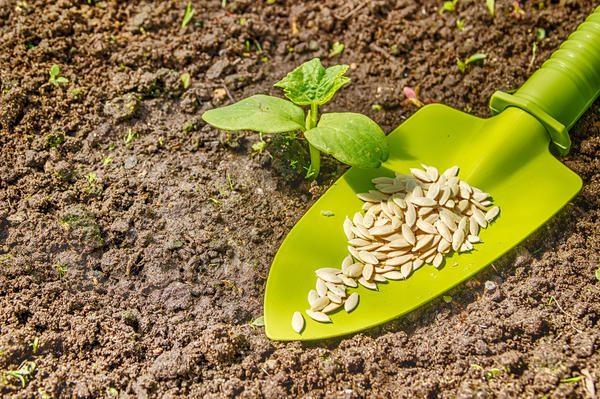 To harden, place cucumber seeds in the refrigerator for 24 hours.There they undergo stratification. Cucumbers grown from hardened seeds are less susceptible to temperature fluctuations.
We decide on the soil composition and container for seedlings
The soil should be loose and nutritious, so to prepare the potting mix, in addition to sod, use peat, sawdust, and humus. Use one part of each component. Mix everything thoroughly before filling the planting containers.
The soil mixture is prepared in advance. It must be disinfected before planting:
- water with a solution of potassium permanganate;
- water with Fitosporin M solution;
- Heat at 70°C for 30 minutes.
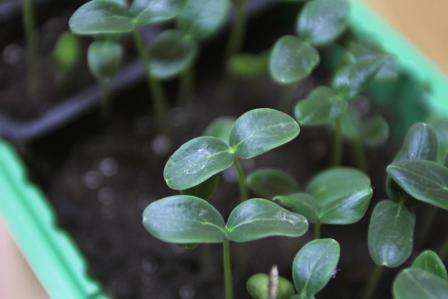
Cucumber seedlings have a hard time transplanting and are prone to disease, so it's best to sow them in individual containers. 500 ml disposable plastic cups are suitable. For growing large quantities of seedlings, consider purchasing peat pellets.
Technology and seed sowing density
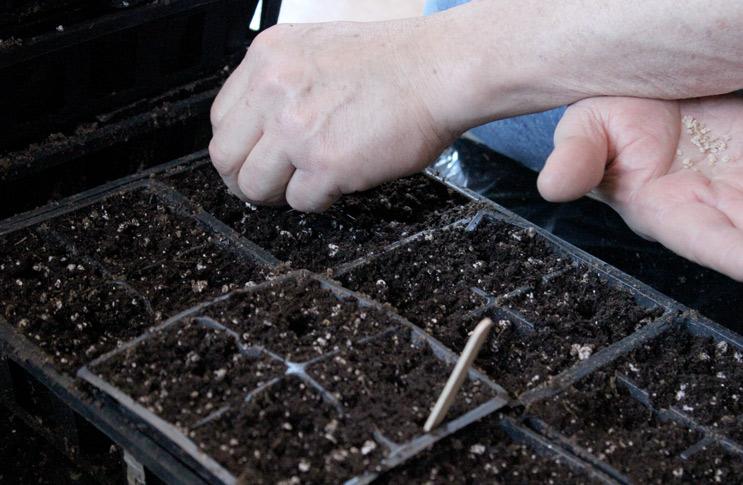
The container needs to be prepared for planting. Puncture the bottom to allow excess water to drain. Eggshells can be used for drainage. Fill the cups with potting mix, but not quite to the top. Top up the soil later, once the seedlings have grown. This technique will allow additional root volume to form on the stem.
Sow two seeds in each cup. If both sprout, pinch out the weaker plant at the second true leaf stage. Plant cucumbers in the greenhouse when they are 25-30 days old. Monitor the soil temperature. It should not fall below 12°C.

A week before transplanting, add humus (8-10 kg/m²) and store-bought fertilizers to the greenhouse soil:
- superphosphate 2 tbsp. l.;
- potassium nitrate 1.5 tbsp;
- 1 tbsp urea
Drill the holes according to the recommended pattern, which is indicated on the seed packet. It's best to plant cucumbers spacingwise, spacing them 3-4 per square meter. When forming a single-stemmed bush, the optimal spacing is 30 cm.
Caring for cucumbers after planting
Caring for greenhouse cucumbers involves more than just watering and fertilizing. Maintaining an optimal microclimate is essential for good cucumber growth. During the first few days after transplanting, the seedlings can be covered with a protective material. This will protect them from the bright sun during the day and from low temperatures at night.
Watering
Before fruiting begins, cucumbers are watered twice a week on moderately warm days, and three times a week in extreme heat. During fruit formation, water every other day, using 10 liters of water per square meter. Drip irrigation can reduce labor costs.
During the period of mass flowering, the frequency of watering should be reduced.
Experienced gardeners believe this prolongs the fruiting period and improves fruit set. Both positively impact the yield.
Top dressing
There's a wide selection of fertilizers available. You can use two- and three-component mineral fertilizers, complex fertilizers, grass seed, manure, chicken manure, and ash. Three applications per summer are sufficient for normal fruiting.
Shaping and garter
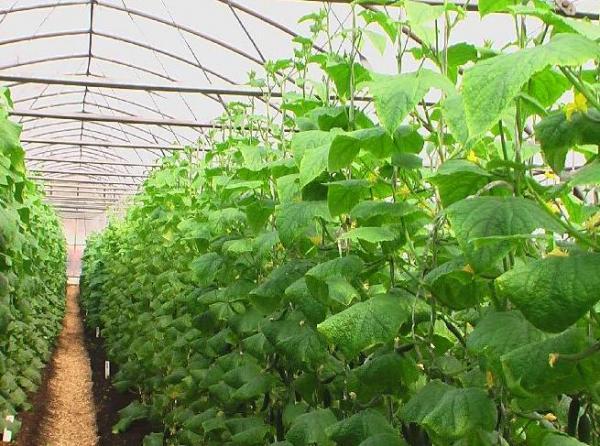
In a greenhouse, cucumbers are grown on a trellis. Wire is stretched between two supports, or a slat, pipe, or profile is attached. A piece of twine is tied above each cucumber plant. A small stake is tied to the bottom of the string and driven into the edge of the hole.
As the stem grows, it is wrapped around twine. The bush formation pattern depends on the variety. cucumbers of the parthenocarpic type are blinded The lower 4 axils. Further, up to a height of 1 m, one ovary is left in each axil, and the side shoots and leaves are pinched off.
On a 1 to 1.5 m stem section, leave two ovaries at each node and pinch the shoot after the second leaf. At 1.5 m and above, leave shoots with three to four ovaries at the nodes. The crown of the shoot, reaching the top of the trellis, is thrown over the wire. The growing point is pinched at 1 m from the ground.
Pest and disease control
In greenhouses in the Moscow region, cucumbers are susceptible to fungal diseases.Root rot is one of the most common. It is caused by:
- watering cucumbers with cold water;
- temperature changes (day, night);
- over-watering of the soil.
The stem first turns brown, then becomes rotten, the leaves wither and fall off. The plant is restored by increasing the greenhouse temperature and encouraging new root formation. The stem is partially lowered to the ground and covered with soil.
During temporary cold spells and high humidity in the greenhouse, an epidemic of other fungal diseases may break out: powdery mildew, brown spot.
Fungus is controlled with a 5% Bayleton preparation, 1% Bordeaux mixture, ventilation of the greenhouse, reduction of humidity, and maintaining the air temperature at least 19°C.
The best varieties of cucumbers grown in greenhouses near Moscow
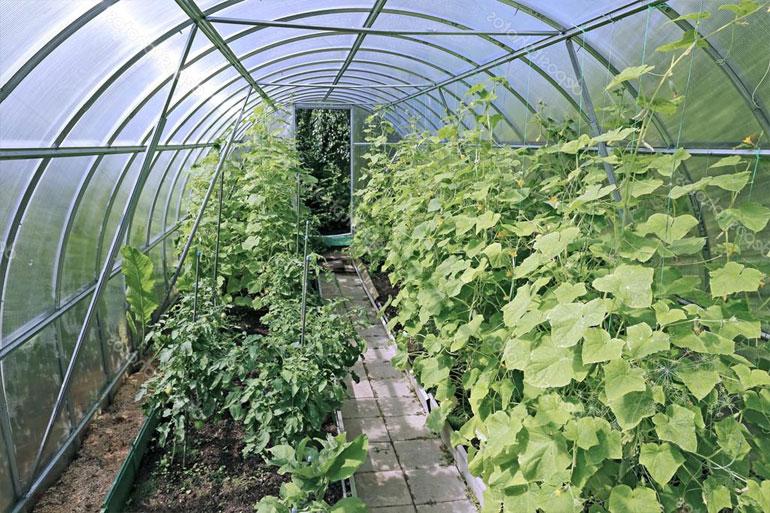
Gardeners are debating which cucumbers are best. Some prefer specific varieties, while others opt for hybrids. Below is a selection of cucumber varieties and hybrids for protected soil grown in the Moscow region.
Chupa-Shchups F1
A new, early-ripening (43-48 days) parthenocarpic hybrid. Chupa-Shchups seeds are sown early in the greenhouse; it is a cold-hardy plant. The average yield is 10 kg/m². The small (4-5 cm) cucumbers have a unique round shape and light green skin. The fruit is versatile.
Murashka F1
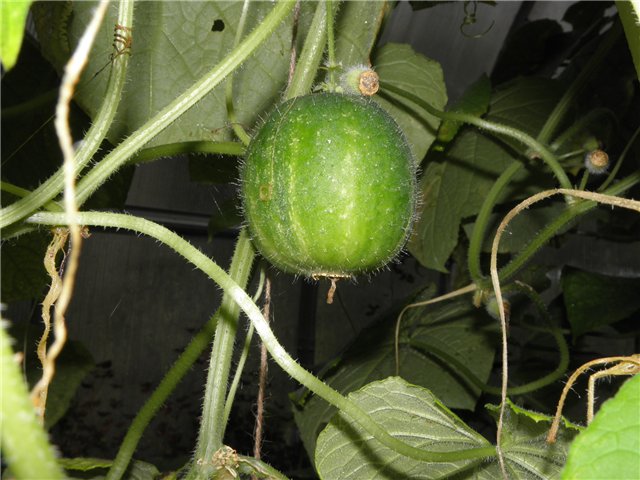
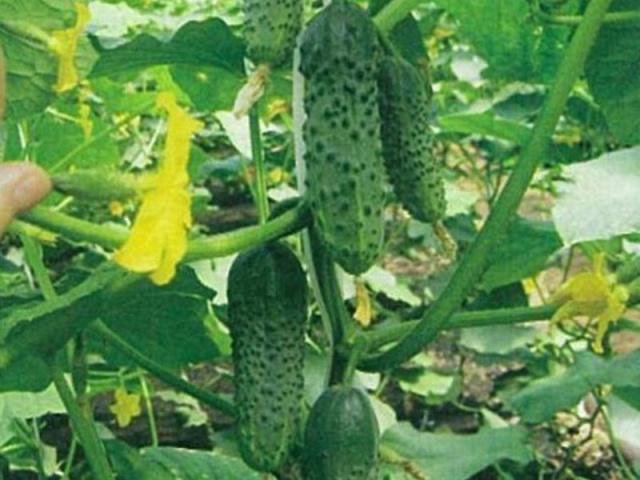
An early parthenocarpic hybrid (38-45 days) with cluster-type fruiting. Three to six ovaries form in a cluster. Lateral shoot growth is moderate, making it easier to care for. In a greenhouse near Moscow, Murashka F1 bears fruit until mid-September. Yields 12 kg/m² indoors. Fruit characteristics:
- weight 90-100 g;
- cylindrical shape;
- the skin is bumpy with slight pubescence;
- black thorns;
- the color is dark green, light green, there are lighter longitudinal stripes;
- length 7-10 cm.
Tumi F1
The bushes require shaping. Lateral shoots grow vigorously. The fruits are smooth, uniform, dark green, gherkin-type, with a large, tuberculate surface and white spines. Each cucumber weighs 120-150 g and is 15 cm long. Suitable for salads. Yield: 20 kg/m². Fruiting is early.
Connie F1
A mid-early (47-50 days) parthenocarpic hybrid. Yields 9-16 kg/m². Universal use. Fruiting is cluster-type. Each cluster contains 3-9 ovaries. The gherkin fruits are short (7-9 cm), cylindrical, and weigh 60-80 g. Bitterness is absent. The skin is bright green, finely tuberculated. The flesh is firm. Cucumbers Connie F1 Suitable for all types of workpieces.
Take a look Also

Masha F1
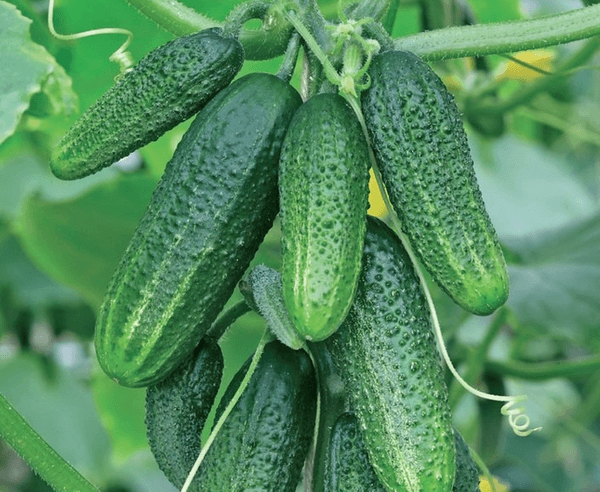
This productive parthenocarpic hybrid is very popular with farmers. It is grown for early sales. The harvest takes 40-45 days to mature. In greenhouses, Masha grows and produces fruit until autumn. Cucumbers weigh 100 g, are 10 cm long, and 3.5 cm in diameter. They are cylindrical in shape. The skin is dense, dark green with light stripes, and is ridged. It is suitable for all-purpose use. Yield is 11 kg/m².
Zozulya F1
A time-tested early hybrid (42-48 days). Zozulya should be paired with a pollinator variety with male flowers. This increases the yield, reaching 15-20 kg/m². The fruits have a long shelf life. They are versatile and large:
- length 15-25 cm;
- weight 160-300 g;
- color dark green;
- The pulp is dense, tender, the skin is thin and coarsely tuberculated.
Tom Thumb F1
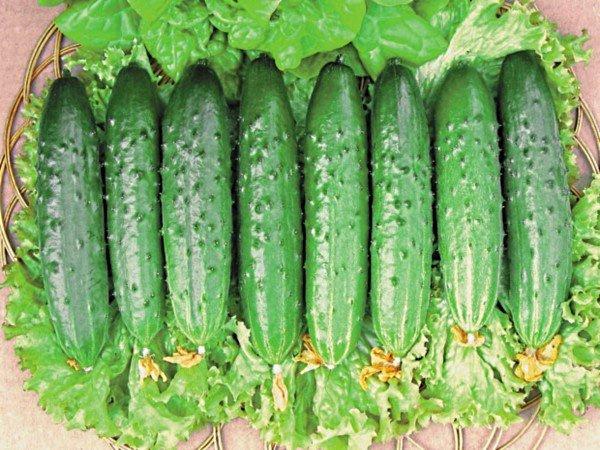
An early hybrid variety of gherkin cucumber for general use. It begins bearing fruit on the 40th day. The plant is parthenocarpic and produces clusters of 5-6 ovaries per cluster.
The cucumbers are 10 cm long, 3-4 cm in diameter, and weigh approximately 90 g. The surface is bumpy, the spines are white, and the color is dark green. Advantages:
- one-dimensionality of fruits;
- absence of bitterness;
- crispy in salting.
Claudia F1
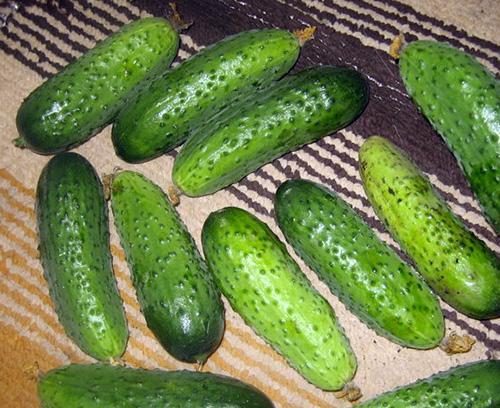
A mid-season (50 days) parthenocarpic hybrid. No sterile flowers. Yield in greenhouses is 20 kg/m². General-purpose. Fruit characteristics:
- dimensions 3 (3.5) x 9 (12) cm;
- weight 80 g;
- the skin is slightly pubescent, finely tuberculate, with a uniform color without light stripes;
- there is no bitterness.
Crispy Cellar F1
A versatile hybrid, early maturing (43-48 days), pollinated by bees. The cucumbers are cylindrical, tapering at one end. The length of the fruit is 9-11 cm, weighing 90-100 g. The skin is coarsely tuberculated, green with light stripes, and the spines are brown. Yield is 15-17 kg/m². Crispy Cellar is grown for pickling.
Surprise
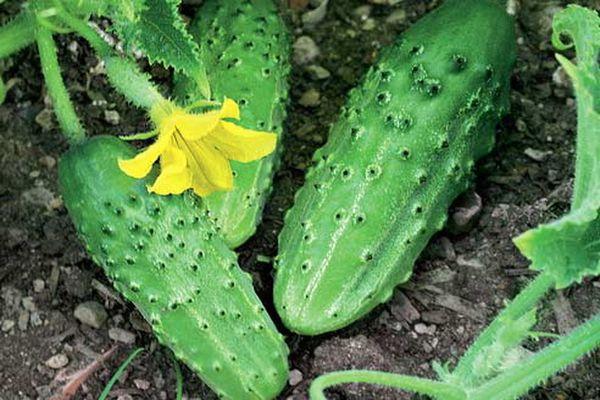
A vigorous hybrid. The central stem grows over 2.5 m per season. The salad-grade cucumbers are cylindrical with slightly wrinkled, bumpy skin. The cross-section of the fruit is rounded to triangular.
The average cucumber weight is 110-112 g, and its length is 14-18 cm. This hybrid is bee-pollinated. Yields are 12-13 kg/m². It bears fruit late. Greenhouse cucumber harvesting begins on the 90th-100th day. They are used fresh. Surprise is grown for late-summer consumption.
White Angel F1
A parthenocarpic hybrid with cluster fruiting. The first cucumber harvest occurs in 45-50 days. The skin of the fruit is white and sparsely pubescent, with an average weight of 90-100 g and dimensions of 3 (3.5) x 7 (10) cm. The flesh is loose, slightly sweet, and may taste bitter.
In a greenhouse, it's important to harvest green fruits on time. When fruits become overgrown, their flavor deteriorates. Having overgrown fruits negatively impacts the plant's immunity and the quality of the harvest.
Related posts:
 Description of the best varieties of Chinese cucumbers, planting, growing and care
 TOP 30 best varieties of cold-resistant cucumbers with descriptions and characteristics
 TOP 30 best determinate cucumber varieties with descriptions
 Description of unusual methods for planting and growing cucumbers
 Top 50 Best Cucumber Varieties for Polycarbonate Greenhouses with Descriptions
 The best cucumber varieties for open ground in the Moscow region and their cultivation
 Description of the best, most productive and new varieties of cucumbers for 2025
 35 Best Powdery Mildew-Resistant Cucumber Varieties with Descriptions