
- Causes of pale leaves and seedlings
- In open ground
- In the greenhouse
- Factors causing pale foliage
- Violation of agricultural conditions
- Low temperatures and frosts
- Sharp fluctuations in temperature
- Lack of mineral elements in the soil
- Poor watering
- Poor pollination
- Plant overload with ovaries
- Insect or infection damage: methods of control
- Fusarium wilt or fusarium
- Downy mildew (peronosporosis)
- Insect pests
- Melon aphid
- Spider mite
- How to feed cucumbers with light green leaves
- Nitrogen-potassium fertilizers
- Mineral mixtures
- Microelements
- Complex fertilizers
- What to do for prevention
Healthy cucumber vines are green, but what should you do if your cucumber leaves are turning pale? Leaf discoloration is a common problem, but to successfully combat it, you need to identify the cause. By adjusting the cucumber growing conditions, fertilizing the plants, implementing disease prevention, and, if necessary, providing the necessary treatment, the gardener will reap the reward—a bountiful harvest.
Causes of pale leaves and seedlings
What causes foliage to change color to light green? Are these changes different for vines grown in greenhouses and those grown in the open ground?
In open ground
If you rush to plant cucumber seedlings in open ground before the soil has warmed up enough, the leaves may turn pale and fall off. To solve this problem, create a portable greenhouse—a temporary frame covered with plastic. Leave it there until the soil warms up.
In the greenhouse
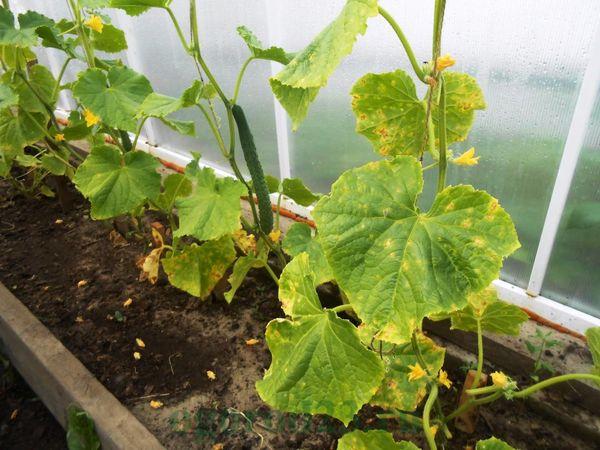
Cucumber seedlings planted in a greenhouse may become diseased, turn pale, and dry out if disease spores were present in untreated soil. Therefore, it is recommended to disinfect the soil, the greenhouse itself, and gardening tools in advance.
Factors causing pale foliage
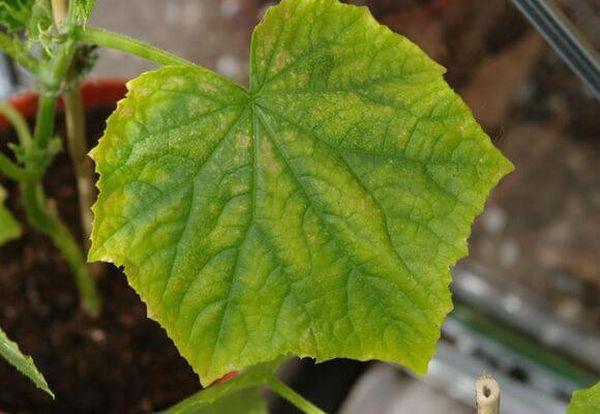
A pale green color in plants appears due to both diseases and improper care and failure to comply with the conditions for planting and growing cucumbers.
Violation of agricultural conditions
Cucumber seedling leaves often turn lighter due to lack of light. This can be remedied by simply moving the seedlings to a brighter location or using supplemental lighting. Direct sunlight will also cause damage.
The tops turn light green if the plants are exposed to drafts. Growing cucumbers in a greenhouse will help ensure the right temperature, no drafts, and adequate ventilation.
Low temperatures and frosts
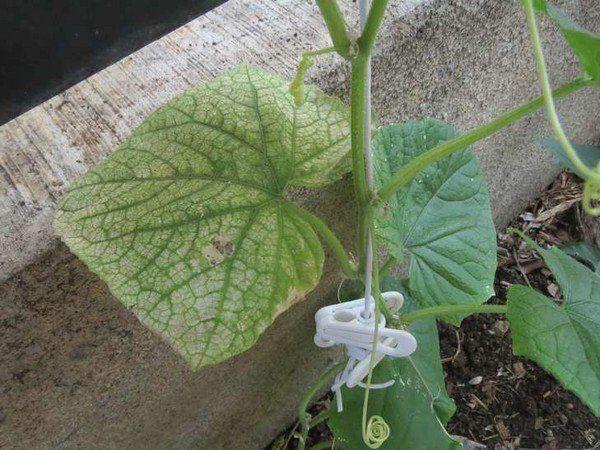
During a sudden cold snap, individual sections of the leaf blade may turn pale or even become completely discolored. Damaged leaves and shoots are removed.
Sharp fluctuations in temperature
Daily temperature fluctuations can cause leaves to turn pale. If nights are cool but days are warm enough, cover the plants with plastic.
Lack of mineral elements in the soil
A deficiency of various elements necessary for plant life can be determined by changes in the appearance of cucumber vines:
- Iron. Iron deficiency causes pale leaves due to disrupted photosynthesis. The pale leaves subsequently dry out at the edges if the problem is not addressed. Iron deficiency does not affect cucumber yield.
- Nitrogen. Nitrogen deficiency manifests itself as follows. Cucumber leaf blades take on a pale yellow tint, while the veins remain green almost until the leaf falls. Not only the leaf color suffers, but the entire plant suffers: inflorescences fall off without forming ovaries, lateral shoots develop weakly, and fruits develop with pointed ends.
- Potassium. A yellowish, then brownish, tint to the foliage and its shrinking indicate a potassium deficiency.
- Calcium. Calcium deficiency doesn't affect mature foliage, but new leaves emerge small and an excessively dark green. As they mature, they lose their dark color and turn pale from the center to the edges. This process doesn't affect the veins. The pale areas of the plant's leaf die, and the edges curl downward.
- Phosphorus. Phosphorus deficiency stops cucumber vine growth. The plant no longer stretches, the leaves become smaller, stiff, and develop light green streaks, and then fall off.
- Manganese. Light spots appear on the leaf blade, the tissue near the veins turns yellow, and the edges take on an orange tint.
- Copper. If the entire cucumber vine becomes wilted, and the upper part of the leaf becomes lighter or even completely discolored, the plant is deficient in copper.
Poor watering
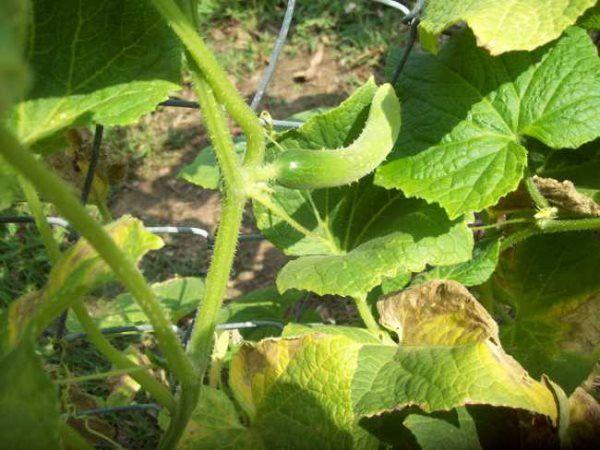
Cucumbers are moisture-loving vegetables. If they're not watered enough, the leaves may turn pale and wilt. Excess water isn't beneficial either; excess moisture can cause the plants to become diseased.
It's best to avoid cold water for watering, as it can also cause the foliage to turn lighter. It's best to water cucumbers with warm, settled water.
Poor pollination
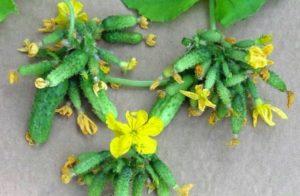
Insufficient pollination of cucumbers This can cause foliage discoloration. This problem is most common in greenhouses and hothouses, where insects have no access to the flowers. In this case, specialized pollinators are used or measures are taken to attract insects.
Plants are sprayed with solutions of purchased preparations or boric acid regularly using a spray bottle.
To encourage insects to pollinate cucumber flowers in a greenhouse, dill or honey plants are planted inside—a few bushes are enough. These will attract flies and bees to pollinate the cucumbers.
Plant overload with ovaries
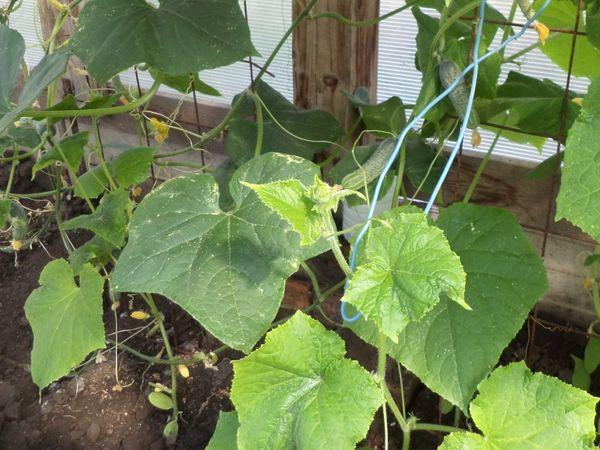
The idea that leaving as many buds as possible is fundamentally wrong to maximize yield. To ensure optimal yield, excess buds are pinched evenly, leaving approximately 20 per plant. If there are too many buds, the vine loses vitality and turns pale.
Insect or infection damage: methods of control
Pests and diseases are common causes of leaf blanching. Temperatures below 15 degrees Celsius and excess moisture promote fungal infections.
Fusarium wilt or fusarium
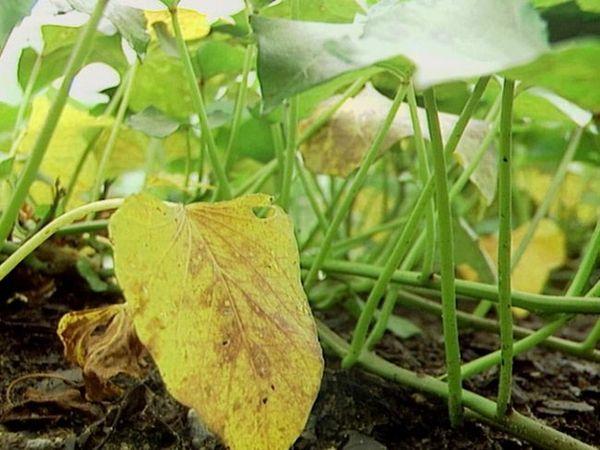
This fungal disease affects the roots and vascular system of cucumbers. The foliage becomes lighter, sometimes turning pale yellow and watery. Antifungal medications are used for treatment, but they are often ineffective. The best way to combat the disease is timely prevention and disinfection.
Downy mildew (peronosporosis)
The name suggests that the symptoms of the disease resemble those of powdery mildew. A coating also appears on the leaves, but while with powdery mildew it is white and flour-like, with downy mildew the coating is yellowish on top and grayish underneath, and the spots eventually darken. If left untreated, the disease will lead to leaf deformation and drying.
Causes of the disease:
- excess moisture;
- changes in air or irrigation water temperature.
Methods of control:
- reducing the amount of watering;
- removal of damaged foliage;
- spraying the plant with special solutions.
Insect pests
Color changes are often caused by insect pests. To combat them, a range of agricultural practices are used that not only promote vine development but also increase the cucumbers' resistance to damage. If insect infestations are numerous, chemical treatments are used, but this should be done no later than a month before harvest.
Melon aphid
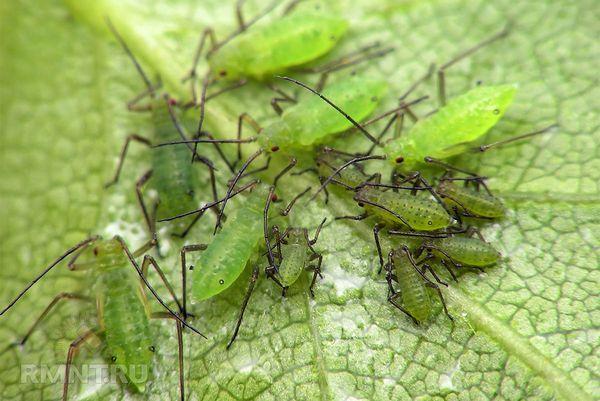
Melon aphids can be detected by turning a leaf over; the insects are visible to the naked eye. To get rid of aphids, wash the plant leaves with a soapy solution and spray them with herbal infusions.
Spider mite
The foliage first turns pale, then yellow, and then dries out. The underside of the leaf blade is covered in webbing. Plants infested with spider mites require treatment with specialized products. Folk remedies include dandelion and wormwood, either as a decoction or infusion.
How to feed cucumbers with light green leaves
For safety and nutritional reasons, many prefer organic fertilizers such as manure and compost. Store-bought fertilizers should be prepared strictly according to the instructions, as too much nutrient solution can harm a weakened plant.
Nitrogen-potassium fertilizers
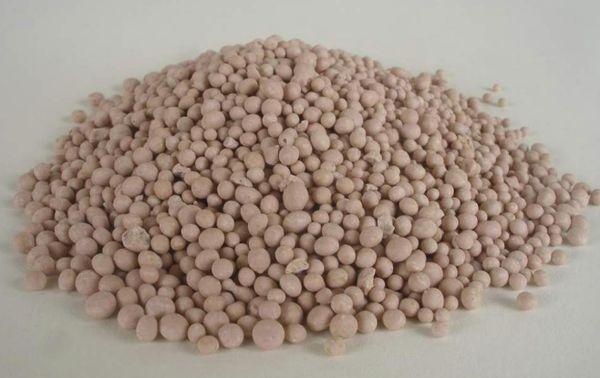
Potassium nitrate is used for root and foliar feeding throughout the season. This helps replenish the nitrogen and potassium deficiencies that cause the foliage to turn pale. It's important not to overfeed the plant, as this will negatively impact its growth.
Mineral mixtures
Mineral mixtures will replenish the nutrients that cause the leaves to become light-colored. Fertilizing is done through root and foliar feeding. Mineral mixtures are fed several times according to a specific schedule.
Microelements
There are mixtures that contain only micronutrients, or micronutrients are included in complex fertilizers. Micronutrients, along with vitamins and enzymes, act as catalysts for plant reactions.
Complex fertilizers
Complex fertilizers are convenient because they provide all the necessary nutrients at once. You can make this fertilizer yourself by mixing various components, or you can purchase it ready-made.
What to do for prevention
It's always easier to prevent a problem than to treat it. For some cucumber diseases that cause pale foliage, it's impossible to cure the plants at all.
What preventative measures can be taken:
- Site selection. Experienced gardeners know that vegetable crops rotate year after year, with favorable and unfavorable predecessors. It's not recommended to plant cucumbers in areas previously occupied by squash or pumpkins to avoid fungal diseases.
- Watering. Regular watering of the beds is essential for the viability of cucumber vines.
- Mulching. If frequent watering is not possible, mulch the soil using cut weeds or grass. A layer of mulch will prevent water from evaporating, provide nutrients to the plants, and keep the roots warm.
- Fertilizers. Regular fertilization not only nourishes the bushes but also protects them from pests.
- Spraying. Cucumbers can be sprayed with a solution based on laundry soap (20 g of soap, 1 liter of milk, 30 drops of iodine per 10 liters of water) or a regular loaf of bread (soak the bread overnight in a bucket of water, knead it in the morning, and mix it with a small bottle of iodine). Spray every 10 days, the first time after the sprout has 3-4 leaves.
- Disinfection. Before planting cucumbers, disinfect the soil, greenhouse, and tools.
Pale cucumber leaves indicate that all is not well with the plant. It's important to recognize this signal promptly and respond to it. Identifying and eliminating the cause, whether disease, pests, or unfavorable conditions, is a gardener's top priority to ensure a successful harvest.
Related posts:
 Why do cucumber leaves curl inward and what to do about it?
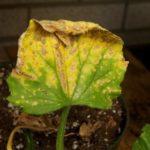 Why cucumber leaves are drying out and what to do, how to treat them in a greenhouse and in the ground
 Why are cucumber leaves turning yellow on the windowsill? What to do and how to treat them?
 Description of unusual methods for planting and growing cucumbers
 How to care for cucumbers in open ground from planting to harvesting
 Reasons why cucumber leaves turn yellow and what to do, how to treat and feed them
 Is it possible to soak treated cucumber seeds before planting and how to do it correctly?
 Description of the best varieties of Chinese cucumbers, planting, growing and care