
Cucumbers and tomatoes are considered the most popular vegetables. One of the most popular is the Liliput f1 cucumber. It boasts several growing advantages and excellent taste.
The Liliput variety is a hybrid. It was developed in 2007 by the renowned agricultural firm Gavrish. Breeders attempted to combine the best qualities of the vegetable crop in the Liliput variety.
The hybrid has its own specific agricultural practices. It's important to familiarize yourself with them in advance to avoid any problems during cultivation. Achieving a good and bountiful harvest is not difficult at all if you grow vegetables and care for the plants properly.
Description of the variety
The Liliput cucumber variety is an early-ripening hybrid. It is intended exclusively for indoor cultivation, that is, in greenhouses and hotbeds. The growing season lasts from 38 to 42 days. A distinctive feature of this variety is that it does not require pollination. This group of vegetables is considered parthenocarpic.

The bushes grow to a medium size, with well-developed branches. The inflorescence on the plant appears with female flowers. The ovaries are set in clusters. Three to ten ovaries can form in each leaf axil. The foliage is medium-sized, dark green, and sparsely fills the bush.
The Liliput cucumber variety has excellent characteristics. Although the plant requires regular picking of ripe fruits, the cucumbers themselves do not tend to overgrow, become rounded, or turn yellow. Pick the gherkins from the bush every other day. Small pickles are harvested daily.
The hybrid boasts strong immunity to various fungi and viruses. It is resilient to extreme weather conditions. The plant is capable of producing a good and abundant harvest during short droughts and even during rainy periods. Thanks to its rapid ripening process, the crop is not susceptible to fungal infections.
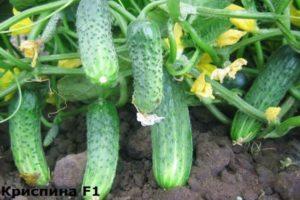
Characteristics of fruits
The Liliput variety of cucumbers has the following description:
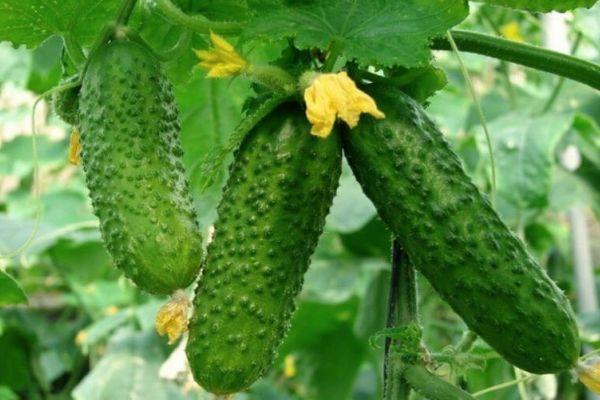
- The fruits are cylindrical in shape, with a tapered tip.
- The length of one cucumber is on average from 7 to 9 cm.
- One cucumber weighs on average from 80 to 90 g.
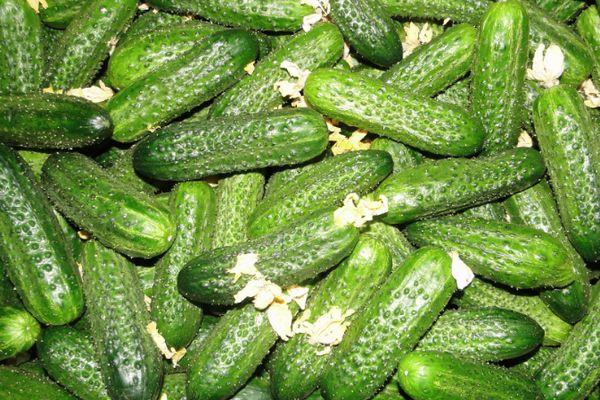
- The skin is not thick, but dense, and has small bumps on the surface.
- The cucumbers' color is uneven. Each fruit has a gradient coloring, transitioning from a light green crown to a dark green tail. Short white stripes are visible on the surface. The top of the cucumber also remains white.
- The Liliput variety has excellent flavor. The flesh is juicy and aromatic. The small fruits are perfect for pickling and preserving whole. They are also used in a variety of vegetable salads.
- The Liliput variety has a high yield. On average, 10 to 11 kg of fruit can be harvested per square meter.
- The cucumbers tolerate transportation well and retain their marketable appearance for a long time.
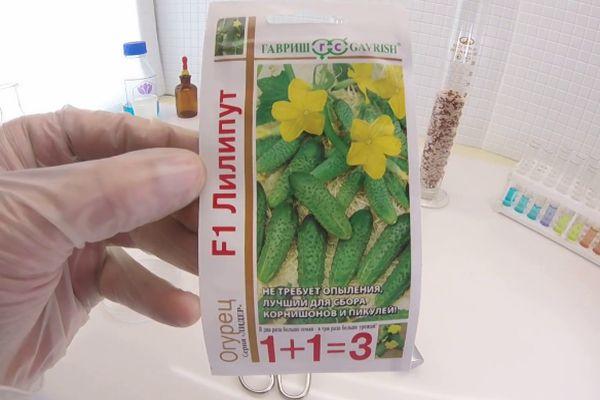
Growing rules
The seeds are planted in pre-prepared soil. It is fertilized with organic fertilizers, such as compost or manure. The soil should be loose and nutritious, so that the seeds will quickly produce new shoots.
Before sowing, gardeners prefer to treat the seeds with a weak solution of potassium permanganate and a growth stimulant.
A potassium permanganate solution disinfects planting material and improves its resistance to fungi. The seeds are soaked in the solution for no more than 2-3 hours. They are then allowed to dry naturally.

A growth stimulant helps activate seeds and produce strong, vigorous shoots. The solution slightly accelerates the germination of young seedlings. The seeds are soaked in the solution for 1 hour. Afterwards, they must be dried in sunlight.
Immediately before planting, the beds are dug up and holes made no more than 3-5 cm deep. The holes are then covered with soil and lightly compacted.

The distance between holes should remain at least 40 cm, and between rows - about 50 cm.
The temperature in the greenhouse should be no lower than 18°C. It's important to monitor the humidity in the greenhouse. Excess moisture can cause mold and mildew growth. To prevent this, the room must be ventilated and the temperature regulated.
Ten days after planting the seeds, the beds need to be fertilized. For this purpose, it's best to use specialized complex fertilizers. These contain a whole range of minerals and microelements that have a beneficial effect on the development of vegetable crops.
Further plant care is also important. It will ensure a rich and bountiful harvest.
The rules of care are as follows:
- Water the beds regularly. It's best to use warm, settled water. It's best to water cucumbers in the morning or evening.
- The holes need to be loosened regularly. This will improve oxygen circulation in the soil and prevent moisture stagnation.
- Regular weeding of the beds is essential. Excess grass and weeds deplete the soil and prevent the plants from developing fully.
- Many gardeners recommend treating plants and soil against pests and fungi at least twice a season. For this purpose, you can use ready-made products available at gardening stores or resort to folk remedies. Wood ash is used to disinfect soil and plants. It is used to prepare solutions and water the beds, and spray the bushes. A manganese solution can also be used, but it is recommended to apply it to the soil according to a specific schedule. A saline solution is also effective in controlling pests.
 The Liliput cucumber variety doesn't have very long branches, but to make it easier to weave them and shape the bush itself, it's necessary to install a special trellis or net next to the bed.

Experienced vegetable growers highly rate this cucumber variety and leave positive reviews, noting its high resistance to fungi and good yield.
Related posts:
 How to plant grapes step by step, with a description of the process and care
 How to properly plant peas in a greenhouse and open ground
 How to control onion flies using natural and chemical methods
 How to propagate and grow peas, cultivation technology, and care in open ground
 Description of varieties of sowing peas and cultivation, to which family they belong
 Growing and caring for almonds, planting and pruning rules at home
 How to combat powdery mildew on onions using folk and chemical remedies
 13 Best Peach Varieties for Central Russia, Planting and Care