
- General description and characteristics of bush cucumbers
- Advantages and disadvantages
- Varieties of bush cucumbers
- Among the varietal options
- Bushy
- Microsha
- Bush gift
- Hybrids
- Baby F1
- Ant F1
- Shorty F1
- Features of agricultural technology
- How to care for bush cucumbers
- Diseases and pests
- Reviews from experienced gardeners
Cucumbers grow in every garden plot. Growing this beloved vegetable requires constructing trellises or accepting that cucumber beds will take up a significant portion of the plot. Bush cucumber varieties eliminate these problems. Let's look at the growing process and the best hybrids and varieties of bush cucumbers.
General description and characteristics of bush cucumbers
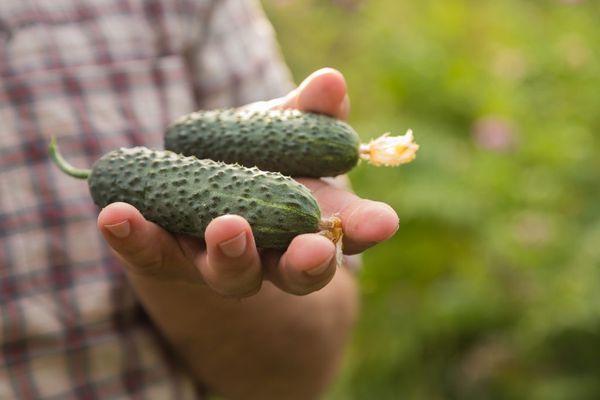
The bush cucumber has all the characteristics of the common cucumber; it's a variety. The main difference is its determinate stem, which can grow no more than 60-70 centimeters, giving the plant the appearance of a bush rather than a vine. It has 2-3 lateral shoots.
Short leaf axils make the bush appear bushier, giving it a more leafy appearance. In the garden, the plants look like beautiful green bushes, don't take up much space, and are very decorative. These varieties are characterized as early maturing—from shoot emergence to maturity, they take 45-50 days.
Bush cucumbers for open ground are insect-pollinated; most varieties are insect-pollinated. Self-pollinating varieties can be planted in greenhouses.
The entire crop ripens within a short period of time—up to three weeks. During this time, the plants are immune to the main diseases common to squash. The cucumbers grow smooth and uniform in shape—up to 100 grams in weight and 10-12 centimeters in size. They have juicy, aromatic flesh and thin skin.
Advantages and disadvantages
Bush cucumbers have a wide following and are grown by many gardeners. The undeniable advantages of these varieties include:
- significant savings in the area of the summer cottage;
- ease of care;
- friendly arrival of the harvest;
- short growing season, early ripening;
- wonderful taste;
- simple agricultural technology;
- long shelf life of fruits;
- resistance to diseases and pests;
- convenience of growing on balconies and windowsills in apartments;
- Excellent taste when used in any form, including canning.
Not only are they easy to plant, but they also eliminate the need for trellises to support the vines and tying them up. These constant tasks take a lot of time and effort from gardeners. The descriptions of all bush cucumber varieties indicate that the harvest ripens simultaneously, and the cucumbers are uniform in size and shape, making them ideal for pickling and jarring.

To make the description of bush cucumbers complete, the disadvantages of these varieties should also be noted:
- not a very high yield per bush, not the same as from its climbing relative;
- short growing season.

Those who decide to plant bush cucumbers need to think through a planting schedule to ensure they have enough cucumbers for the entire season.
Varieties of bush cucumbers
The names of bush cucumbers reflect their appearance and refer to the plant's small size. Let's look at the best varieties and hybrids.
Among the varietal options
Varietal types allow you to obtain your own seeds for planting.
Bushy
It's pollinated by bees, so it's best planted outdoors. In warmer climates, it can be sown from seeds. For areas prone to cold spring weather, seedlings are grown.
From germination to maturity, it takes 45-50 days. The cucumbers are bright green, juicy, and sparsely bumped. They measure 10-12 centimeters.

It tolerates drought and lack of water well. Cucumbers can be stored for 10 days without losing quality.
Microsha
A bee-pollinated variety. Ripens 45-48 days after germination. The fruits are densely tuberculate and a distinct green color.
It is consumed fresh and is suitable for canning and pickling.
Bush gift
The fruits are ready 48-50 days after uniform germination. The cucumbers are small—9-12 centimeters—and do not overgrow or turn yellow if harvested late.
The fruits are slightly round in shape, with slight bumps, weighing 90 grams.

Hybrids
Hybrids have a special symbol on their packaging: F1. Gardeners should understand that these plants do not produce seeds. Hybrid varieties produce higher yields and are more resistant to diseases and pests. Most gardeners prefer hybrids because they don't want to deal with the hassle of growing their own seeds.
Baby F1
The baby grows as a small bush, with stems no longer than 30 centimeters. It's considered an early fruiterer, reaching maturity in 40 days. The cucumbers are of excellent quality, with sparse bumps, and are 9 centimeters long. Pollination is by insects. It is resistant to powdery mildew and viral diseases.
Ant F1
Ultra-early ripening – 37-38 days. This hybrid is planted to produce the first cucumbers. Ant is parthenocarpic, so it is suitable for growing in greenhouses and indoor containers, not just in the open ground.

Each node produces 2-7 ovaries. The cucumbers are brightly colored, with faint whitish stripes extending to the center of the cucumber. They are not bitter. They are suitable for all types of use.
The yield is 10-12 kilograms per square meter.
Shorty F1
Grown in open ground, ripening in 49-52 days. The fruits are 9-12 centimeters in size, triangular-cylindrical when cut. The surface is bumpy. They are used fresh and for preserves.

Features of agricultural technology
For those who know how to grow cucumbers, bush varieties are easy to manage. The basic cultivation techniques are the same:
- choosing the right seed material from reliable producers;
- planted with seedlings or in open ground, directly with seeds;
- You can get two harvests on one plot, the first is planted in April, the second is in July;
- Before planting, selection and germination testing are carried out;
- cucumber seeds are not often pelleted, so before planting the seeds are soaked in a solution of potassium permanganate;
- transplant into the ground when there are at least 4 permanent leaves, and the soil has warmed up to 18 °, in this case the cucumbers will grow and not dormant in the soil;
- planting pattern in the ground - 30 centimeters between plants, 50-60 centimeters between rows;
- the soil is prepared in the fall - it is dug up, treated with fungicides, nutrient soil is added, organic fertilizers are applied - manure, bird droppings;
- Before planting, ash is added to the holes.

Bush cucumbers are grown as seedlings in containers or individual pots. They should be transplanted into the soil in April or May, depending on the region and weather. If the soil in your garden is heavy, mix the soil with peat.
Note: Some gardeners plant cucumbers in barrels – raised bushes are easier to care for, harvest, and add a decorative touch to the plot.
How to care for bush cucumbers
After planting in the ground, cover the plants with plastic film to ensure a higher temperature and constant humidity. This will protect them from the nighttime chills typical of the spring months.
Proper watering is the foundation of growing all garden plants. Cucumbers are watered with warm, settled water. Excess moisture leads to fungal growth and root rot, so experienced gardeners recommend watering small amounts more frequently. In hot weather in warm regions, cucumbers are watered morning and evening. On average, watering every other day is sufficient.
Drip irrigation systems provide convenient water supply, achieving the desired humidity without overwatering. They operate automatically and require no constant monitoring.

After watering and drying, the soil is loosened, also cultivating the spaces between rows to prevent weeds from surviving. They reduce yields and promote the spread of diseases.
Bushy varieties need to be fed regularly, as they bear fruit at a steady rate and require help:
- nitrogen fertilizers for the growth of green parts after planting - manure;
- with potassium and nitrogen during the formation of ovaries.
Diseased leaves and fruits are removed immediately to prevent the entire plant from becoming infected. As soon as the green fruits reach the desired size, they are picked to avoid burdening the bush with ripe fruit and to preserve the strength for the next set of fruit. Harvest occurs in 2-3 days.
Diseases and pests
Although bush cucumbers are rarely susceptible to disease, watering with cold water, excess moisture, and proximity to infected plants lead to the development of diseases.


The most common ones are:
- powdery mildew;
- gray, white and root rot;
- downy mildew;
- anthracnose.
In this case, the bushes and the surrounding soil are treated with fungicides, and the diseased plant is removed and burned.
The most common pests are aphids, nematodes, and spider mites. Folk remedies and insecticides are used to combat them.
Important: a good remedy against diseases and pests is pre-planting treatment of the soil with copper sulfate.
Reviews from experienced gardeners
Bush cucumbers are deservedly popular among gardeners. Reviews of their cultivation are mostly positive. Some are disappointed by the short fruiting period. All gardeners note the ease of these cucumbers and their ability to grow in very limited space, which is very important for many.
Andrey, Chelyabinsk region
"We've been planting bush cucumbers for a long time—the 'Korotyshka' and 'Malysh' hybrids. Our garden is small, so there's no room for trellises or planting. These cucumbers are great for pickling—they ripen quickly and evenly. We harvest the entire crop at once and can them in jars. We don't have to wait for them to ripen one by one on long vines. They're easy and convenient to care for."
Antonina, Samara
"The yield from bush cucumbers is small, but the gherkins are delicious, sweet, and not bitter. They store well. They're very easy to grow; no staking or pinching is required, and they take up little space. The gherkins are all uniform and ripen at the same time."
Vera, Dmitrov
"We plant bee-pollinated varieties like Malysh and Mikrosha. The small plants have a beautiful decorative appearance, and the cucumbers taste sweet and fragrant. They don't have time to get sick, as they fruit quickly and evenly. It's very convenient that they don't require constant treatments against fungus and other diseases."
Bush cucumbers have many fans, prized for their generous harvest and compact size. The uniform cucumbers don't overgrow, have an excellent taste fresh and canned, and are deliciously crunchy in salads and preserves. Those who haven't yet tried growing these vegetables should consider these easy-to-grow bush cucumbers.
Related posts:
 TOP 30 best determinate cucumber varieties with descriptions
 Description of the best varieties of Chinese cucumbers, planting, growing and care
 TOP 30 best varieties of cold-resistant cucumbers with descriptions and characteristics
 Top 7 varieties of shrub roses, their planting and care in open ground for beginners
 Description of the best varieties of bee-pollinated cucumbers, rules for their formation and care
 Description of unusual methods for planting and growing cucumbers
 The best cucumber varieties for open ground in the Moscow region and their cultivation
 How to make a cucumber trellis with your own hands from scrap materials