
- Description and characteristics of the Masha F1 hybrid
- Advantages and disadvantages of the variety
- Features and tips for growing the variety
- When to plant?
- Selecting and preparing a site
- Planting diagram
- Further care of cucumbers
- Formation of the whip and feeding
- Watering
- Protection from diseases and insect pests
- Harvesting and storage
It's often difficult to choose the right cucumber variety that meets all your needs. What do we expect from cucumbers? Certainly not just taste, but also an early and larger harvest. The Masha F1 cucumber variety fully meets these expectations. It's a typical early-ripening vegetable. Why not give it a try? You'll reap an early harvest, and what a glorious one it is! Masha F1 also boasts a high yield.
Description and characteristics of the Masha F1 hybrid
According to reviews, this hybrid gherkin is considered the earliest to ripen. They are also capable of self-pollination. Masha A1 cucumbers can be grown in greenhouses and outdoors. They can grow horizontally and vertically (convenient for growing in small spaces, such as on a balcony).
According to gardeners, as the cucumber grows, it becomes a voluminous and powerful plant with widely scattered branches, which makes harvesting much easier.
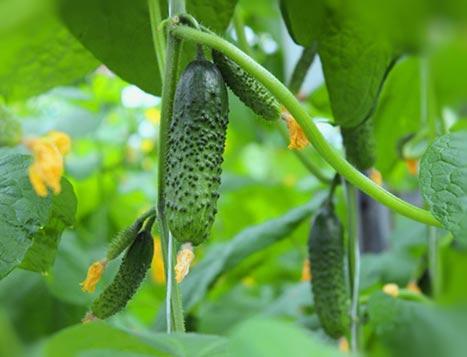
A characteristic feature of the Masha F1 hybrid cucumber is the predominance of female flowers. In a fruitful year, more than five cucumbers ripen simultaneously in each bunch.
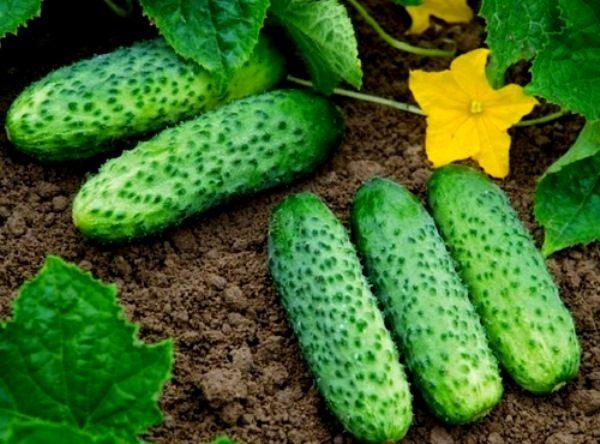
Just 37 days after germination, the first crisp greens can be harvested. A week later, it's already bearing fruit en masse. This cucumber's reputation as a sprinter is well-deserved. This variety was developed by the Dutch. It arrived in Russia only recently, about twenty years ago, in the 1990s.AND Masha F1 cucumbers are resistant to diseasesThe stem needs to be shaped, but there's no need to pinch it, as the main harvest comes from the side shoots.
Advantages and disadvantages of the variety
This Dutch hybrid quickly gained popularity among Russian gardeners. Many of them acknowledged the Masha F1 gherkin's excellent flavor and, what's more, high-yielding. The advantages don't end there:
- early;
- unpretentious;
- self-pollinating;
- resistant to diseases such as cladosporiosis, powdery mildew, cucumber mosaic virus;
- grows equally well in both indoor and outdoor soil;
- universal in application.
However, the variety is not without its drawbacks. Its seedlings have an underdeveloped root system. It requires specific weather conditions when planting. You won't be able to use the fruit's seeds; you'll have to buy them each time.
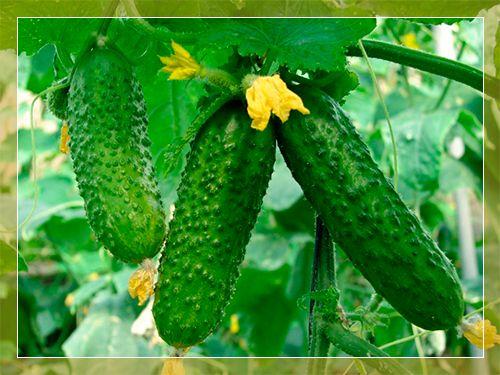
Masha F1 is a bunch cucumber. To ensure maximum fruit production, it needs adequate nutrition and regular, timely watering.
Features and tips for growing the variety
Every gardener knows that to get a good harvest, you need to plant the plant correctly. It's crucial that the selected seeds are of high quality. Packaged in Holland, they don't even require soaking; they're planted directly into the ground.
Of course, the hybrid is easy to grow. But only by providing these beauties with proper care and proper agricultural practices can you expect excellent results.
When to plant?
In central Russia, Masha F1 cucumbers are grown from seedlings, but in southern regions, seeds are sown directly into the ground. Sowing times vary depending on the method. Regional climate conditions are also taken into account.
For seedlings, seeds are sown approximately 30 days before planting in the ground. In temperate regions, the best time to plant seedlings in a greenhouse or hothouse is early May or mid-May, and in open ground, the last days of May or even early June. In harsh climates, the timing may shift depending on the weather.
The best way to grow the Masha F1 hybrid is in half-liter peat pots. The roots will feel comfortable in them. What's more, you won't have to remove the seedling when you plant it in the holes. Simply plant it directly in the pot.
While the gardener is growing the seedlings, the air temperature should be maintained at 23 to 25°C and the plants should be regularly watered with warm water. Incidentally, this requirement also applies to mature plants.
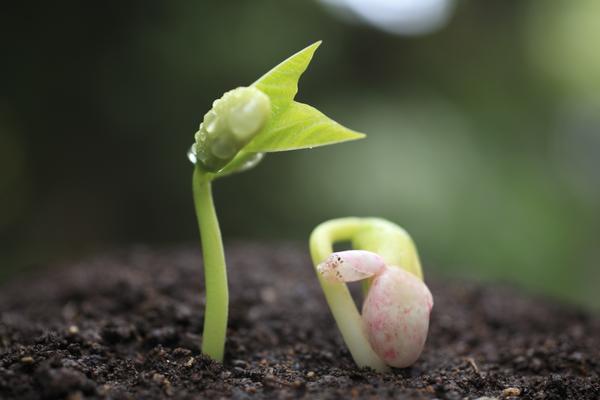
The cucumbers will be fully ready for planting in about 25 days. By then, the soil should have warmed to 14 to 16ºC. Creating shelters for the sprouts using plastic bottles, for example, will protect them from inclement weather.
Selecting and preparing a site
Here are the requirements you'll need to meet when choosing a site for the Masha F1 cucumber variety: warmth and sunlight. Conversely, there shouldn't be any drafts. If you want to create ideal conditions for the plant, look for light, non-acidic soil. If the soil is acidic, apply lime.
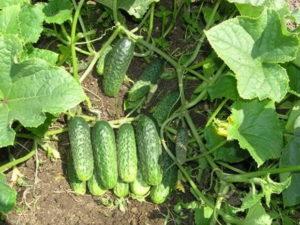
It's best to fertilize the bed with manure in the fall. If you don't do this in the fall, be sure to do it in the spring, right before planting. This will ensure a quick start for the Masha F1 cucumbers. It's a good idea if onions, tomatoes, beans, cabbage, or potatoes were previously grown in the same spot you've chosen.

Planting diagram
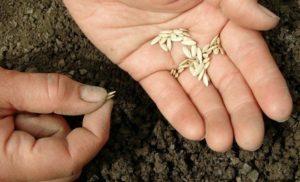
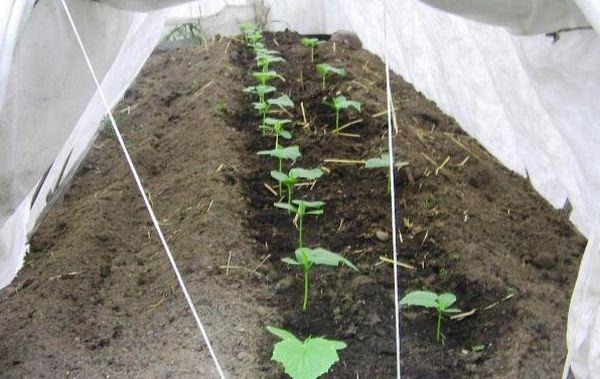
Plant the seeds 2-3 centimeters deep. Covering them with plastic wrap ensures optimal temperature control.
The growing method influences planting density:
- with the vertical method - 4-5 pieces per square meter,
- when planted horizontally, with the bush lying on the ground, 3 pieces per square meter.
Further care of cucumbers
What does it take to care for Masha F1 cucumbers?
- Form a bush.
- Water.
- Feed.
- Treat against diseases and pests.
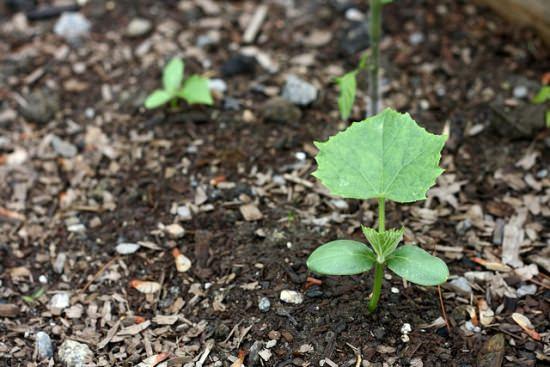
Weeding should be done only when necessary. Mulching the soil is also recommended; this prevents moisture from evaporating, preventing the soil from cracking due to drying out. Regular ventilation will be necessary if Masha F1 cucumbers are grown in a greenhouse. If a plant has 10-15 cucumbers growing at once, pluck off the excess; it's not capable of producing that many.
Formation of the whip and feeding
Mashenka F1 is a hybrid cucumber cultivar. To cultivate the bush, follow these guidelines:
- all shoots and ovaries should be removed from 4-5 lower axils;
- on the next few axils, only one ovary and leaflet are left;
- above - a pair of ovaries and the same number of leaves.
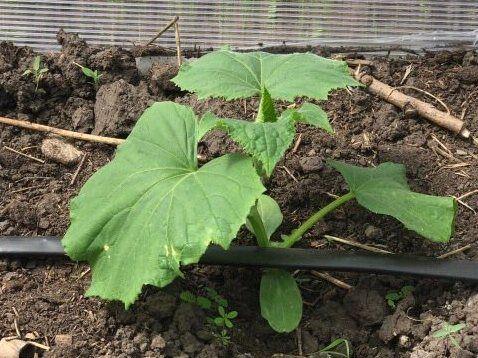
There's no need to pinch its stem; it will stop growing on its own. Masha F1 cucumbers are fertilized every 10-12 days, alternating organic and mineral fertilizers. This is done four times per season. The first feeding occurs when the seedlings have developed their first two full leaves, and the second is done two weeks later. Once the seedlings are planted in their permanent location, it's recommended to apply fertilizer no sooner than 16-18 days later.
Watering
Cucumbers love water. So, water them frequently, always with warm water. More often in hot weather, less often in cooler weather. Watering is indicated when the top layer of soil has dried out. After watering, loosen the soil.
Protection from diseases and insect pests
This cucumber is highly disease-resistant. Scab, mosaic, and powdery mildew are rare for the Maria F1 variety.
But, for prevention purposes, it is worth taking some measures:
- avoid getting water on the leaves,
- dust with wood ash,
- spray with a weak solution of potassium permanganate or treat with Bordeaux mixture.
If signs of the disease do appear, treatment with chemicals is essential: Fundazol, Hom, and other medications. It's important to strictly follow the instructions.
Harvesting and storage
Starting on the 37th day, you can harvest the grown Masha F1 cucumbers daily. However, this must be done carefully to avoid damaging the remaining stems. Even those lying on the ground should not be stepped on. Otherwise, the plant will die.
The Masha F1 hybrid cucumber variety can yield up to 2 kilograms per bush (or 11 kilograms per square meter). The optimal size for harvesting is 8-9 centimeters. This size is best suited for pickling and canning.
A very important characteristic of the Masha F1 cucumber variety is its excellent shelf life, so it will keep for almost two weeks without losing its appearance or flavor. It also transports well.
Although the Masha F1 cucumber variety hasn't been around for long, it's deservedly popular. You don't have to be an expert agronomist to grow a good cucumber harvest. Our amateur gardeners have proven this with their own examples. The most important thing is to provide the Masha F1 with proper care, and you'll be blessed with cucumbers.
Related posts:
 Description of the Nasha Masha tomato and rules for growing seedlings
 Description of the Masha Doll F1 tomato, growing the hybrid, and gardener reviews
 The best grape varieties for growing in the Urals, planting and care rules in summer
 Descriptions of the 20 best cherry varieties for the Moscow region, their planting and care
 80 Best Eggplant Varieties for Different Regions with Descriptions and Characteristics
 Methods for planting and propagating cherries at home
 The best eggplant varieties for growing in a polycarbonate greenhouse: planting and care
 Description of the Velika grape variety, cultivation and care tips