
The importance of cucumbers in the human diet remains undiminished. From spring, when varieties like the Muromsky 36 cucumber are just ripening, until late fall, these fruits are present on tables fresh or in salads, and in winter as canned vegetables.
Description of the variety
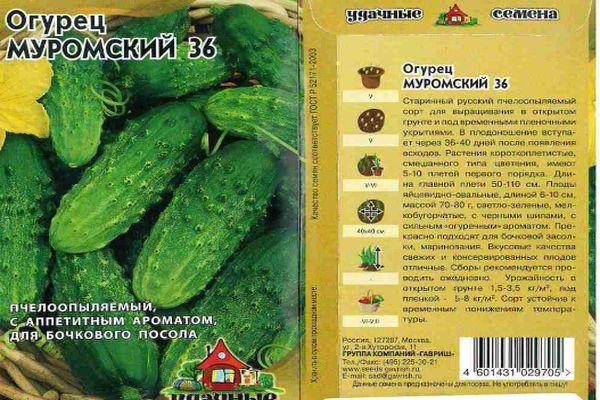
The Muromsky 36 cucumber variety is one of the earliest-ripening crops, known as far back as the 19th century. It is an old Russian variety that remains highly popular. It is a folk selection.
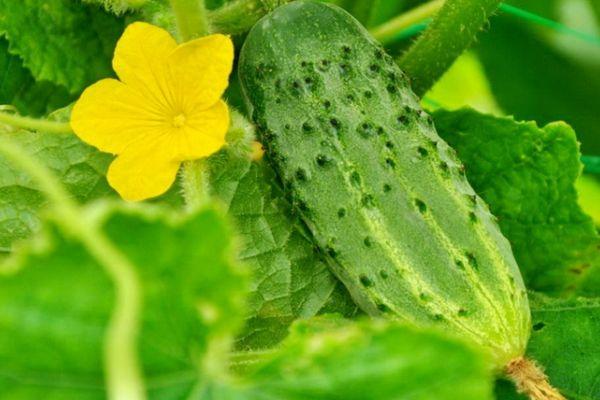
Cucumbers are resistant to morning chills and possible temperature drops, possessing a strong aroma and distinct cucumber flavor. They are versatile in use. The fruit retains its excellent flavor both fresh and canned.
Muromsky 36 boasts a uniquely fast ripening rate. The plant begins flowering approximately 6-8 days earlier than most other varieties. The first fruits appear as early as 32-40 days after mass germination.
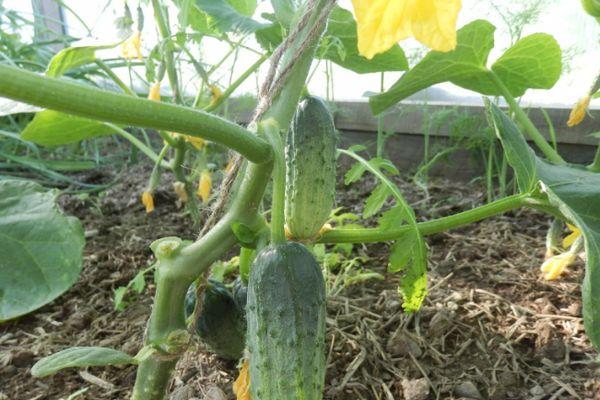
The Murom cucumber plant is bee-pollinated, a weakly climbing plant with short, heavily foliated vines and weak branching. It takes up little space and adapts well to both open and closed ground. However, it prefers open ground, periodically covered with plastic film. The main vine reaches 100-160 cm. The leaves are larger and dark green.
The Murom cucumber has the following description:
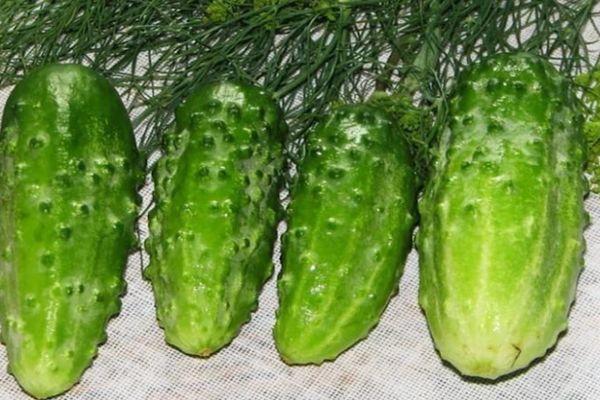
- The fruits are small. The approximate length of a ripe cucumber is 6-8 cm, and its weight is from 50 to 70 g.
- Vegetables are elongated, elliptical or ovoid in shape, almost round in cross-section.
- The cucumber skin is light green with distinct, even lighter stripes.
- The surface of the fruit is distinguished by mixed pubescence, large tubercles and black spines.
Productivity
The Muromskogo 36 variety has a moderate yield of 2-3 kg per square meter. However, it produces fruit until mid-August, after which the plant is susceptible to fungal diseases.
The fruits grow very quickly. They need to be picked almost daily, otherwise they will overgrow and lose their appearance, quickly turning yellow. If the soil is not sufficiently fertilized or is too dry, the vegetables will grow small and crooked.
The Murom variety does not require much care, but responds well to organic and mineral fertilizers.
Endurance and disease resistance
This variety is beloved by gardeners for its low maintenance. Muromsky 36 is resistant to cold and some cucumber diseases, namely powdery mildew and bacterial blight, making it much easier to grow.
It is not recommended to grow the crop in the same plot of land more than once every 5 years. Otherwise, it will weaken its immunity to diseases.
Many years of experience among gardeners have shown that various organic fertilizers are excellent for cucumbers, as they have a positive effect on the soil structure.
Growing and care rules
With adequate watering, oxygen, and drainage, Muromsky 36 is undemanding regarding soil type. However, like any other cucumber variety, it responds favorably to humus-rich or light soil. Preferred pre-planting crops include corn, tomatoes, peas, and early potatoes.
The crop is grown using seedlings or by sowing directly into the soil. For the latter method, select large seeds that have undergone pre-sowing heating and disinfection. Pre-treated seeds will produce more uniform seedlings. Furthermore, treatment will positively impact characteristics such as fruit ripening speed and disease resistance, and will reduce the number of barren flowers.
Seeds for seedling propagation are sown in early May. The optimal time to transplant the seedlings into the ground is late May or early June, when the sprouts have already developed 2-3 true leaves.
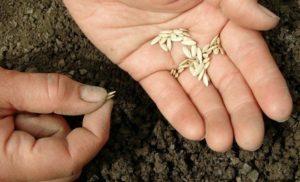
Sowing of seeds directly into the ground is carried out at the end of May. It is important to plant the plant in well-warmed soil. Its temperature should not fall below +14°C. After transplanting, the seedlings are covered with transparent film, creating a greenhouse, which protects the seedlings from frost.
The Murom cucumber planting pattern is 40x40 cm, with a 20 cm spacing between rows. Avoid allowing the cucumber beds to become overgrown with weeds. For 14-20 days, while the seedlings are still small, the soil is loosened to a depth of no more than 2-4 cm. Once large, strong seedlings have emerged, loosening can be repeated as needed, on average once a week.
Cucumbers require ample watering. During flowering, watering should be done once a week. Once the first fruits appear, it's advisable to increase the frequency of watering and begin fertilizing. Fertilize about four times during the fruiting period, using urea, potassium sulfate, superphosphate, and mullein.
After 6-7 strong leaves have formed, it's advisable to pinch off the main stem of the cucumber. This procedure stimulates branching and increases yield.
Related posts:
 Description and characteristics of the Murashka cucumber variety, cultivation and care
 Length and structure of the cucumber root system, how to properly hill them
 Description and characteristics of the Nezhinsky cucumber variety, cultivation and care
 Causes of cucumber diseases in open ground and how to combat them
 Description and cultivation of the Armenian cucumber variety, planting and care
 Characteristics and description of the Parisian Gherkin cucumber variety, cultivation
 When to plant cucumbers in open ground in Siberia, how to grow them, and the best varieties
 Why do cucumber leaves curl inward and what to do about it?