
- What are the advantages and disadvantages compared to similar varieties?
- Description and agrotechnical characteristics of the Nezhinsky cucumber variety
- Bush and leaves
- Flowering and fruiting
- Resistance to low temperatures and drought
- What diseases is Nezhinsky susceptible to?
- Features of crop cultivation
- Soil requirements
- Sowing rules and schemes
- Optimal conditions for growing seedlings
- We organize proper care for the plant
- Regularity of watering
- Fertilizing, loosening and hilling the bushes
- Formation of the whip
- Spraying and protection from pests and diseases
- Reviews of gardeners about the Nezhinsky crop
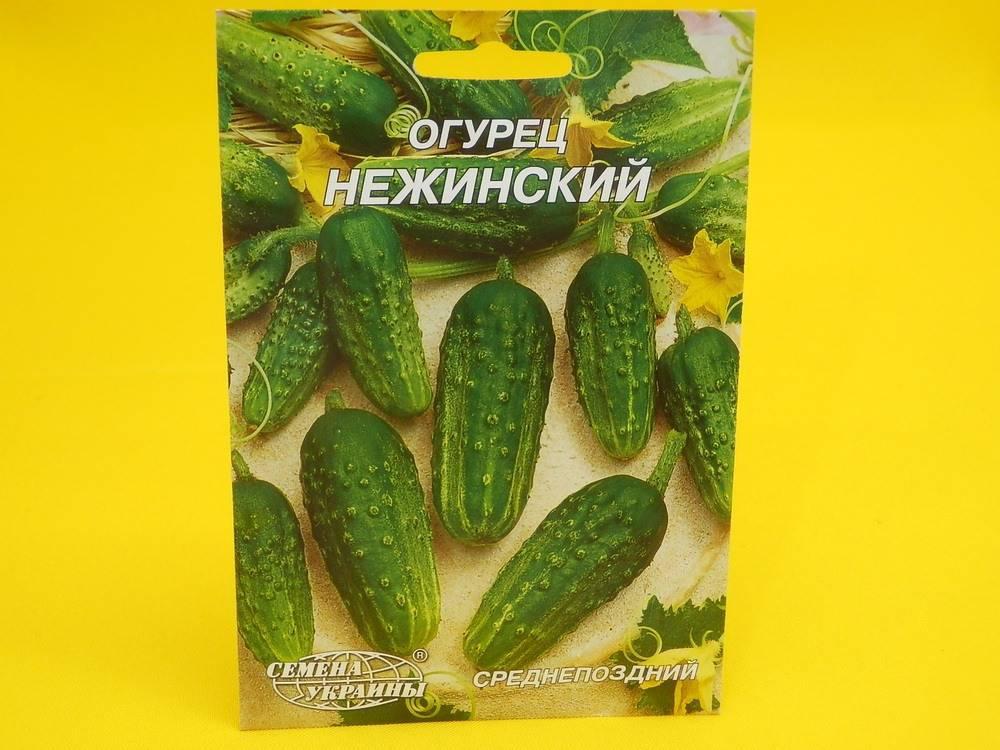
Nizhyn cucumbers were grown for pickling as early as the 17th century. A monument to them was erected in the Ukrainian city of Nizhyn. This variety was and still is used by breeders. A pickling variety, Nizhynsky, was developed. Its details were added to the State Register in 2009.
What are the advantages and disadvantages compared to similar varieties?
Unlike modern hybrids, the Nezhinsky cucumber is less productive. When growing hybrid varieties, up to 10 kg of cucumbers are harvested per square meter. The yield of this variety does not exceed 5 kg/square meter. According to reviews, the Nezhinsky cucumber's strong point is its flavor and pickling qualities.
The advantages of this variety include:
- resistance to the causative agent of cladosporiosis;
- immunity to cucumber mosaic virus;
- using your own seeds;
- long-term fruiting;
- drought resistance;
- heat resistance.
The Nezhinsky variety is not self-pollinating, but pollinated by bees, so yields are low when grown in a greenhouse. It's best grown in the ground. Its disadvantages include susceptibility to downy and powdery mildew. An outbreak of peronosporosis (downy mildew) can result in the loss of the entire crop.
Description and agrotechnical characteristics of the Nezhinsky cucumber variety
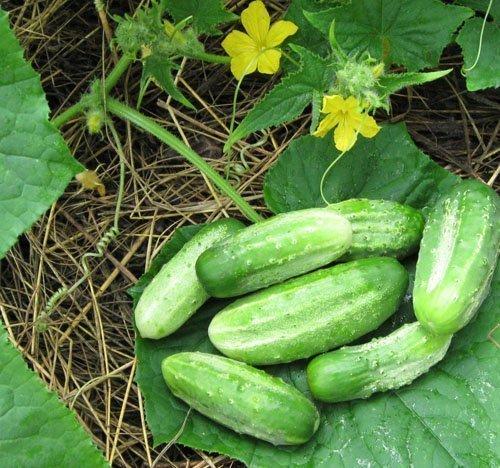
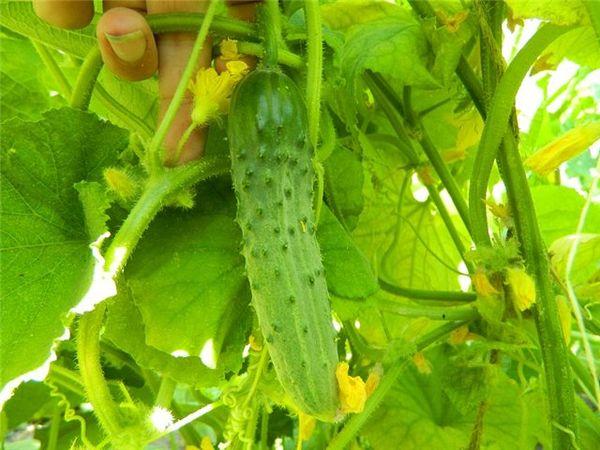
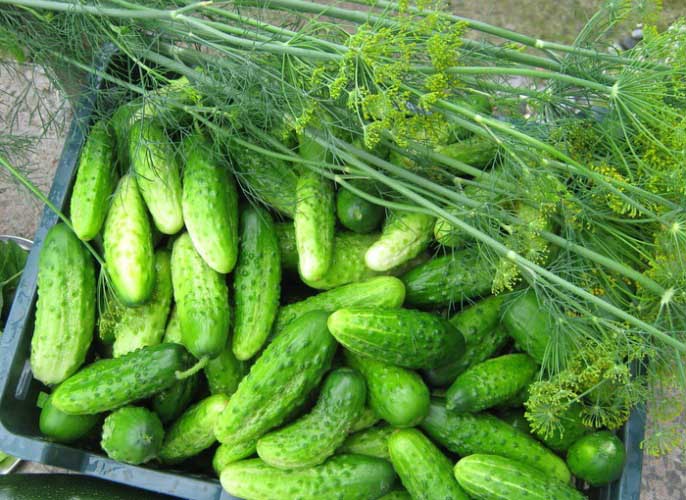
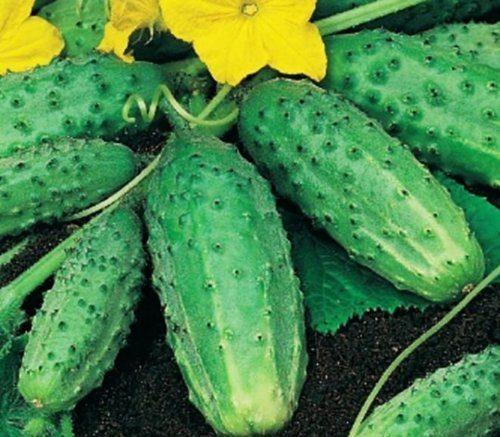
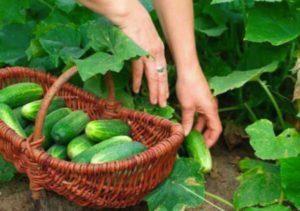
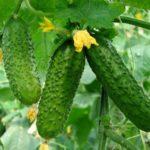
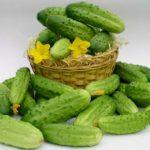
The description describes the fruits as short (10-12 cm), ovoid, and black-spined, with a diameter of 4-4.5 cm. The average weight of each cucumber is 100-110 g. The skin is green with noticeable light stripes. This variety is prized for its flavor and texture. The flesh is crisp, aromatic, and contains small, uneventful seeds.
Cucumbers are used for pickling, canning, and winter salads. They are also suitable for summer salads. When pickled or canned, the cucumbers retain their firmness. For pickling, it is recommended to pick very small cucumbers.
Bush and leaves
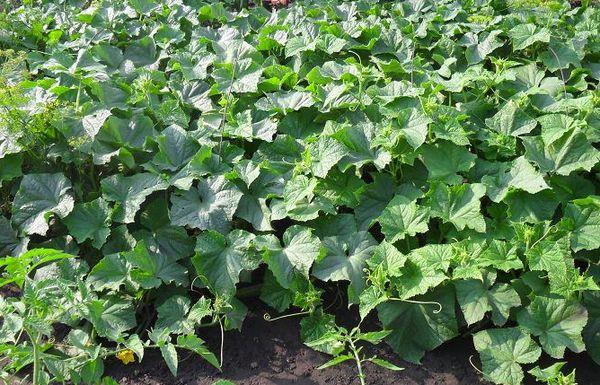
The Nezhinsky cucumber bush is indeterminate in growth habit, with vigorous growth. The central shoot reaches up to 2 meters in length. To stop it from stretching, pinch the growing point. Numerous lateral branches develop, requiring regular training to ensure a good harvest.
Flowering and fruiting
The Nezhinsky cucumber plant produces male and female flowers. They can be distinguished by their appearance. Female flowers have a pistil, while male flowers have stamens. Bumblebees and honeybees carry pollen.
Take a look Also
The majority of male flowers form on the central stem and on the first-order lateral shoots. The bulk of the harvest is collected from the second-order lateral shoots, as they produce the majority of female flowers. Without formative pinching, yields are low, with many empty flowers.
The harvest period for the Nezhinsky cucumber depends on the climate zone:
- in the southern regions on the 47-55th day;
- in Siberia and the Moscow region on the 55-70th day.
Resistance to low temperatures and drought
The variety has medium-sized leaves. Their evaporation area is small, so irregular watering has little impact on yield. During cold weather, watering and root feeding are discontinued. The root system stops absorbing nutrients if the soil temperature is below 10°C.
What diseases is Nezhinsky susceptible to?
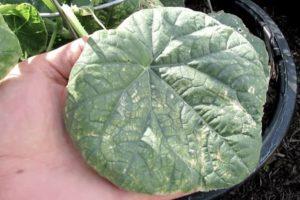
Powdery mildew and downy mildew pose a real threat to plantings. Affected plants can be identified by a characteristic white coating on the lower leaves and brown spots on the underside. The disease is triggered by several factors:
- cold weather;
- dense planting;
- growing cucumbers in one place for several years.
Features of crop cultivation
In central Russia, Nezhinsky cucumber seedlings are transplanted into the ground from May 15 to June 5. Throughout the season, special attention is paid to preventing fungal diseases. Standard agricultural practices are used during cultivation. To prolong fruiting, the cucumbers are harvested every two days.
Soil requirements
The Nezhinsky cucumber prefers fertile, loose soil. To keep the cucumber bed pest- and disease-free, practice crop rotation. A list of good and bad predecessors is provided in the table.
| Good | Acceptable | Bad |
| Early cabbage and cauliflower | Carrot | Zucchini |
| Onion | Potato | Cucumbers |
| Beans | Strawberry | Pumpkin |
| Peas | Tomatoes | Squash |
| Beans | Beet | Cabbage, medium, late |
| Green manure | Herbs and greens | Watermelon |
Sowing rules and schemes
At 25 days old, seedlings are planted in holes. When growing vertically, the bushes are spaced 30 cm apart. Leave a 50-60 cm gap between rows. Add 2 teaspoons of any complex fertilizer to the soil. The seedlings are planted deep down to the cotyledons.
The holes are watered and mulched with humus. Until the weather becomes consistently warm, ridges are installed. Covering material will protect the cucumbers from nighttime frosts. In hot weather, the bed is shaded from the sun. After two weeks, the seedlings will take root and begin to grow.
Optimal conditions for growing seedlings
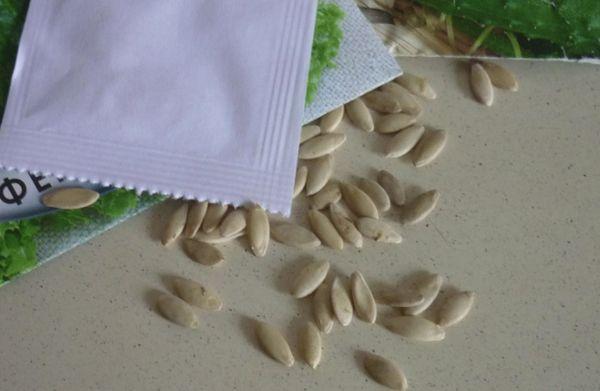
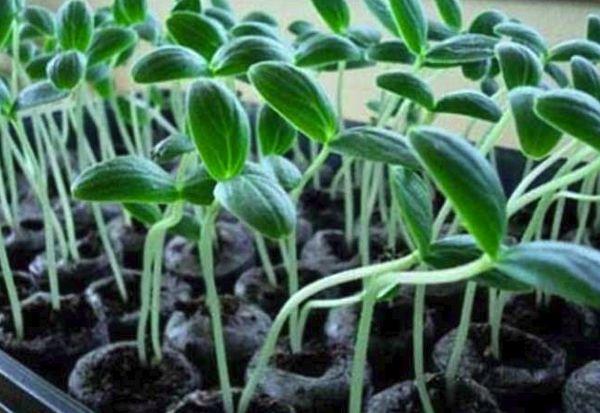
To speed up harvesting, grow seedlings. This variety grows best when sown directly into the ground. To obtain healthy, viable seedlings, you need to put in the effort and create optimal growing conditions:
- artificial lighting;
- temperature 18-22 °C;
- regular watering;
- weekly fertilizing with complex fertilizer.
All the necessary nutrients for the Nezhinsky cucumber seedlings are included in the Zdraven Turbo fertilizer for seedlings.
We organize proper care for the plant
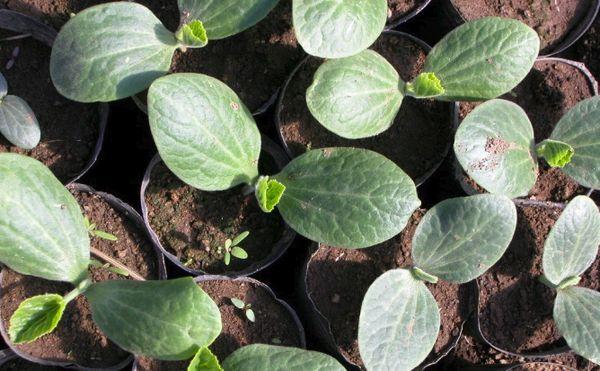
At the age of 25 days, the seedlings are planted in the ground. The soil must be well warmed. The temperature at the root zone, 20 cm deep, should be at least 15°C. Seedlings planted in cold soil will not develop.
Warm beds solve the problem. Biofuel (fresh manure and other organic waste) warms the soil, smoothing out the daily temperature differences between day and night. Nezhinsky cucumber seedlings can be planted in these beds two weeks earlier than in regular beds.
It’s easy to build a warm bed:
- dig a trench 30 cm deep and 1.2 m long;
- Place a 10 cm layer of branches on the bottom;
- lay the second layer of grass, its thickness is also 10 cm;
- then pour manure 5-10 cm thick;
- Place 25-30 cm high borders around the perimeter and fill to the top with fertile soil.
To speed up the process, the manure should be doused with hot water and the bed covered with black plastic. It will take several days for the manure to heat up.
Regularity of watering
A fallen ovary indicates a lack of moisture in the soil.The main mistake gardeners make when growing pickling varieties is irregular and insufficient watering. Outdoor cucumbers are watered according to the following schedule:
- check the soil moisture; watering is needed if the top layer (3-5 cm) is dry;
- on hot days every day or every other day;
- at moderate temperatures once a week.
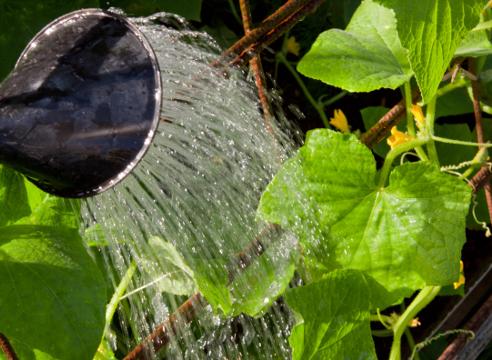
Irrigation water should be warm (18-20°C). Avoid watering cucumber beds during hot weather, as evaporating water can burn the leaves. Irrigation should be done in the morning or evening between 5:00 PM and 7:00 PM. Water consumption:
- before flowering - 5 l/m²;
- during flowering - 8 l/m²;
- during fruiting - 15 l/m².
Fertilizing, loosening and hilling the bushes
After rain and the next watering, the soil is loosened shallowly. Every 2-3 weeks, the bushes are hilled to stimulate root formation on the stems. Cucumbers are fertilized throughout the season.
| Growth phase | Fertilizer | Consumption |
| 3-4 leaves | Nitrophoska | 30 g/m² |
| Aquarin | 5 g per 10 l | |
| Agricola-5 for cucumbers | 2 tbsp. for 10 l | |
| Budding | Mullein solution | 10 l (1:10) |
| Double superphosphate | 20 g | |
| Potassium magnesium sulfate | 20 g | |
| Bloom | Water | 10 l |
| Potassium sulfate | 1 tsp | |
| Urea | 1 tsp | |
| Superphosphate | 1 tsp | |
| Boric acid | 0.5 g | |
| Fruiting | Herbal infusion | 1:5 |
Formation of the whip
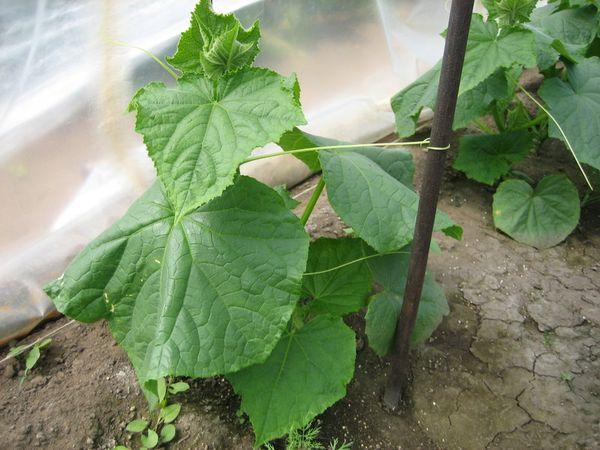
The Nezhinsky cucumber bush begins to be shaped after the fifth leaf emerges. At this time, the top is pinched. The growth of first-order lateral shoots is stimulated. These are also pinched after the fourth or fifth leaf emerges. Secondary shoots begin to emerge from the leaf axils of the first-order stems.
The flowers on them are female, so there is no need to pinch them. The entire cucumber crop is formed on second-order stems. Don't pluck the male flowers located at the bottom of the central shoot. Bees will transfer pollen from them to the pistils of the female flowers.
Spraying and protection from pests and diseases
During unexpected cold snaps, support cucumbers' immunity with foliar feeding. You can use folk remedies with boric acid, yeast, iodine, and milk. These will provide benefits without damaging the fruit's quality.
In hot weather, young bushes can be attacked by aphids. If insects appear, wash the leaves with an ash-soap solution, and dust the soil and lower leaves with ash. Celandine helps against spider mites. Use dried herbs:
- boiling water - 1 l;
- celandine - 100 g;
- laundry soap - 20 g.
This product can be used on fruiting bushes, repeating spraying every 3 days. The variety is not resistant to powdery mildew and downy mildew. If signs of infection appear, treat the bushes with the following mixture:
- water - 10 l;
- urea - 20 g;
- liquid mullein - 1 l.
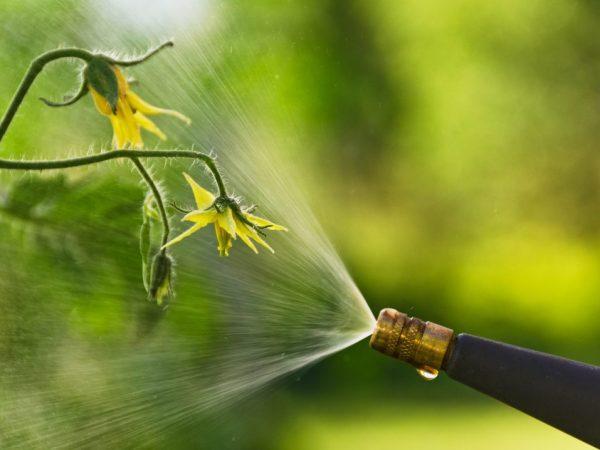
As a preventative measure, the bed is treated with Topaz in early summer. The bushes are sprayed twice, 1-2 weeks apart.
Reviews of gardeners about the Nezhinsky crop
Evgeny Petrovich, 41, Ryazan: "Until we installed a greenhouse, we grew Nezhinsky cucumbers in the ground. They're an excellent variety for the garden; greenhouse hybrids are significantly inferior in flavor. We always grew our own seeds and didn't waste time searching for new varieties. We didn't cultivate seedlings; we sowed them directly into the ground dry."
Liliya Yuryevna, 58, Stavropol Krai: "Last season I grew Nezhinsky cucumbers. I bought the seeds at the market in plain white packets. The cucumbers started getting sick early, and the harvest was poor. I didn't water the plants often in the heat, which may be why I got a lot of bitter cucumbers."
Tatyana Sergeevna, 32, Moscow region: "I've been planting this variety for two years now. The cucumbers have a wonderful flavor, and they don't have many pimples. However, I can't boast of a large harvest. They're suffering from some kind of disease, but I haven't figured out what it is yet. The leaves are turning yellow, which is a shame. They're very good for pickling, tastier than other varieties."
Related posts:
 Description and characteristics of the Murashka cucumber variety, cultivation and care
 Description of the best varieties of Chinese cucumbers, planting, growing and care
 TOP 30 best varieties of cold-resistant cucumbers with descriptions and characteristics
 30 Best Dutch Cucumber Varieties with Descriptions and Characteristics
 Description of the best varieties of pickling and barrel cucumbers for greenhouses and open ground
 The best cucumber varieties for open ground in the Moscow region and their cultivation
 Description of the best and most productive cucumber varieties for open ground
 Description of the best, most productive and new varieties of cucumbers for 2025