
Downy mildew (peronospora) of cucumbers is a disease caused by the Peronospora fungus. It primarily attacks leaves, causing small, yellow, oily spots to form on their surface, which gradually enlarge and merge. Under favorable conditions, the fungus spreads to healthy plants and related melons. Timely treatment helps preserve the harvest.
Reasons for the spread of the disease
Fungal microorganisms are viable in a moist, warm environment, but are activated only in the presence of certain factors:
- dense planting;
- weed clusters;
- temperature changes;
- insufficient ventilation of the greenhouse;
- frequent use of cold water;
- high level of air humidity;
- prolonged downpours.
Most often, leaves are affected by fungus in the last month of summer. In dry weather, false powdery mildew on cucumbers develops extremely rarely.
Signs of appearance, stages of development
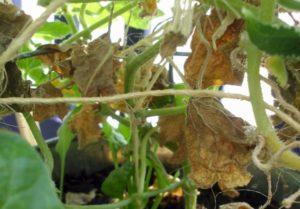
It's impossible not to notice that a plant is diseased. The foliage becomes partially covered with brown or yellow spots. Later, the other leaves are also affected, developing a purple-gray coating on their surface. The yellowed areas quickly dry out. The greatest damage is caused to greenhouse crops. The disease progresses rapidly, and plants can die within 4-5 days. Signs of downy mildew include poor ovary set, slow fruit growth, and loss of flavor.
Once powdery mildew has been identified, it is important to take action immediately, otherwise the plants will die and other crops will be affected by the fungus!
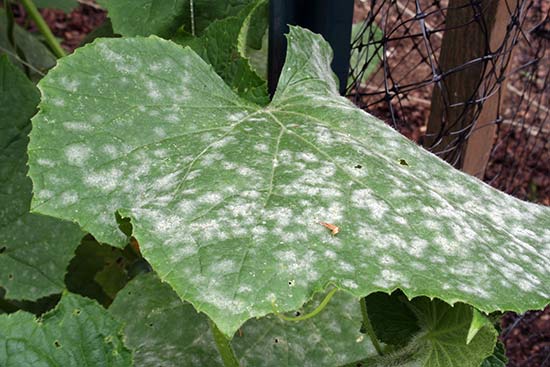
Downy mildew develops in stages:
- the outside of the leaves is covered with light yellow spots;
- the affected areas become oily;
- the spots on the outer surface of the foliage darken, and the inside of the leaves become covered with a coating;
- Multiple spots merge, then the affected leaf dries up, and eventually the bush dies.
How to combat cucumber disease
If the spread of fungal spores cannot be prevented, treatment for downy mildew should be initiated as soon as possible. The method of treatment depends on the stage of the disease's development and individual preferences.
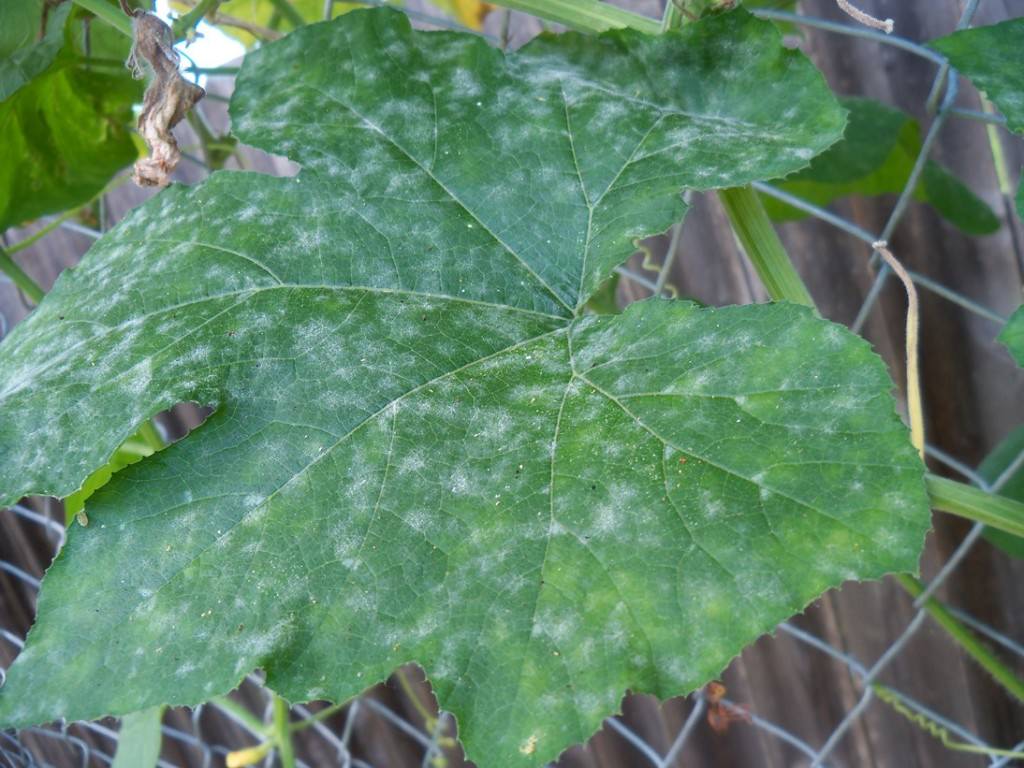
High treatment efficiency is observed in cases where damaged areas of the plant are removed beforehand.
Removed leaves, shoots, and fruits must be burned, as fungal spores can overwinter and re-infect the plant the following season. Then, treatment with special preparations is carried out.
At stages 1 and 2, fungicide treatments are performed. At stages 3 and 4, the harvest cannot be saved because the plants are heavily infected with the fungus. Once the cucumbers have been completely removed from the plot, the soil is disinfected. Up to 7 cm of soil is removed, and the soil and greenhouse are treated with chemicals.
Medicines
If the disease is treatable, plants are treated with chemicals. Recommended products include Oxychom, Kurzat, Ridomil, and others. At stages 1 and 2 of downy mildew, solutions with a concentration of up to 0.5% are used.

Fungicides
The following chemical fungicides are permitted to be used:
- "Signum," a strobilurin, is used. Spray twice, 7-12 days apart. Wait 14 days before harvesting.
- Orvego is a morpholine-based product. The maximum number of sprays is three. If necessary, a second and third spray are administered at intervals of 10-15 days. The waiting period is 10 days.
- "Oxychom" is a two-component product belonging to the class of copper compounds. Plants are treated during the growth and development period. The first application is made when signs of downy mildew are detected. Subsequent applications are made every 7-10 days. The waiting period is short, 5 days. 10 liters of solution is sufficient to treat 100 square meters of soil.
- "Ordan" is in the same class as "Oxychom." Plants are sprayed up to three times during the growing season. The solution is first applied no later than 48 hours after fungal infection. Subsequent sprays are spaced 7-10 days apart. The waiting period is 5 days. 5 liters of solution are required per 100 square meters.
- "Consento" is a combined carbamate chemical. The maximum number of treatments is four, with an interval of 7-10 days between applications. The waiting period is long—21 days. 5 liters of fungicide solution are required per 100 square meters.
- "Kurzat" is a complex product formulated with copper. Three sprays are recommended, with an interval of 10-12 days. A five-day wait is required after each treatment. A 10-liter solution is sufficient for 100 square meters.
- Abiga-Peak is a copper-based fungicide. Three treatments with a 0.4% solution are required during the plant's growth and development period. The waiting period is long—20 days.
- Previkur is a carbamate fungicide. Its components not only protect plants but also promote growth. Two applications are sufficient. The solution is prepared at a concentration of 0.2%. The waiting period is short—5 days.
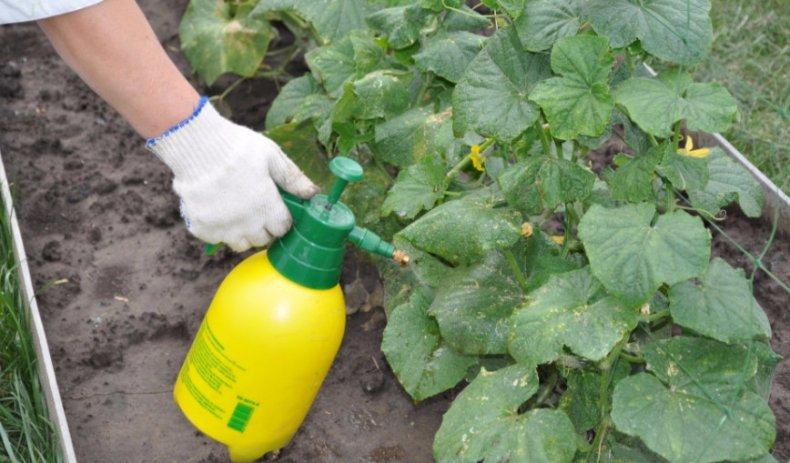
If cucumbers are heavily infested with fungal spores, the use of chemicals is a necessary measure. It's important to consider the waiting period—the time between the last spraying and harvesting, during which the toxic compounds in the fungicides decompose. This waiting period varies for each product.After treating downy mildew with chemical fungicides, cucumbers are fertilized with the usual compositions.
Biofungicides
Biological fungicides are safe for plants, animals, and humans. The ingredients do not accumulate in the fruit, so cucumbers can be harvested the next day or two days after treatment. The following products are approved for use:
- Trichoderma Veride. The solution is applied after flowering. Plants are sprayed during the fruiting period. For 100 square meters, 10 liters of solution is sufficient. This volume of water requires 30 g of fungicide.
- Gamair is a bio-product in tablet form. The solution is applied between the beginning of flowering and fruit formation. Spray twice, 15 days apart. Ten tablets of the biofungicide are required to prepare 10 liters of solution. This volume of solution is sufficient to treat an area of 100 square meters.
- Fitosporin M. Apply three sprays, spaced 10-15 days apart. 40-50 ml per 10 liters of water.
Folk remedies and recipes
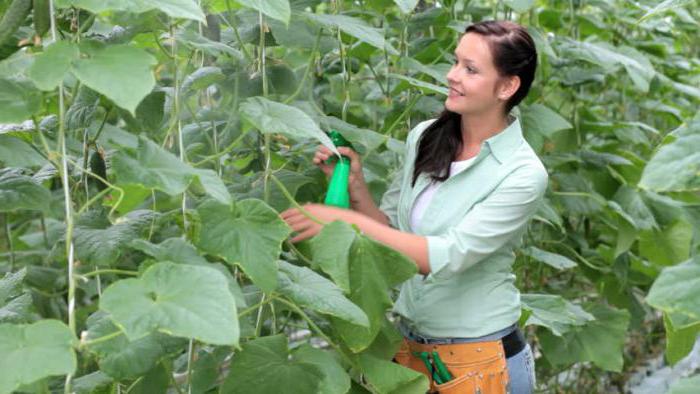
If downy mildew is detected on cucumbers, folk remedies can help solve the problem. In many cases, these remedies are just as effective as chemical treatments. The most common solutions include the following recipes:
- Soap and soda solution. This solution effectively eliminates the disease at its early stages. It consists of boiled water (5 liters), baking soda (30-40 g), and antibacterial liquid soap (10-15 ml). Combine the ingredients and mix thoroughly until completely dissolved. Spray the plants and soil with the prepared solution. Apply up to three treatments at 7-day intervals throughout the season.
- Brilliant green. Dissolve 50 g of urea, 2 l of whey, and 10 ml of brilliant green in 10 liters of water. Use the solution to spray cucumbers after flowering begins. A total of three applications, 7 days apart, are required.
- Milk with iodine. The solution is prepared using milk (1 liter) with iodine (30 drops) and laundry soap shavings (20 g). The bushes are treated regularly—every 10 days.
- Wood ash. This product is suitable for dusting cucumbers and soil.
- Onion peels. Like most other folk remedies, an infusion of onion peels is only effective in the early stages of downy mildew. For every 10 liters of water, use 0.5 kg of onion peels. Combine the ingredients and simmer over low heat, then let steep for several days. The recommended frequency of treatment is once a month.

Prevention
Protecting cucumbers from fungi begins with preventative measures:
- When growing crops in a greenhouse, maintain an optimal microclimate, loosen the soil and provide ventilation;
- carefully select the area, pre-treat the soil and seeds with antifungal compounds;
- control the soil moisture level during the period of growth and development of bushes;
- apply fertilizers regularly;
- Infected plants are removed immediately to prevent the spread of the disease;
- At the end of the season, destroy the remaining plants, dig up and disinfect the soil;
- the beds with agricultural crops are changed annually;
- For preventive purposes, cucumbers are treated with fungicides.
Disease-resistant varieties
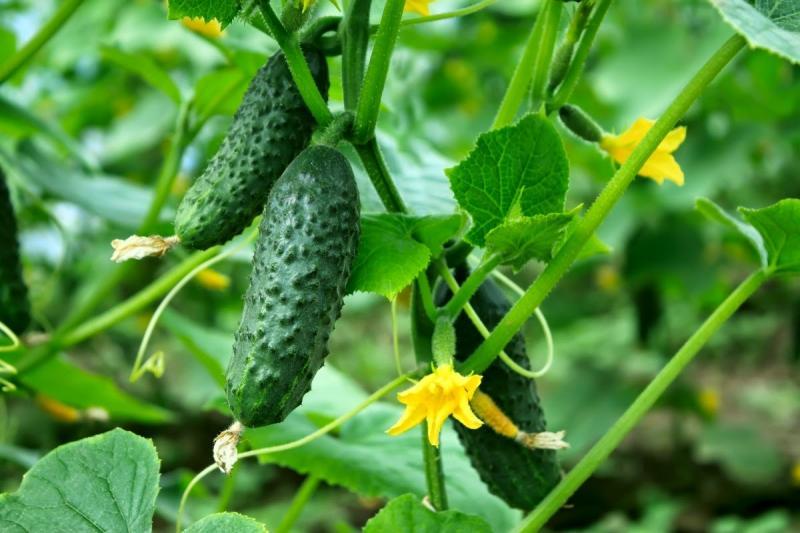
To initially reduce the risk of developing fungal diseases, it is necessary to choose cucumber varieties with a high level of resistance to fungi:
- Tom Thumb. This early-ripening variety is resistant not only to powdery mildew but also to a number of other diseases. The fruits ripen 38-40 days after germination.
- Octopus. This hybrid is grown outdoors. Fruiting occurs in 44-49 days.
- Pasadena. This mid-early hybrid bears fruit in 44-49 days.
- Murashka. Can be grown both in a greenhouse and in the open ground. Fruit is harvested 44-49 days after germination.
- Golubchik. Fruit ripening takes 55-58 days. This variety's advantages include a pleasant flavor and high yield.
It's impossible to provide 100% protection against downy mildew. No cucumber variety is completely resistant to fungal spores. Despite this, powdery mildew poses a serious threat to the crop, so preventative measures and timely treatment are essential for growing cucumbers.
Related posts:
 Description of the best varieties of Chinese cucumbers, planting, growing and care
 How to care for cucumbers in open ground from planting to harvesting
 Description of unusual methods for planting and growing cucumbers
 How to properly plant cucumber seedlings in a greenhouse and care instructions
 Description of the best, most productive and new varieties of cucumbers for 2025
 How to properly plant cucumbers in open ground with seeds, and at what depth
 How to make a cucumber trellis with your own hands from scrap materials
 Types of fungicides for cucumbers in a greenhouse and instructions for use