
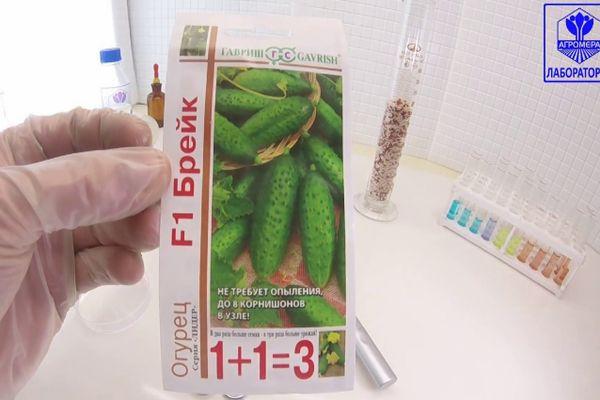
Break cucumbers belong to the group of early-ripening hybrids. The variety was added to the State Register of Russian Cucumbers in 2002. Break f1 cucumbers are used fresh, added to salads, pickled, and preserved for the winter.
Cucumbers can be grown in greenhouses made of plastic or glass. The fruits are well suited for long-distance transportation.
Briefly about the plant and its fruits
The characteristics and description of the variety are as follows:
- The hybrid's growing season, from planting to the first fruits, lasts 40-43 days. This female variety produces cluster-shaped ovaries.
- The height of the bushes ranges from 1 to 1.4 m. The leaves are medium-sized, smooth, and green.
- On average, 2 to 4 ovaries form in the axils of the plant's central shoot, but sometimes their number increases dramatically. On the lateral shoots, the number of ovaries ranges from 6 to 8.
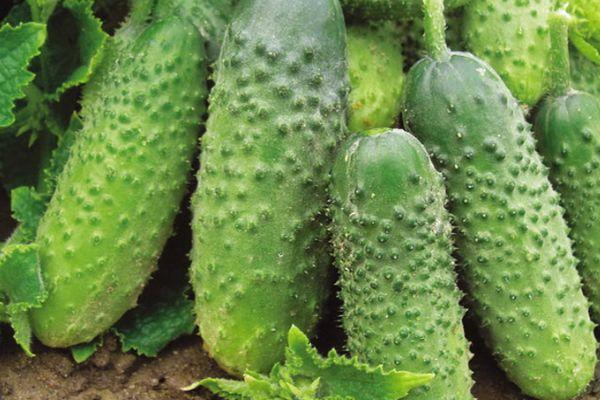
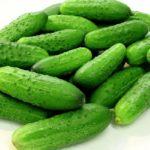
- The hybrid's fruits are cylindrical. Their surface has a moderate number of tubercles. Fruit weight ranges from 80 to 100 g. Cucumbers are 90 to 110 mm long and 3-3.5 cm in diameter. The skin is dark green, becoming lighter near the tips. Blurred light stripes run across the entire surface of the fruit, extending up to a third of its length. The hybrid has white spines. The surface of the fruit is covered with fuzz.

Feedback from farmers growing this hybrid shows that the yield of cucumbers is up to 8.5 kg of fruit per bush.
The plant is resistant to diseases such as downy mildew, powdery mildew, and root rot.
Planting and cultivation of the hybrid is carried out throughout Russia.

Growing seedlings yourself
After purchasing seeds, a gardener's first step is to disinfect them with hydrogen peroxide or a weak solution of potassium permanganate. The planting material is then treated with growth stimulants. Special preparations or a honey solution are used for this purpose.
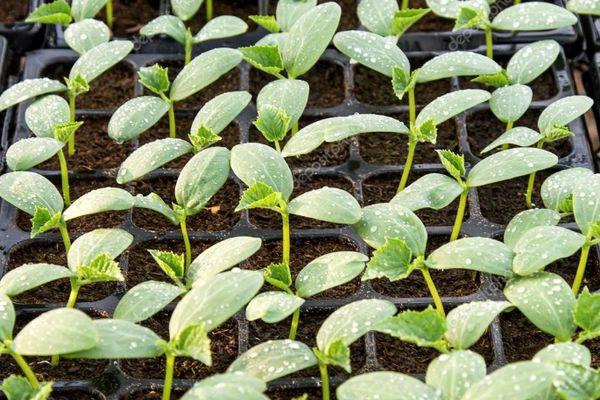
The seeds are planted in individual peat pots. They are planted 20 mm deep and watered with warm water. Breakroot is a heat-loving plant. Therefore, it is recommended to maintain a temperature of 25 to 30°C in the room where the containers with future seedlings are located. After the first sprouts appear (after 6-7 days), they are fed with chicken manure or chicken manure. Watering the seedlings is recommended once every 4-6 days.
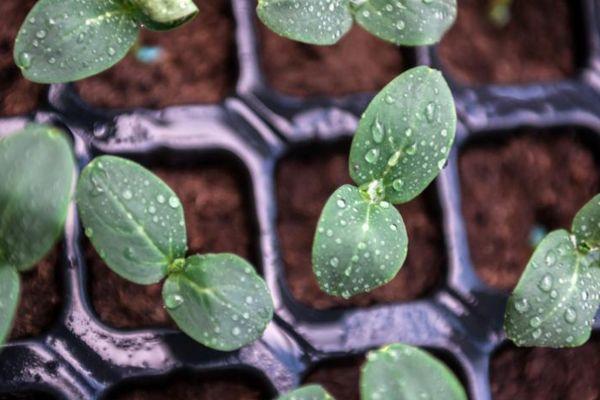
When the seedlings reach a height of 10-15 cm, they can be transplanted to permanent soil. For this, the beds are prepared. They are loosened and disinfected with bleach. Organic fertilizers (peat, manure, wood ash) are added to the soil. Then, the soil is watered thoroughly and the seedlings are transplanted. The young bushes are planted at a distance of 0.5 x 0.5 m.
How to care for hybrid bushes
To maintain the desired microclimate in the greenhouse, it needs to be regularly ventilated. Drafts are not recommended. Timely loosening of the soil after watering will allow the cucumber root system to receive the necessary amount of oxygen. This will accelerate the development and growth of the hybrid.
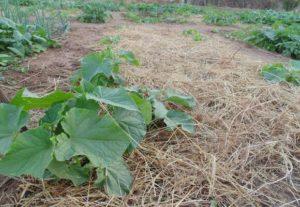
To ensure proper root ventilation, you can mulch the soil in your garden beds. This will help young seedlings resist fungal and bacterial diseases. It also kills root parasites.
Fertilize the bushes every 5-7 days. For this purpose, it is recommended to use nitrogen, potassium and phosphorus fertilizersThey can be replaced with organic mixtures created from natural ingredients. This hybrid requires enhanced nutrition for growth. Root and other methods of fertilizing the bushes are used for this purpose.
It is recommended to water the vegetables daily. Use small amounts of water. Puddles should not form under the plant stems, as this will slow growth. Avoid getting water on the leaves, as sunny weather can burn the hybrid, which will negatively impact yield. Use warm water for irrigation. Allow the water to settle in a barrel placed in the sun. Watering of plants is done after sunset or early in the morning.
A rake is used to weed the garden beds. This process is performed once a week. Removing weeds protects young plants from fungal and bacterial infections that are transmitted to crops from weeds. It also eliminates garden pests that initially infest weeds and then move on to crops.
Although Break is immune to some diseases, experts recommend spraying the bushes with medicinal products to prevent fungal or bacterial infections. If chemical treatments are unavailable, the plants are treated with copper sulfate. Garden pests are controlled with toxic chemicals.
Related posts:
 Description of the Krasotka grape variety, planting and care technology
 Description of the Julian grape variety, planting and care instructions
 35 Best Powdery Mildew-Resistant Cucumber Varieties with Descriptions
 Description of the Elematis Pink Fantasy variety and pruning group, planting and care
 Description and pruning group of clematis Ernest Markham, planting and care of the hybrid
 Description of Serpentine cucumbers and methods of growing the hybrid variety
 The best eggplant varieties for growing in a polycarbonate greenhouse: planting and care
 The best grape varieties for growing in the Urals, planting and care rules in summer