
- How to tell if cucumbers need fertilizer
- When is it necessary to feed cucumber bushes?
- After planting in open ground
- During the period of flowering and ovary formation
- During fruiting
- How to apply fertilizer correctly
- Under the root
- The nuances of foliar feeding
- Benefits of chemical-free fertilizers
- Folk recipes for fertilizers for cucumbers
- Making fertilizer from banana peels
- Eggshells
- Potato peelings as a complementary food
- Humus
- Aspirin
- Spent mushroom mycelium
- Aloe Fertilizer
- Iodine and milk
- Water with herbal infusion for a good harvest
- Mullein and bird droppings
- Nettle infusion
- Onion peel
- Bread
- Yeast
- Ash
Every cultivated plant grown in a garden or vegetable patch requires proper care. Cucumber plants are no exception. Fertilization is considered one of the key agricultural practices for increasing yields. For those who want to grow vegetables without the addition of chemicals, fertilizing cucumbers grown outdoors with folk remedies is a good option.
How to tell if cucumbers need fertilizer
Cucumbers are a low-maintenance crop. However, timely fertilization will boost their immunity and yield. Deficiencies in certain nutrients can often be identified by the condition of the leaves, stems, and fruits. If the leaves take on light yellow hues, the bush needs an additional source of nitrogen. When leaf edges begin to curl downward, the plant requires calcium supplementation. If a light rim appears along the edges, add potassium, while the presence of veins indicates a magnesium deficiency.
The fruits can also indicate the plant's micro- and macronutrient needs. Cucumbers shaped like hooks or bulbs indicate poor nutrition. Pear-shaped cucumbers require potassium fertilizer, while pointed cucumbers require nitrogen. Timely fertilization can help prevent nutrient deficiencies.
When is it necessary to feed cucumber bushes?
Bushes with long shoots and wide leaves require a large amount of nutritional complexes. In addition to supporting immunity, fertilizers help increase crop yields. As the plants develop, they are fed several times a season: at planting, at the beginning of fruiting, and during fruiting. Gardeners use ready-made formulas or traditional recipes.
After planting in open ground
Preparatory fertilizing is done in the fall. If this hasn't been done yet, it can be done before sowing seeds or planting seedlings. Humus-rich soil, warmed to 15 degrees Celsius, is ideal for cucumbers. The pH should be neutral or slightly acidic.
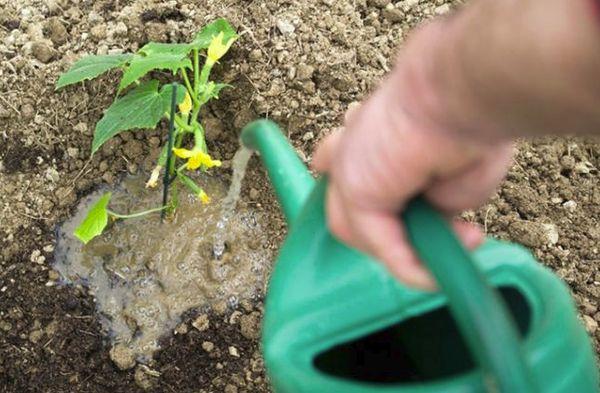
In early spring, fertilize with humus or manure. If the gardener doesn't have a lot of mineral fertilizer, 2 tablespoons of ash can be added to the holes. In some situations, 1 kg of compost can be used instead.
During the period of flowering and ovary formation
A second feeding should be done before flowering. Cucumbers will require potassium and phosphorus nutrients during this period of development. Wood ash is a good choice at this stage. Apply 100 grams per square meter. Sprinkle the ash over the beds, then water the plants.
During fruiting
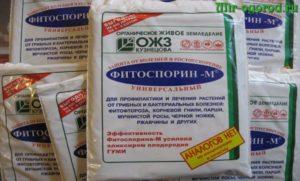
During fruit ripening, provide additional sources of potassium fertilizer. Ash fertilizers have received positive reviews. It's important to adhere to the prescribed dosages of the fertilizers. Proper application will result in an increased number of female flowers and future fruit set. Fruits will have a uniform shape.
How to apply fertilizer correctly
There are two methods of applying fertilizer: foliar application and foliar application. The components applied to the soil interact with the soil's acidity and are then absorbed by the plant. Foliar application provides beneficial nutrients to the stems and leaves.
The advantage of the latter method of application is the high speed of distribution throughout all plant organs.
Under the root
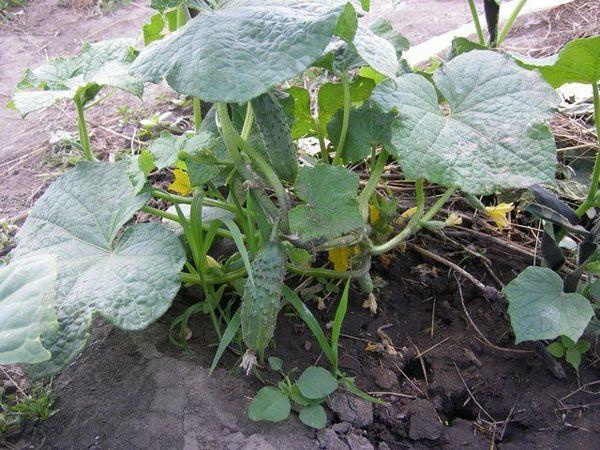
Fertilizers applied this way deliver nutrients to the required depth. The fertilizer, when combined with the soil, is evenly distributed throughout the entire area around the plant. Therefore, all parts of the root system receive sufficient micro- and macronutrients. The effect of this type of feeding can last for several weeks.
The nuances of foliar feeding
This fertilization method is most often used during the fruiting period. The required nutrients are diluted in water and sprayed onto the cucumber leaves. The best time to apply this fertilizer is early morning or evening.
Exposure to direct sunlight will negatively impact the process. This can cause the plant to become sunburned. The leaves will then turn yellow, and the plant will wilt. Foliar feeding promotes rapid yield increases, so it is essential during the flowering and fruiting periods.
Benefits of chemical-free fertilizers
Using ready-made fertilizers makes life much easier for any gardener. However, many fear that such complexes contain large amounts of chemicals that can be harmful to health. Therefore, folk remedies are often used as fertilizers for cucumbers. They have their own advantages:
- naturalness;
- nutritional value;
- ecological cleanliness;
- ingredients for preparing nutritional formulas can always be found at hand;
- The effectiveness of the recipes has been tested over the years.
Folk recipes for fertilizers for cucumbers
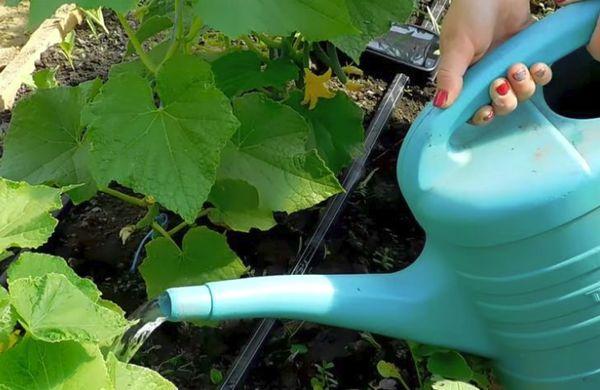
To increase cucumber yields, a variety of infusions are used. They are made from onions, garlic, bread, and milk. The most popular are solutions made from humus, mullein, or bird droppings. The main rule for fertilizing cucumbers grown outdoors is timing.
Making fertilizer from banana peels
Banana peels can also be used as fertilizer. Dried peels make a good mulch. They can also be used to make an infusion that nourishes young plants. There are two preparation options:
- Soak 3 fresh banana peels in 3 liters of water and let them sit. After 3 days, mix the infusion with the same amount of water. Water the solution at the roots.
- The second method involves using dried peels, using 4 bananas per liter of water. The infused solution is then poured over the cucumbers.
Eggshells
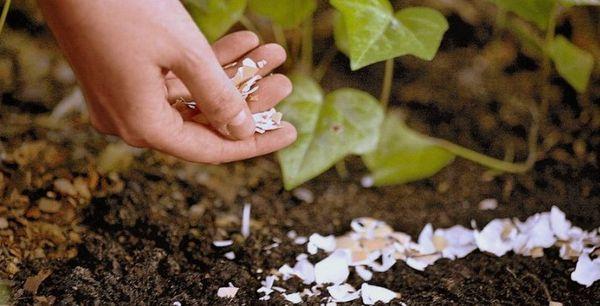
Clean, dry eggshells are suitable for this purpose. They should be ground using a meat grinder or coffee grinder. The smaller the pieces, the higher the efficiency of the fertilizer.Handle this ingredient carefully to avoid injury. Pour boiling water over the powder at a rate of 5 eggshells per 1 liter of liquid. Let it steep for at least 5 days. Before use, dilute the tincture with water and apply it to the roots.

Potato peelings as a complementary food
Plant waste has also proven itself as a good fertilizer for cucumbers grown outdoors. Potato peelings are steeped in boiling water and left for several days. Then, a glass of the prepared infusion is diluted with 5 liters of water. The cucumber plants not only receive nourishment but also protection from disease. A similar recipe is used to prepare infusions from orange and carrot peels.
Humus
This type of organic fertilizer is recommended for application in the fall. First, remove the top two centimeters of soil. Then, spread the fertilizer evenly over the entire area. Finally, replace the removed soil and level the area.
Aspirin
In addition to its positive effect on plant growth, Aspirin effectively combats fungus and low soil acidity. Aspirin accelerates plant growth. Gardeners prepare a solution for watering plants. Dissolve one tablet in a liter of liquid. In some cases, an undissolved tablet can be placed directly into the soil at a depth of 10 cm.

Spent mushroom mycelium
Gardeners have developed a cucumber fertilizer made from mycelium. The mycelium is collected and mixed with equal parts hot water. The mixture is left to stand for 24 hours. After this time, the solution is filtered and diluted with water before watering. The ratio should be one part mycelium to 10 parts water.
Aloe Fertilizer
The nutritious nature of aloe juice accelerates cucumber growth. To prepare the fertilizer, peel several leaves, wash them, and place them in a container. Both old and young leaves are suitable. Next, puree them. Dilute one tablespoon with a glass of water and let it steep for a week in a cool, dark place. Then dilute the mixture with 5 liters of water. To prepare the solution, boil it and cool it.
Iodine and milk
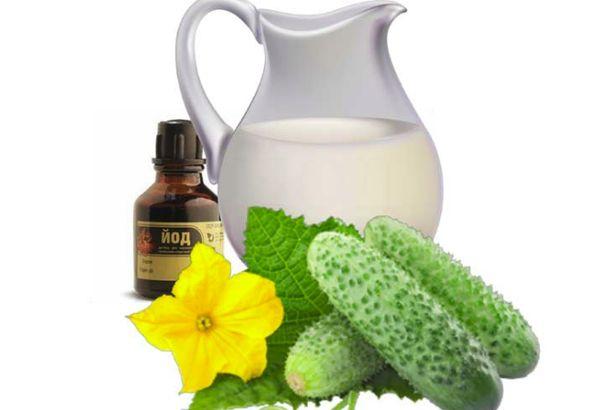
Milk, interacting with iodine, strengthens the trunk and shoots of bushes and increases the yield. This mixture provides effective protection against late blight. To prepare a root dressing, mix 15 drops of iodine with 4 cups of milk. Dilute the resulting solution with 10 liters of water. For foliar feeding, mix 1 liter of milk or another fermented milk product, 1 tablespoon of liquid soap, and 30 drops of iodine per 10 liters of water.
Water with herbal infusion for a good harvest
To make this fertilizer, cut fresh grass and then soak it in water. Let the liquid steep for several days. On the fourth day, squeeze the grass. The cucumber fertilizer is ready. The grass is also used as a top dressing and is spread between the rows.
Mullein and bird droppings
These ingredients are popular for their high nitrogen content. Furthermore, they contain virtually no weed seeds. To prepare the solution, use 3-4 containers of water per bucket of fertilizer. The mixture is left to ferment for several days, stirring regularly. During fermentation, uric acid, which is detrimental to cucumber roots, is eliminated. After the process is complete, 0.5 liters of the solution can be applied under each plant.
Take a look Also
Nettle infusion
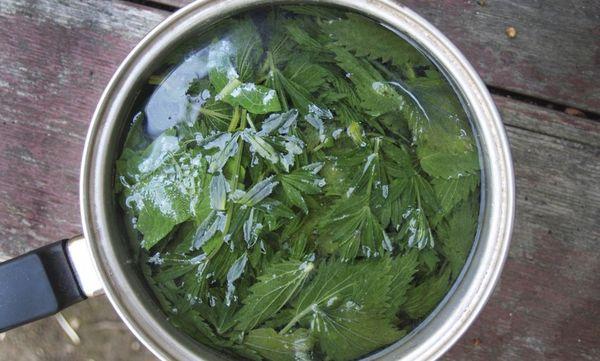
To prepare the solution, chop the plant and then add boiled water. Cover the container and let it steep for 4-5 days. Then, strain the solution and dilute it with liquid at a ratio of 1:20. For the tincture, choose young, non-flowering nettles and enamelware.
Onion peel
If the leaves are turning yellow, an infusion of onion peels can be helpful. To prepare it, add a cup of peels to 8 liters of water. Bring the mixture to a boil, cover, and let it steep for 4 hours. After cooling, strain the solution. Apply the fertilizer to the roots.
Bread
This is suitable for making sourdough, which increases yields. Dried black bread is used. It is ground and filled to a container 2/3 full. Then, water is added to just cover the breadcrumbs. A lid with a diameter smaller than the container is placed inside. A weight is placed on the lid.
This will prevent the bread from floating to the surface and going sour. The kvass is then left in a warm place for a week. After the starter is ready, add 3 liters of water. Root nutrients are added every 8-9 days. This infusion can be used from the beginning of flowering until the harvest is complete.
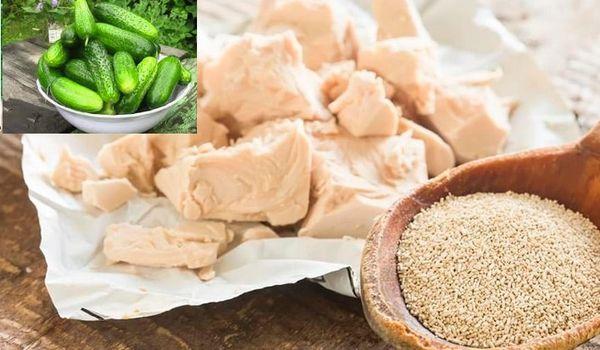
Yeast
This fertilizer works similarly to sourdough starter. Dissolve the yeast in a bucket of water and let it sit for 30-36 hours. Place the container in a warm place to allow the fermentation process to occur. Water one bush with 1.5 liters of solution.
Ash
Ash is used to increase potassium, magnesium, and phosphorus levels. It is added to the planting holes when planting cucumbers. Use half a cup of wood ash per cucumber plant. Mix it with the soil and water thoroughly. Repeat this process every two weeks. For irrigation, prepare a solution of one cup of powder per liter of water, using 2 liters of liquid per plant. Add 2 tablespoons of dry ash to each cucumber plant before watering.
A wide range of traditional recipes for cucumber fertilizers allows you to choose the most convenient solution. Natural fertilizers help you grow a bountiful harvest without chemicals.
Related posts:
 Description of unusual methods for planting and growing cucumbers
 What is the best way to feed cucumbers during flowering and fruiting?
 How to care for cucumbers in open ground from planting to harvesting
 How to plant cucumbers in open ground under film: timing and cultivation technology
 Description of the best varieties of Chinese cucumbers, planting, growing and care
 How to properly plant cucumbers in open ground with seeds, and at what depth
 How to properly plant cucumber seedlings in a greenhouse and care instructions
 Is it possible to soak treated cucumber seeds before planting and how to do it correctly?