
- Cucumbers on the balcony: advantages and disadvantages of growing
- Which varieties to choose?
- What do you need to grow bushes?
- Suitable soil
- Is drainage necessary?
- What container to plant cucumbers in: the required container volume
- Plastic bottles
- Pots
- Where is the best place to plant cucumbers?
- Preparing seeds for sowing
- Optimal time for sowing
- Sowing and germinating seedlings
- Caring for young sprouts and mature cucumber bushes
- Light
- Watering
- Top dressing
- Picking seedlings
- Pinching
- Forming cucumber vines and tying bushes to a support
- Pollination
- What pests can threaten cucumbers on the balcony: control methods
- When cucumbers ripen on the balcony: the nuances of harvesting
Breeders have developed several varieties of cucumbers specifically for planting on balconies and growing them in plastic bottles (or other suitable containers) during the cold season. Self-pollinating varieties are suitable for planting on a balcony. Pots or 5-liter plastic bottles are recommended as containers.
Cucumbers on the balcony: advantages and disadvantages of growing
The benefits of growing balcony cucumbers are as follows:
- This method reduces the risk of frostbite or infection of the plant;
- less water is required for irrigation;
- you can get an early harvest of cucumbers;
- ensures uniform heating of the soil, which has a positive effect on the root system of cucumbers.
The main drawback of this growing method is that only one plant can be planted per 5-liter bottle. Therefore, it's impossible to get a bountiful cucumber harvest at home.
The second drawback of this method is that the plant grows excessively. Therefore, to grow cucumbers indoors, you'll need a fairly spacious balcony.
Which varieties to choose?
Parthenocarpic (self-pollinating) hybrid varieties are suitable for planting on a windowsill:
- Brownie;
- Buyan;
- Emelya;
- Cuckoo;
- Hermann;
- April.
There are also other varieties of cucumbers that can be planted on the balcony.
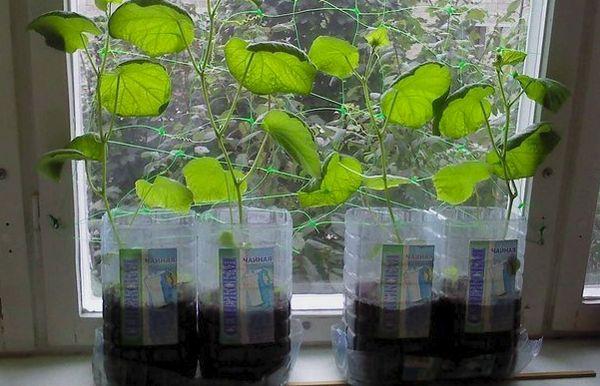
What do you need to grow bushes?
In addition to planting material, for germination at home you need to take a container of a suitable size and pre-prepared soil.
Suitable soil
Garden soil isn't suitable for growing cucumbers on the balcony. Such soil may contain pathogens or weed seeds. It's recommended to plant cucumbers in a soil mixture with complex fertilizers. To save money, you can use sod soil mixed with peat, sawdust, ash, and compost. Then, add 5 grams of phosphorus, potassium, and nitrogen fertilizers to the resulting mixture.
Is drainage necessary?
Drainage should be added to each container where vegetables are planned to be grown. To create this layer, add expanded clay sand, perlite, or vermiculite to the soil mixture. Providing drainage will increase oxygen flow to the root system and improve the soil's water-holding capacity.
What container to plant cucumbers in: the required container volume
For growing cucumbers at home, any container large enough to allow for normal root development is suitable. Such containers should have a capacity of more than one liter.
Take a look Also

Plastic bottles
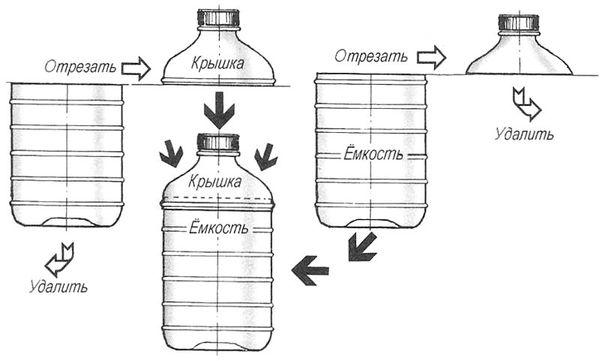
Plastic bottles significantly reduce the cost of growing vegetables. 1.5- or 2-liter plastic containers, as well as 5-liter ones, are suitable for planting cucumbers. If smaller bottles are chosen, cut the container crosswise with a knife to form a pot. In 5-liter containers, remove the top (you can also cut it lengthwise).
After preparation, you need to make several holes in the bottom of the plastic bottles with a nail to remove excess moisture.
Pots
Indoor plant pots are also used for growing vegetables. It is recommended to choose containers of sufficient capacity (at least 1 liter).
Where is the best place to plant cucumbers?
Cucumbers are heat-loving plants. It's recommended to plant this vegetable in areas with adequate light. They don't tolerate cold or drafts well. However, the balcony where the cucumber containers are kept should be periodically ventilated.

Preparing seeds for sowing
Cucumber seeds should be prepared before sowing on the balcony. First, the seedlings are warmed in a room at 25 degrees Celsius. The seed packaging will tell you how long to keep the seeds in these conditions. One month is usually sufficient.
The seedlings required for sowing must be free of external damage and deformation. After warming, these seeds should be placed on gauze soaked in a 1% potassium permanganate solution for up to half an hour or soaked in Fitosporin-M for two hours.
Some gardeners additionally warm up the planting material. To do this, they place the seeds on a radiator and keep them at 60°C for 10 hours. However, this procedure is not necessary.
Finally, the prepared cucumber seeds should be laid out on a damp cloth or placed in a bag and stored in a warm place for two days. During this time, the material should be periodically moistened. After this time, the first sprouts should appear from the seeds.
Optimal time for sowing
If it is planned growing cucumbers on the balcony, then the optimal time for sowing sprouted seeds is the first half of April.
Sowing and germinating seedlings
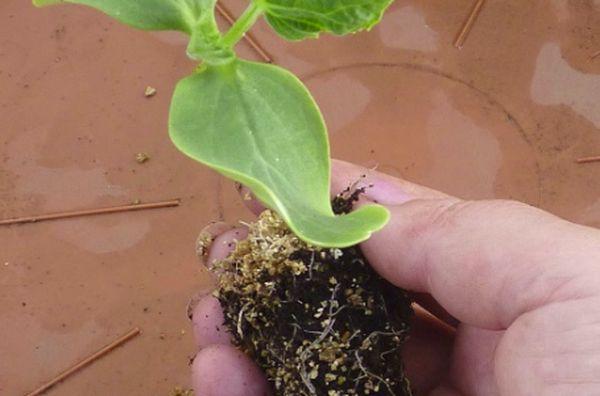
Planting sprouted seeds in containers on the balcony is carried out according to the following algorithm:
- Add a 4-5 cm layer of drainage material to the prepared container, followed by soil. Leave at least two centimeters to the top of the bottle.
- Moisten the soil and make holes 3-5 centimeters deep.
- Place planting material in each hole. You can sow up to five seeds in a 5-liter bottle. This is done to ensure a single, strongest shoot (the others are removed).
- After sowing, moisten the soil slightly with a spray bottle.
Finally, place the container with cucumbers in a warm, well-lit area. If desired, you can grow the seedlings first and then transfer them to a larger bottle.

Caring for young sprouts and mature cucumber bushes
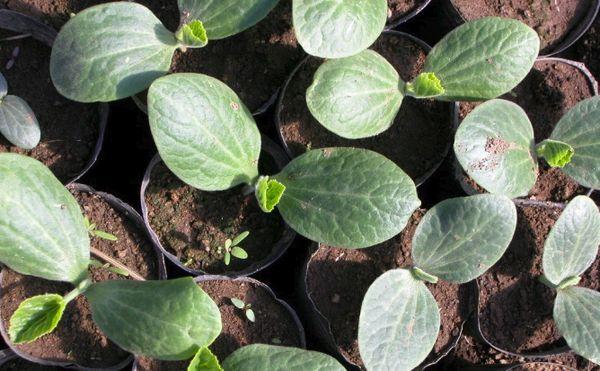
To achieve a healthy cucumber harvest on the balcony, the plants require constant care. However, this doesn't have to be a long time commitment. When germinating seeds, cover the bottle with plastic. It's recommended to remove the film twice a day for 10 minutes, removing any accumulated condensation. Once the sprouts have fully emerged, remove the plastic from the bottle.
Light
Cucumbers require good light. If the sun doesn't shine enough, the leaves will turn yellow and fall off. To avoid this, it's recommended to place the plant containers on a south-facing surface. During the day, the leaves should be shaded to prevent sunburn. If the sun is infrequent in the spring or summer, UV lamps should be placed near the cucumbers.
Watering
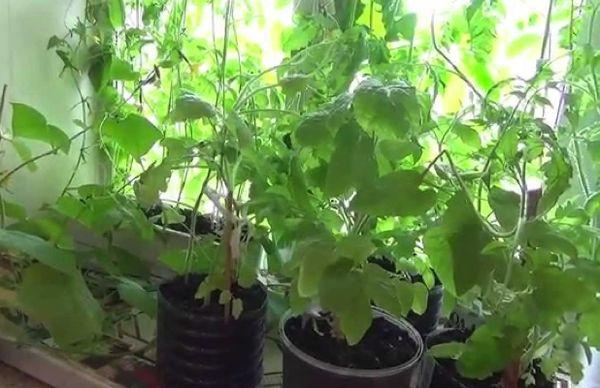
For watering cucumbers on the balcony, it is recommended to use warm, settled water. For the first 20 days after sprouting, the soil should be moistened every 2 days. After flowering, reduce watering frequency to once a week. During fruit formation, moisten the soil every 3-4 days. Water at the roots, avoiding contact with the leaves (this may cause burns). After each watering, loosen the soil to ensure oxygenation.
Top dressing
The first feeding is done when the first flowers appear. For this, use a mixture of:
- urea;
- sodium humate;
- potassium sulfate;
- superphosphate.
To prepare a nutrient mixture, take one gram of each ingredient and mix it in 10 liters of water. After 12 days, apply a second feeding. During this period, fertilize the plant with a mixture of potassium sulfate and sodium humate (one teaspoon of each) per 10 liters of water. This mixture can be used for subsequent feedings. The fertilization frequency remains the same.
During flowering, it is recommended to spray the plant with a mixture of one teaspoon of urea and one liter of water. After the first fruits appear, a second spray is recommended. In this case, use 1/3 teaspoon of urea and one liter of water.
Picking seedlings
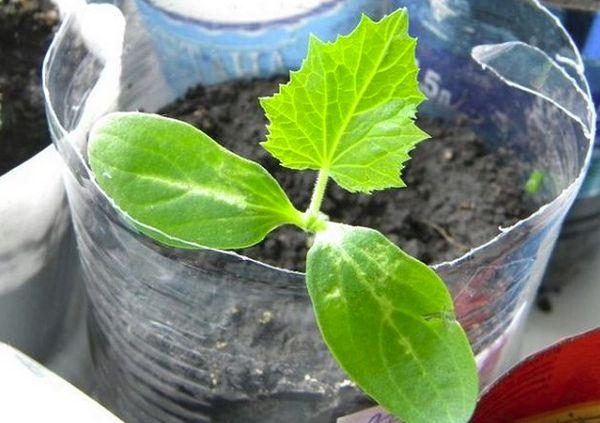
When growing cucumbers on a balcony, transplanting is usually avoided. This is because this procedure is intended to promote root growth.
Pinching
Because there isn't enough space on the balcony for actively growing cucumbers, side shoots are pinched regularly. The section of the stem below the 11th or 12th leaf is also removed when the plant reaches the top of the trellis.
Pinching of the stem is carried out according to the following scheme:
- at a height of 50 centimeters, the shoots are removed so that one ovary and several leaves remain;
- At a height of no more than a meter, 4 shoots are left, each of which has 2 ovaries.
The last stage is then repeated every 50 centimeters.

Forming cucumber vines and tying bushes to a support
To support the cucumber plants, it's recommended to install a large-mesh net or trellis on the balcony near the container. Then, tie ropes to the stems 15 centimeters above the ground and secure them to the frame. Install the net or trellis when the plant reaches 20 centimeters.
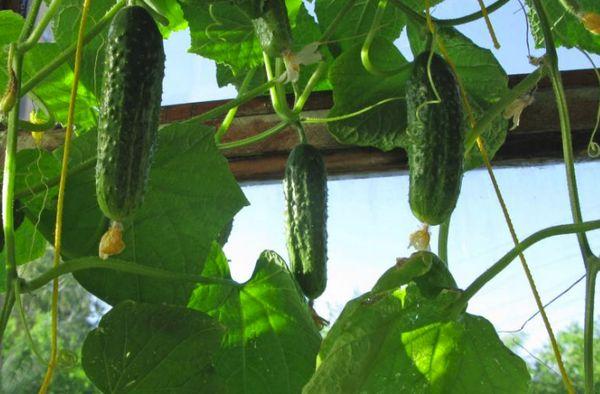 As the cucumbers on the balcony grow, the ropes need to be loosened. When pinching, it is recommended to leave up to three lateral shoots.
Pollination
Self-pollinating cucumbers are recommended for growing on the balcony. However, if you purchased a different variety, to obtain cucumbers, you need to use a paintbrush to transfer pollen from the male flower to the female flower (located on the small green bud).
What pests can threaten cucumbers on the balcony: control methods
When growing cucumbers on the balcony, the crop is sometimes affected by:
- Spider mites. To combat this pest, prepare a mixture of a head of garlic, soaked in water for two hours, and a small amount of laundry soap. Apply this mixture to each leaf.
- Aphids. To combat insects, boil tobacco in a liter of water for 10 minutes. Then add the same amount of water to the resulting mixture. Afterwards, spray the crop with the resulting mixture.
- Whitefly. To control this insect, use the same solution as for aphids.
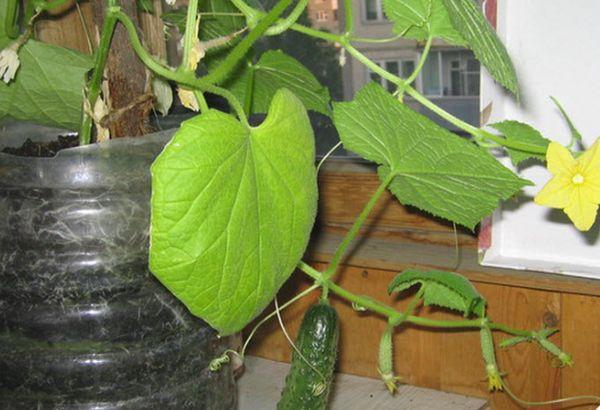
Cucumber sprout flies are a common problem at home. To prevent this insect from appearing, the crop should be treated with a fragrant ointment (Zvezdochka is a good option).
When cucumbers ripen on the balcony: the nuances of harvesting
The first fruits form 2-2.5 months after the first sprouts emerge from the seeds. Harvesting cucumbers grown on the balcony follows the same principles as for garden crops. If you need cucumbers for salads or pickling, it is recommended to harvest cucumbers longer than 10 centimeters. Harvesting should be done in the morning and evening. Once fully formed, pick the cucumbers every two days.
Gardeners recommend strictly adhering to the specified timeframes. Failure to do so will result in poor fruit flavor and a reduction in the number of new ovaries per plant.
Related posts:
 How to properly plant cucumbers in open ground with seeds, and at what depth
 Description of unusual methods for planting and growing cucumbers
 Description of the best varieties of Chinese cucumbers, planting, growing and care
 How to Properly Plant and Grow Cucumbers in 5-Liter Bottles
 How to care for cucumbers in open ground from planting to harvesting
 Is it possible to soak treated cucumber seeds before planting and how to do it correctly?
 How to make a cucumber trellis with your own hands from scrap materials
 Step-by-step technology for growing tomatoes on the balcony, the best varieties with descriptions