
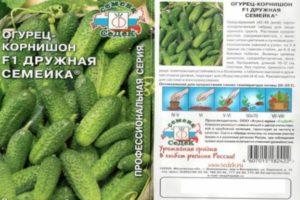
The "Veselye Gnomiki" F1 cucumber belongs to a group of hybrids whose fruits grow in clusters, reminiscent of banana bunches. This variety produces high yields even in unfavorable climates. This vegetable can even be grown indoors, on a balcony or loggia. However, yields drop by 20-30%. The fruits can be transported over any distance. Vesyolye Gnomiki can be stored in a cool place for up to 1.5 months. The vegetables are eaten fresh or canned for winter.
Technical characteristics of the hybrid
The description of the plant is as follows:
- This variety belongs to the group of early-ripening hybrids. The growing season from first shoots to fruiting lasts approximately 40 days, regardless of whether the cucumbers are grown outdoors or in greenhouses.
- The hybrid does not require insect pollination. The bushes reach a height of about 1.2 m (in a greenhouse), so they need to be tied to a trellis. The plant is grown from a single stem.
- The hybrid requires constant removal of side shoots. Up to five fruits develop in the cucumber axil. The plant has increased immunity to most diseases.
- The fruits are 80-90 mm long and average around 80 g in weight, although many gardeners have managed to grow specimens weighing up to 0.1 kg. The flower side of the cucumber is light green with yellow stripes (which extend halfway down the length of the fruit), while the main body of the vegetable is dark green.
- The surface of the vegetable is covered with bumps and white spines, but the skin of the fruit is quite thin, and the flesh is juicy and crisp.
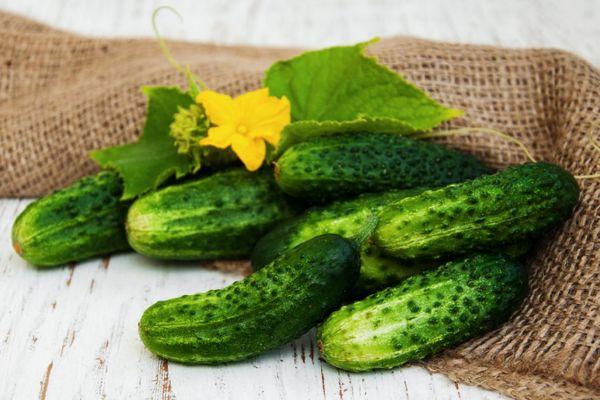
Farmer reviews indicate that Vesyolye Gnomiki yields 5-7 kg per bush. Fruiting continues until the end of August. Although the cucumbers don't overgrow, timely harvesting is recommended to prevent the bush from drying out.

How to grow vegetables yourself?
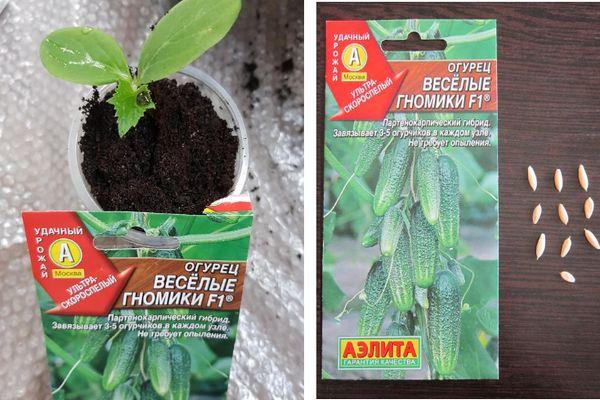
Seedlings are germinated from seeds by soaking them in warm water. After this, the planting material is laid out on a napkin to dry. After two days, 90% of the seeds have developed roots. After this, they can be planted in the ground. Most often, for growing seedlings, the seeds are sown in individual containers. This occurs in early March. The soil should be loose and fertilized with manure or peat.
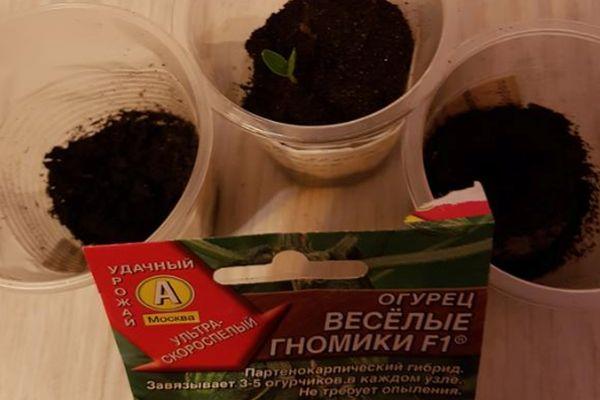
If the seeds are sown in plastic cups, they should be planted at a depth of 15-30 mm. When using a common seed tray, leave 70 mm between individual seeds, and 20 cm between rows.
Until the sprouts develop, cover the container with glass or transparent film. Once the seedlings emerge, keep the soil slightly moist. Fertilizing the sprouts begins when they develop two leaves.
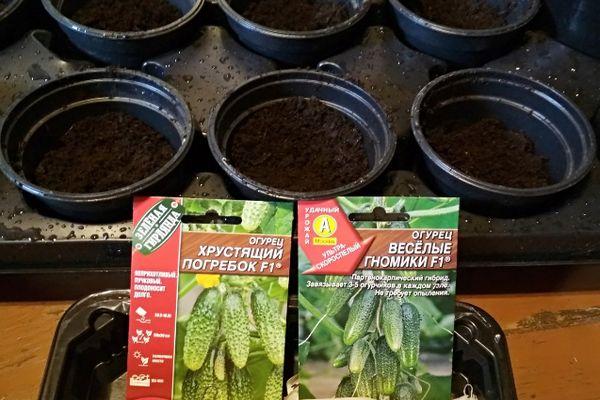
When the seedlings are 25-30 days old, they are transplanted to their permanent location. If planting outdoors, no more than three plants are planted per square meter, and up to five seedlings per square meter in a greenhouse.
The seedlings are transplanted to an open area in May. The soil is fertilized with organic fertilizer and dug over. The seedlings are planted in a 0.3 x 0.7 m pattern.
In regions with cold climates, seedlings are transferred to beds in a greenhouse. This occurs in the last ten days of April.
How to care for bushes before fruiting?
Water with warm, settled water once every two days. This is most often done in the late evening. During hot summer weather, watering is postponed until early morning. To prevent scorching, avoid allowing the leaves to come into contact with moisture. During sudden cold snaps, reduce watering frequency to once every five days.
Fertilize the bushes with complex fertilizers, alternating them with organic mixtures. It's best to combine fertilizing with watering. The first application is two weeks after transplanting the plants to their permanent soil. Fertilize the bushes every 9-10 days thereafter. Fertilization should be continued even during fruiting.

When the bushes are growing, nitrogen fertilizers are used; during flowering, they switch to phosphorus; and after the fruits appear, the plants are fed with both phosphorus and nitrogen ingredients. The hybrid must be treated with growth stimulants twice per season. At first, this is done when the buds open, and then during intensive flowering.
Although the Merry Gnomes are disease-resistant, preventative measures should not be neglected. The use of Fitosporin is recommended for this purpose.
The hybrid may be susceptible to aphids. To control them, soap or ash solutions are recommended. Some gardeners use various herbal infusions or decoctions. If these fail to kill the insects, commercially available organic pesticides should be used.
Related posts:
 The best eggplant varieties for growing in a polycarbonate greenhouse: planting and care
 Causes and treatment of eggplant pests and diseases, how to combat them at home
 Growing and caring for hazelnuts in open ground, rules for planting hazelnuts
 Is it possible to soak treated cucumber seeds before planting and how to do it correctly?
 Methods for planting and propagating cherries at home
 Description and rules for growing Solaris grapes
 The best grape varieties for growing in the Urals, planting and care rules in summer
 Description of varieties of sowing peas and cultivation, to which family they belong
These cucumbers are far from the largest, but in my opinion, they are the most delicious and pleasant in appearance. If I only pickle cucumbers from these cucumbers, they are sweet in any form, and in a jar they are also crunchy.