
The Vyuga f1 cucumber is very popular among vegetable growers seeking an early cucumber harvest. This hybrid variety was developed by breeders at the Biotekhnika agricultural firm. This vegetable boasts a number of advantages. Due to its high quality, it is increasingly being grown by large farms and farmers for commercial purposes.
Even a novice gardener can grow tasty and healthy cucumbers in their own garden. The Vyuga variety is characterized by good resistance to various fungi and viruses. Before getting started, it's worth studying the description and key characteristics of the crop and familiarizing yourself with the main rules of cultivation.
Description of the variety
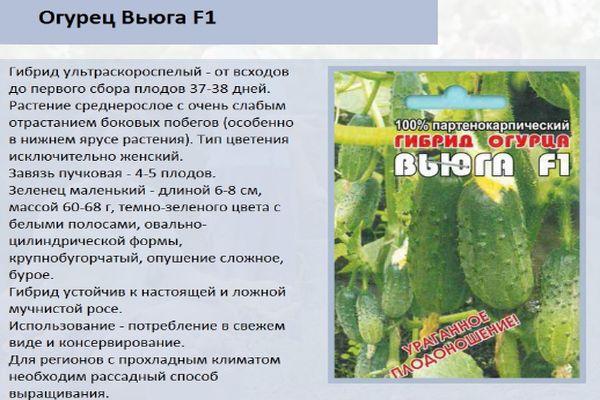
The plant is parthenocarpic. The Vyuga variety is self-pollinating, meaning it doesn't require any beekeeping to pollinate its flowers.
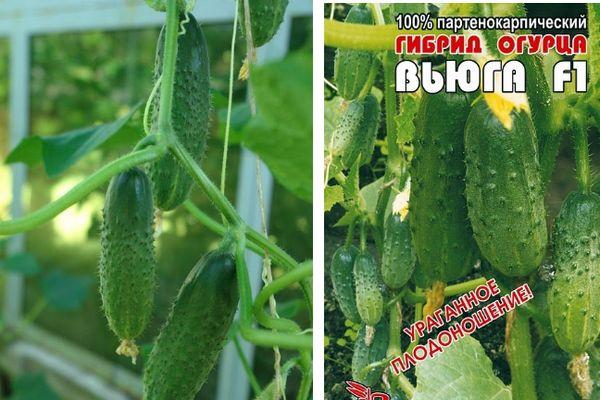
This hybrid is early maturing. Its growing season is only 37-38 days.
Vyuga cucumbers are intended for growing in greenhouses or hotbeds. Experienced gardeners recommend growing this variety from seedlings in regions with cooler temperatures. Otherwise, the seeds are sown directly into the garden beds.
Mature bushes are medium-sized, typically reaching a height of no more than 70-80 cm. The foliage is medium-sized and dark green. The central branch grows freely, while the lateral shoots grow slowly and weakly. The inflorescences on the bushes are primarily female, with 3 to 5 ovaries located per leaf axil.
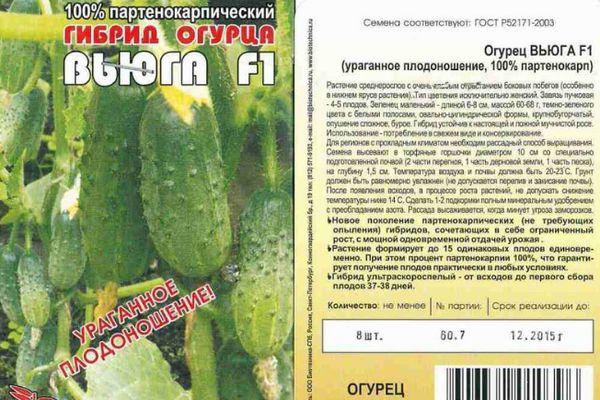
The fruits of the Vyuga variety have the following description:
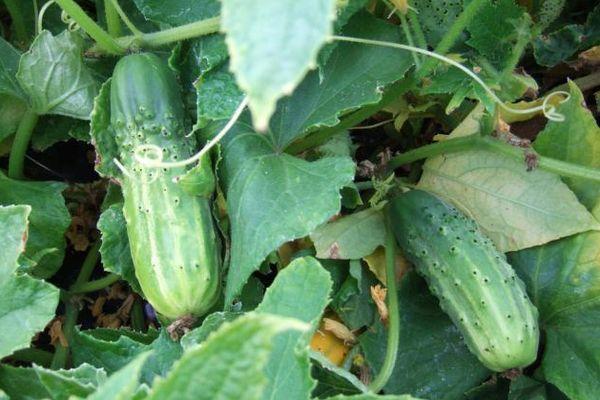
- cucumbers are cylindrical in shape;
- the skin is dense and covered with a large number of small tubercles;
- the average weight of 1 fruit is 70-80 g; its length rarely exceeds 8 cm - as soon as the cucumber reaches 5-6 cm, it begins to grow in width;
- the fruits are green in color, but the shade is slightly lighter towards the top; there are white stripes up to half the cucumber;
- The taste is excellent: the cucumbers have a sweet and at the same time spicy taste; they have a pronounced cucumber aroma;
- The yield of this species is very high: about 15 kg can be collected from 1 m².
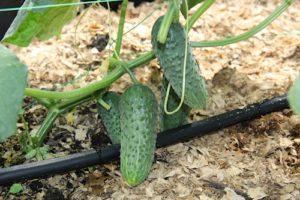
The Vyuga cucumber variety is versatile. It's perfect for fresh salads and garnishing meat dishes. It's also used for canning and pickling.
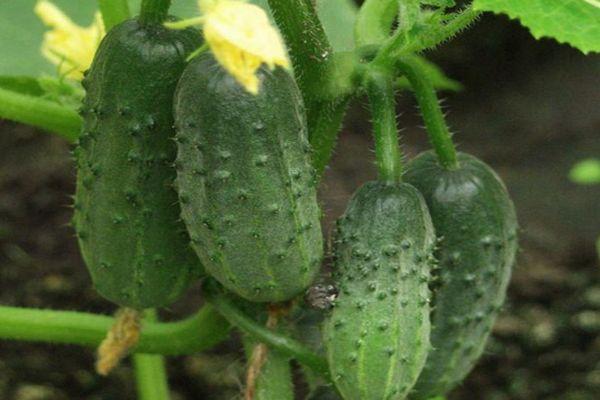
The plant has good resistance to fungi such as downy mildew, powdery mildew and olive spot.
The Vyuga cucumber has many advantages: it produces a large early harvest, is resistant to specific fungi, and has excellent flavor. However, the variety does have a small drawback: the fruits are prone to developing internal voids.
In order to grow a crop on your plot, it is necessary to competently and correctly organize its agricultural technology.
Growing rules
The Vyuga variety can be grown using either seedlings or without seedlings.
For seedlings, seeds must be properly prepared. To do this, they are soaked in a weak solution of potassium permanganate and a growth stimulant. The seeds are soaked in the liquids for 1-2 hours. Then they are dried and tested for germination. To do this, prepare a saline solution and place the seedlings in it. Seeds that float are not suitable for planting. Only those that sink to the bottom are used. This method is used to prepare seeds not only for seedlings but also for planting in a greenhouse.
The soil for cucumbers should be nutritious and loose. A mixture of turf, sand, and peat is best. Sometimes, peat is replaced with compost. Special containers are filled with soil and holes are made in it about 2 cm deep. The seeds are placed in the soil and covered with soil, compacting it lightly.
Immediately after planting, water and cover the container with plastic wrap. Store the container in a warm, dark place until the first sprouts appear. Then remove the plastic wrap and allow the loops to unfold. Then move the container to a brighter location. Transplant the seedlings into the garden beds when they are 2-3 weeks old.
Seedling care involves regular watering and the application of complex mineral fertilizers. These fertilizers should contain nitrogen and potassium. It's important to monitor the soil. Avoid overwatering and waterlogging, as this can damage the weak and fragile roots.
Many gardeners recommend planting seeds directly in individual small peat pots. This makes the subsequent process of transplanting seedlings into the garden beds much easier and shortens the plant's adaptation period.
The Vyuga variety receives positive reviews from both professional farmers and amateur gardeners. Everyone notes that the plant is easy to care for, hardy, and produces a high yield.
Related posts:
 Is it possible to soak treated cucumber seeds before planting and how to do it correctly?
 Description and characteristics of the best seeds of pea varieties and types
 How to propagate and grow peas, cultivation technology, and care in open ground
 80 Best Eggplant Varieties for Different Regions with Descriptions and Characteristics
 Carrot care guidelines for outdoor cultivation to ensure a good harvest
 The best eggplant varieties for growing in a polycarbonate greenhouse: planting and care
 Description of the 90 best varieties of beans for open ground with names
 How to properly plant peas in a greenhouse and open ground