
- Types of devices
- Autoclave design and instructions for use
- Preparation for canning
- Delicious recipes for the autoclave
- Canned meat
- Poultry preparations
- Canned fish
- Mushroom preparation
- Canning vegetables
- Tomato sauces
- Pork stew
- Ground meat
- Barley with lamb
- Porridge with rice and pork
- How and for how long should you store winter preparations?
Simple recipes for home canning in a pressure canner are a real boon for any home cook. This simple device can significantly speed up the canning process. Furthermore, no experience is required; you can get good preserves the first time. Hundreds of recipes have been developed for pressure canners, but the most popular are for poultry, fish, meat, various tomato sauces, and stews.
Types of devices
An autoclave is a device used to preserve homemade food fairly quickly. Its key feature is that it raises the cooking temperature from the standard 100 degrees Celsius to at least 120 degrees Celsius. This is achieved by generating higher pressure.
Using this equipment allows you to:
- preserve much more vitamins and nutrients in the product, compared to the standard canning method;
- the exposure time is reduced, as a result, the housewife will close the jars quite quickly and will be able to go about her business;
- The taste is rich and original - the special feature of using an autoclave is that no additional ingredients such as sugar, salt, vinegar essence or citric acid are required for preparation.
Of course, such a device would be useful in any home. But it's especially worth considering for those who keep livestock and poultry on their property or in the countryside.
Autoclave design and instructions for use
Canning with an autoclave at home is always done under vacuum, meaning no air gets into the jars during the process. The jars are tightly sealed.
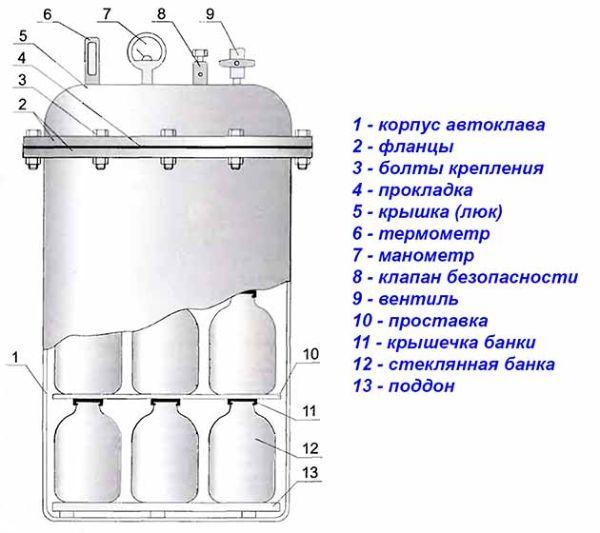
There are several types of autoclaves. Among them:
- those that do not build up pressure themselves in advance;
- those that create excess pressure in advance.
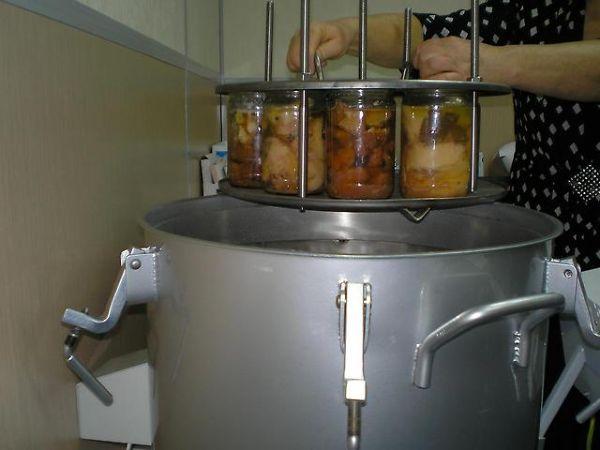
The first type, which don't pump air automatically, are equipped with special cassettes or simply clamps. You'll need to place them on metal plates, then press them down with another plate. This secure fit is necessary to prevent the lids from being blown off the jars during cooking. This could, of course, not only spoil the food but also cause injury.
Autoclaves that automatically pressurize the jars don't require any air to be pumped out. Simply close the jars and then apply the required pressure using a special pump. It is clear that the pressure in the jar at this time will be significantly lower, so the lid will physically not be able to be torn off.
Preparation for canning
Canning using an autoclave is carried out according to a slightly different algorithm, in contrast to the classic one, when ordinary jars are used.
Necessary:
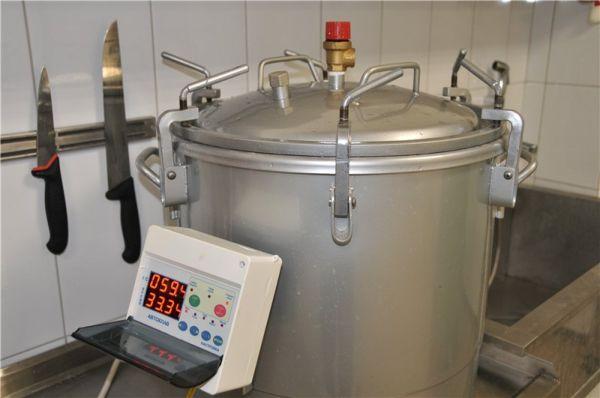
- place the container in the autoclave;
- fill with water;
- pump up air to one atmosphere;
- treat the sensors, valve and nipple with a soap solution;
- If the seals are not tight, bubbles will appear - this problem needs to be addressed.
An autoclave is primarily a device for mass production at home. It's indispensable for farmers who raise meat and for fishermen whose passion is satisfied every weekend at the pond. Cooking food in an autoclave is a completely hassle-free and quick process.
Delicious recipes for the autoclave
You can preserve various preserves and canned goods for the winter in an autoclave. The key is to strictly follow the recipe and prevent air from entering.
Canned meat
You need to take:
- 1 kg of beef;
- 100 g bones;
- 100 g of lard;
- 2 heads of onions;
- 1 carrot;
- to taste: bay leaf, black pepper, cumin, salt.
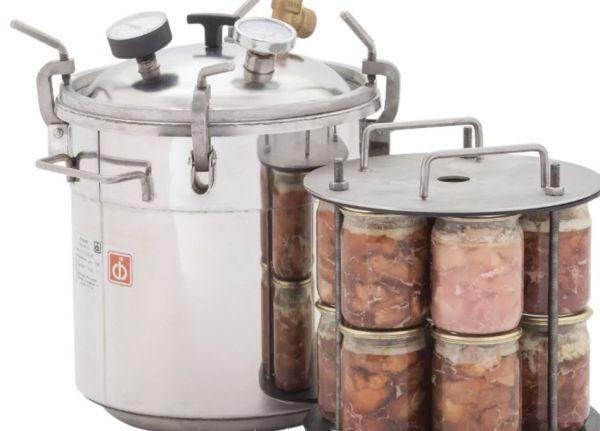
First, you need to make a broth from the beef bones. Chop the main ingredient and then fry it in a small amount of vegetable oil. Pack finely chopped or shredded vegetables and spices into the bottom of the container. Place the fried meat in jars, making sure there are no gaps. Then pour in the broth. In a pressure canner, cooking takes two hours at 120 degrees Celsius (250 degrees Fahrenheit). You can tell when the mixture is ready—the broth will turn into a gel.
Poultry preparations
The beauty of this recipe is that it can be made with any type of poultry. Chicken is delicious, but you can also use duck, goose, turkey, or even combine the chicken with other meats. There are a wide variety of combinations, so you can try different versions.
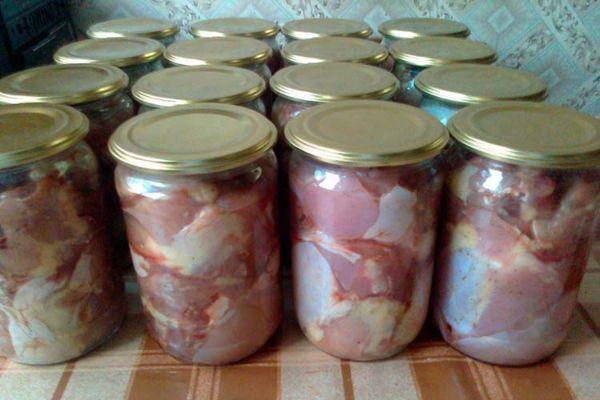
For one kilogram of the main ingredient we take:
- 2 heads of onions;
- laurel;
- 1 teaspoon coarse salt, not iodized;
- black peppercorns.
Cut the meat into small pieces—about 2 centimeters long and wide. Place it uncooked in a container, add sliced or half-sliced onion, spices, and seasonings to the bottom and top. The mixture will cook in just half an hour in a pressure canner at 110 degrees Celsius.
It is worth paying attention to the fact that goose and turkey meat contain fat, so it serves as a natural oil when melting for frying. There is a minimum of it in chicken, so you need to add a little boiled water.
Canned fish
Canned fish from silver carp, bream, mackerel, and gobies are very tasty; they can be added to fish soup or used as a supplement to a standard side dish.
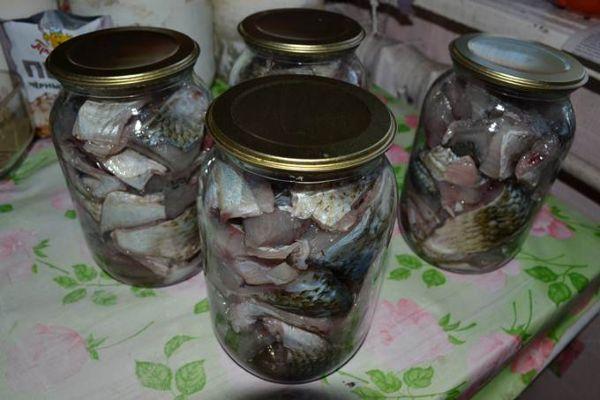
For one kilogram of prepared fish:
- 1 teaspoon salt;
- 1 tbsp. vegetable oil;
- 10 black peppercorns;
- seasonings for fish (you can do without them).
Gut the fish, remove scales and large bones (if necessary and possible). Then cut into pieces (3 or 4 cm wide) and place them in the bottom of the container. Mix each layer with the seasonings. Can in a pressure canner for 45 minutes at 110 degrees Celsius.
Mushroom preparation
You can can any mushrooms in a pressure canner. First, clean them, trim them, and chop them if necessary. Remove excess liquid by frying them in vegetable oil.
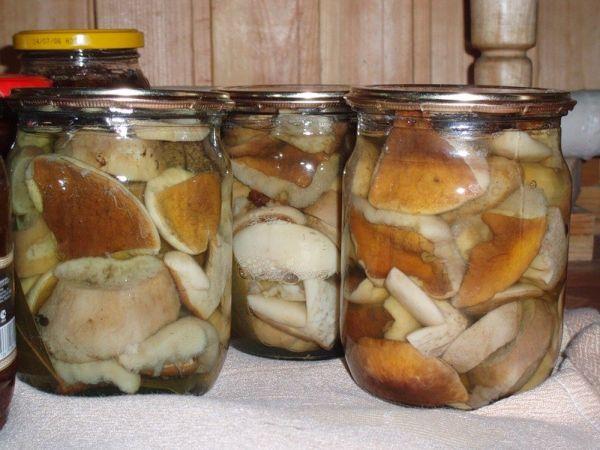
Next, place the mushrooms in the bottom of the container, add finely chopped onion and carrots (if desired), seasonings, and salt (one teaspoon per kilogram of mushrooms). Simmer in the pressure canner for approximately 50 minutes at 110 degrees Celsius.
Canning vegetables
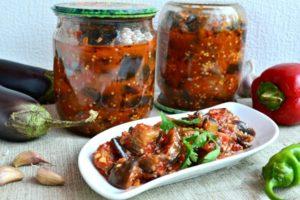
Seasonal vegetables also turn out delicious in a pressure canner. They can be eaten as a regular stew, added to pasta and grains, or used as a stir-fry for a delicious soup or borscht during the colder months. You'll need:
- 3 kilograms of eggplants;
- 2 kilograms of sweet peppers of various colors;
- 1 kilogram of dense tomatoes;
- 1 kilogram of carrots;
- half a kilo of onions;
- 2-3 teaspoons of salt;
- vegetable oil for frying.
The key is to fry the vegetables consistently. This way, they won't darken and will retain their shape even when stored in jars for a long time.
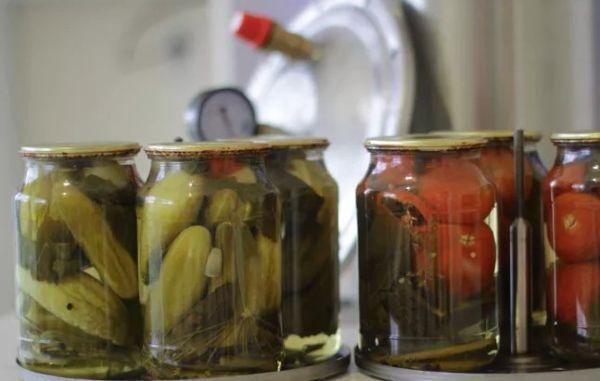
First, fry the eggplant for 4 minutes and set aside in a separate bowl. Fry the sliced peppers in the remaining oil. After 5 minutes, add the onions and carrots. Once the onions are golden, add the finely chopped tomatoes.
Seasonings are placed at the bottom of the jars; dill sprigs can be used, and garlic can be added. The vegetables are layered, remembering to sprinkle salt between each layer. Sterilization in an autoclave is incomplete—only 20 minutes at medium temperatures.
Tomato sauces
For canning you will need to take:
- 3 kg of tomatoes;
- 20 g salt;
- 1 teaspoon sugar;
- garlic, cloves, nutmeg, black pepper, cinnamon to taste;
- vinegar - a couple of tablespoons.
Take a look Also

Tomatoes are selected when they are as ripe and juicy as possible, with thin skins. The vegetables are minced, then simmered in a frying pan or enamel container until they have reduced to half their original volume. Other vegetables are also chopped—with a knife, blender, or grinder. Everything is mixed and poured into jars. Sterilization takes at least half an hour at 110 degrees Celsius.

Pork stew
For preparations take:
- 1 kg pork;
- 2 large onions;
- 1 tsp coarse salt;
- black pepper to taste, bay leaf.
You can fry the meat, but you don't have to. The latter option will result in a more tender and smooth dish. Press the meat into layers, mixing it with the seasonings, and cover with water. Place in a pressure canner for 45 minutes at 110 degrees Celsius.
Ground meat
Place the pre-prepared minced meat into sterilized jars. Add water—4-5 tablespoons per kilogram is sufficient. Sterilize for 50 minutes at 110 degrees Celsius.
Barley with lamb
They take:
- 1 kg lamb;
- 4 cups of dry pearl barley;
- sweet pepper, onion and carrot to taste;
- spices, including bay leaf and pepper.
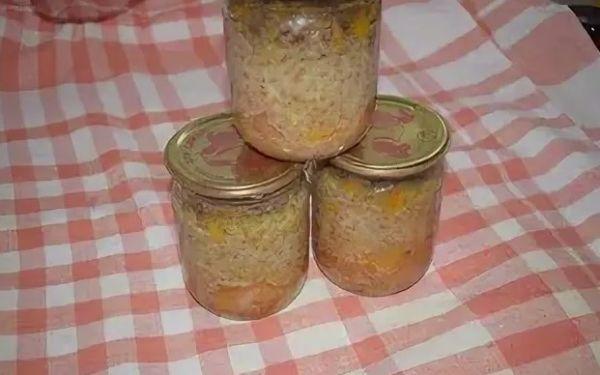
The lamb is thinly sliced and fried until lightly golden. The jars are filled a quarter full. Next, the washed grains are added until the entire mixture fills half the jar. Water is added until the jars are three-quarters full. Sterilize for 40 minutes at 120 degrees Celsius.
Porridge with rice and pork
Need to:
- 2 kg pork;
- 200 g lard;
- 120 g rice per jar;
- onions, carrots, spices.
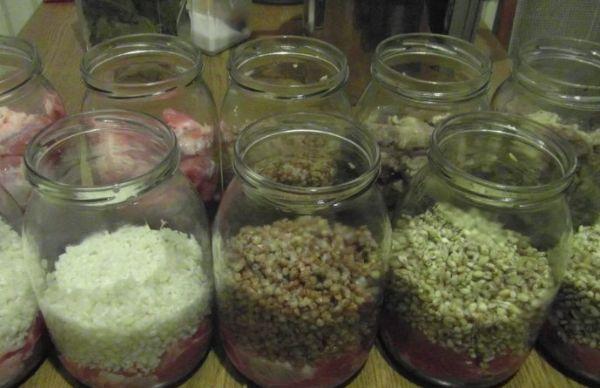
The meat is fried, and the lard is rendered in a frying pan. Arrange the meat in layers with the seasonings, filling no more than half of the container. Sterilize for 50 minutes at 110 degrees Celsius.
How and for how long should you store winter preparations?
Autoclaved products can be stored for up to 3 years. Store in a cool, dark place.
Related posts:
 The best grape varieties for growing in the Urals, planting and care rules in summer
 The best eggplant varieties for growing in a polycarbonate greenhouse: planting and care
 Methods for planting and propagating cherries at home
 Descriptions of the 20 best cherry varieties for the Moscow region, their planting and care
 Carrot care guidelines for outdoor cultivation to ensure a good harvest
 Causes and treatment of eggplant pests and diseases, how to combat them at home
 Top 40 DIY New Year's Baking Recipes for 2020
 Description of 30 varieties and types of Muscat grapes, planting, cultivation and care