- Why might shoots appear?
- Mistakes made during landing
- Traumatization of bark and branches
- Incorrect placement of scion and rootstock
- Reasons for its removal
- Instructions for removing overgrowth
- Use of arboricides
- Shoot isolation method
- Mechanical methods
- Prevention of occurrence
- Are there varieties without suckers?
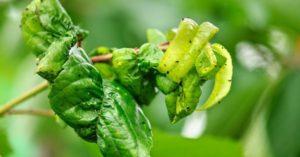
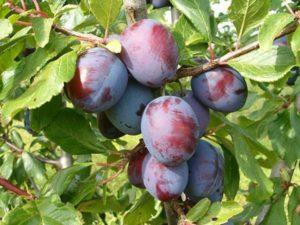
Plum is considered a tree that often forms suckers. This causes shoots to emerge from the roots around the plant. This negatively impacts the plant itself and deprives it of nutrients. In severe cases, there is even a risk of plant death. Therefore, many gardeners are interested in how to get rid of plum suckers. Chemicals and mechanical methods are acceptable for this purpose.
Why might shoots appear?
There are many factors that can trigger the growth of undergrowth. To prevent future problems, it's important to identify the causes.
Mistakes made during landing
The appearance of suckers may be due to the tree being planted too high. This leads to the active development of a spreading root system located near the soil surface. If the grafted area receives sunlight, the rootstock will form its own crown, resulting in numerous suckers.
Traumatization of bark and branches
Failure to properly care for the tree, exposure to adverse environmental factors, and various diseases can cause an imbalance in the supply of nutrients to the root system. This forces the plant to produce new shoots. Plum trees can also produce suckers if their shoots are improperly pruned.
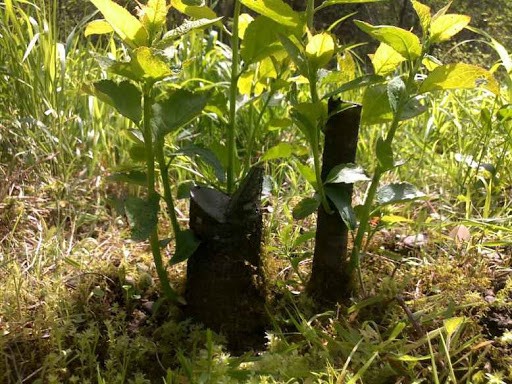
Problems most often arise the following year after improper pruning. They are generally associated with inadequate treatment of damaged areas with special products. Spurlings also appear if the gardener fails to remove the grafting bandage.
Take a look Also
Incorrect placement of scion and rootstock
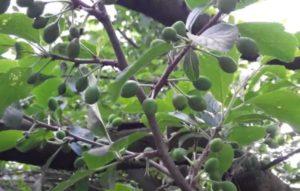
If the rootstock and scion are not properly mated, nutrient production is disrupted. Nutrients do not flow correctly between the top and bottom. It may take up to a year to identify the problem.
This can lead to root depletion, reduced tree growth, and premature yellowing of the leaves. Frost resistance often decreases, and the scion thickens. To compensate, the plant produces new shoots.
Reasons for its removal
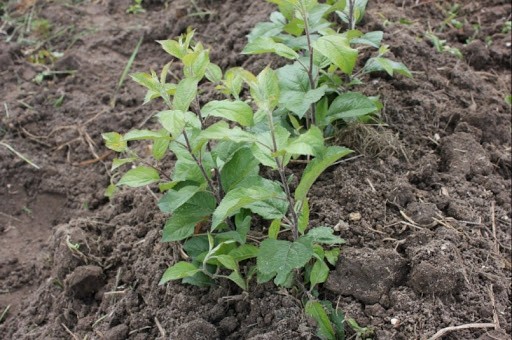
Plum tree suckers require removal for various reasons. Root suckers detract from the garden's appeal. They also rob the main plant of nutrients. This is due to the presence of a common rootstock.
Above-ground shoots feed throughout the growing season, absorbing numerous valuable nutrients. Consequently, the shoots disrupt the tree's nutritional status and negatively impact yield.
If you let the suckers grow, they'll be very difficult to get rid of. That's why it's so important to regularly remove wild plum suckers.
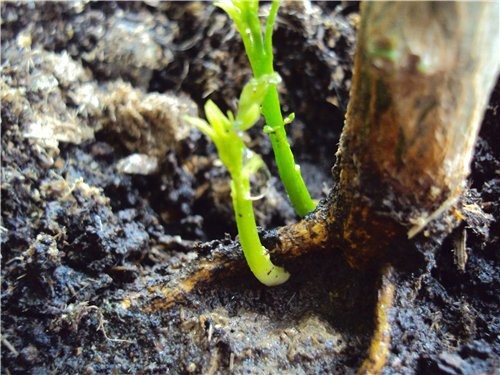
Instructions for removing overgrowth
To address the problem, various methods can be used. Chemicals and mechanical methods are suitable.
Use of arboricides
This method of root sucker removal is considered the most radical. Chemicals are used when it is necessary to remove the suckers along with the old tree. Products such as Arbonal, Alsenal, and Pikloram are used for this purpose.
These products are actively used to kill grassy weeds. To combat plum shoots, the dosage must be increased.
If there are other fruit trees in the garden, it is recommended to use milder products – arboricides. The most effective ones include Roundup, Tornado, and Uragan.
To carry out the procedure, you need to do the following:
- Cut down the tree and its undergrowth at the optimal height. If you don't plan to uproot the stump, you can do so at ground level.
- Use a drill to make 4-5 holes on the cut surface.
- Prepare a solution of the medication. The dosage indicated in the instructions should be slightly increased.
- Pour the liquid into the holes and cover with film. Leave it for a week.
- After the specified time, slightly ream the holes and add the next dose of the product. At this stage, you may notice noticeable wilting of the growth. If the effect is insufficient, the procedure can be repeated a third time.
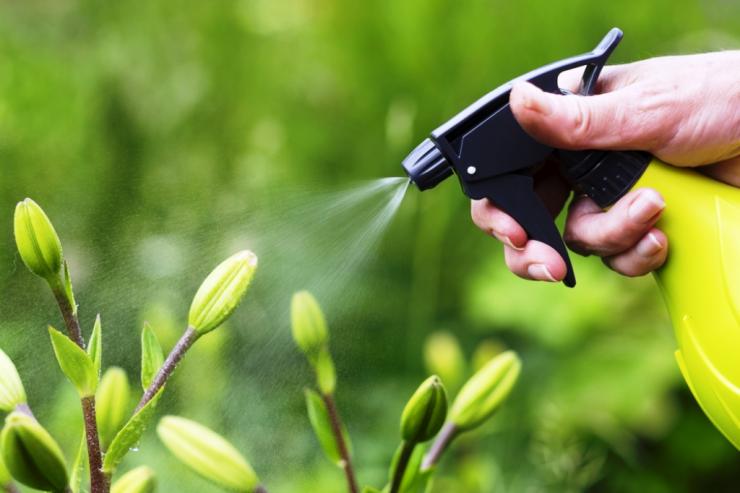
The shoots should be removed only after the root system has completely died. If a small portion of the root remains, there is a risk of new shoots appearing.
Shoot isolation method
This method is highly effective. When performed correctly, it can permanently remove hair growth. To do this, we recommend the following:
- Cover the soil with cardboard half a meter from the tree, water it well and trample it into the soil.
- Place film and roofing felt on top.
- Cover the objects with sand and earth.
A lawn or flower bed can be placed on top. Shoots will not be able to grow under the film and roofing felt. The disadvantages of this process include high labor intensity and lack of aesthetic appeal.
Mechanical methods
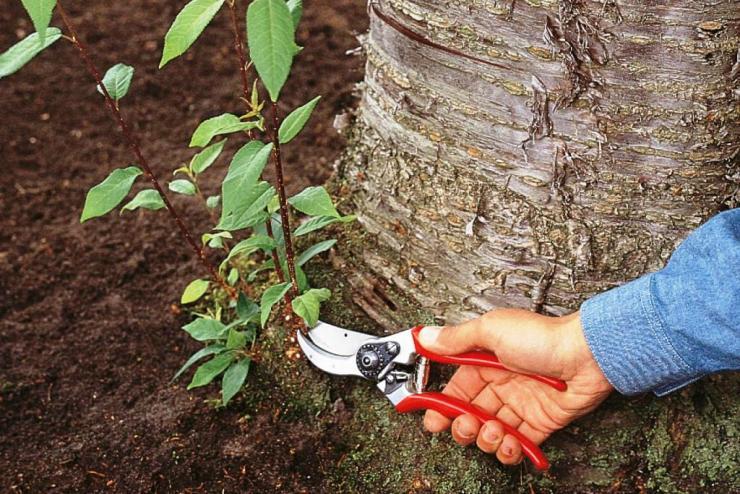
You can remove suckers with pruning shears. You can trim shoots at ground level or at the root system. The former method risks the rapid development of new suckers.
When removing shoots by felling, they must be dug down to the rootstock and cut off to the base. After pruning, the hole must be refilled with soil and compacted.
Prevention of occurrence
To avoid the appearance of shoots, it is recommended to adhere to the following rules:
- avoid digging the soil under the tree;
- When watering, avoid strong water pressure;
- when roots are exposed, cover them with a layer of soil;
- carefully shape the crown so as not to cut off too many branches;
- After pruning, treat the affected areas with garden pitch.

Are there varieties without suckers?
The following varieties produce the least amount of root shoots:
- Anna Shpet;
- Rencold Altana;
- Stanley.
Plum suckers can be removed using a variety of methods. Chemicals and mechanical methods are both effective. To achieve the desired results, it's important to follow the instructions carefully.
Related posts:
 How to permanently get rid of cherry tree growth on your property yourself
 How to get rid of tree growth, the best removal methods on the site
 How to quickly get rid of lilac shoots in your garden: the best methods and recipes
 The best eggplant varieties for growing in a polycarbonate greenhouse: planting and care
 Methods for planting and propagating cherries at home
 Why plum tree leaves turn yellow and fall off, and the best control measures
 How to prune grapes step by step for beginners
 Growing and caring for hazelnuts in open ground, rules for planting hazelnuts