
- What are the benefits of dried plums?
- With or without stones
- Preparing plums for drying
- Methods of harvesting at home
- In an electric dryer
- In the oven
- In the sun
- In the microwave
- In an air fryer
- Determining the quality of dried fruits
- Preparing the product for storage
- Choosing a location
- Compliance with conditions: temperature, humidity, lighting
- Container for storing dried fruits
- Storage methods
- In the apartment
- In the refrigerator
- In the freezer
- Possible problems
- Pests
- Mold
- Best before date
How to properly dry plums at home? This question is a common one for gardeners who have a bountiful harvest but don't know how to process it quickly. Prunes are rich in beneficial nutrients and quick to prepare.
What are the benefits of dried plums?
Daily consumption of prunes improves human health and has many beneficial effects:
- improves intestinal peristalsis;
- cleanses the body of waste and toxins;
- helps to cope with constipation;
- used for weight loss;
- normalizes metabolism;
- accelerates metabolic processes;
- saturates the body with vitamins and minerals.
Important! Excessive consumption of prunes can cause health problems.
With or without stones
The producer decides whether to leave the pits inside the berries. The presence of drupes does not affect the quality of the prunes. To remove the pits, cut the plums in half and remove them by hand.
Preparing plums for drying
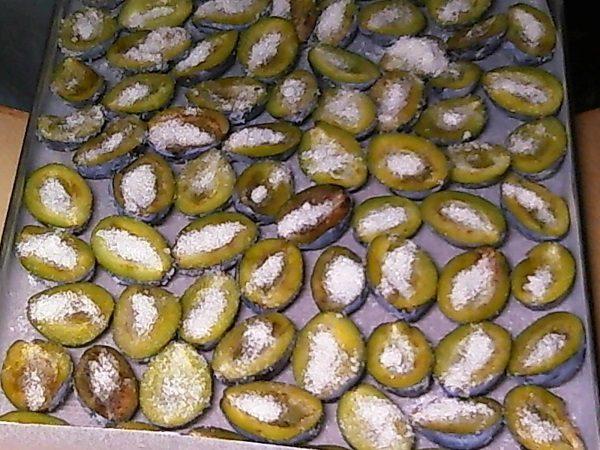
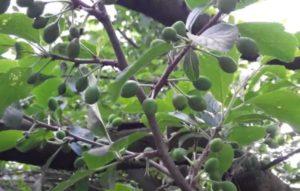
To dry plums, you need to prepare them properly. This procedure consists of several steps:
- The fruits are sorted, and berries without rot or damage are selected.
- The product is washed under running water and wiped clean of dust.
- If desired, remove the seeds.
- Prepare a soda solution at the rate of 5 g per 1 liter of water.
- Plums are dipped into it.
- Take out and rinse under running water.
- They begin drying.
Methods of harvesting at home
You can make prunes at home using an oven, convection oven, microwave, electric dehydrator, or simply leaving them to dry in the sun.
In an electric dryer
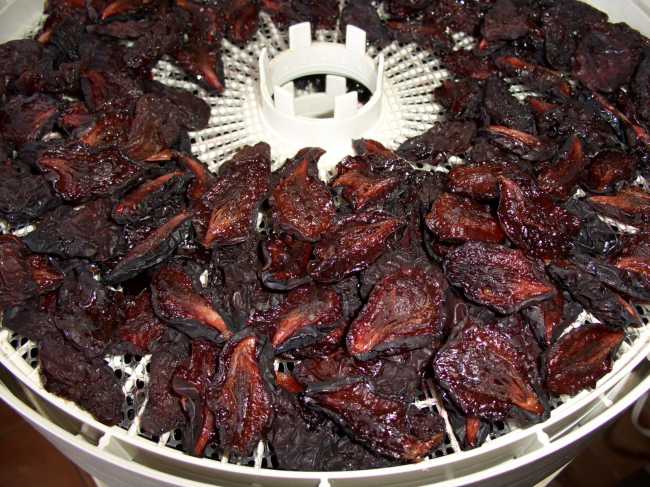
This device is designed specifically for drying fruits and vegetables. The drupes are laid out in neat rows on racks in an electric dehydrator. The process occurs in three stages:
- 4 hours at 50 °C;
- 6 hours at 60 °C;
- 4 hours at 70°C.
Take a look Also
Between temperature changes, the plums are turned over onto different sides.
In the oven
Drying prunes in the oven takes about 12 hours. Constantly running the oven consumes a lot of electricity, so this method is rarely used. A baking sheet is lined with special paper or foil. The prunes are spread out on it. The drying process occurs in three stages:
- 5 hours at 50°C;
- 6 hours at 70°C;
- 1 hour at 80 °C.
Important! Between stages, allow the prunes to cool completely and turn them over.
In the sun
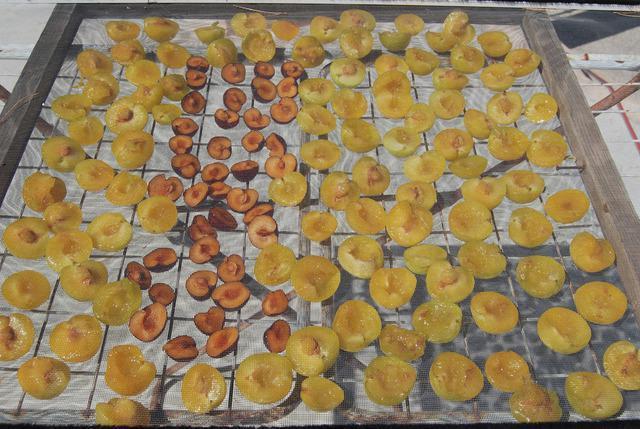
Drying plums in the sun is easy. The prepared drupes are laid out on racks in a ventilated area, turned once a day. The process takes 4-6 days, depending on the weather. Then the racks are moved to the shade and dried for another 4 days.
In the microwave
This express mode is suitable for plums with thick skins. Soft berries will turn into mush after processing. Arrange the prune slices in a row on the oven tray. Dry the prunes at medium power for 3 minutes. Then turn each berry over and repeat the process. Then check the condition of the product and continue drying, checking every minute.
In an air fryer
You can dry plums in an air fryer. After heat treatment, they become slightly juicy and firm. The taste is more pleasant than regular dried prunes. Arrange the plums on the rack and set the oven to 80°C for 40 minutes. Then, turn each drupe over and repeat the process.
Determining the quality of dried fruits
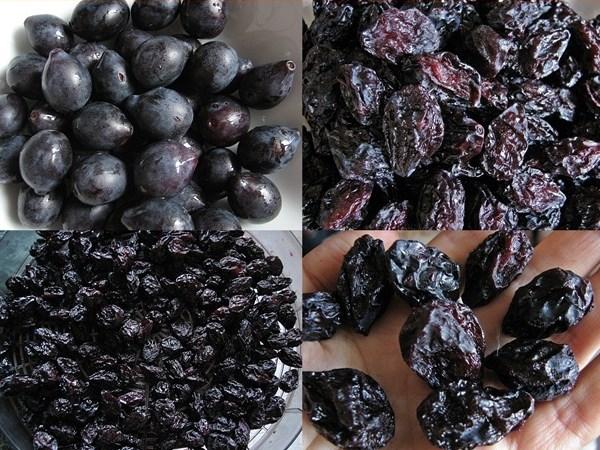
The quality of finished prunes can be determined visually. The fruits should be firm and whole, slightly firm, not sticky, and should not fall apart in your hands. Improper drying can cause the skin to crack, the fruit to change shape, and the fruit to become overdried.
Preparing the product for storage
To preserve prunes and their beneficial properties for as long as possible, it is necessary to choose the right location and storage container, as well as consider temperature, humidity, and lighting.
Choosing a location
Almost any storage location is suitable for dried fruit. They can be kept at room temperature or in a cellar. However, a cooler environment reduces the risk of mold and rot. If you notice that your prunes are quickly depleted, it's sufficient to leave them indoors.
Compliance with conditions: temperature, humidity, lighting
To prevent the product from spoiling quickly, it is recommended to store it in a cupboard or refrigerator out of direct sunlight. Sunlight can cause it to become hard and difficult to chew.
Storage temperatures range from 2°C to 27°C. The cooler the temperature, the lower the risk of mold and rot. To extend the shelf life of prunes, store them in the refrigerator.
Dried fruits are kept completely dry, preventing them from getting exposed to excess moisture. This promotes the growth of fungal bacteria, which significantly reduces the fruit's quality, making it unfit for consumption.
Container for storing dried fruits
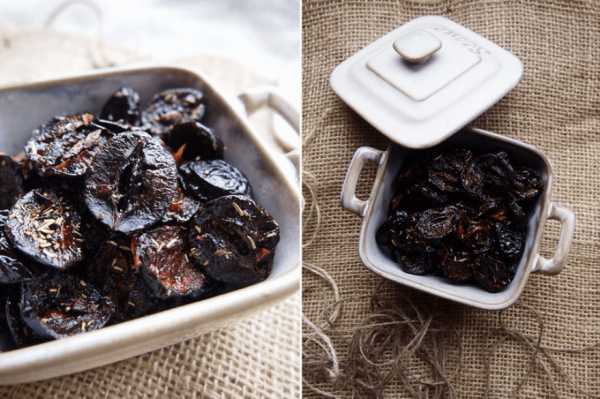
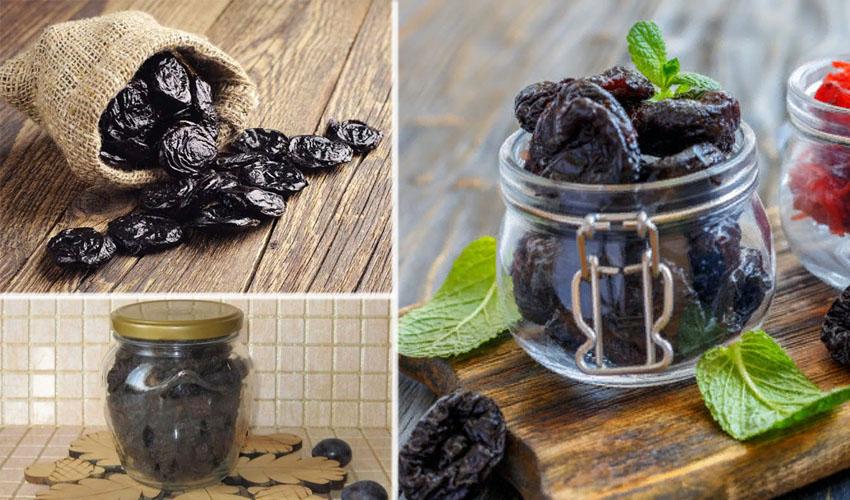
Dried plums can be stored in a glass jar, plastic container, cloth bag, zip-lock bag, cardboard box, or paper bag. It's important to keep the dried fruit completely sealed to prevent moths and other insects from getting in. This will reduce the fruit's quality and force it to be discarded.
Important! Before placing the product inside, it is recommended to sterilize the container or treat it with a saline solution. This will prevent moisture and spoilage bacteria from entering.
Storage methods
There are various ways to preserve dried berries. They can be stored indoors, in the refrigerator, or in the freezer.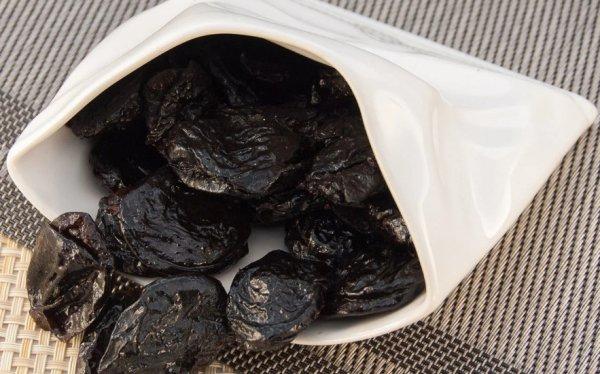
In the apartment
In an apartment, prunes can be stored on a shelf in a cupboard. If the dried fruit is large and simply won't fit on a shelf or in the refrigerator, they can be strung on a string to form "beads" and hung in a pantry or cellar. Place several plates or containers of salt around the room to protect against mold and excess moisture.
In the refrigerator
Storing plums in the refrigerator is one of the best options. Plums don't absorb the odors of other foods, but bread, cheese, and dairy products do. To prevent this, store them in a container with a tight-fitting lid. Dried fruits thrive in the cool, ventilated environment found in the refrigerator. Upper and lower shelves, as well as vegetable drawers, are ideal for this purpose. One option for storing plums is to wrap them in foil with a few holes poked in it with a toothpick.
In the freezer
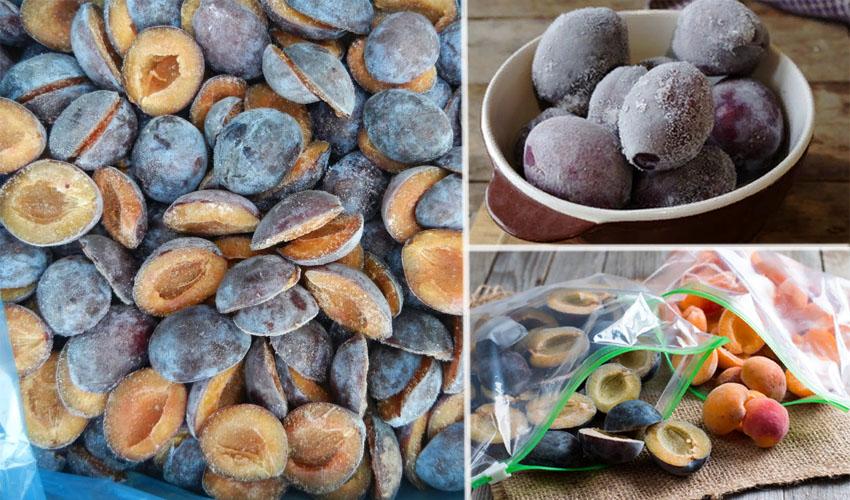
Freezing prunes significantly extends their shelf life. After freezing, they retain their nutritional value and beneficial properties. This option is especially suitable for dried plums, which have a slightly shorter shelf life than dried ones.
It is important to remember that dried fruits impregnate nearby foods with their aroma.
Therefore, they are packed in airtight containers: a plastic container with a lid, a bag with a zipper, a glass jar with a nylon lid.
Take a look Also
Important! To avoid surprises when you find something in the refrigerator, we recommend labeling the container with a marker.
Possible problems
Some problems can arise when storing processed prunes. Prunes are often infested with moths, and mold can develop in high humidity.
Pests
The most common household pest that attacks prunes is the plum moth. It nests in the storage container where the prunes are stored. There, it lays eggs, which feed on the fruit and then develop into adults. If you notice a plum moth, sort through the dried plums, rinse them, and bake them in the oven. While the adults are still present, change the storage location.
Mold
Prunes easily absorb moisture, so they need to be aired every two weeks. If neglected, the fruit will become covered in a slimy film, sticky, and moldy. In the initial stages of the problem, drying the dried fruit in an oven or dehydrator is sufficient. However, once mold has appeared, the product cannot be restored and should be discarded.
Best before date
Dried plums are good for a year when stored at home or in the refrigerator. Freezing them extends their shelf life by six months. Dried plums have a shorter shelf life than dried plums, about four months shorter.
Related posts:
 Description and characteristics of the Yakhontovaya plum variety, pollinators
 Description and varieties of plum variety Ternovka, planting and care technology
 Description of the Renklod plum varieties and cultivation technology
 Description and distinctive features of the best varieties of Ussuri plum
 Description and characteristics of the 30 best yellow plum varieties, planting and care
 Description of the beneficial and harmful properties of plums for human health, contraindications
 TOP 20 recipes for making homemade pickled plums for the winter
 Description of the Volga Beauty plum variety, planting and care