
- What is special about pink currant?
- Unique beneficial properties of the fruit
- The best varieties
- Dutch pink currant
- Jumper
- Lyubava
- Rose Chair
- Muscat
- Pink pearl
- Jonker van Tete
- Landing specifics
- How to choose healthy and strong seedlings
- Preparing the site and planting hole
- Timing and planting patterns for bushes
- What kind of care do pink-fruited crops require?
- Regularity of watering
- Top dressing
- Shaping and pruning
- Insect and pest control
- Do I need to cover it during the winter?
- Reproduction
- Gardeners' reviews of pink currants
Everyone knows about the benefits of currants. But not everyone enjoys the high-acid berries, even though currants are considered the most vitamin-rich fruit. Hybrid varieties of pink currants have appeared relatively recently, but have already gained popularity for their sweet, virtually acid-free berries.
What is special about pink currant?
The origins of pink currant varieties date back to the late 19th century. European breeders based their breeding on red and white varieties of the berry. After years of experimentation, they developed a completely new currant variety resistant to frost, disease, and pests, and with a sweet, dessert-like flavor.
- Pink currant varieties vary in color. Depending on the variety, ripe berries take on a light or dark pink hue. Berries can also have white, yellow, and even greenish hues, but the primary color remains pink.
- This berry crop impresses with its high yield despite its small berries, up to 1 g each. Each plant yields 5 to 7 kg of sweet fruit.
- Berry bushes easily survive frosty winters, spring frosts and drought.
- Pink currants also have excellent natural immunity to fungal infections and pests.
Note! This hybrid crop is easy to care for, so even a novice gardener can grow pink currants.
Unique beneficial properties of the fruit
Pink currants have a sweet taste and an aroma unusual for a fruit crop. They contain a variety of vitamins and beneficial substances.
It is recommended to eat the berries fresh, preserve them, freeze them, or add them to desserts and baked goods.
Also, the fruits and leaves of pink currant have a positive effect on the functioning of the heart, blood vessels, nervous system, gastrointestinal tract and have anti-inflammatory properties.
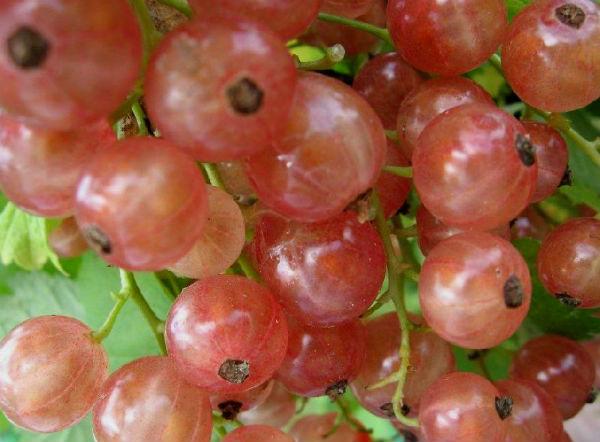 Important! Due to its carbohydrate content, pink currants should be consumed with caution by diabetics.
The best varieties
Although this fruit crop has not yet gained the same fame as its red and black-fruited relatives, breeders are not stopping development and are developing new, hybrid varieties of the berry bush.
Dutch pink currant
This variety was developed to be resistant to climate conditions and fungal diseases. The bush is compact, making it suitable for growing in small spaces. The berries are quite large, light pink in color, sweet in flavor, and seedless.
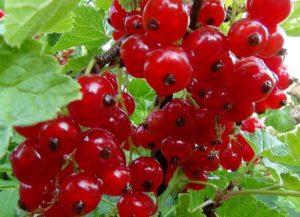
The fruits are best suited for making jellies, desserts, jams and confitures.
Jumper
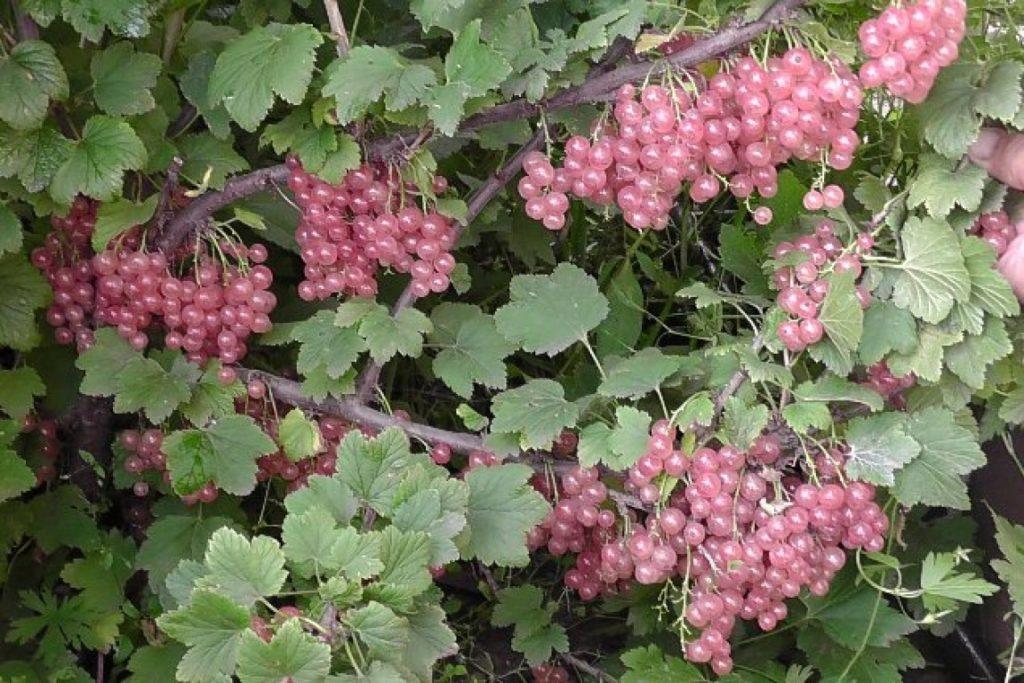
This self-fertile variety was developed by Belarusian breeders in 2002. The result is a frost-resistant berry crop with large, sweet-tart fruits and natural immunity to diseases and pests.
Lyubava
This berry bush variety is grown in both southern and northern latitudes. It has excellent frost resistance and easily tolerates heat and drought. The berries are large, up to 1 g, light pink in color, and sweet in taste. A single plant yields up to 5 kg of fresh fruit.
Rose Chair
This berry crop is highly productive. A single bush can yield up to 6 kg of pink-and-beige berries.
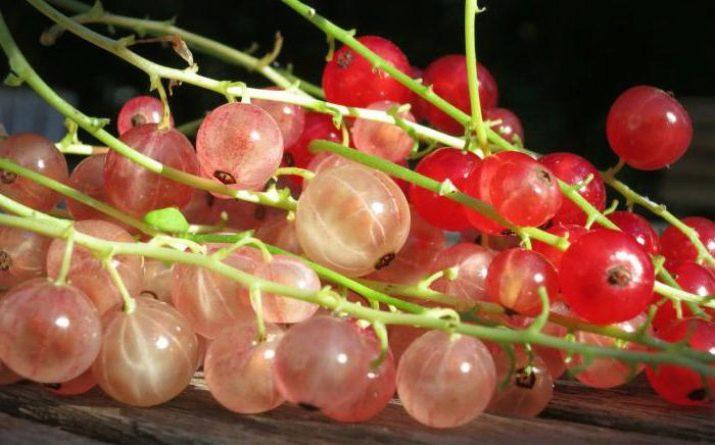
The variety isn't particularly resistant to fungi and pests. It's also sensitive to soil conditions.
Muscat
This self-fertile berry cultivar is distinguished by the muscat aroma emitted by the bush during growth and ripening. A single plant yields up to 6 kg of delicate pink berries with a sweet and sour taste. The fruit makes a delicious, light wine. This variety thrives in the sun; in shade, the yield and flavor of the berries decrease.
Pink pearl
This variety was developed by Canadian scientists at the end of the last century. Pink Pearl currant is resistant to most diseases and pests and has good frost tolerance, but often suffers from spring temperature fluctuations. The berries are large, weighing from 0.8 to 1 g, bright pink, and have a sweet and sour taste. Each plant yields up to 7 kg of ripe fruit.
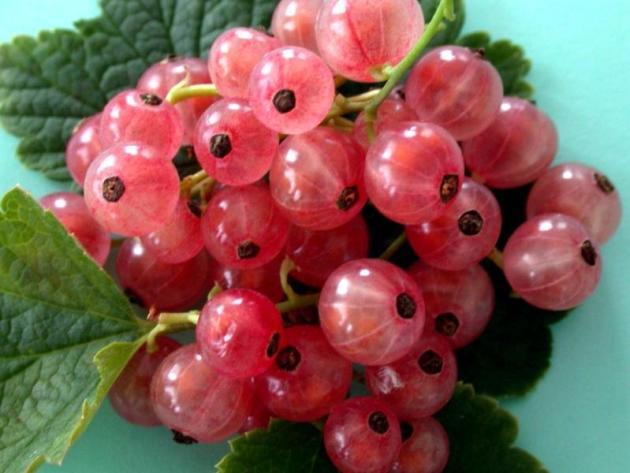
Jonker van Tete
Although classified as a red currant, the berries turn a rich pink when ripe. The fruit has a sweet, slightly tart flavor.
This berry crop was developed by Dutch breeders in the 1940s, and since then, currants of this variety have been grown both in industrial quantities and in private gardens.
Landing specifics
Pink currant hybrids are distinguished by their unpretentiousness, and there are no difficulties during planting.
How to choose healthy and strong seedlings
To grow a healthy and productive berry crop, you need to purchase planting material.
- The roots of the seedling are examined for damage, knots, fungal and mold damage.
- The rhizomes must be well moistened.
- The age of the seedling should be no older than 2 years.
- The trunk of the bush is straight, smooth, without visible damage or cuts.
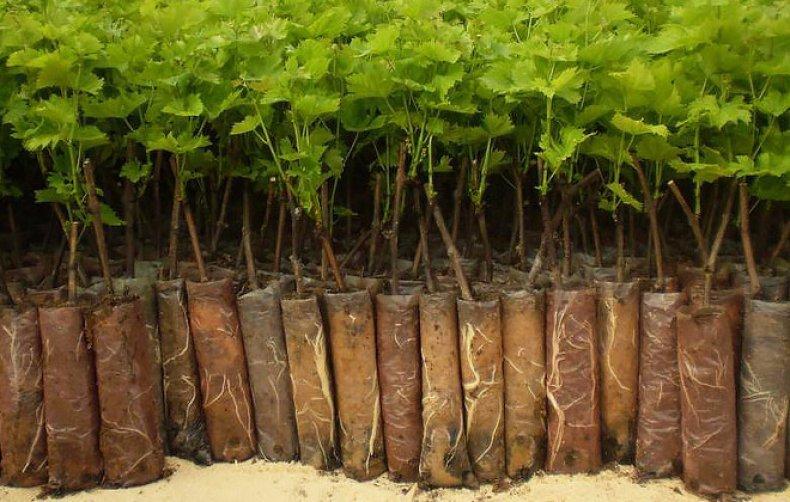 Important! Before planting outdoors, soak the plant in a clay and water solution for 3-4 hours, and treat the roots with antibacterial agents.
Preparing the site and planting hole
For planting pink currant bushes, select well-lit, dry areas sheltered from wind and drafts. Prepare the soil 4-6 weeks before planting. This berry prefers fertile, loose soil with a neutral pH.
- The bed is carefully dug up, weeds are removed and the soil is loosened.
- Humus or compost, organic fertilizers and mineral substances are added to the soil.
- On the prepared area, planting holes are dug for the seedlings, no more than 50 cm deep and in diameter.
- The distance between holes is 1 m, between rows 1.5-2 m.
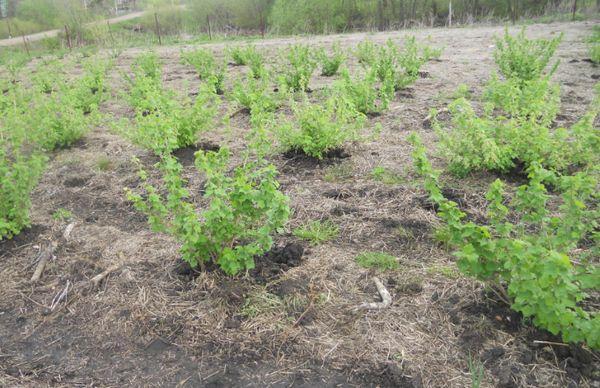 Advice! It is not recommended to plant berry bushes in low-lying or marshy areas. Excessive soil moisture will cause the plant's rhizomes to rot.
Timing and planting patterns for bushes
The berry crop is planted in open ground in the fall, 3-4 weeks before the first cold weather, or in mid-spring.
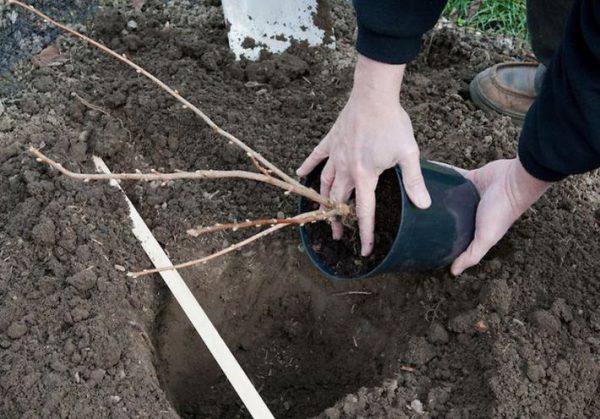
- The plant seedling is placed into the prepared planting hole at an angle of 40-45 degrees.
- The roots are distributed in the hole and covered with fertile mixture, trying not to leave voids between the roots and the soil.
- The soil around the seedling is compacted and watered.
After planting the berry bush, the soil around the trunk circle is mulched with dry grass, humus or sawdust.
What kind of care do pink-fruited crops require?
This fruit crop is undemanding in terms of care, so even a novice gardener or horticulturist can handle growing pink currants.
Regularity of watering
During prolonged periods of dry weather and hot temperatures, the bushes require generous watering once every 5-7 days. Pour up to 50 liters of warm, settled water under each plant, and mist the bushes.
Typically, fruit trees are watered as the soil dries out. Along with watering, the soil is loosened. This helps enrich the soil and roots with oxygen and distribute moisture properly.
Top dressing
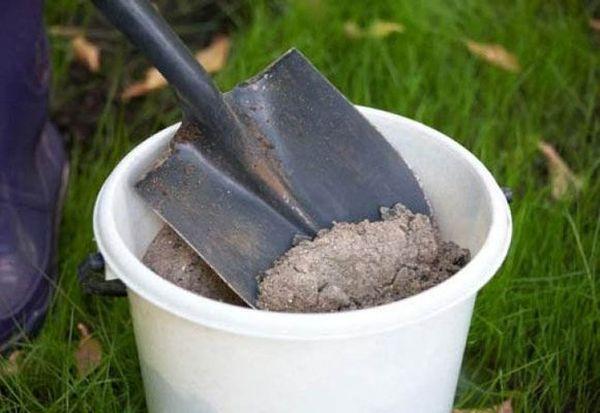
A productive fruit crop always requires fertilizer and supplemental feeding. Organic and mineral fertilizers are used alternately as supplemental nutrition for the plant. The most important period for feeding is the flowering and fruiting stages of the berry bush. The last time to fertilize currants is before winter dormancy.
Shaping and pruning
Formation of a currant bush begins in the first year of growth. Five to seven branches are left on the main trunk each year, and the rest are pruned. Formative pruning is completed after the fourth to fifth year of growth. In early spring or late fall, all broken, damaged, dried, and frozen branches and shoots are removed.
Important! After pruning, treat the cuts with garden pitch.
Insect and pest control
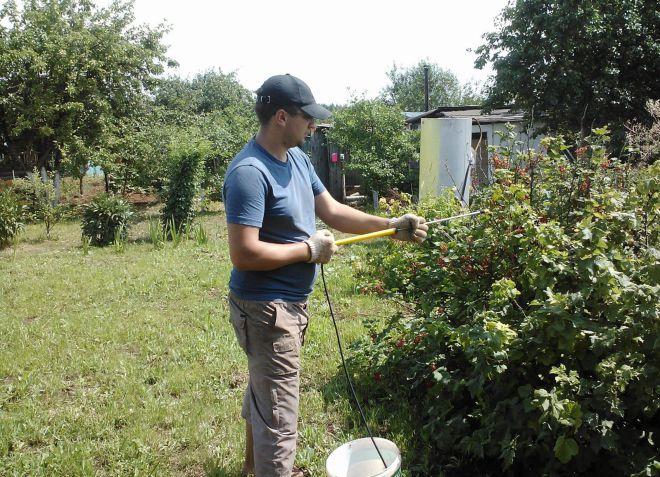
Experienced gardeners and vegetable growers recommend using folk remedies to prevent bushes from becoming infested. Unfortunately, however, this approach doesn't always have a positive impact on plant health. Therefore, it's best to treat fruit trees with professional fungal and pest control products in early spring.
Do I need to cover it during the winter?
Hybrid currant varieties are resistant to low temperatures, easily surviving winter frosts down to -40 degrees Celsius. It is recommended to mulch young bushes with a thick layer of humus and earth them up before wintering. However, with the onset of spring, the fruit crop may react negatively to frost. In this case, cover the plants with film or special fiber.
Reproduction
Pink currants are propagated by vegetative methods.
- The easiest way to obtain new plants and rejuvenate fruit trees is by dividing the bush. For this procedure, select a mature, healthy plant and dig it out of the ground. The root system is divided into several equal parts with a sharp knife. Leaves or buds should remain on each bush. The resulting seedlings are transplanted into open ground.
- A strong, healthy shoot is pruned from a mature bush and divided into several cuttings. Each cutting should have 3 to 5 shoots remaining. The plant is planted in fertile soil until it takes root, then transplanted to its permanent location.
- When propagating by layering, the strongest and healthiest lower branches of a mature bush are selected. The branches are bent toward the soil surface, secured, and covered with soil, leaving the upper portion of the plant above ground. During the growing season, the layers are kept moist. In the fall, the rooted shoots are separated from the mother bush and planted in open ground.
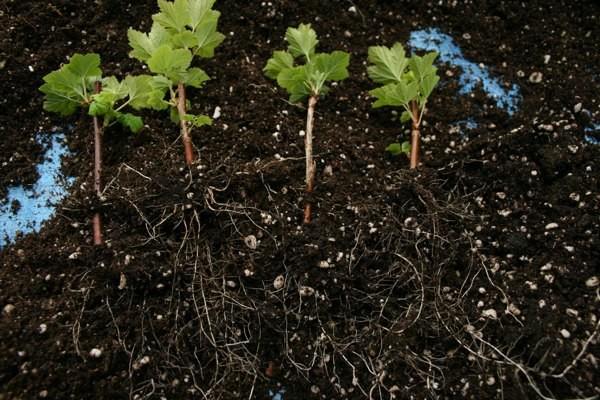
Propagation by seeds for hybrid crops is fraught with the loss of varietal characteristics.
Gardeners' reviews of pink currants
Ksenia Petrovna 52 years old, Yoshkar-Ola
Last year, we harvested the Lyubava pink currant variety for the first time. The berries were very tasty—juicy and sweet—even my little grandson enjoyed them, and he doesn't like sour things at all. We planted three bushes and ended up with almost 14 kg of berries. Caring for the currants is very simple and doesn't require any special care. The variety overwinters well, even without additional insulation.
Victoria Nikolaevna 33 years old, Podolsk
A few years ago, we planted Dutch pink currants, and we haven't regretted it. The berries are large and sweet, perfect for jams, compotes, and freezing. I often make jelly from fresh berries for the kids. The bushes are very easy to care for: just water and feed them regularly. They're not very overgrown, so pruning is easy.
Related posts:
 20 Best Blackcurrant Winter Preserves Recipes
 Description and rules for growing black currant variety Veloy
 Characteristics and descriptions of the 40 best red currant varieties
 Description of green currant varieties, planting and care features
 The health benefits and contraindications of white currants
 When is the best time to plant currants to get a good harvest?
 Description of the red currant variety Sakharnaya, features of planting and care
 Description of the 10 best currant varieties for the Moscow region, planting and care