
- The history of the Jonker Van Tets (Jonker) variety
- Description and characteristics
- Bush
- Flowers
- Advantages and disadvantages of the variety
- Planting and care
- Optimal timing
- Selecting a location and seedlings
- Planting instructions
- Watering
- Top dressing
- Trimming
- Shelter for the winter
- Diseases and pests: control and prevention
- Leaf gall midge
- Currant glasshouse
- Kidney mite
- Goblet rust
- Powdery mildew
- Harvesting and storage
- Gardeners' reviews of the variety
The Jonker Van Tets red currant variety appeared in gardens in the early 1990s. In less than 30 years, this low-growing shrub quickly spread throughout central Russia. Jonker Van Tets gained such popularity thanks to its huge clusters of sweet, bright red berries. The plant is easy to care for and has good winter hardiness.
The history of the Jonker Van Tets (Jonker) variety
In 1941, breeders in the Netherlands developed a new red currant variety called Jonker Van Tets. The Dutch-bred variety had a mid-early ripening period. The new variety was a cross between the Faya Fertile and London Market currants..
Thanks to its excellent flavor, early fruiting, and large berry and cluster sizes, the new crop quickly spread throughout Western European gardens. It wasn't until 1992 that this variety arrived in Russia. Red currants, originally from Holland, are now grown throughout regions with a temperate continental climate, specifically in the central part of Russia.
Description and characteristics
Jonker Van Tets red currant is a self-fertile crop, with yields nearly doubling with cross-pollination. This perennial deciduous shrub has a compact crown. The plant begins bearing fruit in its third year, with peak yields occurring between the fifth and eighth year. The shrub lives for approximately 20 years, constantly rejuvenating itself through basal suckers.
Bush
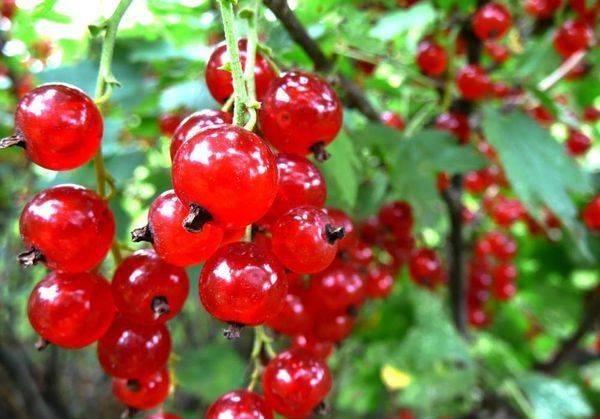
Jonker van Tets is a medium-sized shrub with upright stems densely laden with long (up to 10 centimeters) clusters of bright red berries. The plant can grow up to 1.65 meters in height.
When young, the bush grows rapidly. During the fruiting season, growth slows. Young shoots are light green. Over time, they acquire a light brown hue.
The leaves are medium-sized, dark green, and 5-lobed. The leaflet edges are wavy. The leaf blade is wrinkled and veined. The petiole is light green, medium-length, thick, and slightly pubescent.
Flowers
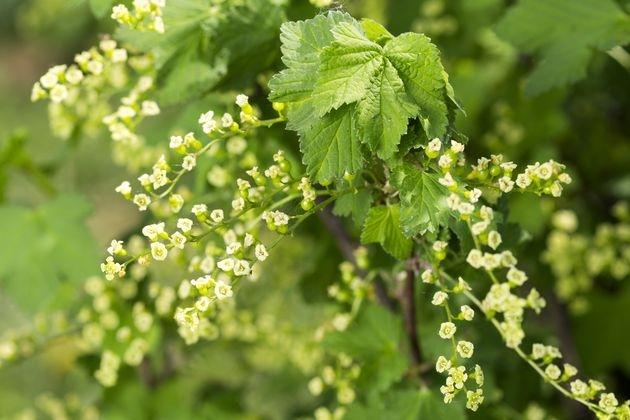
The currant bush blooms in mid-May. The flowers resemble light green bells. They are collected in clusters 10 centimeters long. The flower stalk is light green. Each cluster produces about 10 berries.
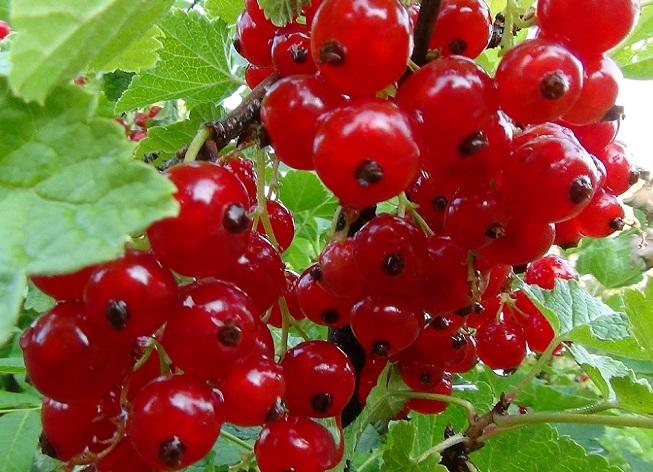
Red currants can be harvested in July. Compared to other varieties, these berries are larger and have a sweet-tart flavor. Each berry weighs 0.75-1.45 grams. The skin is thick and translucent. Each berry contains about five seeds. A single bush can yield up to 6.65 kilograms of currants. The berries are eaten fresh or made into jam.
Advantages and disadvantages of the variety
Pros of Jonker Van Tets:
- early fruit bearing;
- stable yield;
- excellent taste characteristics;
- non-shedding of ripe fruits;
- self-fertility;
- winter hardiness;
- resistance to many fungal diseases.
Disadvantages of currants:
- average frost resistance;
- need for shelter for the winter;
- the need for formative crown pruning;
- early flowering, flower shedding due to recurrent spring frosts;
- the need for watering during drought.
Planting and care
For planting, purchase red currant seedlings aged 1-2 years. The plants should have a healthy root system, undamaged trunks, and moist buds or green leaves. Container-grown seedlings are also available.
If it is difficult to obtain a ready-made plant, you can grow it yourself using cuttings or grafting.
Optimal timing
Jonker Van Tets red currants are planted in the fall, in September-October. The seedlings should be planted a month before the onset of frost to allow time for rooting and establishment in their new location.
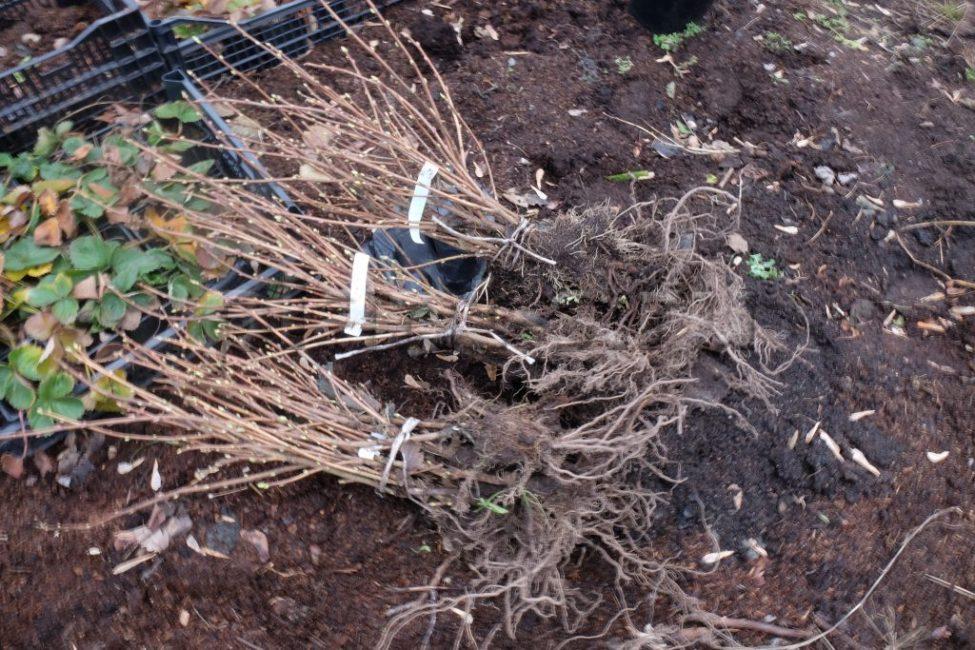
Currants can also be planted in early spring, before the sap begins to flow. However, such seedlings grow more slowly than those planted in the fall, and they begin to bear fruit much later.
Selecting a location and seedlings
Currant bushes prefer an open, sunny location. In the shade, yields will be low, and the berries will be small and sour.
The location should be on the south side of the garden and protected from winds and drafts.
The plant grows well in light sandy loam or loamy soil. The soil pH should be neutral or slightly acidic. The shrub does not respond well to excessive moisture. It is advisable to plant the seedling on a mound to allow water to drain away during rainfall.

Planting instructions
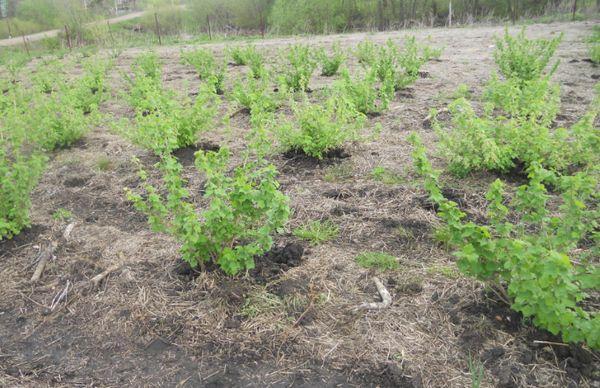
Seedlings are planted in pre-dug holes. Site preparation for fall planting begins in the summer, and for spring planting, in the fall.
Planting instructions:
- They dig a hole measuring 0.40 x 0.50 meters.
- The soil is mixed with a bucket of humus, wood ash (300 grams), peat, sand, superphosphate, potassium sulfate (100 grams each).
- Fill the hole 2/3 full with fertilized soil.
- The plant is placed on top of the mound at an angle of 45 degrees and its roots are straightened.
- The plant is covered with the remaining soil.
- The root collar should be deepened to 6.45 centimeters.
- The seedling is watered generously with water (2 buckets).
- All above-ground stems are shortened to 20 centimeters. Three to four growth buds should remain on each.
- The tree trunk circle is mulched with peat or sawdust.
- During the first 3 weeks after planting, the currant bush is watered regularly so that it takes root better.
Watering
Red currants are watered only during droughts; they are not watered during rainy weather. A bucket of water is poured under a young bush 1-2 times a week. For a mature currant bush, use 2-4 buckets of water, and water the currants once a week.
The bush is watered generously at the very beginning of the growing season, and when the berries ripen, watering is reduced.
To reduce moisture evaporation, the soil can be mulched with peat, sawdust, or straw. The mulch layer should be renewed periodically.
Take a look Also
Top dressing
A planted seedling shouldn't be fertilized for the first three years. In the spring, it can be lightly fed with a urea solution. In the fourth year, during the fruiting period, the plant needs more thorough fertilization. In the spring, the bush is fed with slurry or nitrogen-containing fertilizers.

Before flowering, water with a solution of superphosphate and potassium sulfate (30 grams per 11 liters of water). After flowering, add a little wood ash to the soil. After harvesting, feed the shrub again with superphosphate and potassium sulfate. For the winter, mulch the base of the shrub with peat and humus.
Trimming
The first pruning is done in the second year after planting, in late autumn, after the leaves have fallen. All stems are shortened by half, leaving 4-6 of the largest, and the remaining basal shoots are completely cut off. In the second year, a few more young stems are left. By the time the plant begins to bear fruit, the bush should consist of 16-21 shoots.
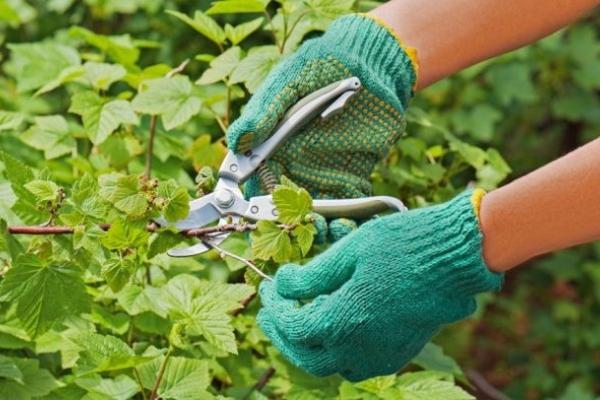
When performing formative pruning, try to avoid touching the ends of branches, as flower buds grow there. Shoots begin bearing fruit at 2-3 years of age for 6-8 years. As branches age, they are replaced with new ones (from basal shoots). In early spring and late fall, sanitary pruning should be performed, which involves removing diseased, dry, or old shoots that are crowding the crown.
Shelter for the winter
Jonker Van Tets red currant is a winter-hardy plant. However, in severe frosts, half of the flower buds may freeze. Before freezing temperatures arrive, insulate the base of the bush and cover the area around the trunk with a thick layer of soil and humus.
Diseases and pests: control and prevention
A bush grown in fertile soil has good immunity and is rarely affected by fungi and insects if agricultural practices are followed and preventative treatments are carried out.

In excessively humid and warm weather, the plant may become diseased. Applying sufficient fertilizer and taking preventative measures during unfavorable periods can help prevent disease development.
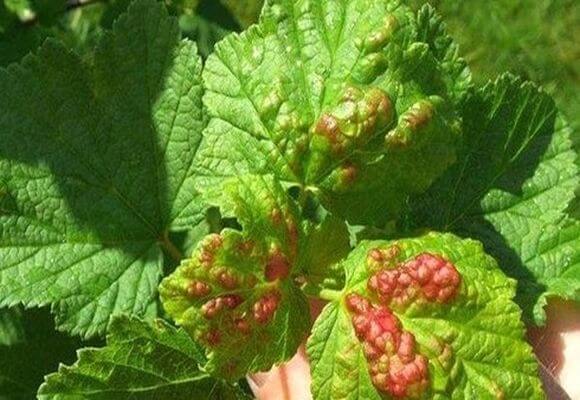
Leaf gall midge
A fly-like insect that lays eggs in curled young leaves. The hatched larvae feed on the leaf sap and scrape off the outer skin.
The activity of this pest leads to the fact that young leaves grow poorly, dry out prematurely, and sometimes bloom, but have an ugly shape.
To control the insect, insecticides are used: Fufanon, Ditox, Iskra M, Bitoxibacillin.
Currant glasshouse
This insect resembles a wasp. The female lays eggs on currant shoots. Small caterpillars emerge from the eggs. They burrow into the stems, feeding on their pith. Damaged branches stop growing and dry out. Insecticide treatments such as Clonrin and Inta-Vir protect against this insect.
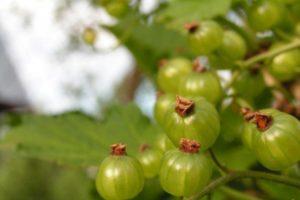

Kidney mite
These are microscopic worms that infest currant buds and feed on their juices. These insects damage the buds, causing poor plant growth and illness. Acaricides such as Apollo and Neoron are used to control the mites. Preventative measures include spraying with a colloidal sulfur solution in early spring.
Goblet rust
A fungal disease whose main symptom is the appearance of rusty spots on the upper surface of the leaf, while orange growths form on the underside. The fungus overwinters in fallen leaves. In the spring, the spores awaken and infect the currant bush. The fungus reproduces in damp, warm weather. The disease causes foliage loss and weakens the bush's immune system.
 If signs of damage are detected, all affected parts of the plant should be cut off. Currant foliage should be treated with fungicides such as Previkur, Topaz, and Skor. As a preventative measure, the bush should be whitewashed with Bordeaux mixture in early spring, and the soil should be watered with a copper sulfate solution.
Powdery mildew
A fungal infection that affects foliage, shoots, and berries. A white coating appears on the upper side of currant leavesIt looks as if the bush has been dusted with flour. Colloidal sulfur is used to prevent the disease. The plant is treated in early spring, before bud break. In summer, except during flowering and ripening periods, currant foliage can be sprayed with fungicide solutions (Topaz, Fundazol).

Affected leaves should be picked and buried away from the garden. During berry ripening, the bush can be sprayed with a solution of ordinary baking soda.
Harvesting and storage
Red currants are harvested in the second half of July and early August. Dry weather and afternoons are ideal for harvesting. The berries are easy to pick and undamaged.
Currants are eaten fresh or used to make preserves, jellies, compotes, and juices. The berries are frozen, used to make wine, preserve tomatoes, and are added to fruit drinks, kvass, baked goods, and meat or fish dishes.
Harvested red currants can be stored in the refrigerator for 1-2 weeks. It's best to process the berries immediately.
Gardeners' reviews of the variety
Irina Vasilievna, Nizhny Novgorod.
"I used to dislike red currants because of their tart flavor. When I tried Jonker Van Tets, I was surprised. The currants are incredibly tasty and very sweet. Plus, the berries are large. Currants are good for thinning the blood and helping fight fatigue."
Related posts:
 Characteristics and descriptions of the 40 best red currant varieties
 20 Best Blackcurrant Winter Preserves Recipes
 Description of the 10 best currant varieties for the Moscow region, planting and care
 Description and rules for growing black currant variety Veloy
 Description and characteristics of the 25 best blackcurrant varieties for Siberia
 The health benefits and contraindications of white currants
 The best and new varieties of black currant for growing in the Urals, planting and care
 Description and characteristics of the Rip Van Winkle daffodil, planting and care