
- The main causes of currant leaf deformation
- If pests are to blame: signs of parasitism
- Leaf roller
- Currant glasshouse
- Gall aphid
- Spider mite
- Methods of insect control
- Means for processing bushes
- Folk remedies
- Biological additives
- Chemicals
- Timing and step-by-step instructions for carrying out treatments
- Diseases that cause leaf curling
- Spheroteka
- Columnar rust
- Goblet rust
- Anthracnose
- How to treat berry crops
- Preparations for therapeutic measures
- When should crops be sprayed?
- Preventive treatments
Currants are an easy-to-care-for plant that produces tasty and healthy fruit. Naturally, gardeners try to grow them, but sometimes it can be challenging. Specifically, if currant leaves curl, what treatment should be used? Treatment depends on the type of disease and the underlying causes. Therefore, it's important to identify these conditions first, rather than resorting to chemical treatments.
The main causes of currant leaf deformation
Leaf deformation indicates either the presence of pests or the spread of a disease. If ignored, the plant will begin to wilt. Its leaves will dry up and fall off, and its development will be stunted. Consequently, black or red currants will not produce fruit; they simply won't have time to ripen in time.
The upper leaves curl from the very beginning, and only then the disease begins to spread to the middle and lower leaves. Gardeners are advised to regularly inspect currant bushes to prevent further spread. Only timely treatment can preserve the plant's health and ultimately yield a tasty and plentiful harvest.
If pests are to blame: signs of parasitism
Many pests prefer to feed on fresh currant leaves. This is why the outer leaves are more susceptible to attack—they're rich in nutrients and microelements. Insects pay less attention to older leaves and attack them last.
You can spot the insect's effects by its characteristic signs. First, a light coating appears, similar to a dusting of dust. The previously smooth leaf begins to curl, even if not completely. If the leaf curls strongly, and the surface has already become a bundle, it should be unrolled. The insect will be found, and its appearance will be identified and treatment will begin.
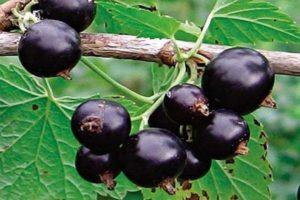
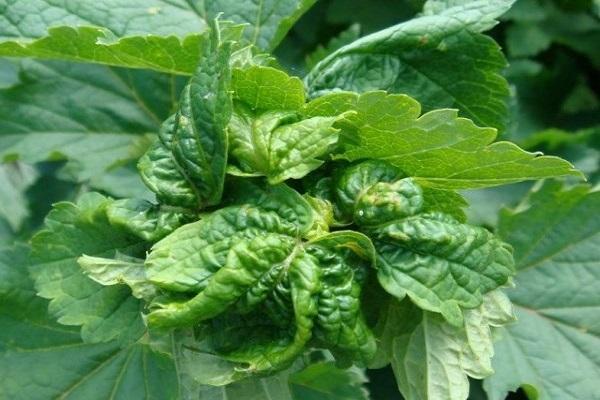
Leaf roller
Leaves curl more often for this reason. A sign is the presence of dark-winged butterflies with a wingspan of up to 2 centimeters flying above the bushes. The butterflies lay eggs in the leaves, and the caterpillars and larvae feed on the leaves. The insects remain in the cocoon until autumn. Damaged parts must be burned.
Currant glasshouse
Leaves curl when a butterfly begins to lay eggs in the currant bark. currant glasshouseThe caterpillar crawls out of its hole and begins to eat the core of the twigs.
Gall aphid
The leaves are twisted and bulging. The gall aphid burrows under the bark to lay its eggs. The larvae only emerge in the spring.
Spider mite
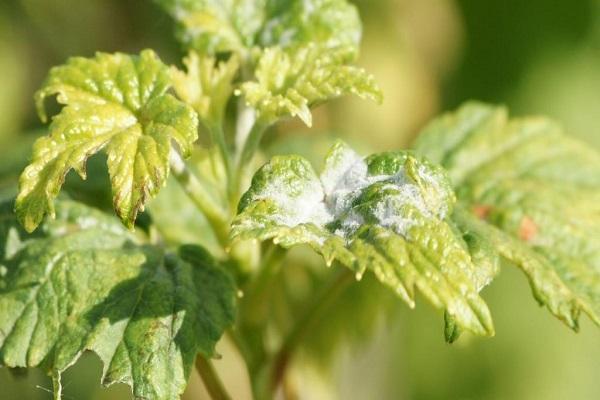
Characterized by speckles that cause discoloration, the mites are carried by the wind, and the leaves become covered in a fine web.
Methods of insect control
Preventative measures are essential for black and red currants. Pre-treatment minimizes the risk.
Means for processing bushes
Any product should cover as much of the plant as possible. Therefore, it's important to remove any damaged, diseased, or dried-out parts beforehand. Using multiple treatments provides greater confidence. However, be sure to consider the compatibility of ingredients—information can be found on the packaging.
Folk remedies
Formulations based on readily available ingredients are safe and inexpensive. However, if used after the pest has already spread, they will be ineffective. The following formulations are used:
- soda - mix 1 tablespoon of soda with 1 tablespoon of washing soap and 2 liters of water;
- boiling water - pour through an iron watering can, tie the branches into a bunch;
- Green soap - soap mixed with water, the resulting foam inhibits insect activity.
Spraying with garlic water, tobacco infusion and celandine are also popular methods.
Biological additives
This type is divided into bacterial and fungal, based on the main active ingredient. Please note:
- the composition is used within 2 hours after preparation;
- apply early in the morning or in the evening;
- the air temperature should not exceed 30 degrees.
Take a look Also
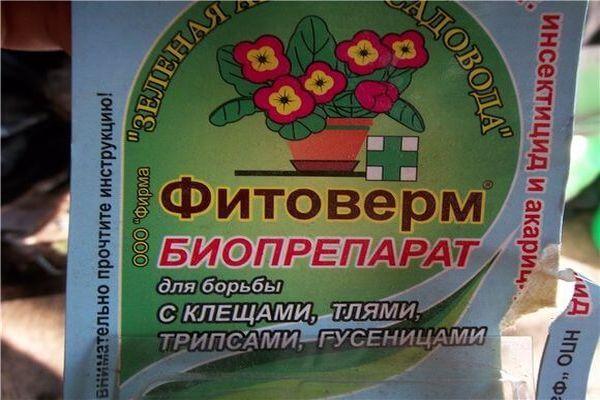
Popular pest control products include Fitoverm, Lepidocide, Bitoxibacillin, Dendrobacillin and Trichodermin. The compositions do not destroy pests, but stop their development.
Chemicals
They are used to kill pests. The chemicals are harsh, and the plant requires fertilizing and nutrition after use.
Among the chemical compounds, the most popular are ammonia, urea, Bordeaux mixture, and copper sulfate.
Timing and step-by-step instructions for carrying out treatments
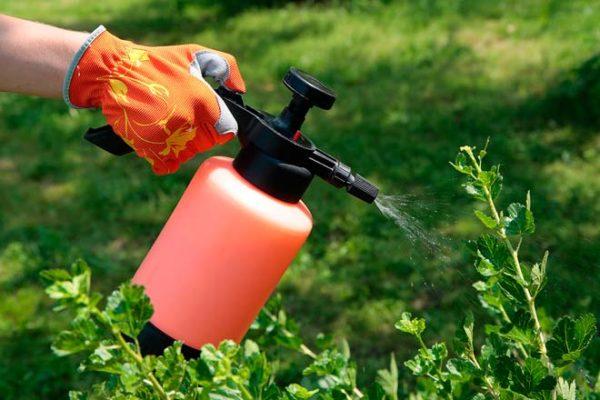
The treatment method depends on the intended use of the product and its aggressiveness. For example, ammonia should only be used on cloudy days; using it in sunny weather will burn the plants. Biological products are less active and gentler on plants. However, in any case, treatment should be carried out at the initial stages of insect emergence, choosing days away from maximum sun, not rainy, and not windy. Apply the products in the evening or morning. Please note that results may not be immediate—some products take 1-2 days to take effect.
Diseases that cause leaf curling
Another group of causes is disease. Typically, there are other consequences and external defects, not just curled leaves.
Spheroteka
Symptoms of the disease include a powdery, greenish coating that eventually turns red. This occurs during the budding period. It doesn't affect nutrition, but the currants take on a felt-like appearance.
Columnar rust
Orange growths appear during the growth phase. If left untreated, the currant leaves will fall off completely by the end of the season.

Goblet rust
The leaves turn red, and bumpy growths (which look like cups under a microscope) appear. Rain and dampness are the optimal breeding ground for microbes.
Anthracnose
Characterized by dark spots and depressions. It spreads more quickly in damp conditions. Treat not only the crop but also nearby plants.
How to treat berry crops
What exactly needs to be done is decided depending on the disease identified.
Preparations for therapeutic measures
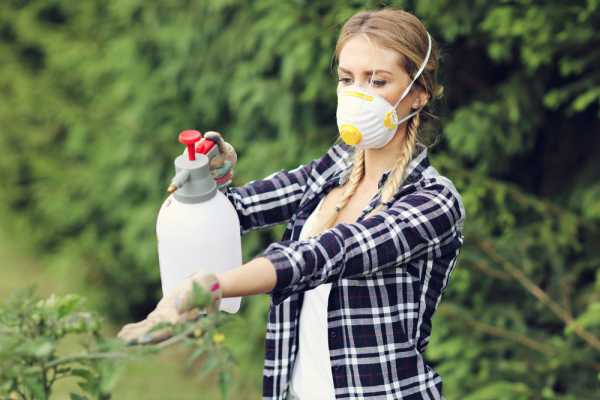
A wide range of products can be used to combat currant diseases. Fungicides, chemicals, and copper-containing compounds are recommended. These can be combined with traditional methods, if desired.
Be sure to follow the instructions on the medications. The fruits can only be eaten after a certain period (indicated on the packaging).
When should crops be sprayed?
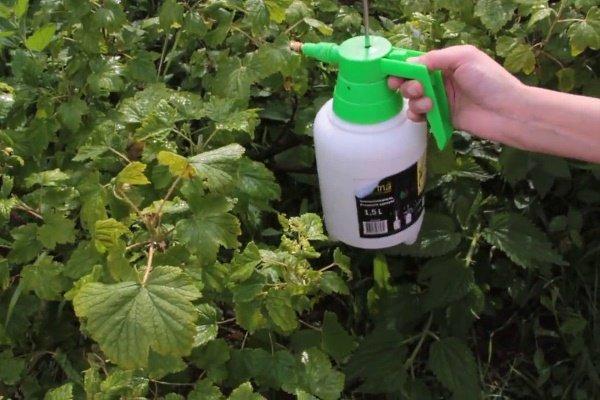
Preventative treatment is necessary as soon as buds appear. Ideally, inspect the plants daily or every other day, and if any defects are detected, immediately identify their nature and begin treatment.
The time of day should be early morning or evening. Avoid direct sunlight on the leaves, as this can cause sunburn.
Preventive treatments
Currants should be planted at least 70 centimeters apart. This will ensure the bushes are well-ventilated and warmed. But in addition, you should:
- remove weeds - they are a habitat for insects;
- dig up the soil during the off-season;
- Remove and burn infected berries and leaves;
- do not allow the anthill to spread nearby;
- You need to plant nearby fragrant plants that repel insects.
Preventative measures contribute to an excellent harvest. Keeping them in mind reduces the risk of infection.
Related posts:
 20 Best Blackcurrant Winter Preserves Recipes
 Description and rules for growing black currant variety Veloy
 Characteristics and descriptions of the 40 best red currant varieties
 Why and what to do if blackcurrant leaves turn yellow
 The health benefits and contraindications of white currants
 TOP 10 recipes for red, black, and white currant sauce and ketchup for the winter, and how to store your preparations
 When is the best time to plant currants to get a good harvest?
 Description of green currant varieties, planting and care features