
Beets are a popular vegetable in Russian gardens, but they can be quite finicky. Sometimes, the tops and roots are susceptible to various diseases. The leaves are a delicacy for beetles. Sometimes, pests completely destroy the plants. To avoid this fate, it's important to understand why beet leaves turn black, how to combat each disease, and how to take preventative measures.
Possible danger
Blackened beet leaves may indicate fungal infestation or improper storage and harvesting practices. This sometimes occurs during late harvesting, when the roots lose their resistance to frost, disease, and beetles. Beet leaves darken 2-3 months after storage. The storage area should be free of temperature fluctuations. High humidity negatively impacts the vegetables; adequate space for oxygen circulation is essential.
The cause of black spots on leaves
Beet leaves and strong roots provide a favorable environment for pathogens of various diseases. They can destroy up to 70% of the crop. Below are the most common causes of leaf blackening and methods for combating them.
Root eater
Beet tops sometimes turn black due to rootworm attacks. The pest can be identified by the following symptoms:
- the stem and foliage turn black;
- young shoots die without ever appearing on the surface of the earth.

In advanced cases of rootworm infestation, crop yields are reduced by 45%. Factors predisposing to the pest's appearance include the following:
- beet damage by pathogenic bacteria;
- poor soil aeration;
- low soil acidity;
- poor quality of seeds.
Eradicating rootworm is difficult because it's difficult to remove from the soil. Numerous harmful beetles can accumulate in the soil, which can then spread to other vegetables.
The insects even survive in the next season's seed. Beets develop resistance to the rootworm after the formation of the second pair of true leaves.

Fusarium rot
Fusarium rot is also a common cause of black spots on beet leaves. The disease attacks beetroots in early June. Leaves gradually wilt, petioles turn black, and cracks with a large white coating appear. Initially, brown rot is observed on the stems, petioles, and the ground.

This pathology often occurs when the soil has too much nitrogen or is too damp. Rot is controlled by properly applying lime and boron-containing fertilizers to the soil. It's important to thoroughly loosen the area between the beds, eliminating pests and any remaining infected plants.
Ascochytosis
Ascochyta leaf spot is caused by the appearance of blue-green spots on the leaves. Over time, these spots turn brown, and black dots appear in the center. These are called "pycnidia." To diagnose, the seeds and rhizomes are examined for these spots. A weakened immune system is considered a contributing factor. The seed and soil are already infested with harmful beetles, which are carried into the soil by plant debris.
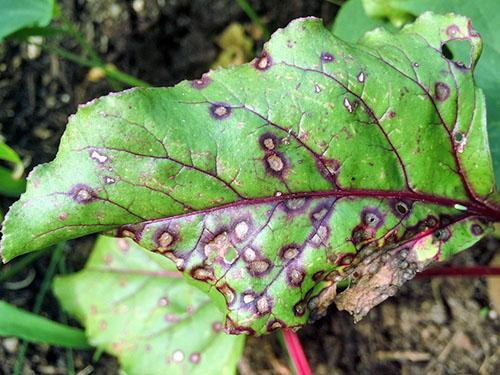
Ascochyta blight is the most common cause of beet leaf blackening. There's no cure for this condition, and the plant will not recover. Spraying with fungicides will only help protect the roots. Beets sometimes try to fight the disease on their own, drying up and falling off. The plant develops new, younger leaves. This is how the beetroot recovers.
Beetroot disease phomosis
Phoma is a heart-shaped rot that affects the petioles, roots, and leaves of beets. The first symptoms include the appearance of light-colored areas with black spots on the plant, followed by sporulation. The disease then penetrates the root itself and begins to develop. Affected vegetables contain juicy, hard, infected tissue. During storage, these areas may develop voids containing whitish mycelium. This is the peak of the disease's development. Phoma occurs when beets are stored in winter. This is when the disease is usually detected.

Sometimes, the cause of this pathology may not be an infectious disease, but a boron deficiency. If this is the cause of photosis, the crop develops poorly, and young greens die. Furthermore, the root vegetables themselves are susceptible to the disease, developing black rot. As a preventative measure, healthy, firm beets should be selected for the winter, and diseased ones should be discarded. If they are placed next to healthy vegetables, infection will occur.
To treat phomosis, you need to add boron compounds to the soil in a timely manner and burn the remains of the plant in the fall.
You can also soak it before sowing. beet seeds in a 1% solution of boric acid.

What to do if a problem is detected?
When beet leaves turn black, a number of measures must be taken. Only a comprehensive approach can solve the problem.
- Apply proper fertilizer. Organic fertilizers, especially manure, are not recommended for beets. They can be added 1-2 years before planting. Mineral fertilizers provide the greatest benefit to plants. They promote the development of high-quality roots and increase the vegetable's resistance to disease. A phosphorus deficiency can trigger root rot and rootworm. Potassium deficiency can lead to cercospora leaf spot, boron deficiency can lead to phoma leaf spot, and manganese deficiency can lead to various types of spotting and rootworm. Foliar feeding is also helpful. When signs of cercospora leaf spot are visible, spray with potassium, and for phoma leaf spot, apply boric acid. It's important to use balanced fertilizers.
- Soil care. Beets don't like acidic soils, as they often develop root rot and rot. Acidic soils should be limed. It's also important to prevent crusting and control weeds, aphids, and spider mites. The latter two pests carry viral infections.
- It's better to burn diseased bushes rather than throw them away. This will definitely destroy viruses, fungi, and bacteria.
- Using fungicides. At the first signs of disease—reddening, yellowing, or spots on leaves—the plants should be treated with chemicals.
If you don’t want to use chemicals, you can resort to Bordeaux mixture, HOM, Propiconazole, biofungicides such as Actofit, Planriz, Mikosan, Fitodoctor, Gaupsin.

The requirements for using the latter treatments are more stringent, and it's important to select the appropriate weather conditions. Typically, preventative treatment is performed once, while curative treatment is performed twice, 10 days apart. These measures are aimed at maximizing the beet's survival. When the disease is first detected, and the plant isn't severely affected, biofungicides or folk remedies can be used. For extensive infestations, chemicals are used. Both methods can be alternated.

How to prevent black spots
There are a number of preventative measures that can help protect beets from diseases even before planting.
- Choose varieties that are resistant to diseases and bugs. Pay particular attention to resistance to fungal diseases. This information is usually indicated on the packaging. Varieties with high immunity have a slow incubation period for the development of diseases, resulting in fewer fungal spores and no need for fungicide treatment. Hybrids are also preferable, as they have strong resistance to diseases and harmful bugs.
- Maintain crop rotation. Beets should not be replanted in a new location for at least five years. Otherwise, diseases such as cercospora leaf spot, phoma leaf spot, root rot, downy mildew, and susceptibility to rot will become active. The best predecessors for beets include legumes, corn, winter grains, onions, tomatoes, cucumbers, and potatoes.
- When growing vegetables, adhere to agricultural requirements - timely weeding, watering, thinning.
- Add all fertilizers according to the established time limits.
- Harvest on time.
- Carefully sort vegetables before storing to remove damaged fruit.
It is impossible to 100% protect beets from attacks by pathogenic microorganisms and pests, but preventative measures will provide a greater guarantee.
Related posts:
 Reasons why beet leaves turn yellow, care mistakes, what to do, and how to treat them
 Growing and caring for beets in open ground: step-by-step agricultural technology
 Description and characteristics of 35 best beet varieties, planting and care rules
 Description of sugar beet varieties, cultivation technology and growing conditions
 TOP 10 recipes for delicious beetroot caviar for the winter – finger-licking good!
 What to do if beet leaves are covered in spots, why this happens, and how to treat them
 How and when to properly plant beet seeds in open ground
 Why beet leaves turn red and what to do