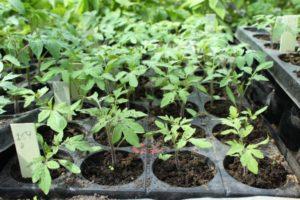
Growing seedlings requires the use of covering, so it's important to know when to remove the film from tomato seedlings. Forming healthy and strong seedlings ensures high yields.
Characteristics of the protective material
Growing tomato seedlings requires minimal soil protection from external factors. When growing seedlings, polyethylene film is used, which is placed on the surface of the containers containing the planted seeds until germination.
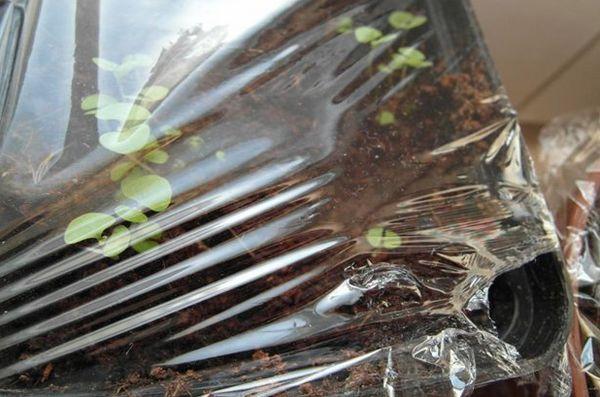
The structure of the film coating creates the microclimate necessary for seed germination. Under the protective layer:
- the humidity level is maintained;
- the optimal temperature is ensured.
The transparent film allows sunlight to reach the sprouts. These favorable factors help the plants develop good immunity to various nightshade diseases.
Growing seedlings
The process of growing tomatoes begins with planting seeds. Before you begin, you need to:
- decide on the choice of varieties;
- study the characteristics carefully;
- find out the planting dates;
- select containers;
- prepare the ground.
Timely sowing of seedlings influences the yield of the future harvest. The timing of seeding depends on the climate zone where tomatoes are grown. Seeds are planted in containers and then transplanted into individual pots.
Peat containers are often used for transplanting, and seedlings are then transported to their permanent location. Pricking out plants at the two-leaf stage stimulates root development and strengthens the tomatoes.
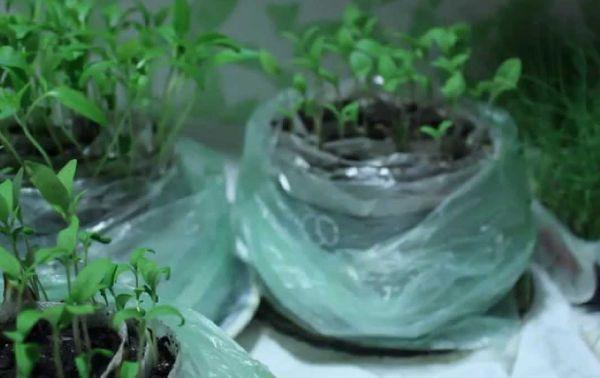
Individual pots provide excellent air and light access to each seedling. Smaller containers are used when growing different varieties. Drainage holes are a must for seedling containers to remove excess moisture.
For sowing, select fertile soil, which is treated with a disinfectant solution of potassium permanganate. Before planting, fill the containers with the substrate or prepared potting mix, level and lightly compact, and water generously with warm water 24 hours before sowing.
The seeds are planted dry, pre-sprouted or treated in a special solution and disinfectant (potassium permanganate, aloe juice).
For ease of planting, you can make furrows 1 cm deep or simply place the seeds on the surface and mulch with a 1 cm layer of peat. Space the seeds 2 cm apart, leaving 3-4 cm between rows.
Dense planting increases the risk of tomato fungal diseases. It is recommended to use tweezers to spread the seeds. The more widely spaced the seeds are, the longer the plants can be kept in the seedling containers.
After sowing, moisten the soil and cover the seedlings with plastic film. This film is placed in such a way as to create a greenhouse that can be periodically ventilated.
Place the container in a warm place, maintaining an optimal air temperature. Avoid placing the seedlings on a hot radiator. This can cause the soil to dry out and lead to the death of the sprouted seedlings.
Under the sprouting film, maintain humidity at 80-90%. Check the air humidity daily. If the soil dries out, water it with warm water using a spray bottle.
If there's excess moisture, lift the film slightly and let it dry. Sometimes, excess moisture can lead to mold growth on the soil surface. In this case, remove the mold and water the soil with a solution of potassium permanganate and water or a special antifungal agent.
As seedlings emerge, gradually increase the ventilation time. Young seedlings should be maintained in a high humidity environment. Therefore, do not immediately remove the covering from the seedling containers. The film can be removed completely after 3-4 days.
Caring for tomato seedlings
To ensure uniform seedling development, the container should be regularly rotated toward the light source. After planting, the optimal air temperature should be between 25°C and 28°C. If the temperature is lower, germination will be delayed by several days.
During this period, the plantings do not require intense lighting. Once the sprouts emerge, the air temperature is lowered, and the seedlings are placed closer to the light source. For 7 days, the seedlings are kept at a temperature of 17 to 18°C during the day and 14 to 15°C at night.
After this period, the daytime temperature is increased to 18–22°C. One day before transplanting, the seedlings are not watered, but only lightly moistened with warm water.
Film coating characteristics
Growing seedlings under a protective layer requires the right choice of material. The consumer market offers a wide range of films with varying performance characteristics.
The material must meet certain criteria to ensure normal sprout development and the formation of healthy seedlings. The film must be lightweight and durable to prevent deformation under the weight of condensation.
To ensure the sprouts receive sufficient light, the film must be translucent. The material's light transmittance should be approximately 80%. To retain heat in the containers and protect the sprouts from burning, the material must be UV-resistant.
The film used to cover tomato crops must be made from environmentally friendly materials. The film must be moisture-repellent. Otherwise, condensation will accumulate and run down the sides of the containers.
Using plastic film is a rational option for developing strong seedlings. Experience growing seedlings under transparent cover shows that the film should be removed from the container promptly.
Otherwise, plants may be damaged by excess moisture or drying out of the surface soil layer. Using a film cover stimulates seedling development and helps regulate humidity levels.
Related posts:
 Is it possible to soak treated cucumber seeds before planting and how to do it correctly?
 How to plant cucumbers in open ground under film: timing and cultivation technology
 The best eggplant varieties for growing in a polycarbonate greenhouse: planting and care
 Carrot care guidelines for outdoor cultivation to ensure a good harvest
 How to properly plant peas in a greenhouse and open ground
 Why didn't the carrots sprout and what should I do? How to plant them so they sprout quickly?
 Methods for planting and propagating cherries at home
 Technology for growing and caring for coriander in open ground before winter, how and when to sow