
Transplanting seedlings into open soil poses a number of challenges for inexperienced gardeners. When planting, it's easy to damage the root system or encounter fungal parasites in the black soil. This process is simplified by planting tomatoes in peat pellets. These pellets are a modern agricultural technology with many unique features.
Benefits of peat tablets
Peat tablets look like light-brown disks with a central hole for seeding. On the outside, a fine-mesh mesh holds a compressed layer of peat with added antibacterial components and minerals. Depending on the size of the seeds being grown, you can select a disk with the appropriate diameter.
The possibility of growing tomato seedlings in peat tablets has become widespread due to the following advantages:
- The root system of planted plants will be constantly supplied with oxygen due to the air-permeable structure.
- After being transferred to the soil, the outer layer gradually dissolves, which helps protect the seedlings from the effects of fungus at an early stage of development.
- When planting in the ground, there is no need to remove the seedlings from the peat pot, as over time it will dissolve on its own and will not interfere with the growth of the root system.

- Pots for planting seedlings are compact in size and do not take up much space.
- Thanks to the presence of mineral additives and growth activators, the seed material will not require additional feeding, and the seedlings will grow strong and produce a large harvest.
- The versatility of the peat base allows you to grow any vegetable crops in tablets, including eggplants, tomatoes, and others.
- The devices can be used for planting expensive crops that do not tolerate picking well.
How to choose the right one
To ensure proper development of tomato seedlings and a good harvest, it's important to consider several selection guidelines. It's recommended to purchase pots and potting trays with loose bases, as hard, highly compacted containers will prevent the root system from developing freely and will leave it weak.
Since tomatoes and other vegetable crops grow better in neutral soil, you should pay attention to the pH level when purchasing.
Another important criterion is size. Small pots with a diameter of up to 36 mm are suitable for planting flowers or small bushes. For growing tomatoes, choose pots with a larger diameter, ranging from 41 to 70 mm, to ensure the seedlings' roots have sufficient space to spread through the soil.
Beginner gardeners often opt for affordable options without paper casings, but it's better to use those in cardboard cups. This variety is impregnated with a fungicide that prevents the negative effects of parasitic fungi. Furthermore, the outer casing maintains its shape during swelling, allowing for various seedling growing methods without the risk of the pot crumbling or breaking.


How to use
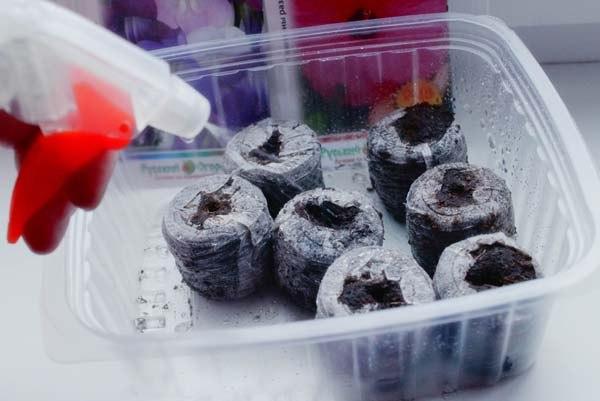
When growing tomatoes in peat pellets, soak the pellets in liquid first to allow them to swell and expand. Prepare the pots according to the following instructions:
- Place the tablet on the bottom of a smooth, leak-proof container that can be sealed tightly. The seed opening should be at the top, as it's not recommended to turn the soggy pots upside down.
- It is necessary to leave space between the seedling containers so that as the seedlings grow, their roots do not become intertwined with each other, making it difficult to separate them.
- Warm water is best for soaking, as it will speed up the swelling process. Pour enough liquid so that the tablet is completely submerged. After a couple of minutes, the peat pellets will begin to absorb the moisture and float to the surface.
- If necessary, add liquid until the peat no longer absorbs it. If excess water occurs, drain it to prevent rotting.
- To expand the seeding space, you can tear the top layer of mesh and fold the edges inward. If the seedlings in the cup are grown from a single seed, there is no need to tear the mesh.
Gardeners often place peat pellets on trays or boxes filled with coarse sand. This promotes the evaporation of excess moisture and prevents rot.

Planting seeds in a tablet
Before planting in peat pots, you need to prepare the seed. If you're using pelleted tomato seeds, no treatment is required. When growing other varieties of seeds, disinfect them to prevent infectious disease vectors, treat them with growth stimulants, and soak them in a complete fertilizer.
Seeds are treated for pathogens by soaking them in disinfectants. Place the seeds in gauze and soak them in the solution for a couple of hours. Then, rinse the seeds in warm water. Spraying with growth stimulants accelerates development due to the phytohormones contained in the solutions.
Complex fertilizers are essential when preparing seeds, as a deficiency of nutrients disrupts normal growth, prevents the formation of a strong root system, and leads to a reduction in yield.
Once you've prepared the seeds and figured out how to use peat pellets for seedlings, you need to manually sort through the planting material and weed out any damaged ones. Large, healthy tomato seeds are inserted into the peat-filled hole, gently pushing them in. It's recommended to cover the seeds with a thin layer of compost or gently scrape the peat from the edges toward the center.
Small seeds can be lifted out with a toothpick or similar tool when planting. After placing a small seed in a hole, it's acceptable to leave the hole open, as this will require more light during the initial development stage. When planting tomato seedlings, leave 2-3 seeds in each hole. Once the seedlings emerge, you can leave the most developed shoot and pull out the others.
Optimal conditions for growing seedlings
Providing suitable conditions for seedling germination is the key to a good harvest. Seedling containers should be covered with plastic or other similar material to retain heat near the seeds. At low temperatures tomato seedlings are unable to grow, causing the soil to freeze and stop developing. Avoid sowing or leaving seedlings near heating elements, as the soil will dry out and the plants will require additional fertilizer.
During the day, peat pots can be left on a windowsill to receive direct UV rays. To prevent condensation, uncover the containers for a couple of hours each day. In cold temperatures, wrap the outside of the containers in a cloth for additional warmth.
Throughout the entire process of growing seedlings until planting in the ground, proper care of the seedlings is required.
Failure to follow basic care rules will lead to problems during subsequent transplantation into open soil.

Rules for watering peat tablets
Watering peat pots is essential for proper seedling growth. Before the planted seeds sprout, simply spray the tablets with a spray bottle. Using a spray bottle prevents the plants from drying out and becoming soggy. It's important to always monitor the moisture level, as a white tint may appear on the seedlings, indicating a need for less water.
Water used for watering seeds planted in peat containers must be allowed to settle for 24 hours. This ensures that harmful components settle to the bottom and do not reach the planting material. Excessive heavy metals and salts in the water will cause a white-yellow deposit to appear on the soil surface. To prevent this, pre-filter the water to remove impurities.
Growing seedlings requires allowing the peat to dry out slightly between waterings. Leaving the soil constantly damp can encourage fungal growth.
First achievements
Once you notice the emergence of seedlings, it's recommended to lift the edge of the lid or covering material and then secure it in place for several hours. This step is necessary after the very first seedlings emerge to allow for ventilation. It's important to avoid direct airflow through the plants, as this can cause the tomato seedlings to wilt and stunt root development.
Once the green stems have sprouted, stop spraying completely and pour the liquid only onto the tray so that the root system can absorb moisture through the bottom layer of peat.
A couple of weeks after germination, the irrigation water should be diluted with growth-promoting agents. These agents disinfect the soil and prevent the development of mold and fungal diseases.
The outer casing of peat pots can be left in place even when the seedlings begin to grow, as the outer layer prevents the pot from collapsing. Under these conditions, the root system develops normally and becomes strong enough to penetrate the frame.
Secrets of experienced gardeners
Gardeners with extensive experience growing tomatoes and other vegetables have many secrets for achieving a bountiful harvest. By keeping these nuances in mind, they can avoid many common problems. These secrets include the following:
- Once grown, planted tomatoes can be periodically moved outdoors once the air has warmed up sufficiently. Keeping the plants on the balcony or outside for a couple of hours a day can help them adapt to being transferred to the open ground.
- If a seed does not take root in one of the containers, then a mature sprout remaining after sorting the seedlings can be planted in its place.
- The seedlings can be transplanted into open ground 3-4 weeks after sowing. When growing heat-loving and demanding tomato varieties, it's best to keep the plants in containers for 10-12 weeks, until the root system begins to break through the outer layer on its own.
- Peat pots are convenient for transplanting into the ground, as the seedlings don't need to be removed from their pots first. The tablets dissolve in the soil over time and serve as additional nutrition for the crop.

Video on how to use peat tablets
After reviewing the instructions for using peat pots, you can also watch a video detailing all the necessary steps. This is especially helpful for beginner gardeners growing tomatoes using this alternative method for the first time.
The video instructions explain complex issues and address the problems most often encountered by gardeners. A preliminary introduction to unconventional tomato planting techniques helps grow a bountiful harvest without much effort.
Related posts:
 What is the best way to feed tomato seedlings to make them plump?
 The best eggplant varieties for growing in a polycarbonate greenhouse: planting and care
 Rules for growing tomatoes in open ground, choosing a variety, planting and care
 How to properly plant cucumber seedlings at home and what to feed them with
 Methods for planting and propagating cherries at home
 How to prepare soil for tomato seedlings yourself
 Nitrophoska composition and instructions for use of fertilizer, errors
 Rules for planting and caring for pears in open ground, how to grow them correctly