
- What is it and why is it needed?
- Tomato varieties suitable for sprouting
- Preparing tomato seeds for germination
- How to properly germinate tomato seeds for seedlings
- Sample
- Warming up seeds
- Processing
- Soak
- Germination
- Hardening
- Peculiarities of germination in toilet paper
- The specifics of germination in cotton pads
- How long does it take to germinate?
- Soil for sprouted tomatoes
Vegetable growers germinate tomato seeds before planting them in the ground. Few know why this is done and how to properly germinate the seedlings. Strictly following the process will help you obtain high-quality seedlings.
What is it and why is it needed?
Gardeners have been sprouting seedlings for a long time. However, not everyone does it; some consider the process pointless and frivolous. The seeds will take root and grow anyway, so why waste time sprouting them? Gardeners will be able to evaluate the advantages and disadvantages of this method after trying it out.
Benefits of sprouting:
- reducing the time until germination;
- increase in harvest volume by 30%;
- increasing resistance to diseases;
- tomatoes will not be planted in vain; sprouted planting material indicates that the seeds are of good quality;
- reducing the risk of attacks from soil-dwelling insect pests, and much more.
There are undoubtedly benefits to sprouting seedlings. Properly performed, this procedure will help you grow a larger harvest. Germinating seeds means giving them the opportunity to sprout.
Tomato varieties suitable for sprouting
It's important to choose the right variety for planting. Then success is guaranteed. Any variety that a gardener intends to grow on their plot can be germinated.
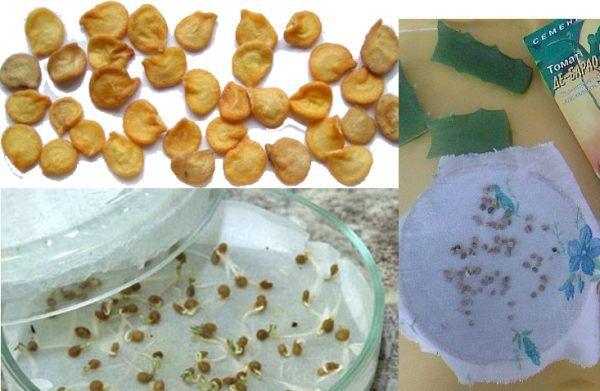
Preparing tomato seeds for germination
To properly germinate, you need to prepare the planting material. Seeds undergo several stages of preparation. These preparations are essential as they are part of the process. It's best to follow these steps precisely, as this will result in a higher yield and stronger plants.
How to properly germinate tomato seeds for seedlings
All that's left to do is germinate the prepared planting material. It's best to follow the instructions precisely, so even beginners can succeed.
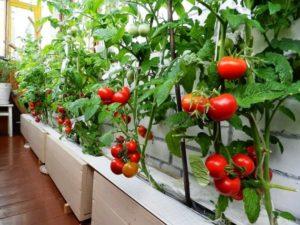
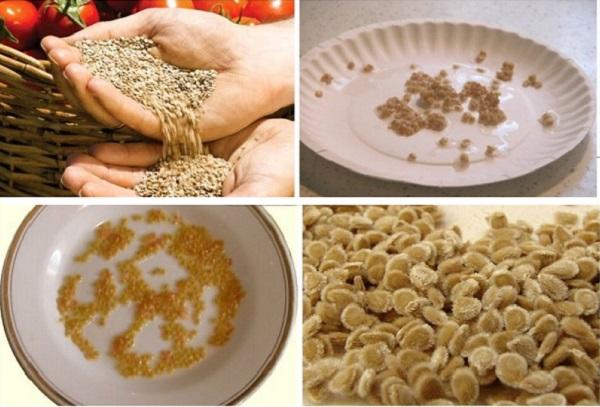
Sample
Sorting the planting material. Use dense, heavy seeds. To discard all empty seeds, prepare a salt solution. To do this, dissolve 2 tablespoons of salt in a liter of water. Pour the seeds into the solution; any that float to the surface are discarded. The remaining seeds are washed, dried, and prepared for the next step.
Warming up seeds
The dried planting material is kept in a warm place for several days. A radiator is recommended.
Processing
Disinfection is carried out. A weak solution of potassium permanganate is often used. The planting material is soaked in it for 20-30 minutes, then washed and dried.
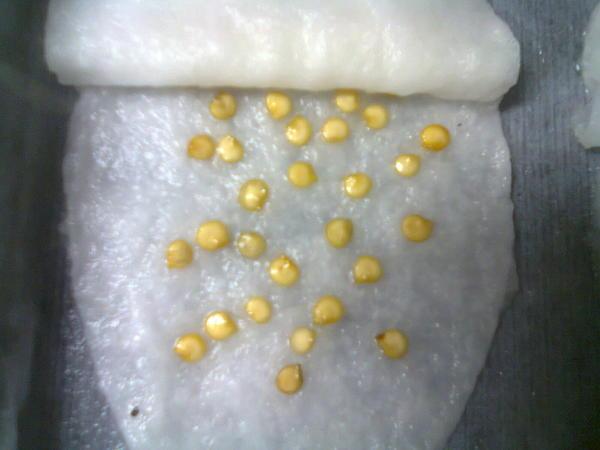
The second disinfection option is to use a hydrogen peroxide solution. To do this, heat the solution to 35-40°C. Once the peroxide is heated, soak all planting material in it for 10 minutes.
Soak
To increase disease resistance and speed up germination, seedlings are soaked in a growth stimulant. This helps the seeds gain strength before sprouting.
Potato juice, aloe leaf juice diluted with water, and melted snow are used as natural stimulants. The planting material is soaked for 10-12 hours. There is no need to rinse after this.
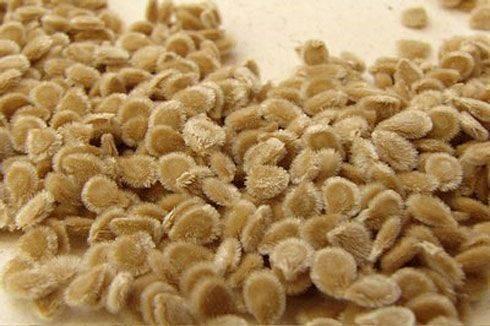
If chemicals are used, after soaking, rinse with warm running water and dry.
Germination
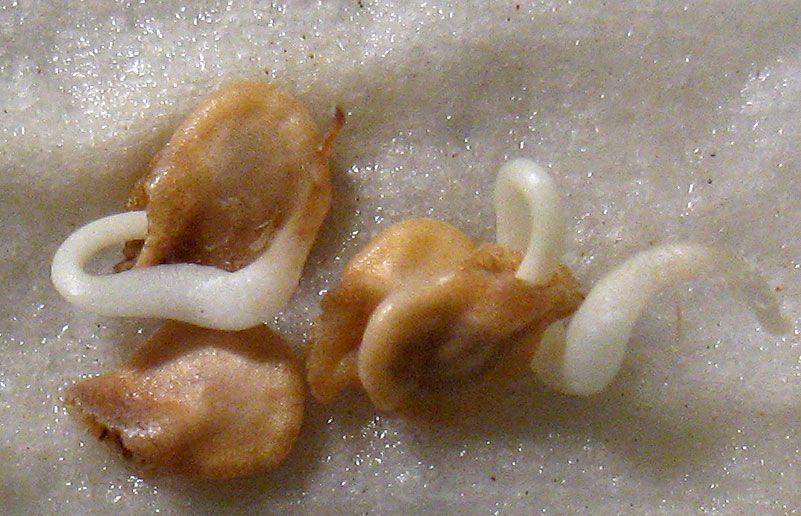
This is done immediately before sowing. You'll need regular gauze, a small saucer, and warm water.It's best to use rainwater or settled water. It contains more nutrients needed by future plants.
Spread a cloth or piece of gauze, moisten it with water, and scatter the seeds over the surface. Cover with another cloth soaked in warm water. The more transparent the cloth, the easier it is to observe the process. Place the prepared seeds in a warm place and wait for germination.
Hardening
This involves placing the seeds in a cold place for 24 hours, then back in the room for the same amount of time. This process is repeated 3-4 times.

Peculiarities of germination in toilet paper
Seeds are germinated in various ways. To speed up germination, gardeners use toilet paper. This method involves taking a piece of plastic and lining it with toilet paper.
Method 1:
- Moisten it with a spray bottle and spread the seeds evenly, slightly away from the edge.
- Then roll it into a roll and leave it in a glass until the seedlings appear.
- The seeds should remain on top. Add water to the bottom, about 2 cm deep.
Method 2:
- Use a saucer and spread several layers of toilet paper on it.
- Then the planting material is moistened and spread over the surface.
- Cover the top with polyethylene.
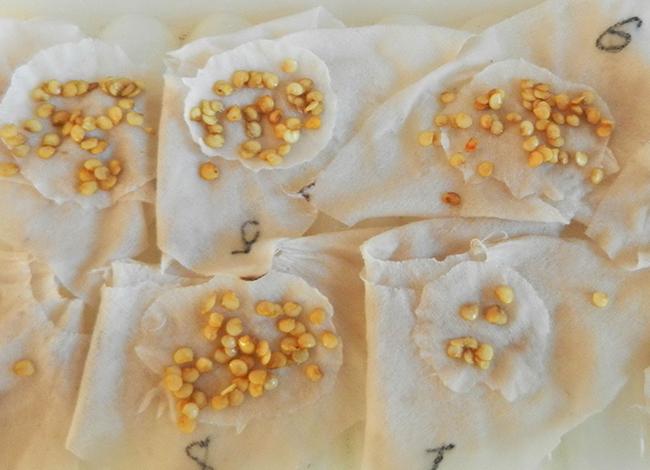 With this growing method, humidity must be controlled. Otherwise, all the planting material will be lost.
Growing plants in toilet paper not only makes life easier for the gardener, but also enriches the plants, as this material acts as a natural growth stimulant.
The specifics of germination in cotton pads
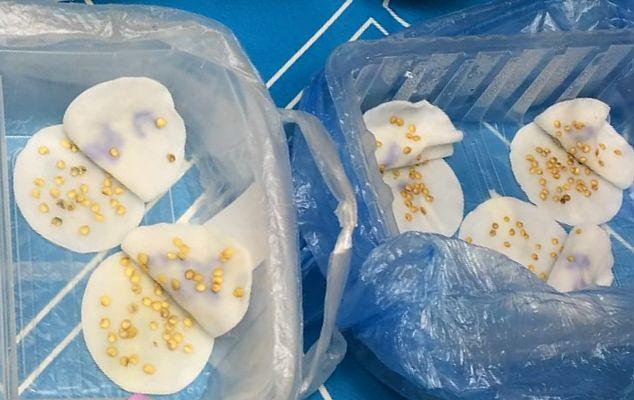
To germinate using this method, you'll need cotton pads, water, and a saucer. Moisten the cotton pads with water, place one on the bottom, spread the seeds on it, and then cover with a second one. Cover the top with plastic wrap and cling film. Place the pads in a warm place and wait for the seedlings to sprout. Once the seeds sprout, remove the film and leave them in a warm, bright place. Germination on cotton pads is quick, and the seedlings grow strong and vigorous.
How long does it take to germinate?
The germination time for planting material depends on the tomato variety grown. Furthermore, the age of the seeds affects germination speed; the earlier they are harvested, the lower the germination rate. To ensure rapid germination, it's important to use last year's harvest. These seedlings grow faster and produce a higher yield.
If you plant a dry seed in soil, it will sprout in at least 10 days; a soaked seed will sprout in 5-7 days. And sprouted seeds will sprout in 1-2 days. It's impossible to give a definitive answer to how long it takes for a tomato to germinate. It even depends on the sowing depth.
Take a look Also

Soil for sprouted tomatoes
When the seeds are in the final stages of preparation before germination, it is necessary to prepare the soil for planting the sprouted seeds.
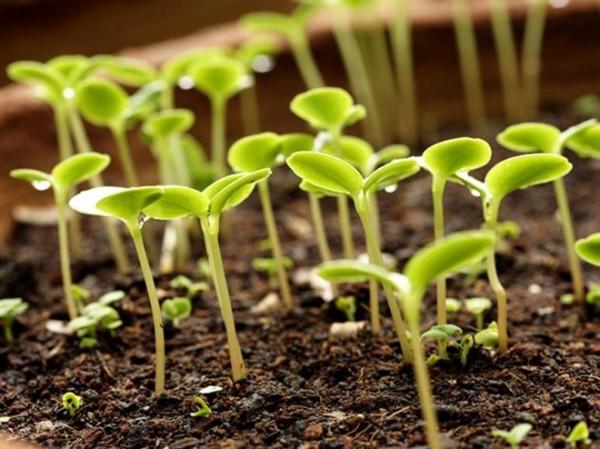
Once the seedlings have sprouted, they are immediately planted in the soil. A slight delay risks losing the seedlings. Then the entire process will have to be started over again. There's no way to make up for lost time.
Some gardeners buy soil from the store. But most vegetable growers prefer to do it themselves.
Prepare the nutrient mixture yourself. You'll need:
- 1 part turf soil;
- 2 parts humus;
- 1 part river sand;
- wood ash.
To enrich the soil, gardeners add complex mineral fertilizers. Germinating tomato seeds is easy. Even a novice gardener can handle this task. If the steps are followed correctly, they will achieve positive results. Vegetable growers claim that once they've germinated seeds, they'll always come back for more.
Related posts:
 Is it possible to soak treated cucumber seeds before planting and how to do it correctly?
 Carrot care guidelines for outdoor cultivation to ensure a good harvest
 How to prepare tomato seeds for planting seedlings
 How to quickly germinate cucumber seeds before planting at home
 How to properly plant peas in a greenhouse and open ground
 How to propagate and grow peas, cultivation technology, and care in open ground
 How to plant grapes step by step, with a description of the process and care
 How to soak cucumber seeds before planting and is it necessary?