
The Tatyana tomato, whose characteristics and description are available on forums, was developed by Russian breeders. This tomato variety is not a hybrid and is similar to the Tanya F1 variety, which was developed in Holland as a hybrid of several tomato varieties.
The Tatyana variety is typically grown outdoors, although seedlings can also be planted in greenhouses, hotbeds, and plastic shelters. This variety is productive and easy to grow. It is often planted by gardeners who don't have greenhouses at their dachas. The planting method doesn't affect yield, as the plants require little care.
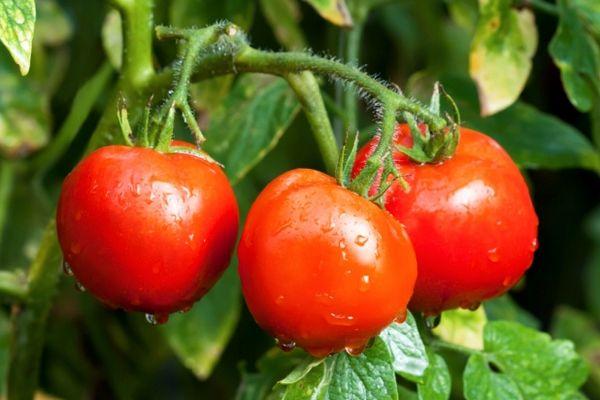
Description of tomato
Characteristics and description of the tomato variety Tatyana:
- Early ripening variety.
- High-yielding.
- Determinate plants that reach a maximum height of 60 cm.
- The plants are branched and standard.
- This tomato variety has a strong stem that produces a beautiful, abundant foliage. This makes it look like an ornamental garden plant.
- The leaves are simple, medium-sized and dark green in colour.
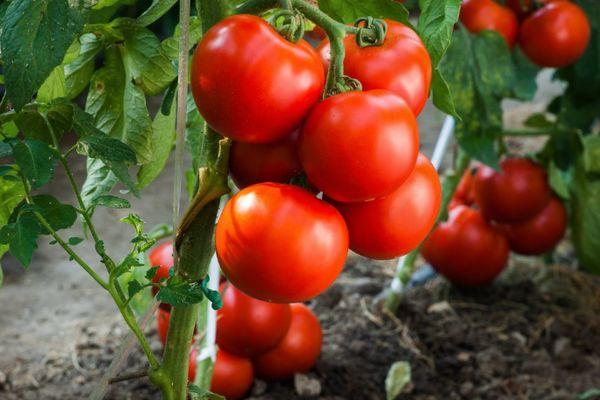
- The fruits ripen on the branches in clusters of 3-5 pieces on each cluster.
- This variety can be planted as a houseplant. To do this, you need to purchase pots or containers of the appropriate size. These containers with tomato plants can be placed on balconies, verandas, and terraces.
- The fruits demonstrate excellent keeping quality and transportability over long distances.
Advantages of the Tatyana variety:
- The fruits ripen quickly and evenly.
- High yields are observed both from one bush and from the entire plot.
- Excellent taste of fruits.
- The bushes of this variety are resistant to diseases.
- Compact dimensions allow you to save space in your summer cottage or balcony.
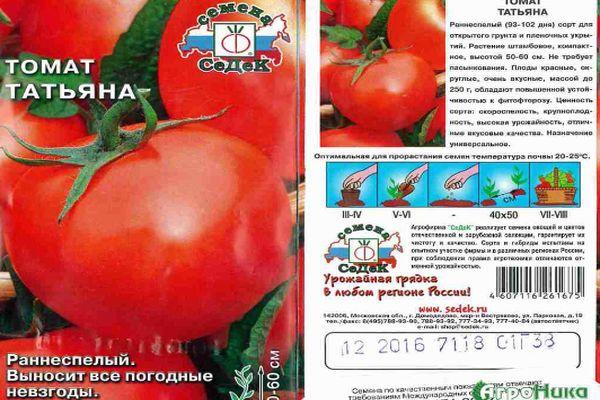
Gardeners who have already planted Tatyana tomatoes have spoken highly of the variety's fruits. The tomato's key characteristics include the following:
- The fruits grow small, of medium size.
- The weight of each tomato varies from 120 to 200 g, sometimes more – up to 250 g.
- The tomatoes are round, slightly flattened at the top and bottom. The stem is slightly ribbed.
- The fruit contains juicy, fleshy pulp. There are few seed chambers.
- Tomatoes are covered with a thin, glossy skin that does not crack during transportation or ripening.
- The fruits contain a high content of dry matter and sugars, which give tomatoes a sweet, rich, pleasant taste and aroma.
Take a look Also

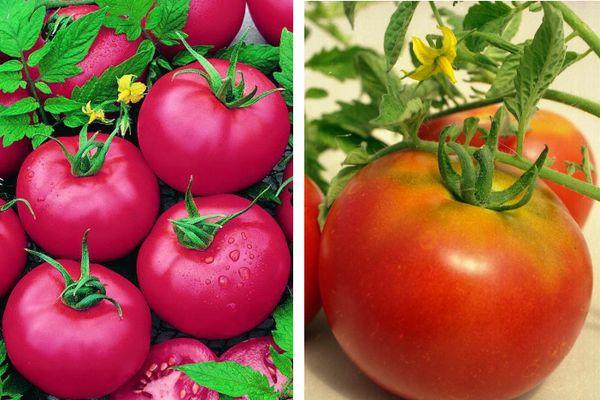
Reviews from those who have grown this variety indicate that the juicy fruits can be used to make tomato juice, soups, pastes and purees, and fresh salads. Tatyana tomatoes are also eaten fresh. They make a wonderful addition to main dishes, making any meal more filling and healthy.
Many gardeners use Tatyana fruits for canning whole. This is facilitated by their small size and thick skin, which does not crack during cooking.
How to grow tomatoes
To plant in your garden, you need to grow seedlings first. To do this, you need to buy seeds and prepare containers with soil. Before planting, treat the seeds with a growth stimulant and then plant them in the ground. Garden soil, mixed with humus and river sand, is suitable.
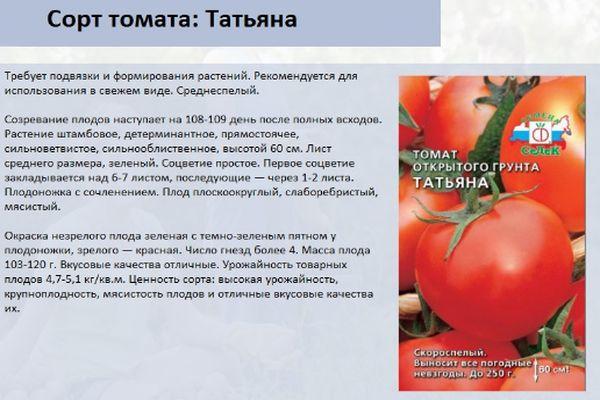
Sow seeds for seedlings in early March, placing them no more than 2 cm deep into the soil. After sprinkling the soil with peat, spray the soil with water. Cover the boxes with plastic wrap and place them in a room with a stable temperature. It shouldn't drop below 25ºC. This allows the seeds to germinate faster.
As soon as the seedlings emerge from the ground, the boxes are moved to a windowsill for natural light. If this is not possible, fluorescent lamps should be placed near the boxes. "Tanya" seedlings should be watered every few days, once the top layer of soil has become dry. Watering should be moderate and done using a watering can or spray bottle.
Pricking out is done when the first leaves appear on the plant. Additionally, the bushes are fed with a complex fertilizer, diluted with water according to the instructions.
In the second half of May, the seedlings are transferred to the ground, which by this time has already warmed up. The bushes are transferred to plastic and greenhouse shelters earlier.
Before planting, add humus and loosen the soil. Plant the bushes 30 to 40 cm apart. During the growing season, the lower leaves need to be removed, which accelerates the flow of air to the roots. There's no need to tie or remove side shoots. Throughout the season, the bushes should be fed with organic and mineral fertilizers.
Related posts:
 Description and characteristics of the best seeds of pea varieties and types
 The best grape varieties for growing in the Urals, planting and care rules in summer
 80 Best Eggplant Varieties for Different Regions with Descriptions and Characteristics
 The best eggplant varieties for growing in a polycarbonate greenhouse: planting and care
 What varieties of tomatoes are best to plant in a polycarbonate greenhouse?
 Description of the best potato varieties of domestic and foreign selection
 How to propagate and grow peas, cultivation technology, and care in open ground
 Description of the Velika grape variety, cultivation and care tips
