
The new Giraffe tomato differs from other common vegetable varieties in its ability to withstand long storage. Some gardeners even consider this quality a disadvantage rather than an advantage.
General characteristics of the plant
The Giraffe variety is an indeterminate, tall-growing variety, capable of reaching 2 meters in height, especially when grown in greenhouses. The bushes require staking and training into 1-2 stems. To achieve this, gardeners will need to monitor the formation of lateral shoots and promptly remove side shoots.
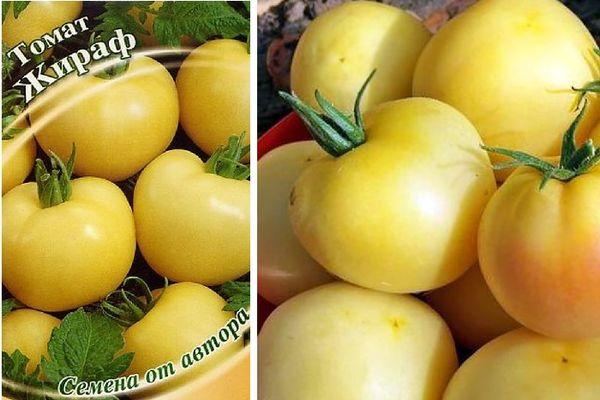
Like all modern varieties, Giraffe tomatoes are fairly disease-resistant and tolerate mid-summer temperature fluctuations well. They don't suffer much from heat, and rarely shed their flowers even when the soil dries out. The plant's pollen can become sterile at temperatures above 35°C, which is why some ovaries sometimes fail to form in a greenhouse.
Giraffe tomatoes are difficult to grow in regions with early autumn frosts. In these conditions, the mid-season tomato barely has time to ripen: the first harvest can be obtained in mid-August, when cold nights begin and late blight begins to spread.
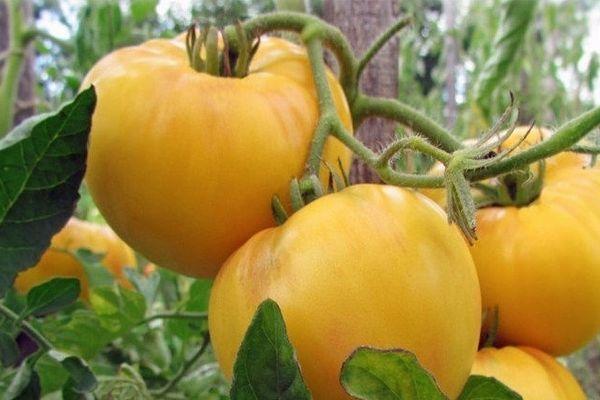
Vegetable growers Tomatoes are being harvested in the Urals and Siberia in the milky stage of ripeness for this very reason: this way it is possible to preserve the harvest almost completely.
In greenhouse conditions, cold weather doesn't affect tomato growth, so Giraffe tomatoes can be harvested for another 1-1.5 months, producing fresh, ripe tomatoes for the table. The remaining unripe berries can be collected for ripening in crates.
Giraffe tomato fruits
During the growing season, a bush can produce up to 10 fruit clusters. Each cluster produces 5-7 roughly identical, spherical tomatoes weighing 80-100 grams each. On average, a single bush can yield approximately 5 kg of high-quality, marketable produce. The plant has a unique characteristic: tomatoes ripen very poorly on the vine, so when they reach the milky stage of ripeness, it's best to harvest them and store them in boxes. Only seed-bearing tomatoes can be left on the bush.
Take a look Also
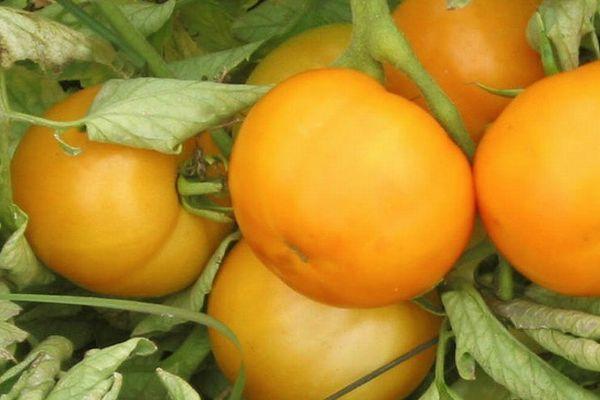
Picked green tomatoes can last up to six months, gradually ripening. A gardener can enjoy fresh produce until mid-winter. To speed up ripening, place several blanched tomatoes of any variety in a box. As they ripen, they release ethylene, which triggers the process in Giraffe berries.
The skin of Giraffe tomatoes is dense and does not crack during ripening and ripening on the vine. It is heat-resistant during canning. The excellent shelf life and transportability of Giraffe tomatoes is largely due to the strength of the skin.
The color of a ripe tomato is orange-red; at technical ripeness, the fruits are pale green, without a dark spot.
The flesh is meaty, juicy, and multi-chambered. The color is pale red or pinkish. Some gardeners describe the tomato flavor as classic tomato flavor, without any particular merit. The fruit walls are thick and firm, even when fully ripe.
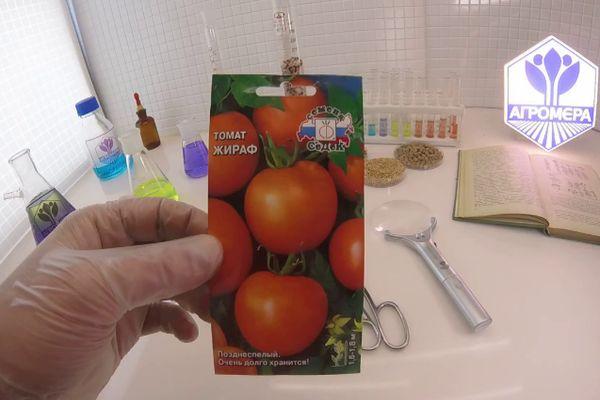
The variety's description and fruit characteristics indicate that these tomatoes can be used both as a winter salad vegetable and as a garnish for savory dishes and appetizers. The firm flesh retains its shape well when stuffed and baked. Due to its average flavor, many gardeners prefer to use the Giraffe variety in other ways.
Firm, calibrated tomatoes look great in marinades and pickles. However, for such preparations, it's best to grow them in a greenhouse to ensure ripe, well-colored tomatoes. When harvesting milk-ripe tomatoes, they can be salted or pickled even at this stage of ripeness. Green tomatoes are used to make delicious vegetable caviar. and cook exotic jam.
Agricultural technology of the variety
Tomatoes are grown exclusively from seedlings. Sow 60-70 days before planting in their permanent location. To protect the seedlings from fungal diseases, water the soil in the seed tray with a hot solution of potassium permanganate. Sow the seeds after the soil has cooled to room temperature. Cover with a layer of dry sand approximately 0.5 cm thick.

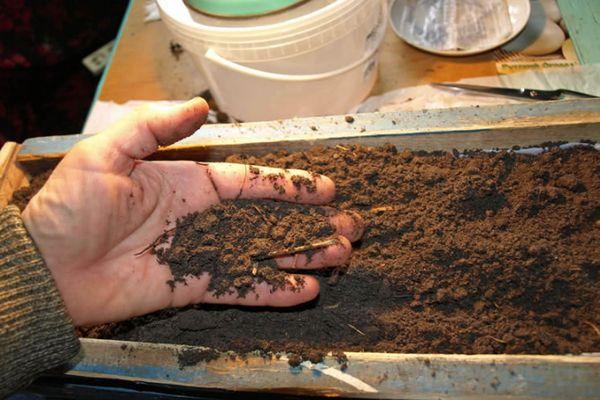
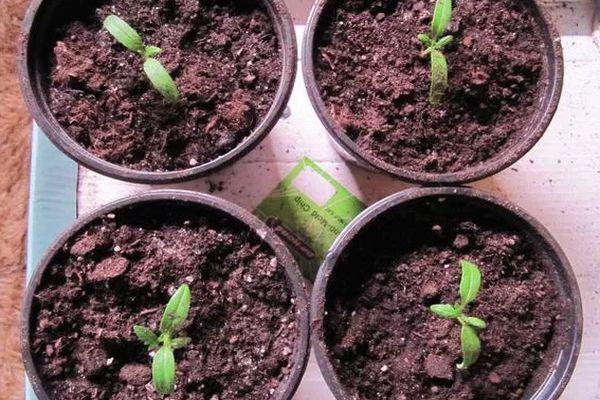
Tomatoes should be germinated under plastic film to retain maximum soil moisture. Poke a few holes to allow air circulation. At a temperature of 25°C, the seeds will germinate in 4-5 days. After this, remove the film, and grow the seedlings until they develop 2-3 leaves.
It's best to transplant tomatoes into individual pots, as they grow quickly and often become leggy when space is limited. When planting seedlings in beds, overly long stems can be placed in grooves, leaving 3-4 pairs of leaves above the soil.
Further care for Giraffe tomatoes, according to experienced gardeners, consists of timely watering and fertilizing. The first time, tomatoes need to be fed with nitrogen fertilizers (nitrophoska or others), but fresh organic matter (manure, droppings) cannot be added to tomatoes.
When the plants develop one or two flowering clusters, they are fed again. For this, use a mixture containing phosphorus and potassium, which are essential for the growth and development of fruit ovaries. The next feeding is done 2-2.5 weeks later, using phosphorus-potassium mixtures (Kemira, Agricola, Kristalon tomato, etc.). Nitrogen fertilizers are not applied during fruit formation.
When training the Giraffe tomato plant, remove all side shoots below the first cluster. After it blooms, trim off the lower leaves as well. If you plan to grow a two-stemmed plant, leave one side shoot above the cluster, continuing to remove the rest. Remove leaves as the clusters form, trimming those located under each new branch.
Harvesting begins when the berries reach the average weight specified for the Giraffe variety (70-100 g) and acquire a bright, glossy finish. These tomatoes are considered technically ripe and can be ripened indoors. This harvesting method allows the higher clusters to form ovaries better, and the tomatoes ripen to a ripening stage suitable for picking.
Related posts:
 Description of the best varieties of black tomatoes for open ground and greenhouses
 What varieties of tomatoes are best to plant in a polycarbonate greenhouse?
 The best eggplant varieties for growing in a polycarbonate greenhouse: planting and care
 The best tomato varieties for growing in the Leningrad region for greenhouses and open ground
 Description of the best tomato varieties for open ground in the central zone
 80 Best Eggplant Varieties for Different Regions with Descriptions and Characteristics
 The best grape varieties for growing in the Urals, planting and care rules in summer
 Descriptions of the 20 best cherry varieties for the Moscow region, their planting and care
