
The Nocturne tomato is a hybrid. The fruits are harvested in clusters. They have several advantages over other varieties.
What is the Nocturne tomato?
Description and characteristics of the variety:
- The variety will be appreciated by summer residents and gardeners who do not visit their plots often.
- The tomatoes are of excellent quality.
- They have a sweet and sour taste and are high in vitamin C.
- During storage, the amount of vitamins in fruits increases, which further increases their value.
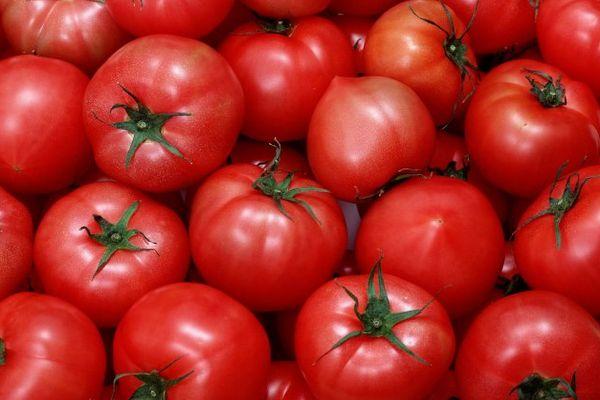
F1 hybrid varieties are often planted for sale, so they have to meet high requirements:
- good presentation,
- high yield,
- taste qualities.
Early-ripening Nocturne NK tomatoes are grown in a greenhouse or under plastic cover. The plant stops growing after the fifth or sixth cluster appears, reaching a height of 1.5 m. The branches must be tied to a trellis to prevent breakage.
The growing season lasts approximately 90 days. The fruits develop evenly and ripen uniformly. The maximum weight is 150 g. The variety is quite productive: up to 20 kg of tomatoes can be harvested per square meter. The quality of the harvest depends largely on the preparation of healthy seedlings.
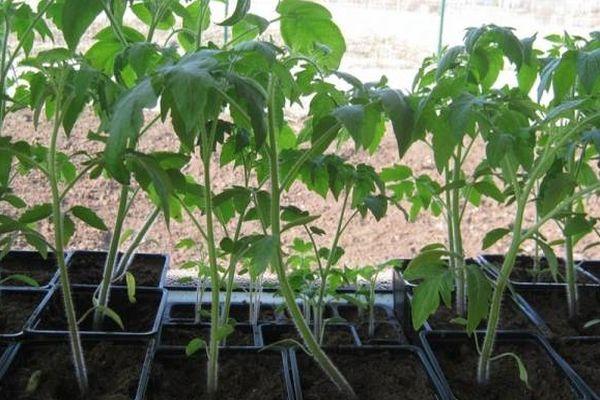
The initial stage of sowing seeds is as follows:
- a container with soil is prepared and first brought into a warm room;
- the seeds are prepared by soaking them in an ash solution as a growth stimulant;
- planting is carried out by distributing seeds into the soil to a depth of 1-1.5 cm;
- the soil is moistened using a spray bottle;
- a greenhouse effect is created by covering the container with film;
- the air temperature is maintained within the range of +20…+24ºС.
How to grow tomatoes?
Up to 9 seedlings can be planted per square meter. Proper planting location is crucial for a bountiful harvest: it should be well-lit, but protected from direct sunlight. Tomatoes can be planted in areas previously occupied by cabbage, cucumbers, zucchini, parsley, or dill.
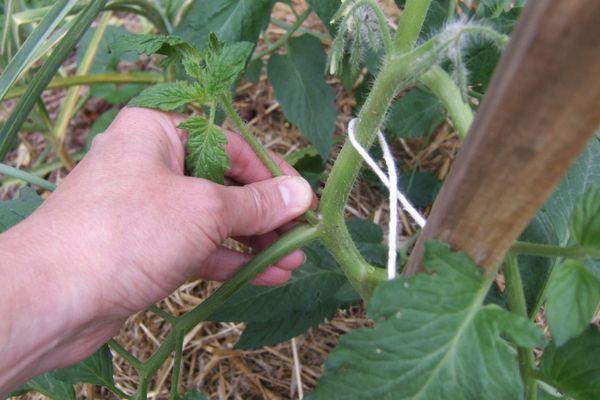
Frequent weeding, loosening, and hilling of the soil is necessary. This helps strengthen and improve the health of the root system.
After the flowers appear, carefully inspect the bushes, removing excess shoots and foliage. Their growth consumes a large amount of nutrients needed for fruit set and a high-quality harvest. Removing excess foliage is especially important during the active fruiting period, when all the plant's energy is devoted to fruit formation.
It is necessary to pick off the lower leaves that touch the ground and can become a source of disease.
Water the bushes sparingly, as tomatoes do not tolerate excess water. During high temperatures, mulch can be applied to retain moisture in the soil.

The cut leaves of the plant itself are ideal as mulch; they will soon turn into fertilizer for the roots. But they can be used provided that there are no traces of fungal diseases on them. You can also cover the soil with hay, straw, sawdust, and even newspaper. Mulching is usually done after hilling the soil.
When growing tomatoes in a greenhouse, it's important to maintain the correct temperature. Both high and low temperatures can be harmful to the plant. The optimal temperature for this crop is 18 to 25ºC.
During flowering, it's helpful to spray the bushes with a weak solution of boric acid, which promotes fruit set and growth, as well as increases their sugar content. Use 10 grams of powder per 10 liters of water.
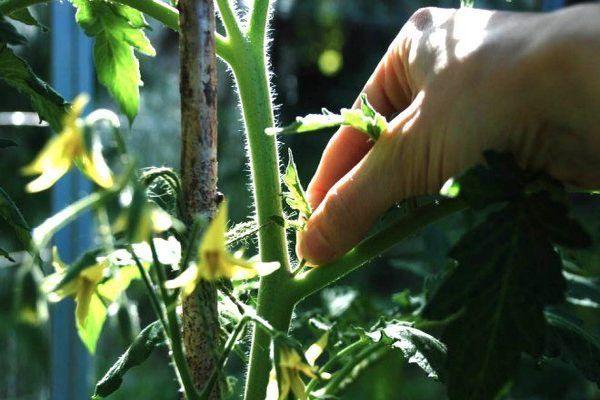
Once a week, it's helpful to apply foliar micronutrients. This spraying provides additional nutrition, accelerating the ripening process. Urea, potassium phosphate, or calcium nitrate can be used as a fertilizer at a rate of 1 teaspoon per 10 liters of water. Alternatively, you can spray with a solution of 1 liter of whey and 20 drops of iodine.
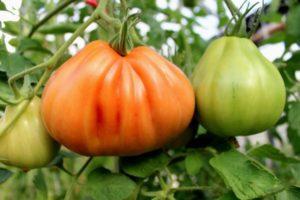
Root fertilization is necessary during the first phase of the growing season. During the fruiting period, no fertilization is necessary; you can simply sprinkle a little dry ash under the roots, which will impart a sweet flavor to the fruit.
Related posts:
 The best grape varieties for growing in the Urals, planting and care rules in summer
 The best eggplant varieties for growing in a polycarbonate greenhouse: planting and care
 Planting and caring for cherries, feeding and growing rules
 80 Best Eggplant Varieties for Different Regions with Descriptions and Characteristics
 Carrot care guidelines for outdoor cultivation to ensure a good harvest
 Methods for planting and propagating cherries at home
 Is it possible to grow an apricot tree from a seed in your garden? How to plant and care for it?
 Is it possible to plant carrots in July or at the end of June? What are the best days and care instructions?