
The Vermilion F1 tomato is a modern, early hybrid that will appeal to busy gardeners. It's completely undemanding in terms of growing conditions and care, yet delivers a decent harvest of fairly large fruits.
Description of the plant
The bush is determinate, forming its own top after 5-7 fruit clusters have formed. The plant is not very tall (up to 75 cm), vigorous, and upright, but during peak fruiting periods, the bushes can collapse under the weight of the tomatoes. Part of the harvest will end up on the ground. During unfavorable weather conditions, even seemingly strong and stable bushes should be tied to stakes. This will protect the harvest from late blight pathogens.
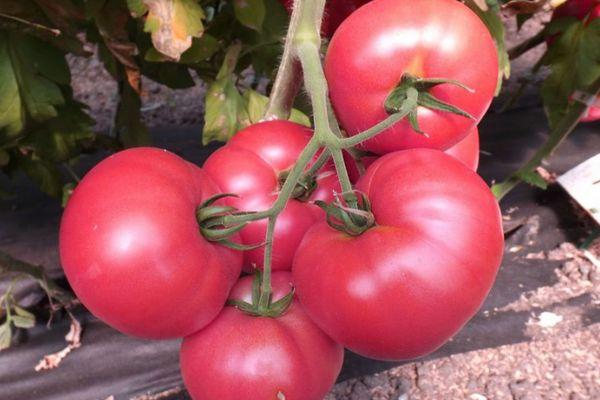
Vermillion tomatoes are an early-ripening hybrid. It takes about three months from sowing the seeds to harvesting ripe tomatoes, meaning the first harvest can be around early July. When grown in a greenhouse, you can see the fruits of your labor even earlier, allowing you to prepare vegetable salads from your own tomatoes from early summer.
This Dutch-bred variety is genetically resistant to many fungal diseases of tomatoes that can significantly reduce yields in commercial vegetable production. The plants yield quickly and are virtually immune even to late blight, which can damage the fruit only during cold, rainy summers when grown outdoors.
The hybrid tolerates both sudden temperature fluctuations, quickly recovering from stress, and long-term adverse conditions. The variety does not drop buds in dry weather. The watering schedule during fruiting is convenient for gardeners who rarely visit their plots: the plants require abundant but infrequent watering, approximately once every 5-7 days. Gardeners report a deterioration in the tomato flavor with excess moisture and insufficient sunlight.
Consumer qualities of Vermilion tomatoes
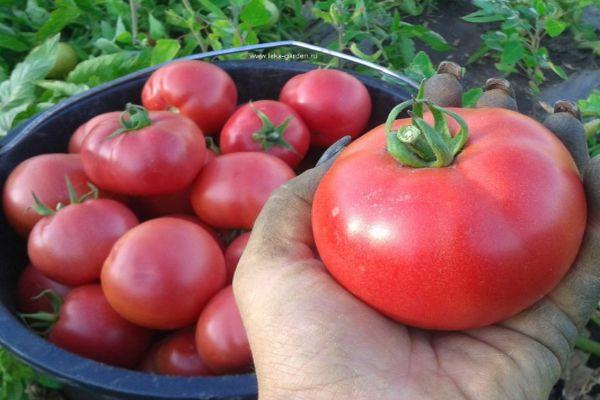
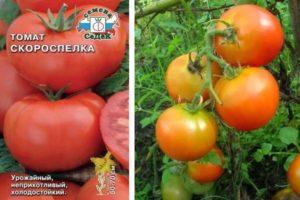
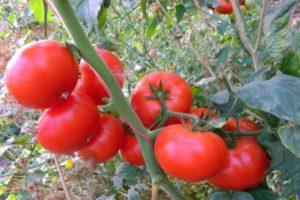
The plant produces several large, simple, and unbranched clusters with 5-7 ovaries each. The tomatoes are rounded with slight ribbing near the stem, and uniform in size and weight within the cluster. The average weight of a single tomato is 120-180 g, but the first tomatoes on the lower branches can reach 200 g. The total yield per bush is approximately 5 kg of marketable produce during the growing season.
The skin is very dense and tough. This is sometimes noted as a flaw of the hybrid, as when eaten fresh, the skin spoils the flavor of tomato salad. However, when canned whole, the dense skin reliably prevents the tomato from cracking. The skin of a ripe fruit takes on a rich pink hue; when ripe, the tomatoes are green.
The flesh is quite dense, but becomes more tender when fully ripe. The fruit's structure resembles beef tomatoes, with several small, often seedless, seed chambers nestled within the fleshy pulp. Flavor is characterized as average: the flesh is sweet and sour, with a classic tomato aroma. Those who prefer sweet and exotic varieties may find this commercial hybrid too sour and unappetizing.
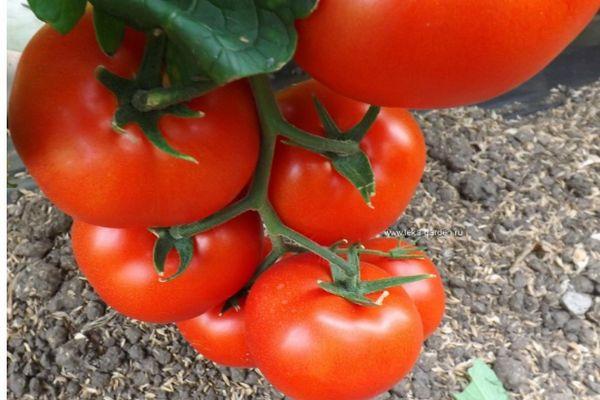
This variety's primary use is fresh consumption. The pink flesh of these tomatoes looks beautiful in salads and slicing, and the classic-flavored slices are perfect for hamburgers or sandwiches. When adding these tomatoes to hot dishes, be mindful of their pale color: pink tomatoes won't brighten borscht or kharcho sufficiently, nor will they add a vibrant flavor to vegetable caviar.
For whole-fruit canning, it's best to choose small tomatoes. They'll fit more compactly in the jar. Pink tomatoes look beautiful paired with brighter-colored vegetables. Overripe tomatoes can be processed. The resulting juice won't be too vibrant, but it will have a classic tomato flavor. It's perfect for drinking and as a sauce for lecho and other appetizers.
To obtain a brighter shade of juice, tomatoes can be processed together with red fruits of other varieties.
Hybrid agricultural technology
Early tomato varieties should be sown as seedlings approximately two months before transplanting to their permanent location. In southern regions, even direct-seeding cultivation is possible, but in central Russia, truly early tomatoes require growing seedlings yourself.
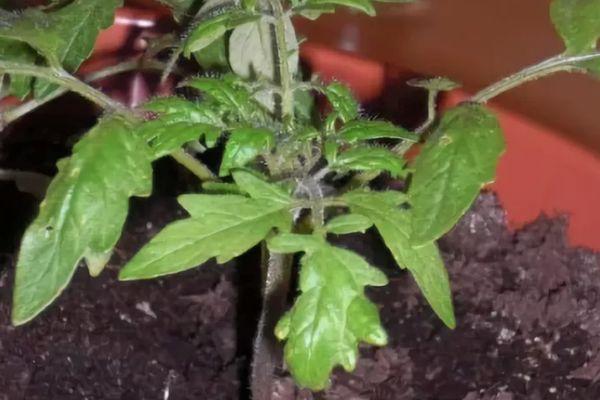
For sowing, prepare a substrate of equal parts humus, fine sand, and fertile soil. Add 2 tablespoons of ground chalk or eggshells to the mixture (for every 10 kg of soil). Sprinkle the prepared mixture into seed trays and disinfect them by soaking them in a hot, dark solution of potassium permanganate. Sowing is carried out only after the soil has cooled to room temperature.
Scatter the seeds over the surface of the moist soil and cover with a thin layer of dry sand, no more than 0.5 cm thick. No watering is required. To retain moisture, cover the boxes with plastic film, poke 2-3 holes in it, and place them in a very warm place (+25°C) to germinate. The tomatoes will sprout in 4-5 days. Remove the film from the box.
The seedlings continue to be kept warm, watering whenever the top 0.5 cm of soil dries out. The water should be approximately the same temperature as the soil in the container holding the seedlings. Young tomatoes require no other care.
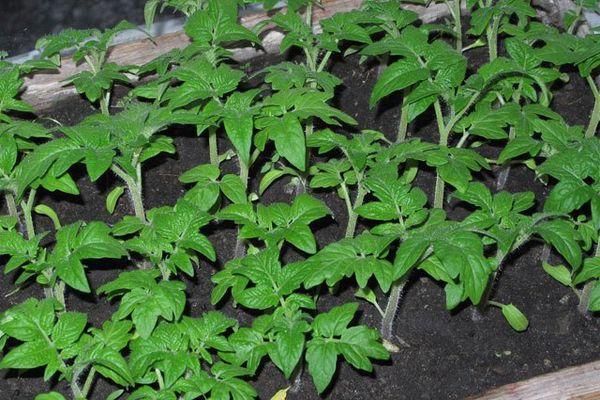
When the plants develop 2-3 true leaves, they are pricked out. When planting in a separate pot, the tomato is buried in soil up to the cotyledons to ensure additional roots form along the entire stem that's in the soil. After transplanting, water the plants lightly to firm the soil.
Further care consists of regular watering with warm water. Tomato pots should be kept in a well-lit area, near south- or southwest-facing windows. No additional fertilizer is necessary.
Transplanting into a greenhouse occurs around mid-May, when the soil warms to 15°C at a depth of about 15 cm. Planting in open ground is not done until the first ten days of June, when the last frost has passed. Plant 40 cm apart.
Related posts:
 The best eggplant varieties for growing in a polycarbonate greenhouse: planting and care
 Methods for planting and propagating cherries at home
 How to control carrot flies with medications and folk remedies
 Is it possible to grow an apricot tree from a seed in your garden? How to plant and care for it?
 Planting and caring for cherries, feeding and growing rules
 Top 40 DIY New Year's Baking Recipes for 2020
 Description of the Red Early apple tree variety, agricultural technology and specific care
 The best grape varieties for growing in the Urals, planting and care rules in summer
Thanks for the article. I'll be planting Vermilion tomatoes for the first time and then I'll post my feedback.