
Many gardeners prefer to grow low-growing tomato varieties. These low, compact varieties save space in the greenhouse and eliminate many additional maintenance tasks. Among low-growing varieties, the Mongolian Dwarf tomato stands out for its key qualities. Despite its small stature, the plants produce excellent fruit and are easy to care for.
Description of the variety
This miniature tomato variety was recently developed by breeders and is not yet registered in the State Register. However, it has already gained popularity among tomato lovers. Its primary purpose is cultivation in harsh climates. This new variety is widely grown in the Far East and the Urals, as well as in Siberia.

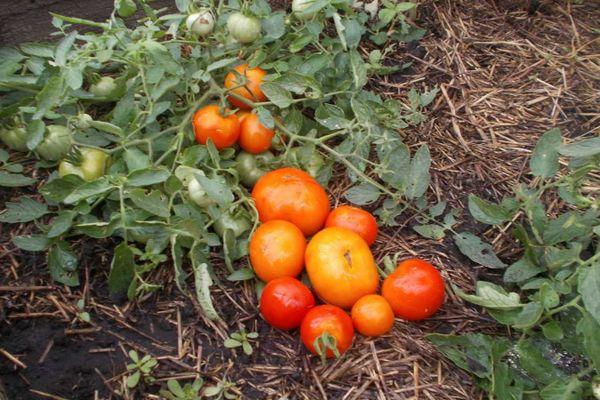
This the tomato variety is classified as superdeterminateThe bush reaches a height of 20-25 cm. After reaching this height, the stems begin to bend downward. The main stem usually has many side shoots, on which the ovaries develop. The shoots are not tied. The bush grows up to 1 m wide. The leaves on the bushes are narrow, heavily pubescent, and dense.
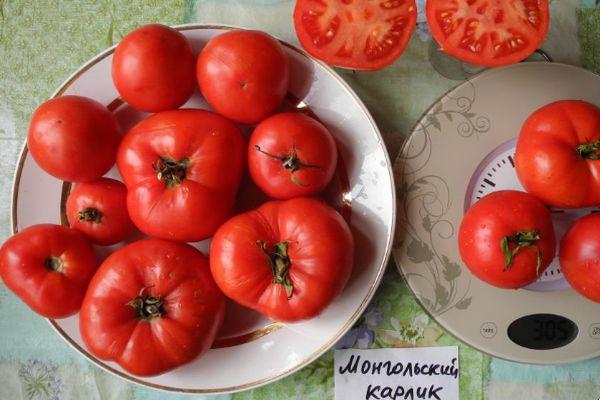
Mongolian Dwarf tomatoes ripen very early. The first harvest is already in late June. Fruit characteristics include the following:
- tomatoes are bright red and round;
- tomatoes are large, weighing on average 200 g;
- the fruits taste sweet, with a slight sourness, the pulp is juicy;
- The variety has a high yield - up to 10 kg of tomatoes can be obtained from one plant.
Growing
Seeds for seedlings are sown between March 20 and April 5. In southern regions, they can be sown directly into the ground.
Experienced gardeners recommend checking the quality of the seeds before sowing. To do this, soak them in a salt solution. Discard any that float to the surface, as they won't produce quality sprouts. Soak the remaining seedlings for half an hour in a weak solution of potassium permanganate and rinse with clean water.

For sowing, buy ready-made soil from a specialty store or prepare it yourself. Place the seeds in the soil to a depth of 1 cm, leaving 4–5 cm between each furrow. Cover the container with plastic wrap until the first sprouts appear and leave it in a warm place. Once the seedlings sprout, remove the plastic wrap and move it closer to sunlight. Once the seedlings have developed two or three true leaves, they can be pricked out.

This variety has its own unique characteristics. One of them is that the seedlings don't grow very large. However, small stature doesn't mean poor development; they can be safely planted in prepared soil in late May or early June. Sometimes, seedlings take a long time to grow, but then suddenly grow both vertically and horizontally.
Planting in protected soil is done a little earlier. The "dwarf" variety tolerates light and short-term frosts well. Simply cover the bushes with protective film.
In southern regions, dwarf tomatoes are grown without seedlings, planting the seeds directly into the soil. In areas with heavy soil, these tomatoes bear fruit poorly.
Before planting, add 10 grams of superphosphate and a small amount of compost to each hole. Leave a distance of up to 80 cm between holes, as the bushes grow widely. Water the seedlings when planting, but after that, they can go without water for a week until they take root. Plant the seedlings at a slight angle, covering the roots and part of the stem with soil.
Care Features
Mongolian Dwarf is easy to care for. Water sparingly, and don't allow the soil to dry out. To ensure the plants absorb moisture and nutrients better, the soil in the planting holes should be loosened regularly.
Miniature bushes benefit from additional feeding. This boosts the plant's resistance to disease and allows for larger fruits.
During the season, the bushes are fertilized three times. The first fertilizer is applied a couple of weeks after planting the seedlings, and the remaining fertilizer is needed during the ripening process. Experienced gardeners recommend feeding the plants with a wood ash solution or an infusion of mown grass.

Since the shoots of low-growing bushes spread along the ground, mulching is essential. Sawdust, straw, or plastic film can be used as mulch. You can also place scrap boards under the bushes. These measures will protect the fruit from rot and various pests.
Advantages and disadvantages
The Mongolian Dwarf has its pros and cons. The variety's advantages include the following:
- Mongolian Dwarf is a high-yielding variety. With proper care, each plant can yield a bucket of tomatoes.
- Simple care for low bushes can be handled by any novice gardener.
- The tomato is characterized by its cold resistance and resistance to wind, precipitation and drought.
- Early ripening allows you to enjoy delicious tomatoes at a time when other varieties are just beginning to produce ovaries.
The variety has virtually no drawbacks. The only drawback gardeners consider is that genuine Mongolian Dwarf tomato seeds are unavailable from any source. They can be ordered by mail or online, but there's a risk of receiving a counterfeit. Unscrupulous sellers pass off seeds from any dwarf tomato as Mongolian Dwarf seeds. Therefore, you should purchase planting material from trusted stores.
Pests and diseases
One of the tomato's positive qualities is its resistance to various diseases. Due to its early ripening, the Mongolian Dwarf is resistant to late blight. If the plant does become infected with late blight, it only occurs to a mild degree and in late autumn, when the cold weather sets in.
Mulching the soil protects bushes from pests and slugs.
Harvesting and storage
Tomatoes from dwarf bushes are harvested from late June until the first frost. The fruits store and transport well, and they don't crack or rot.
Gardeners note that, if necessary, the fruits can be harvested at the milky stage of ripeness. They ripen well indoors.

Tomatoes of this variety are versatile. They are used in fresh salads, lecho, juice, and other preserves.
Gardeners' reviews
Miniature tomatoes receive mostly positive reviews from gardeners. This amateur variety is suitable for any region, except those with acidic or heavy soils. According to reviews, these tomatoes grow and produce more fruit in open ground than in a greenhouse. This is because they do not like excess moisture. Other advantages of this dwarf variety include the following:
- Aside from watering, loosening the soil, and fertilizing, tomatoes require no special care. That's why some call them "the variety for lazy housewives."
- Gardeners who take the risk of planting a dwarf variety enjoy delicious tomatoes before others.
- This variety is a real find for tomato lovers living in northern regions with short summers.
Mongolian Dwarf is the best option for those who lack the skills or time to cultivate garden beds. This low-growing but hardy variety won't let you down.
Related posts:
 The best grape varieties for growing in the Urals, planting and care rules in summer
 80 Best Eggplant Varieties for Different Regions with Descriptions and Characteristics
 Descriptions of the 20 best cherry varieties for the Moscow region, their planting and care
 Description of 30 varieties and types of Muscat grapes, planting, cultivation and care
 Description of the best varieties of black tomatoes for open ground and greenhouses
 50 Best Pumpkin Varieties with Descriptions and Characteristics for Outdoor Planting
 Beginner's Guide to Growing Grapes in Open Ground in Central Russia
 Description and cultivation of the 15 best cherry plum varieties for the Moscow region, planting and care rules
I've been growing only these tomatoes for a long time now, and I get at least 8 kilograms from a single bush. I use the product "BioGrow"The drug is completely safe.