
Every vegetable grower dreams of low-growing, compact plants that produce a large harvest. This also applies to the favorite vegetable of many gardeners: tomatoes. The name of the new tomato variety, Vidno-Nevidimo, speaks for itself. This variety produces a large number of large pink fruits, while the plant itself is short.
Description of the variety
The Vidima-Nevidimo tomato variety was developed by Siberian breeders in the early 2000s. Their goal was to create a productive, early-ripening variety for unprotected soil. The result was an early-ripening, low-growing, determinate, high-yielding tomato variety.
It's ideal for growing in open beds, under plastic or non-woven covers, and in greenhouses. It can also be grown in large pots on balconies or greenhouses.
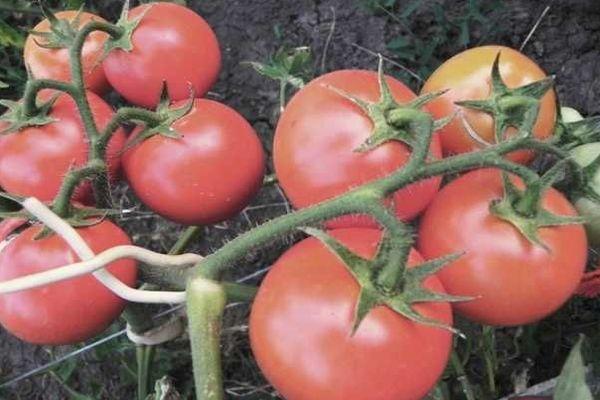
The bush grows from 50 to 90–100 cm tall, with a sturdy trunk and branches. The clusters form with abundant ovaries. The first cluster forms above the fourth leaf, with subsequent clusters forming every other leaf. The clusters should be tied to supports to prevent the plant from falling over due to the weight of the fruit on the branches.
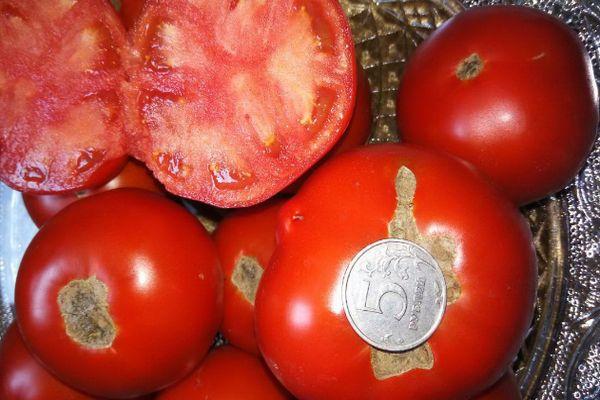
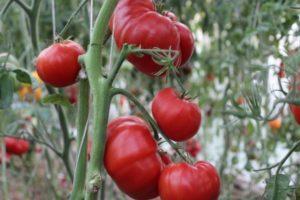
The fruits average 100–150 g in weight, occasionally reaching 250 g. They are round and smooth in appearance, slightly flattened at the top. The flesh is firm, a rich pink color, sometimes reaching deeper shades of red. The fruit contains 4–5 chambers. These tomatoes are excellent for fresh salads and for processing.
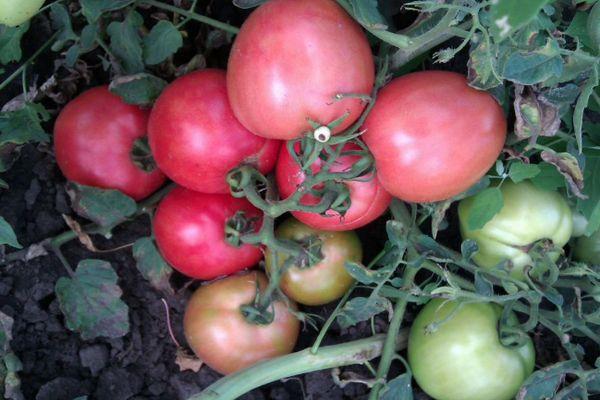
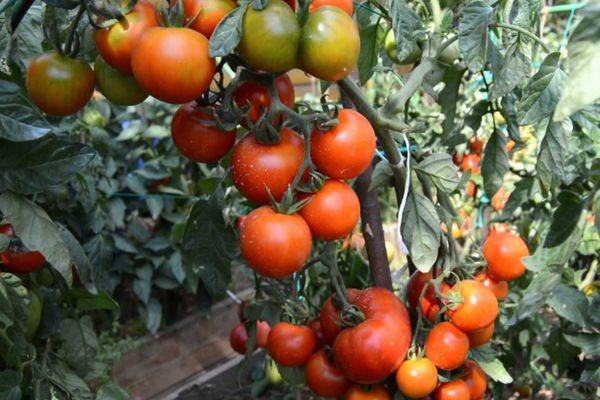
The yield is up to 3.5 kg of tomatoes per bush and up to 15 kg per square meter. The bush produces fruit until October and looks very attractive throughout the entire fruiting period, giving the impression that the fruits are lying on the top of the plant.
The clusters produce so many tomatoes that it's sometimes difficult to see the leaves and stems of the plant itself. The fruit has a pleasant, slightly sweet and tart flavor.
Growing
Planting seeds for seedlings begins 55–60 days before the planned transplanting into the beds. This is typically around late February to early March. The soil should be prepared in advance using garden soil, sand, and peat moss, and a little ash can also be added.
Before planting, check the seeds for germination. To do this, soak them in a small amount of water. Discard any empty seeds. It's also a good idea to disinfect them by soaking them in a potassium permanganate solution for about 15 minutes or using disinfectants available from specialist stores.
Plant in prepared soil no deeper than 1.5 cm, moisten, and place in a dark place under plastic wrap. Once sprouts appear, place the tomato containers in a sunny, draft-free location. The room temperature should remain steady at around 20–23°C.
Pricking out (replanting into another container) is necessary when two true leaves have formed. Some gardeners avoid pricking out to avoid damaging the plant's root system and leaves.
When transplanting seedlings to a permanent bed, it is recommended to plant 4 plants per square meter. Ensure the soil temperature is at least 16°C and that there are no more night frosts. It is advisable to use a non-woven covering material. Leave 30–40 cm between plants. Two to three weeks before transplanting, reduce watering and acclimate the plants to the outdoors by placing them on the balcony or veranda for short periods each day.
Care Features
For full establishment, feed the tomatoes with a nitrogen fertilizer two weeks after planting, and with fertilizers containing phosphorus and potassium after flowering. The first ripe tomatoes appear 85–100 days after the seedlings emerge. Fertilize again after the first harvest.
Tomato plants also need:
- water with warm water;
- loosen the soil;
- weed out.
In the southern regions of Russia, no shelter is required, but in the northern regions, it is advisable to grow in greenhouses and under shelter to maintain the quality of the harvest.
Advantages and disadvantages
The main advantages of the Vidno-Nevidimo variety are:
- The low growth of the plant is suitable for small areas.
- Large fruit size.
- High yield.
- Early maturity.
- Resistance to tomato diseases.
- Long fruiting period.
- This is a variety, not a hybrid, so you can use your own seeds and not buy them later.
There are few drawbacks, the main ones being the need for timely fertilization, otherwise the yield will decrease, good watering, and tying the plant to a support to prevent the clusters from breaking the plant's branches. Overall, this tomato variety is very easy to grow and doesn't require any special care.
Pests and diseases
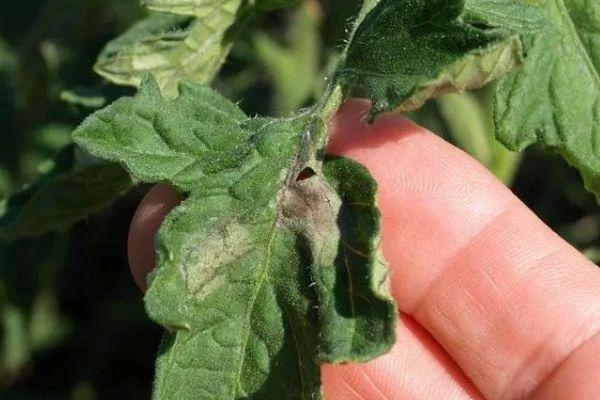
It's incredibly resistant to late blight and fungal diseases. Diseases that affect tomatoes include blossom-end rot and bacterial black spot. These diseases are treated with the store-bought product Fitolavin.
Pests that can damage tomatoes include the Colorado potato beetle, codling moths, and cabbage whites. To combat them, use specialized products such as a solution of copper sulfate and saltpeter.
Harvesting and storage
Tomatoes are a very healthy vegetable, containing fiber, vitamins, and microelements beneficial for human health. They are recommended for those who are overweight, suffer from gastrointestinal diseases, and gastritis with low acidity. They are excellent for eating fresh.
The first harvest can be picked on average three months after germination. Because ripe tomatoes have firm flesh and smooth, ribbed skin, the fruits are ideal for canning whole, as their surface does not crack.
Their flavor allows them to be used to make high-quality tomato juice, sauces, pasta, lecho, and excellent-tasting adjika. They are also used in sandwiches, appetizers, stuffing, and oven baking. They store well in cardboard boxes.
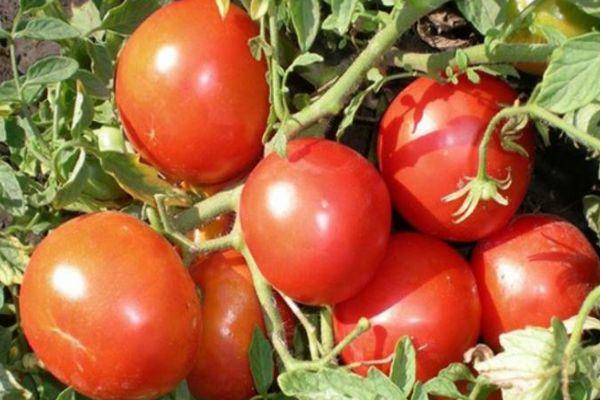 They do not wrinkle during transportation and retain their beneficial properties for a long time.
Reviews from gardeners and vegetable growers
The Vidno-Nevidimo tomato has earned mostly positive reviews and praise from experienced vegetable growers. After planting it for testing, many chose it for further cultivation due to its early maturity, large fruits, excellent taste, ease of care, and good yield. Those who have planted it once return to this variety, as its characteristics and description distinguish it favorably from other varieties.
Excellent for use in vegetable salads and winter preserves. Canned tomatoes are highly praised for their flavor. Even the variety's name speaks for itself—it produces abundant fruit, producing excellent yields in any climate.
Related posts:
 How to propagate and grow peas, cultivation technology, and care in open ground
 The best grape varieties for growing in the Urals, planting and care rules in summer
 Description and characteristics of the best seeds of pea varieties and types
 Description of varieties of sowing peas and cultivation, to which family they belong
 80 Best Eggplant Varieties for Different Regions with Descriptions and Characteristics
 Descriptions of the 20 best cherry varieties for the Moscow region, their planting and care
 Descriptions and characteristics of chrysanthemum species and varieties, growing rules
 Description of the 23 best pear varieties for the middle zone, planting and care rules