
The Mona Lisa hybrid tomato is a variety that produces tasty, early-ripening fruit. Developed by Russian breeders, it is specifically designed for outdoor cultivation. Covering is recommended only as a temporary measure during ripening or prolonged inclement weather. User reviews indicate that the Mona Lisa f1 tomato produces well even in northern latitudes, where cool weather prevails throughout the summer.
Features of the variety
This plant is an early variety with a short ripening period. Even under unfavorable weather conditions, the first fruits appear no later than 90 days after sowing the seeds. Germination and flowering occur simultaneously. Yields are uniform and stable throughout the growing season; plants wilt after the first frost.
The manufacturer gives the following description of the variety:
- Mature bushes are tall. In open ground, they grow up to 130 cm, and in a greenhouse, up to 180 cm or more. This often leads to the development of crown rot. The stem and leaves are light green. The foliage is sparse, evenly covering the branches.
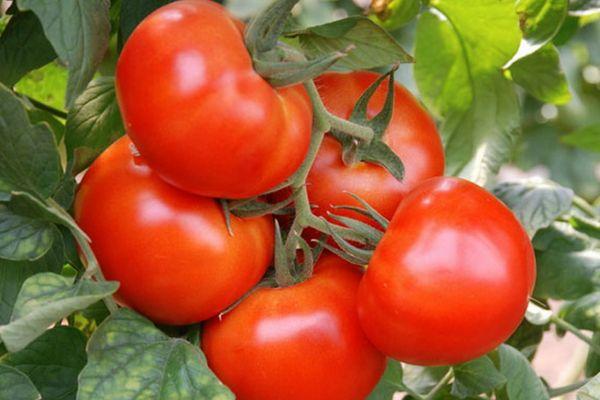
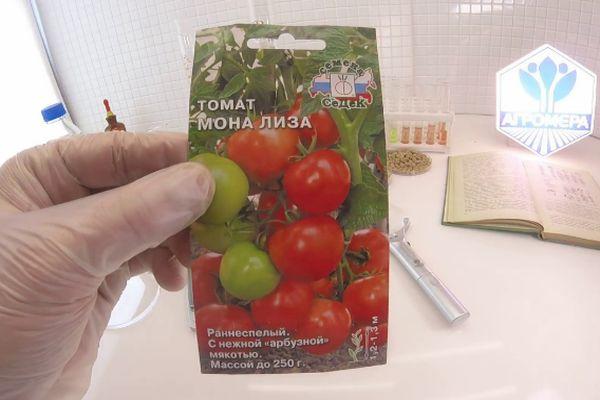
- The fruits are perfectly spherical, slightly flattened vertically. The tomatoes are large, bright red, weighing up to 300 g. The skin is dense, smooth, and glossy. The color is uniform, with no light spot near the stem. According to growers, the taste of the fruits is excellent. The consistency of the flesh is reminiscent of watermelon, with no fibers. The flavor is distinctly tomato-like, slightly tart.
- The variety has a high yield. When planting and care recommendations are followed, it yields up to 20 kg per square meter in open ground. In greenhouse conditions, the yield is half that. Uniform ripening of the fruit facilitates harvesting and processing.
Advantages and disadvantages of the variety
Mona Lisa tomatoes were bred for cultivation in high-risk farming zones. They tolerate extreme temperature and humidity fluctuations well. The plants are hardy, resistant to dampness and drought.

The variety has the following advantages:
- High yield. This characteristic allows for commercial-scale cultivation even on small private farms.
- Good shelf life. Large fruits have strong skins that resist cracking during transport and bulk storage in boxes. Under proper conditions (humidity, light, temperature), tomatoes can be stored for up to 3 months after harvest.
- Resistance to infectious diseases. Plants are resistant to verticillium wilt, leaf spot, and cladosporiosis.
- The versatility of the fruit. They are eaten raw, sliced, in salads, and in juices. Ketchup, adjika, and other preserves are made from tomatoes. Whole tomatoes are not canned because they are too large.
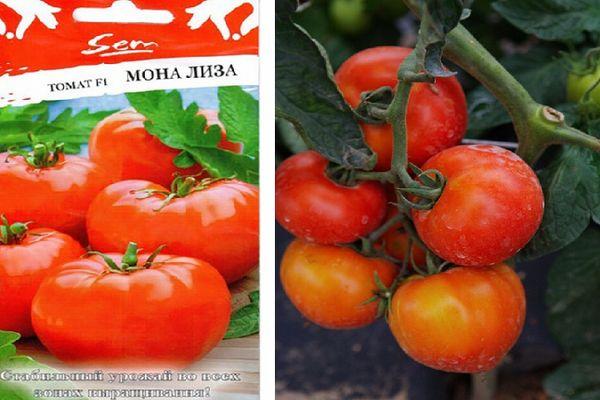
A definite drawback is the size of the tomatoes: they don't fit into standard jars and put a lot of pressure on the stems. Because of this, the plants need to be supported. If they produce a lot of fruit, several supports may be needed.
During the ripening period, plants require increased fertilization. If there is a shortage of nutrients, fruit formation will cease.
Tomatoes also react negatively to an abundance of nitrogen (which occurs in greenhouses), and growth occurs in the green mass in the absence of fruits.
Growing technique
Growing the Mona Lisa variety is no different from cultivating other tomatoes, but there are some nuances specific to this type.
It is necessary to pay attention to the following points:
- The hybrid is early maturing, meaning it requires comprehensive mineral fertilizers. Insufficient fertilizer results in fruit not setting and the bush not growing.
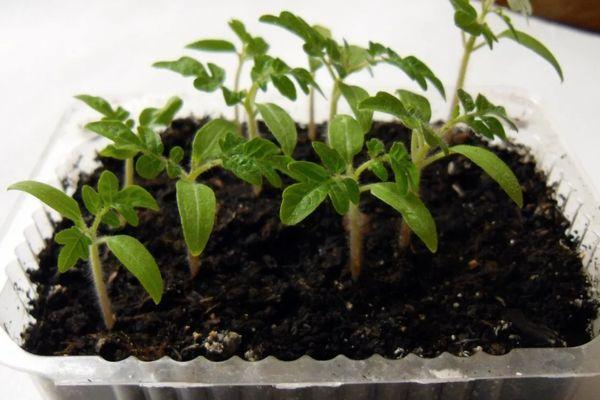
- The seeds are prepared and planted in the ground as early as the second ten days of March. Given the early sowing, they need to be thoroughly hardened off in the cold.
- After the first shoots appear, constant illumination with an agrolamp and maintaining a temperature of +18 ºС are required.
- Seedlings need to be regularly fed with special mineral complexes. Pricking out should be done after the second leaf appears.
- Plants are planted in the ground a week after the last spring frost. There's no need to wait for the soil to warm up completely. It's best if the plant has two stems.
- The manufacturer recommends planting 8 bushes per square meter. Supporting the branches and trunk is essential.

The fruits should be collected before the onset of night frosts.
Related posts:
 The best eggplant varieties for growing in a polycarbonate greenhouse: planting and care
 80 Best Eggplant Varieties for Different Regions with Descriptions and Characteristics
 The best grape varieties for growing in the Urals, planting and care rules in summer
 Causes and treatment of eggplant pests and diseases, how to combat them at home
 Descriptions of the 20 best cherry varieties for the Moscow region, their planting and care
 The health benefits and harms of cherries, rules of consumption, and their effects on the body
 Growing and caring for hazelnuts in open ground, rules for planting hazelnuts
 Description and characteristics of the 27 best plum varieties for the Urals, planting and care