
The Padishah tomato, whose characteristics and description indicate a high sugar content, is distinguished by its interesting fruit shape and high yield. It is suitable for cultivation in both protected and open ground and is resistant to nightshade diseases. Other varieties with special names fall into the category of tomatoes with exceptional qualities.
Exclusive varieties of tomatoes
The Padishah tomato variety is a mid-season variety. Fruiting begins 111-114 days after sprouting. This indeterminate plant requires support or trellising during the growing season.
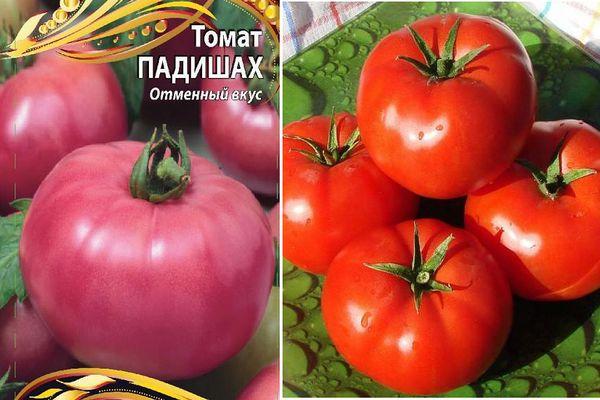
It is recommended to grow the plant in a single stem for maximum yield. This variety is suitable for cultivation in open and protected ground conditions in glass and polycarbonate greenhouses.
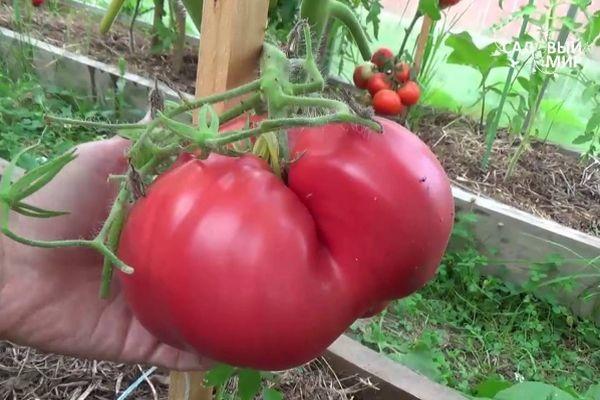
Reviews from those who have planted the Padishah variety indicate high yields and uniform fruit set. The large tomatoes have a glossy surface and resemble a heart in appearance.
The tomatoes have a slightly ribbed surface. Fruit weight reaches 120-350 g. The tomatoes are pink in color and sweet in taste.

Tomato King The "Korolei" variety was bred relatively recently in Russia. It is adapted for cultivation in protected ground and warm climates. The red fruits ripen 120 days after germination.
Tomatoes weigh between 0.6 and 1 kg. Yields reach up to 4.5 kg per bush. The fruits have a firm consistency and contain up to 10% dry matter.
Tomatoes store well for over a month and withstand transportation. Indeterminate plants reach a height of 140-180 cm. The variety is resistant to biological pests and fungal diseases.
Among the kings hybrid tomatoes Azhur It takes its place, fully justifying its delicate name as an ornamental species. Compact, determinate bushes are adorned with carved foliage. The hybrid is grown in open ground and greenhouses.
The fruits are a regular, flat, round shape, with fleshy flesh and a deep raspberry color. They weigh up to 300-400 g. A single bush can yield 5-7 kg of fruit. The hybrid is resistant to cracking and many nightshade diseases.
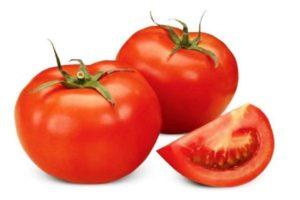
Tomatoes have an excellent sweet flavor. It is recommended to tie the sturdy bushes to a support to prevent stem deformation during the ripening period.
Tomato Sultan Bred by Dutch agrobiologists, this hybrid boasts a long fruiting period. Determinate bushes produce large, intensely green leaves.
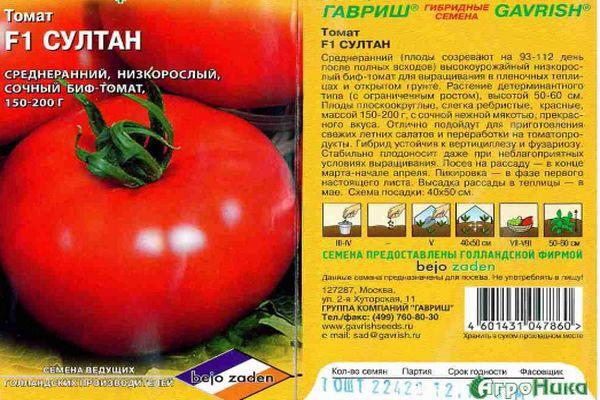
Each cluster contains 5-7 tomatoes weighing 100-200 g. The fruits are deep red, with firm flesh and skin. When cut horizontally, chambers containing a small number of seeds are visible.
The fruits have a rich, sweet flavor. Dry matter content reaches 5%, and sugar content is 2.8%. To grow a good harvest, generous fertilizing and timely watering are recommended.
Cultivation techniques
The Padishah tomato is grown from seedlings. The seeds are sown in March. The seeds are placed in a container with prepared and moistened soil mixture at a depth of 1-1.5 cm. The container is covered with plastic film to create a greenhouse effect.
Once the sprouts emerge, remove the film. When one or two true leaves have formed, transplant the plants into separate containers filled with substrate. When transplanting, it's recommended to use peat pots, which can be used for planting the bushes in their permanent location.

Seedlings are transplanted into the ground at 50 days old. They are planted in greenhouses in April. Maintain a distance of 40 cm between plants and 70 cm between rows. It is recommended to plant three plants per square meter to ensure each receives adequate ventilation, light, and easy access for care.
Plants are trained to form 1-2 stems. When forming two stems, the first shoot is left. During the growing season, remove excess shoots and lower leaves. Care requires infrequent but abundant watering at the roots with warm water.
During the season, it is recommended to apply complex fertilizers 4-5 times according to the manufacturer’s schedule. The variety is not resistant to late blight, so it is necessary to carry out preventive treatment with preparations 3 times with an interval of 10 days.
To maintain a balance of moisture and air around the root system, loosen the soil periodically and hill up the plants. Mulching with black fiber, straw, or grass is recommended to reduce water evaporation from the soil. Mulch prevents weed growth and maintains the optimal temperature needed for tomato growth.
Related posts:
 Description of the best varieties of black tomatoes for open ground and greenhouses
 80 Best Eggplant Varieties for Different Regions with Descriptions and Characteristics
 The best grape varieties for growing in the Urals, planting and care rules in summer
 Beginner's Guide to Growing Grapes in Open Ground in Central Russia
 What is the best way to feed tomato seedlings to make them plump?
 What varieties of tomatoes are best to plant in a polycarbonate greenhouse?
 Description of the best tomato varieties for pickling and canning
 Description and characteristics of the best indeterminate tomato varieties for greenhouses