
- Description of the Sanka tomato
- Characteristics of the variety
- Pros and cons
- How to plant the Sasha tomato
- Preparing seedlings
- Growing seedlings yourself
- Time to sow seeds
- Choosing time and place
- Soil preparation
- Picking
- Peculiarities of tomato care
- Loosening
- Watering
- Feeding
- To stepchild or not?
- Bush formation
- What can ruin the harvest?
- Diseases
- Pests
- Aphid
- Insect larvae
- Colorado beetle
- Harvesting and storage
- The best reviews from our readers
The consumer market offers a wide range of vegetable crops from the Aelita agricultural firm. Sanka tomatoes are considered one of the most sought-after varieties of this agricultural product. The reasons for this increased demand, its characteristics, and cultivation guidelines will be discussed in detail in this article.
Description of the Sanka tomato
Before we begin the description, it's important to clarify that the Sanka tomato is not an F1 hybrid. This characteristic allows the plant to self-pollinate and pass on all its qualities to its offspring.
Description of the Sashenka variety:
- Plant type: determinate.
- When grown outdoors, the mature bush reaches 0.5 meters in height. In greenhouse conditions, this height can be increased to 1 meter.
- The plant stem is standard and heavily foliated.
- The foliage is medium sized and rich green.
- Intermediate type shoot system.
- The inflorescences are unbranched and have a simple structure.
The root system is well developed, providing a strong foundation for anchoring the plant in the soil.
Noteworthy! A new variety, Zolotoy Sashenka, was developed from the Sanka tomato. This subspecies has a similar bush structure. However, it differs in fruit shape and color, as well as yield.

Characteristics of the variety
The Sanka tomato is an ultra-early, high-yielding variety. The growing season, from seed germination to the first ripe fruit, averages 80 days. With proper care, the variety yields 15 kilograms of select tomatoes per square meter.
Detailed characteristics of the fruits:
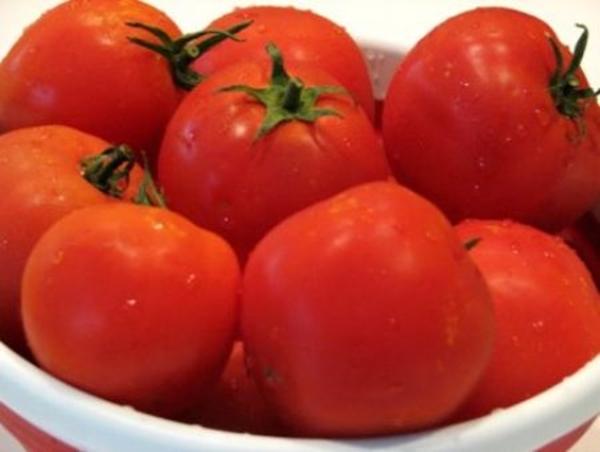
- weight – 80 grams in open ground, in film shelters – 150 grams;
- shape – round;
- skin - slightly ribbed, smooth;
- color – deep red;
- pulp - fleshy, not watery;
- taste qualities – 4.8 points, on a 5-point scale.
The dry matter content in tomatoes is 4-5%.
Pros and cons
According to gardeners, the Sanka tomato has many positive qualities. The variety's advantages include:
- early maturity;
- increased productivity;
- long fruiting period;
- taste qualities;
- good transportation;
- frost resistance;
- collection of seed material.
The variety's advantages also include good immunity to various diseases and insect pests.
Experience has shown that the Sanka tomato has no shortcomings. However, to obtain a decent harvest, certain cultivation and care practices must be followed.
How to plant the Sasha tomato
Growing the Sanka variety requires some preliminary measures. These will guarantee high yields and high-quality fruit.
Preparing seedlings
The Sanka tomato can be grown using either seedlings or direct-seeding methods. If the variety is cultivated in the southern regions of the country, the seeds are sown directly into the plant's permanent growing location. To ensure a high yield in the northern regions, the tomato is grown exclusively using seedlings.
Growing seedlings yourself
Growing young seedlings at home does not require any specific skills or knowledge.
This process is carried out as follows:
- The seeds are treated with a weak solution of potassium permanganate for 15 minutes.
- To stimulate growth, the seed material is treated with preparations such as Zircon or Ecosil.
- The prepared container for seedlings is filled with loose soil.
- The soil is well moistened by airborne droplets.
- Rinsed seeds are placed into the soil to a depth of 1 centimeter.
- The seed material is covered with soil.
At the end of the work, the container is covered with film and transferred to a dark place until the first sprouts appear.
Time to sow seeds
Many beginning gardeners wonder when to sow seeds for seedlings. This depends on the climate in your region.
The table below shows the optimal time for planting the Sanka variety.
| Name of regions | Southern Territories | Central Black Earth regions | Middle zone | Urals and Siberia | Far East |
| Time to sow seeds for seedlings | February 25–March 5 | March 10-25 | March 10–April 15 | April 1-5 | March 1-25 |
The dates in the table are approximate and not strictly accurate. A more precise calculation can be made by each gardener when growing the crop annually.

Choosing time and place
The optimal time for transplanting seedlings to a permanent growing location is considered to be mid- to late May, after night frosts have ceased.
It's recommended to plant young seedlings in a sunny, spacious area. The growing site should be protected from drafts and northerly winds.
Soil preparation
Soil cultivation begins in the fall, after the plant tops have been cleared. Organic fertilizers such as peat, poultry manure, or poultry manure are evenly spread and dug into the planting area. With the arrival of spring, the soil is loosened and fertilized with copper sulfate and superphosphates.
Picking
Transplant seedlings into the ground when each plant has 5-6 true leaves. Transplant in good, windless weather. It is recommended to plant tomatoes in their permanent growing location in the morning or evening, when there is no heat. The optimal planting pattern is considered to be 40x40 centimeters.

Peculiarities of tomato care
To maintain healthy seedlings and achieve high yields after transplantation, it is necessary to properly organize agricultural work.
Caring for the Sanka variety includes the following steps.

Loosening
It's best to keep the soil under the plants loose at all times. Loosen the soil after each watering or once every two weeks. This oxygenates the soil, which improves tomato growth.
Watering
Irrigate the soil regularly with warm water. Avoid overwatering, as this will damage the plant's root system. The recommended watering rate is 7-8 liters per square meter.
Feeding
The best fertilizer for the Sasha variety is chicken manure or mullein. Fertilizing is necessary during the flowering period. The recommended rate is 0.5 liters of organic fertilizer per 10 liters of water.
To stepchild or not?
Pinching out the side-children of the Sanka variety is an essential part of cultivation. This procedure begins even before transplanting the seedlings to their growing site. Without removing the side-children, the bush begins to grow rapidly and become denser. The clusters produce numerous fruits. Eventually, they become smaller and lose their marketable quality.
Bush formation
Sanka tomato plants are typically trained to have one or two stems. In the first case, all side shoots are removed during plant growth, before the flowers appear. In the second case, an additional stem is formed from a side shoot emerging from a leaf axil.
What can ruin the harvest?
Although the Sashenka tomato has good immunity to various diseases and insects, if they appear, you can still lose a significant portion of the harvest.
Let's take a look at an overview of the most dangerous pathologies and pests.

Diseases
Mosaic disease is a common tomato disease. It destroys 15% of the crop. It is caused by a virus, causing the plant's leaves to first become variegated, then curl and change shape.
The following are also considered dangerous pathologies:
- Alternaria;
- late blight;
- blossom-end rot.
These diseases are difficult to control. Therefore, to prevent their occurrence, it is recommended to regularly inspect your plants and take appropriate measures.
Pests
Many insects can completely destroy tomatoes, both indoors and outdoors. The following pests are considered the most dangerous for the Sanka variety.
Aphid
These insects feed on plant sap, quickly causing foliage to become deformed. Typically, the foliage becomes limp and drooping. Aphids can quickly destroy young seedlings. If left untreated, the insects will also damage mature plants.
Insect larvae
Pest larvae primarily live underground. Their primary food source is plant roots. While feeding, the larvae chew holes in the root system. Over time, fungi and pathogenic bacteria develop in the damaged areas, leading to the death of the tomato plants.

Colorado beetle
The Colorado potato beetle is particularly dangerous for the Sanka variety. This insect can produce four generations in a single season. Colorado potato beetle beetles and larvae are quite voracious, capable of devouring flowers, leaves, and stems until the tomatoes die.
Harvesting and storage
Gardeners also love the Sashenka tomato for its consistent, long-lasting fruiting. When harvested at a controlled rate, a single plant produces 5-8 kilograms of tomatoes. Furthermore, if proper cultivation practices are followed, its yield continues until the first frost.
Another distinctive feature of this variety is its long-term shelf life. At temperatures of 12 to 15 degrees Celsius and 80% humidity, the tomatoes retain their flavor and shape for 9 to 12 days.
The best reviews from our readers
Smirnova Ekaterina, 42 years old, Biysk
I plant Sanka tomato varieties in my garden every year. And every year I'm pleased with the yield. On average, I get 7-8 kilograms of select tomatoes from a single bush. The tomatoes themselves are tasty, aromatic, and plump. They're also great for eating fresh and for winter preserves.
Kutsuba Konstantin, 54 years old, Krasnodar
I'm an expert in vegetable growing, having been in the business for a long time. Among all the tomatoes, I single out the Sanka variety. It's an easy-to-grow crop. Diseases and pests are untouched. The variety's yield is excellent. And the marketability of the tomatoes is also quite high.
In conclusion, I'd like to add that the Sanka tomato has been praised for its qualities by both experienced farmers and newcomers to vegetable growing. The plant's hardiness allows inexperienced gardeners to harvest up to 5 kilograms from a single plant in any region of Russia. For experienced farmers, this variety offers extensive production and marketing opportunities.

Related posts:
 Description of the best tomato varieties for pickling and canning
 Description of blight-resistant tomato varieties for open ground and greenhouses
 The best eggplant varieties for growing in a polycarbonate greenhouse: planting and care
 Description of the best varieties of black tomatoes for open ground and greenhouses
 Description of the best ultra-early tomato varieties for open ground and greenhouses
 Description of the best tomato varieties for open ground in the central zone
 Description and characteristics of the best seeds of pea varieties and types
 The best varieties of low-growing tomatoes for a polycarbonate greenhouse