
The Talisman tomato, described below, belongs to the group of mid-season hybrids. It is fairly resistant to various diseases and can be grown by any gardener with experience growing tomatoes. The fruits are used in salads, tomato paste, juices, ketchup, and sauces. The berries can be preserved for winter or pickled.
There's a trailing tomato called Talisman. This variety is grown in hanging baskets for those without a garden plot.
Technical data of the plant and its fruits
The characteristics of the Talisman variety will be compared with those of plants of the Amulet and Obereg types, which are varieties of the hybrid in question.
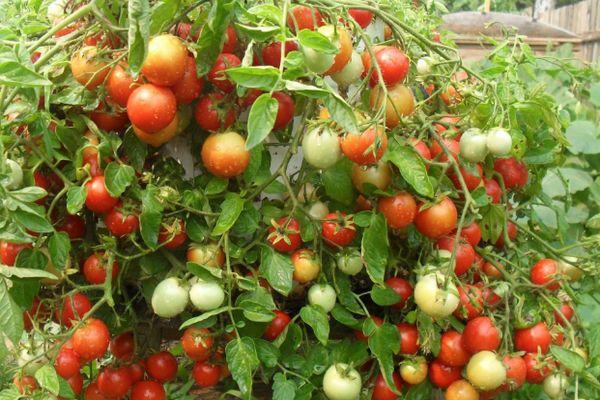
The description and characteristics of these tomatoes are as follows:
- The first harvest can be obtained 110-120 days after sowing the seedlings.
- The bushes of all the described plant species grow to a height of 0.4-0.7 m. Their stems bear a medium number of leaves, which are small in size and green in color.
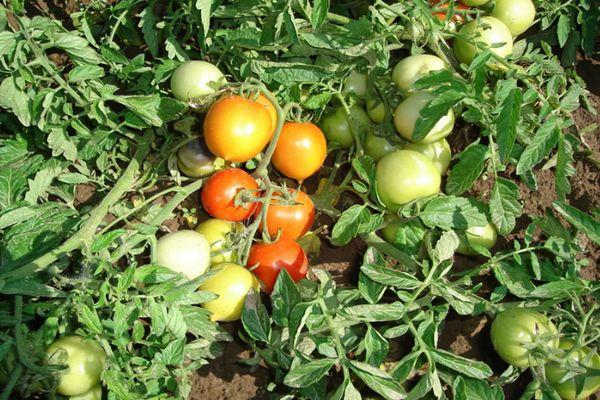
- The shape of the fruit resembles an inverted, slightly elongated egg. Talisman and Amulet have red berries, while Obereg's are yellow.
- The weight of berries ranges from 60 to 100 g, and for hanging tomatoes they weigh 40-50 g.
- The fruit contains 2-3 chambers containing seeds. The berries themselves are smooth and fairly firm. Fruit grown in the ground has a slightly sweet taste. The trailing variety of Talisman has average flavor and is used only fresh.
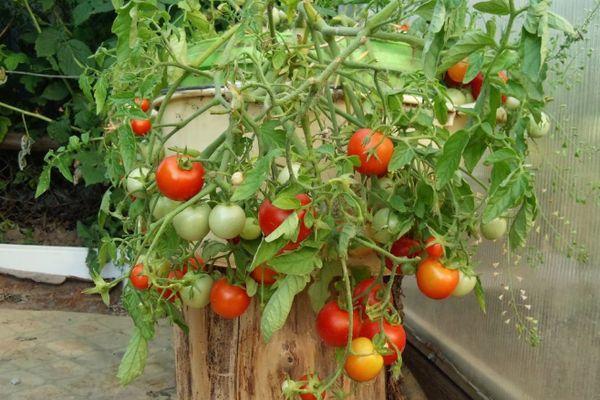
Reviews from farmers growing these varieties indicate yields ranging from 5.5 to 7 kg per square meter. Talisman withstands long-distance transportation well. This tomato is grown not only in private gardens but also on large farms on an industrial scale. The berries remaining on the bushes after harvesting do not overripen. Talisman and its varieties are highly resistant to the tobacco mosaic virus.
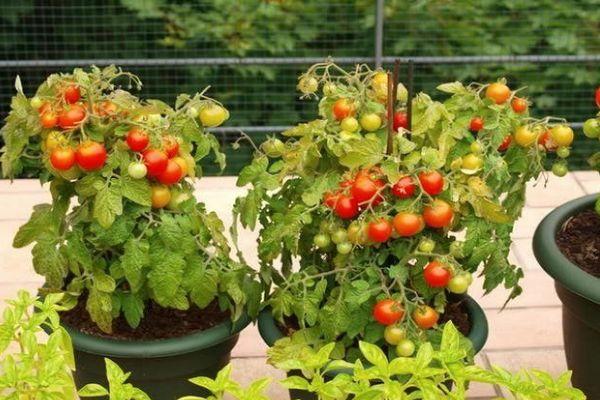
This hybrid can be grown throughout Russia. It grows outdoors in the south and central regions of the country. In Siberia and the Far North, heated greenhouses are used for growing tomatoes. The trailing variety is grown for ornamental purposes, most often on balconies and loggias of multi-story buildings.
How to grow the described variety
To enjoy a harvest of Talisman hybrid varieties, gardeners must follow all agricultural guidelines. The seeds are first treated with a weak solution of potassium permanganate and then planted in containers with soil mixed with peat and sand. When the first sprouts appear, they are pricked out when the seedlings have developed one or two leaves. Before planting in permanent soil, when the seedlings are two months old, they are hardened off using commonly used methods.
The seedlings of the ampelous variety are grown to fruit in containers where the seeds have been sown.
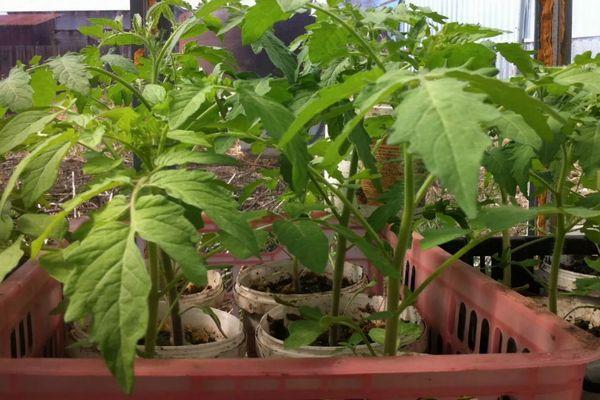
Plant the bushes in 0.7 x 0.3 or 0.7 x 0.4 m formats. No more than 5-6 bushes can be planted per square meter. Since the plants are low-growing, no supports are required. However, if the region is prone to frequent bad weather or strong winds, it is advisable to tie the bushes to supports. To ensure optimal fruit development, it is recommended to sow the seedlings in soil previously sown with cucumbers, carrots, parsley, zucchini, or cabbage.
Although the Talisman variety is resistant to many diseases, preventative measures are recommended to protect the plants. Spray the bushes with Bordeaux mixture or a soap solution.
Plants should be planted in the ground in well-drained beds. However, tomatoes should not be exposed to direct sunlight. It is recommended to mulch the soil with organic matter, otherwise it will lose a lot of moisture. Avoid overwatering. Otherwise, the tomato roots will rot, leading to crop loss.

Plants should be fertilized three times per season. The first time, when planting seedlings, apply organic and nitrogenous fertilizers. After fruiting, the bushes are fed with potassium and nitrogen fertilizers. When the first fruits grow on the branches, complex fertilizers containing nitrogen, phosphorus and potassium are added to the soil.
It's recommended to water the bushes early in the morning or after sunset. This should be done 1-2 times a week. Use warm water.
If a gardener notices garden pests on tomato leaves, such as aphids, Colorado potato beetles, or moth caterpillars, they can be killed by using chemical pesticides. Carefully inspect the soil beneath the plants. If slugs are noticed, they can be controlled by adding ash to the soil beneath the tomato plants.
Related posts:
 The best methods for growing grapes from seeds at home
 The best grape varieties for growing in the Urals, planting and care rules in summer
 What varieties of tomatoes are best to plant in a polycarbonate greenhouse?
 Description of the Nizina grape variety, planting and care in open ground
 80 Best Eggplant Varieties for Different Regions with Descriptions and Characteristics
 Descriptions of the 20 best cherry varieties for the Moscow region, their planting and care
 Description and characteristics of the best seeds of pea varieties and types
 The best eggplant varieties for growing in a polycarbonate greenhouse: planting and care