
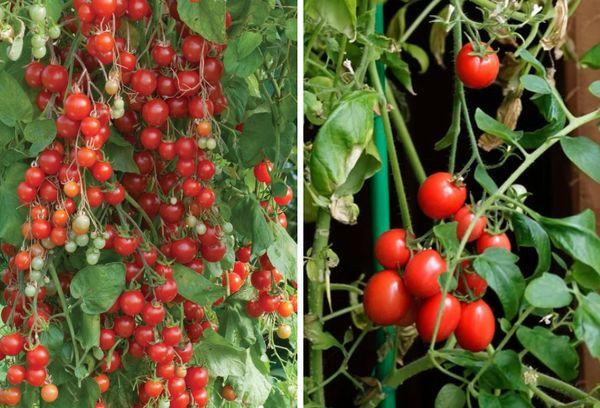
The Waterfall tomato is a striking example of cherry tomatoes. These varieties are perfect for those who love fresh, organic vegetables but don't have their own garden or dacha plot. Cherry tomatoes are convenient because they don't take up much space, so they can be grown in pots or containers. They won't take up much space, and their bright and unique appearance makes them a stunning addition to flower beds. Their originality and beauty are the result of French breeding.
What is the Waterfall tomato?
Characteristics and description of the variety:
- Tomato Waterfall belongs to the early-ripening indeterminate varieties.
- From the moment the seeds sprout until the first harvest, it takes approximately 98-101 days.
- The height of the bush is from 15 to 20 cm, and the length of the shoots is 100-110 cm.
- The leaves of this plant are medium sized and rich green in color.
- The first inflorescence is formed above the 9-10th leaf and has a rather complex structure; subsequent inflorescences are located at intervals of 3 or more leaves.
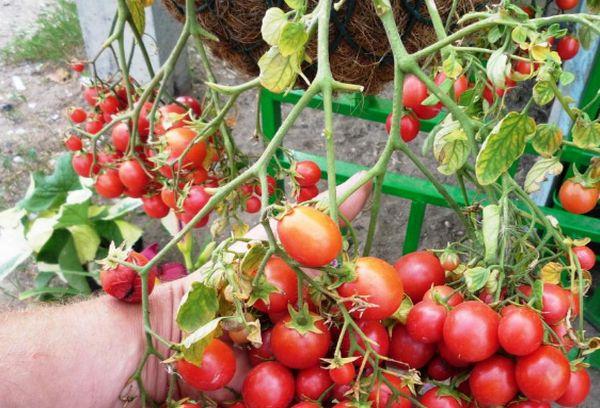
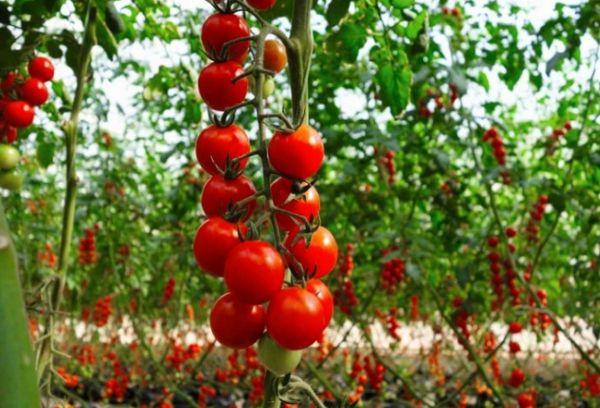
The Waterfall tomato fruits are quite small, weighing 20-25 grams, and are very sweet with a firm skin. They are often used in salads, as a garnish, and for whole-fruit canning. They have a rounded shape. When unripe, the fruit is green with a dark spot near the stem; when ripe, it turns orange.
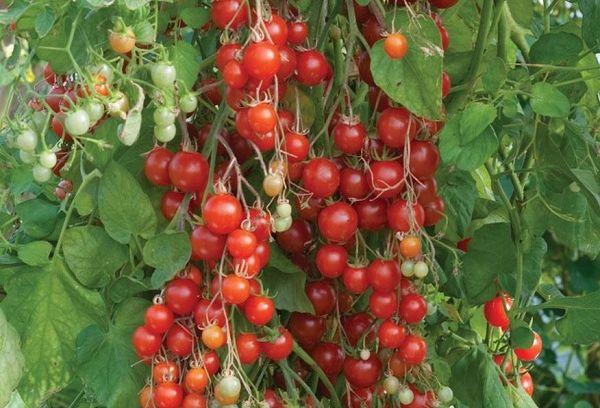
If all agricultural requirements are met, the yield can range from 1 to 1.5 kg per bush or up to 8 kg per 1 m².
How are tomatoes grown?
This variety is primarily grown from seedlings. Seeds should be planted in holes dug in a peat substrate. Mid-March or early April is the ideal time for this.

To create a greenhouse effect, cover the seed tray with glass or cling film and set the room temperature to 20–23°C. Following these tips, the first seedlings will begin to emerge in just 9–10 days.
After this has occurred, the film must be removed. After 2-3 true leaves have formed, calcium nitrate is applied to the seedlings. Five days after applying the fertilizer, the seedlings should be transplanted into pots or individual containers, where they will grow.
You can use special store-bought soil mixtures or soil previously used for growing zucchini, dill, or carrots. These varieties of tomatoes can be grown year-round, but in winter, due to the short daylight hours, they require supplemental lighting with special lamps.
Two weeks before planting, seedlings need to be hardened off. To do this, ventilate the room containing the seedlings and, if possible, take them outside. This will allow the seedlings to adapt more quickly to their new location. This will all have a positive impact on the timing of the first harvest.
After planting, the plant is watered as the top layer dries out. Under no circumstances should you overwater the Waterfall tomato, or any other variety of this plant.
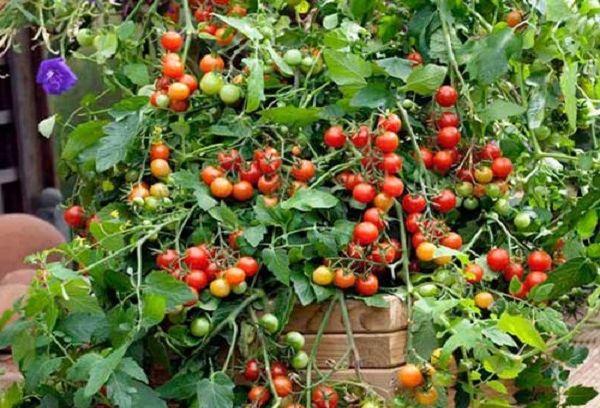
Overwatering leaves the soil depleted of oxygen, causing the roots to rot. Another key advantage of this variety is that it requires no shaping or staking, making it ideal for growing on loggias and balconies.
Vegetable growers have given positive reviews of the fruit's taste. Vegetable lovers appreciate the texture of the flesh and the thin skin. The ability to grow tomatoes in pots is also highly praised, especially by those who don't have large spaces for planting regular varieties.
Related posts:
 The best grape varieties for growing in the Urals, planting and care rules in summer
 Description and characteristics of the best seeds of pea varieties and types
 80 Best Eggplant Varieties for Different Regions with Descriptions and Characteristics
 Descriptions of the 20 best cherry varieties for the Moscow region, their planting and care
 Methods for planting and propagating cherries at home
 Description and distinctive features of the best varieties of Ussuri plum
 Description and cultivation of the 15 best cherry plum varieties for the Moscow region, planting and care rules
 The best eggplant varieties for growing in a polycarbonate greenhouse: planting and care
