The Strawberry Tree (Siberian Garden) tomato was registered in the State Register in 2013. Over the past few years, vegetable growers have had the opportunity to grow the variety in their gardens and experience its valuable properties, as well as its shortcomings.
General characteristics of the plant
This is a distinct variety, not a hybrid. Seeds can be used to propagate plants. For this purpose, it's best to select tomatoes that match the characteristics and description of the variety listed in catalogs. There's a similar German variety called Red Strawberry.
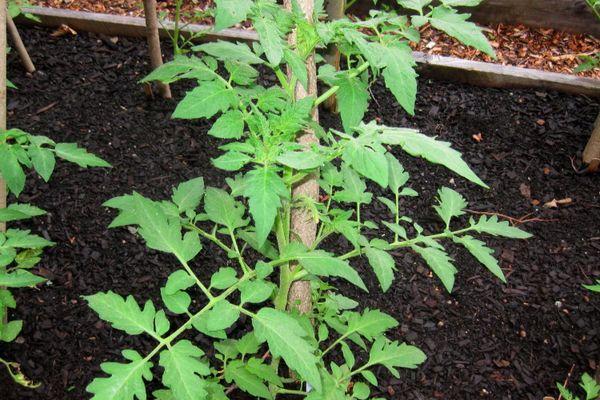
The strawberry tree bush is indeterminate, growing freely and reaching heights of over 2 meters in a greenhouse. In open-bed gardens, growers artificially limit the stem's growth by pinching it back one month before the end of the growing season. This is done to allow the already formed flower clusters time to set fruit, which then ripens and reaches technical maturity.
The Strawberry Tree tomato variety is mid-early, with the time from seed germination to the appearance of the first ripe fruits taking 110-115 days. Fruiting is prolonged and continues until the end of the season. Five to seven clusters form on the stem, each bearing six to ten equally sized ovaries. A single berry weighs approximately 200 g. The average yield per bush is 5-7 kg of marketable produce.
It's not recommended to plant vigorous bushes too closely, so only two plants per square meter are placed. To increase the yield per bush, it's recommended to train it into two or three stems and tie them to a support.
Strawberry Tree tomatoes are a Siberian-bred variety. They adapt to fluctuating day and night temperatures and produce large quantities of fruit even during prolonged rainfall. Harvested at the technical ripeness stage, tomatoes ripen well indoors. They successfully resist fungal infections. However, gardeners also note that late blight damages the Strawberry Tree's harvest to the same extent as other varieties.
The only drawbacks worth mentioning are its poor tolerance to drought and heat. If the strawberry tree lacks moisture, buds may drop. At temperatures above 35°C, pollen becomes sterile and no ovaries develop.
Characteristics of Strawberry Fruits
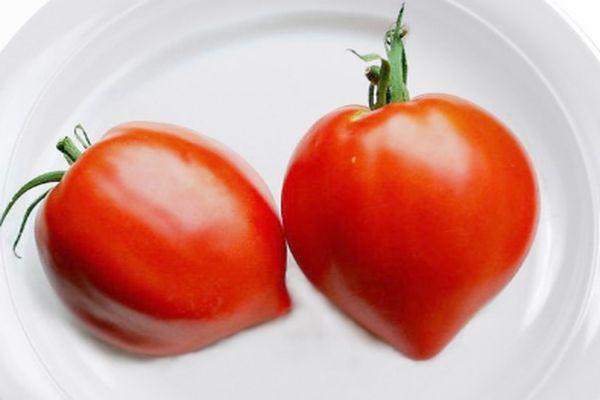
The variety's name stems from the distinctive heart-shaped tomatoes, reminiscent of ripe strawberries. The resemblance is further enhanced by the bright red skin, and the two-meter-tall bush, covered in long clusters of these "strawberries," is simply irresistible.
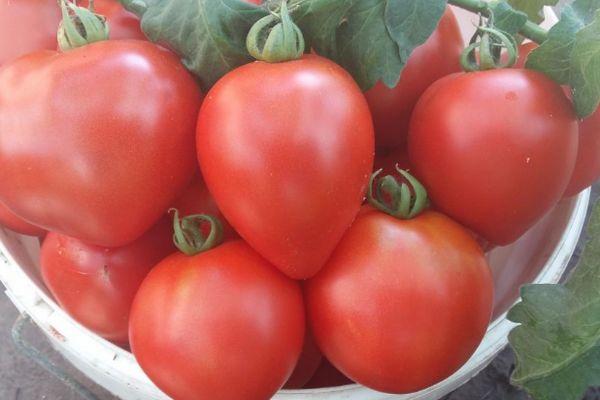
The skin of the fruit is thin but strong; the berries do not crack during ripening and canning. Tomatoes can be stored for several days without losing their marketable appearance and can be transported over long distances. Unripe tomatoes ripen well indoors.
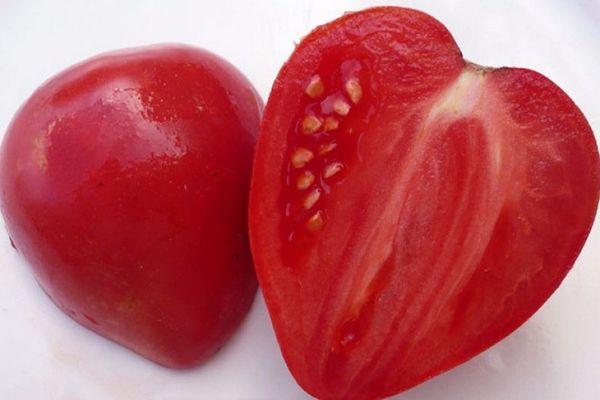
The flesh is intensely and uniformly colored, lacking a light core; a white patch is visible only near the stalk. A cross-section reveals 3-4 seed chambers containing a small number of seeds. The fruit's texture is tender and juicy, reminiscent of melon flesh when ripe.
Gardeners' reviews of the fruit's taste are consistent. The high sugar and dry matter content gives the "strawberries" a sweet, slightly tart flavor with a delicate tomato aroma. The fruits contain lycopene and a host of vitamins and minerals.
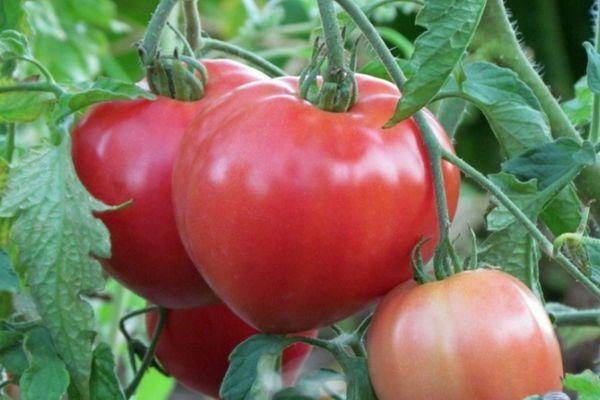
Strawberries are grown primarily for fresh consumption. The beautiful, uniform fruits make for impressive slices and appetizers. A fresh vegetable salad will take on additional shades of coral-red flesh, and a romantic dinner can be complemented by sandwiches with tomato hearts.
Tomatoes of this type are traditionally used as an ingredient in any tomato-based dish; their bright flesh is added to vegetable caviar and various sauces, and can be used in baking dishes.
Surplus salad berries are stored for the winter. Strawberry trees are not suitable for pickling or marinating: the thin skin can burst, and the delicate flesh will not retain its structure. However, processing into juice or sauces is an excellent use. The consistency of the pulp allows for the maximum extraction of the thick pulp, which can be quickly boiled down without the risk of losing many vitamins during processing.
Agricultural technology of cultivation
The future harvest depends on the preparation of the seedlings. To obtain good planting material, sow the seeds 60-70 days before transplanting them to their permanent location. To grow the seedlings, prepare a substrate of equal parts sand, fertile soil, and humus. To deacidify the mixture, add 2 tablespoons of chalk or ground eggshells for every 10 kg of soil.
Take a look Also
Steam the substrate in the oven or soak it in a hot solution of potassium permanganate. After cooling, spread the seeds on moist soil and cover with 0.5 cm of dry sand or soil. Cover the container with glass. Germinate the seeds at 25°C.
When the seedlings develop 2-3 true leaves, they should be transplanted into 10x10 cm spaces or into individual 0.5-liter containers. Avoid allowing the seedlings to dry out; water only when the top layer of soil has dried out. Fertilizing is not necessary.
You can transplant the plants into the garden in mid-May (into a greenhouse) or early June. One week after planting, feed the plants with nitrogen mixtures (nitrophoska, organic fertilizers, etc.) to increase green mass.
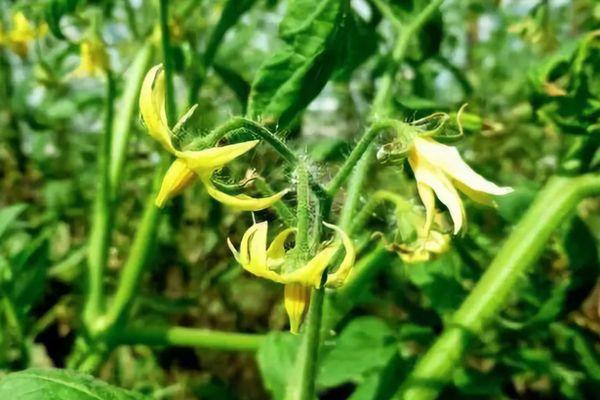
After the first flower cluster has opened, feed the plants with a phosphorus-potassium mixture (3 tablespoons of superphosphate and 10-20 g of monopotassium phosphate per 10 liters of water) or wood ash (300-500 g per 10 liters). Repeat this feeding after 2 weeks. Do not apply nitrogen mixtures during fruit growth.
Strawberry trees are trained by removing all side shoots up to the first flower cluster. One side shoot can be left above this cluster if two stems are needed. For the third stem, leave one side shoot above the second fruit cluster. The remaining shoots should be removed as they grow.
Related posts:
 Description and cultivation of the 15 best cherry plum varieties for the Moscow region, planting and care rules
 Descriptions of the 20 best cherry varieties for the Moscow region, their planting and care
 How to plant walnuts, care for them, and grow them at home
 Description and characteristics of the 27 best plum varieties for the Urals, planting and care
 Peach tree care and agricultural secrets, pest control
 Methods for planting and propagating cherries at home
 Characteristics and description of the Shokoladnitsa cherry variety, pollinators and fruiting
 20 quick recipes for making strawberry jam for the winter