
The compact tomato "Drova" stands out for its decorative, elongated fruits and their abundance on a small bush. This variety is perfect for adorning a balcony or loggia, but it's also a valuable asset for serious gardeners.
General characteristics of the plant
This determinate, early-ripening variety features medium-sized foliage on the stems and pepper-shaped fruits. The bush is extremely compact: the plant barely reaches a height of 30-40 cm, but can grow slightly larger in a greenhouse. The root system is not very developed, and a container of approximately 5 liters is sufficient. Aboveground growth ceases after 3-4 flower clusters have formed, after which the fruit begins to fill and ripen rapidly.
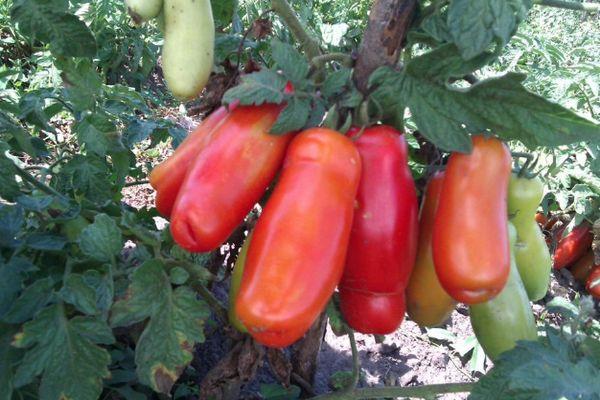
The Drova variety's amusing name stems from its thin, yet long fruits. Gardeners' descriptions of the variety note that Drova resembles tomatoes Eros and Auria: the length is 3-4 times greater than the thickness. They look like short pieces of thin logs, forked at the top. The length of each “log” reaches 10-15 cm.
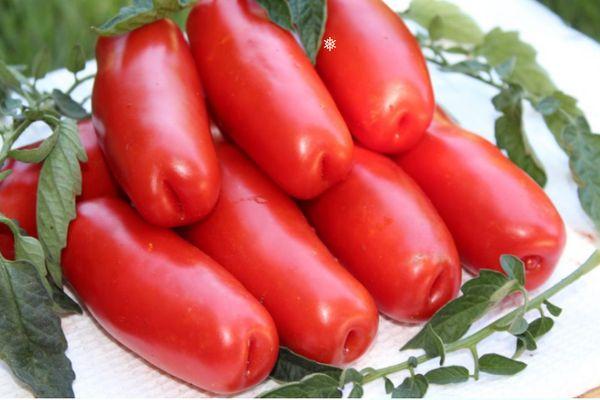
A fruit cluster produces up to 10-12 ovaries of approximately equal size and weight. The average tomato weight is 70 g. A single bush can produce up to 1.5-2 kg of marketable fruit. With a dense planting pattern, a gardener can harvest 10-12 kg of tomatoes per square meter.
Most often, when planting in the garden, vegetable growers use such low-growing varieties for priming tall tomatoes, leaving plenty of space. Compact bushes grow well in these conditions, both in open ground and in a greenhouse. Early ripening (90-110 days) allows you to have fresh vegetables ready for your table as early as July.
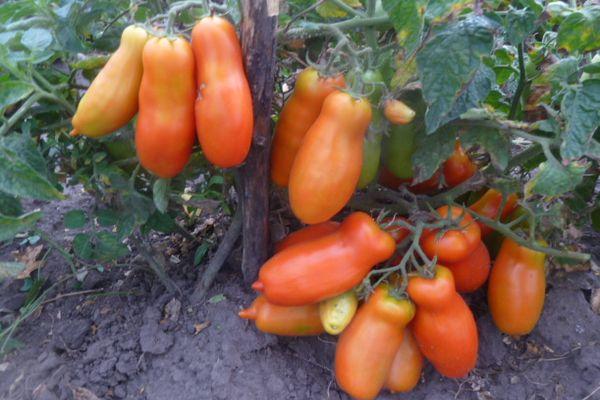
This tomato is easy to care for and tolerates dry soil. When grown outdoors, it produces consistent yields even in the harsh climates of the Urals and Siberia. It is resistant to most fungal infections.
Description of the fruits of the Drova variety
The Drova tomato variety has an elongated shape, typical of pepper-shaped tomatoes. Due to their long length, some of the ovaries can be affected by blossom-end rot. This is most often caused by a calcium deficiency in the soil when grown in salt-prone areas or during damp, cold summers.
The skins are firm, and tomatoes are not prone to cracking during ripening. The skins remain intact even when steeped in boiling water during canning. Ripe tomatoes store well and are easy to transport without risk of loss. Unripe tomatoes ripen well in sealed boxes at room temperature. To speed up the process, it's recommended to add a few red tomatoes to the box with the unripe tomatoes.
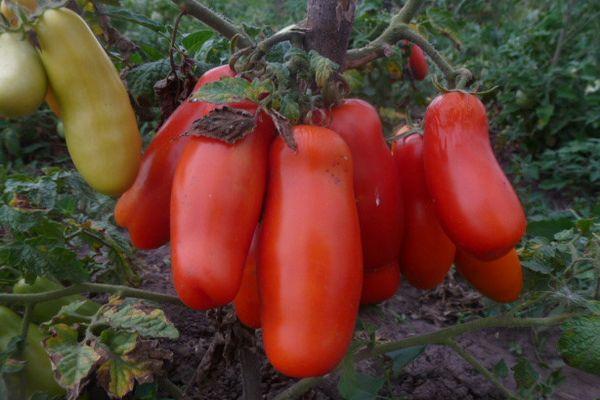
The flesh of fully ripe tomatoes has a soft, juicy texture. When slightly unripe, the fruit walls are firmer, and a white zone may be visible near the stem. There are two seed chambers, each containing a small number of seeds and occupying approximately half the length of the tomato.
Drova tomatoes have a sweet, slightly tart flavor and a subtle aroma. They're perfect for Italian and Caucasian sauces. Ripe tomatoes are delicious in salads or eaten raw. The neat rings make a great garnish.
Gardeners' reviews highlight this variety as particularly suitable for whole canning. Firm tomatoes can be stacked vertically in jars, paired with small cucumbers. Slightly unripe tomatoes retain their shape even when sliced: tomato rings can be included in canned salads. These tomatoes are suitable for sun-drying and drying.
How to grow in the garden and on the balcony?
In Russian conditions, only seedlings are suitable for growing tomatoes in the ground or greenhouse. However, the Drova variety's compact size and suitability for balcony conditions allow for sowing tomatoes directly into a container, where they will grow continuously. A few seeds can be added to the pot to ensure germination. Any excess plants can be transplanted into other containers.
Take a look Also

You can sow balcony garden seeds at any time to ensure a harvest throughout the season. For this purpose, seeds are planted at 2-3 week intervals, beginning the season in late February. Early sowings will require supplemental lighting. Later seedlings can be placed on the balcony during warmer periods, and then fully relocated to the makeshift garden.
To obtain seedlings for a greenhouse or garden, sow them two months before planting. After 2-3 true leaves appear, transplant the seedlings into individual 7-cm diameter pots. Water the seedlings regularly and, when transplanting into beds, space them in a 30x30 cm pattern. If the variety is being used to underplant taller varieties, plant the seedlings simultaneously, alternating between the Drova and taller varieties, leaving 20-30 cm between them.
Related posts:
 Description of the best varieties of black tomatoes for open ground and greenhouses
 What varieties of tomatoes are best to plant in a polycarbonate greenhouse?
 The best eggplant varieties for growing in a polycarbonate greenhouse: planting and care
 The best tomato varieties for growing in the Leningrad region for greenhouses and open ground
 Description of the best tomato varieties for open ground in the central zone
 The best grape varieties for growing in the Urals, planting and care rules in summer
 80 Best Eggplant Varieties for Different Regions with Descriptions and Characteristics
 Description of the best tomato varieties for open ground and greenhouses in the Krasnodar region
Tomatoes grow very tasty, they don't require any special fertilizers, I only use bio-growth activators. Lately I've been buying BioGrow, this product does not contain any chemicals.