
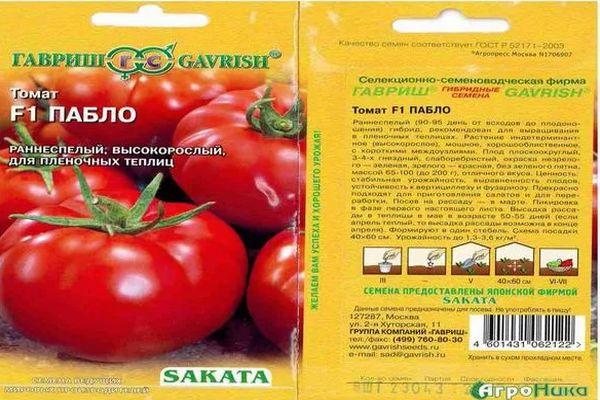
The Pablo f1 tomato is an early-ripening hybrid variety. Its fruits have excellent appearance and delicious flavor. The bush is tall and requires support. The period from germination to maturity is 105-115 days. It is a high-yielding variety, but requires careful cultivation. When grown outdoors, the yield is 11-12 kg per square meter. When grown in a greenhouse, the yield is approximately 8 kg per square meter.
Characteristics of the Pablo variety
Description of tomato Pablo:
- The tomatoes are large, dense, and have juicy red flesh.
- There are 5-6 tomatoes on one brush.
- The shape of the fruit is round.
- The product quality and taste are excellent.
- Transportable.
- Tomato is resistant to most fungal diseases, such as verticillium wilt, tobacco mosaic, and cladosporiosis.
- Tomato Pablo F1 has an advantage over other varieties, being able to withstand sudden temperature changes.

Growing tomato plants requires a planting density of 3-4 plants per square meter. Outdoor cultivation is recommended in warmer regions of Russia. Hybrid varieties combine the genes of the best varieties, thus possessing many positive characteristics.
Advantages of the Pablo tomato: it adapts well to any terrain, the fruits have excellent taste and marketability, ripen early, the plant is resistant to diseases, and the percentage of fruit set is high even under unfavorable weather conditions.

Disadvantages of the variety: it is impossible to preserve the gene pool. As with all hybrid plants created artificially by breeders, seeds collected from the fruits will not produce the parental traits, so planting material will have to be purchased annually.
Gardeners have positive reviews of this variety. They post their comments and photos of their grown tomatoes online. They report a high seed germination rate, around 95%. Yields largely depend on care. It ripens early. In the Krasnodar region, harvesting begins around June 15th. Tomatoes picked brown have a shelf life of 1.5 weeks. They are suitable for transportation and canning.

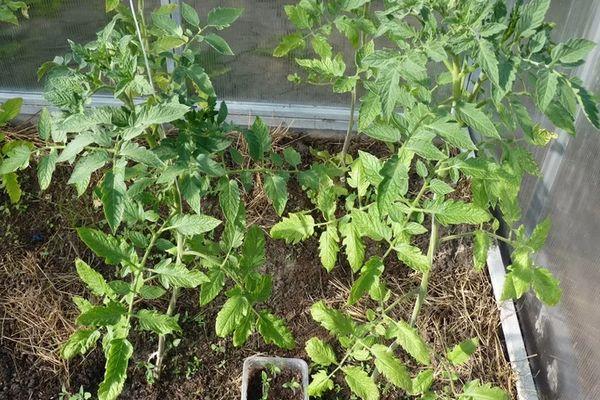
How are these tomatoes grown?
Below we will discuss growing the variety and caring for the plant. Tomatoes are grown with and without seedlings. Methods. With the direct-seeding method, seeds are sown directly into the soil. This method is less labor-intensive, but is only suitable in regions with warm climates. The direct-seeding method reduces yield.
The second method is seedlings. First, prepare the soil: fertilize with humus and peat, and dig it over. The soil should be loose. In dense soil, the seed germination rate will decrease, and the plants will be weak. Before sowing, it is necessary to disinfect the soil with a solution of potassium permanganate or special preparations (Fitosporin, Trichodermin).
The disinfection depth is 30-40 cm. This procedure is necessary to prevent plant diseases during early growth. Before sowing, seeds should also be soaked in a 2% potassium permanganate solution or another special disinfectant for 1 hour. Before sowing, the soil is watered with warm water and compacted.

Plants should be spaced 3-4 cm apart. This density will allow the plants to thrive without shading each other. After sowing the seeds, water the soil again with warm water. For the entire 50-60-day growing season, the optimal temperature for seedling growth is +22…+25ºC, with 60% humidity. Ten days before planting, the seedlings should be hardened off by periodically lowering the temperature to +15ºC.
Planting is done in pre-prepared and fertilized holes. Use a complex fertilizer containing nitrogen, phosphorus, and potassium. Nitrophoska is suitable for this purpose. The plant's bush is tall and requires staking. Two weeks after planting, prepare a support (wooden stakes or iron rods). The plant is formed into two stems, and side shoots are removed. Side shoots (side shoots) interfere with normal growth.

Watering frequency depends on soil moisture. The recommended water consumption per plant is approximately 5 liters. Avoid overwatering the soil, as this creates conditions favorable for disease development and prolongs the growing season, resulting in reduced yields. Fertilize the plant every two weeks. Ensure the soil is always loose.
To reduce labor costs, mulch the soil. Mulching prevents the root system from drying out and reduces weed growth.
Throughout the growing season, it's important to monitor the condition of your plants. At the first sign of pests or diseases, treat them with appropriate products. When applying, follow safety precautions and follow the recommended dosage.
Related posts:
 Description of the Pablo beet variety, cultivation and care
 How to plant grapes step by step, with a description of the process and care
 How to properly plant peas in a greenhouse and open ground
 How to propagate and grow peas, cultivation technology, and care in open ground
 The best eggplant varieties for growing in a polycarbonate greenhouse: planting and care
 How to control onion flies using natural and chemical methods
 Description of varieties of sowing peas and cultivation, to which family they belong
 Growing and caring for almonds, planting and pruning rules at home

I live in a region with high humidity. Not all types of seedlings always take root, so I have to speed up growth with BioGrowIs it possible to accelerate growth with this species or not?