
Irises can be found in almost every flowerbed in May, leading many to believe that these plants are completely unaffected by soil composition and climate conditions. In fact, they require timely fertilization, so every gardener should know what to fertilize irises with and when to do so.
Why are irises fed?
The plant can grow in one place for about five years, then gradually declines. It is precisely a lack of nutrients in the soil that has a detrimental effect on it. Neutral soils with sufficient mineral and organic matter, such as sand, sandy loam, and loam, are best suited for growing irises. For regular and abundant flowering, the plant requires all the micro and macronutrients it needs, which are supplied by fertilizer. Clay soil should be additionally enriched with sand or peat, and overly acidic soil can be diluted with ash or chalk.
In addition to fertilizing, don't forget to apply fertilizer in mid-autumn during and before flowering. During this period, the plant's root system begins to absorb the maximum amount of nutrients to survive the winter.
What fertilizer does the flower like?
Rhizocyanin irises that overwinter outdoors under mulch require organic and mineral nutrients. Therefore, it's important to fertilize the plant in the fall. The following ingredients are suitable for this purpose:
- Wood ash. This natural fertilizer contains potassium and phosphorus, which create favorable conditions for beneficial soil microorganisms. Adding ash to the soil increases plant vitality.
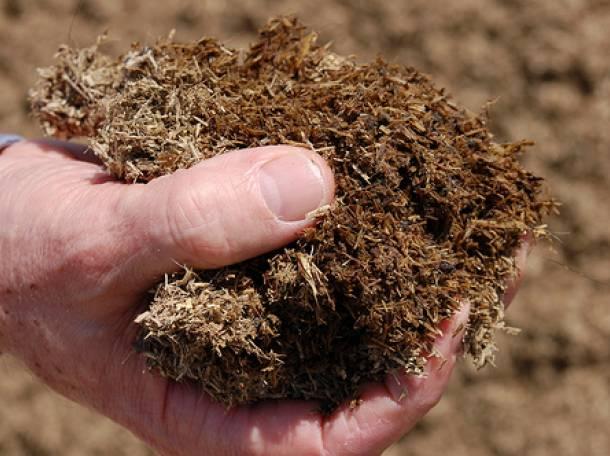
- Compost. Improves oxygen permeability, increases humus content, and increases nutrient levels.
- Humus. It should be aged for at least two years. Fresh manure should not be used for fertilizing irises, as it contains a lot of free ammonia, which stimulates growth and will kill the plant from frost.
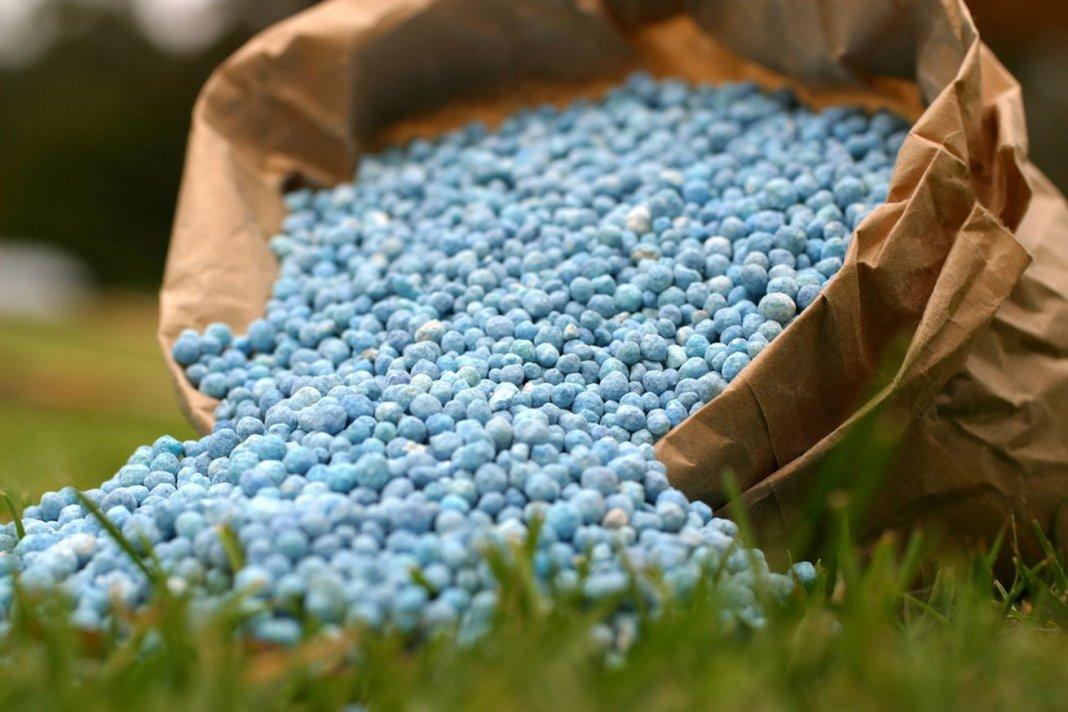
- Minerals. Both complex and single-component fertilizers containing potassium and phosphorus. They are easily absorbed by irises and have a positive effect on their growth and development.
When applying these substances, it's important to follow the correct procedure to ensure successful results. The procedure depends on the type of fertilizer, which can be liquid or dry.
Apply liquid fertilizer to the root zone in the evening or morning on damp soil. Avoid contact with foliage.
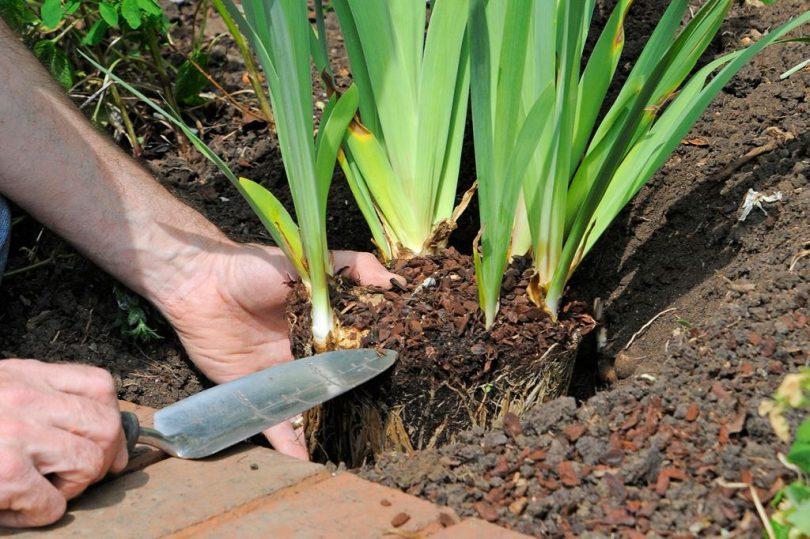
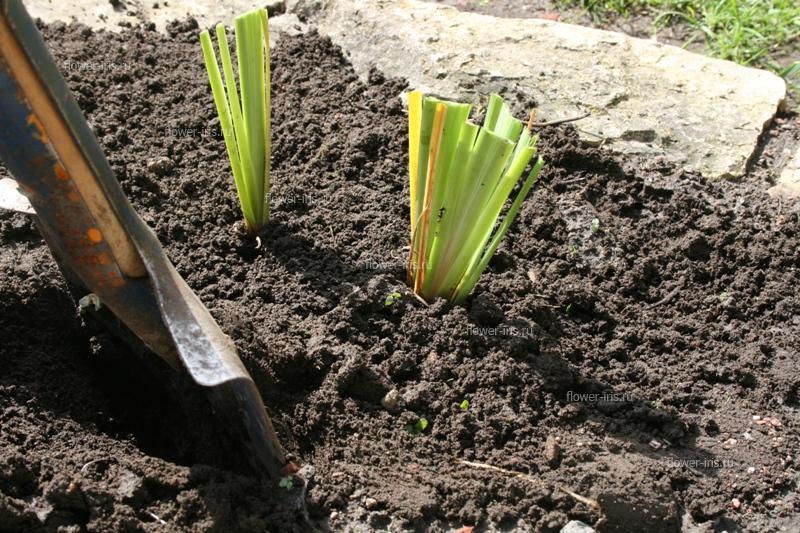
When applying dry fertilizers, pay close attention to the root system, as many iris varieties grow close to the soil surface and can be damaged during the application. Spread the fertilizers before rain or watering into the root zone and work them into the soil to a depth of 3-4 cm.
Timing and rules for applying fertilizer
The timing of fertilization depends on the specific crop and the regional climate. Irises require several applications in the spring before flowering and in the fall before dormancy.
Early spring
The growth and development of irises is influenced by the composition of the soil and the amount of nutrients in it. Early in the spring, irises should be fertilized to stimulate vegetative growth. At this time, the plant requires nitrogen and potassium. For normal development of both the underground and aboveground systems, minerals should be added, specifically potassium salt and ammonium nitrate.
Advice! Gardeners recommend fertilizing only after the soil has warmed up thoroughly. If you neglect this rule, the fertilizer will not be absorbed and will settle on the surface. This can eventually lead to phosphorus poisoning, and the plant will die.
Fertilize the plant before flowering
Irises have two developmental waves, so they require repeated feeding. During the bud formation phase, which begins in late May and continues until June, nitrogen and potassium fertilizers should be applied twice to increase the quantity and quality of the buds. Timing the application correctly is crucial, as this will determine the quality and longevity of the buds.
What to apply during flowering
During the flowering period, stop fertilizing. Flowers require minimal care, consisting of regular watering and loosening the soil. In dry climates, the soil should be moistened in the morning and evening. It's also worth periodically removing dead flowers and leaves to reduce stress on the plant and maintain the flowerbed's attractiveness.
During this period, the plant needs protection from bacterial and fungal pathogens and pests. To do this, sprinkle each flower with 2 tablespoons of wood ash.
The nuances of applying nutrients after flowering in the fall
To replenish nutrients lost during flowering and prepare for winter, the plant requires fertilizing. This will boost immunity, protect the plant from potential diseases, and provide the foundation for bud formation in the following season.
It's best to feed the plant in dry weather, in the morning or evening, without watering; lightly loosening the soil is sufficient. It's important to add sufficient nutrients before frost sets in. This is best done a month after flowering, using a phosphorus- and potassium-based fertilizer. Avoid ammonia-based fertilizers, as nitrogen stimulates plant growth and development, and the plant needs to be prepared for the onset of cold weather and dormancy. Watering and loosening the soil will also facilitate the flow of nutrients to the root zone.
Mistakes of novice gardeners
Many novice gardeners make mistakes in the technology of carrying out the procedure:
- fertilizers are not applied on time;
- use low-quality or incorrectly selected substances;
- Fresh manure or compost is used as fertilizer in preparation for winter, causing the plant to sprout and die from the cold.
The full growth, development, and flowering of irises directly depend not only on the timeliness of fertilizing, but also on the correct selection of fertilizers.
Take a look Also
Related posts:
 What is the best way to feed cucumbers during flowering and fruiting?
 Why do you need to fertilize corn? Irrigation and watering after applying fertilizer.
 How and what to feed watermelons in open ground after planting, during flowering
 The best way to feed cherries after harvesting and during ripening
 Rules for planting and caring for cinquefoil in open ground, growing and pruning
 How to propagate and grow peas, cultivation technology, and care in open ground
 How to properly plant peas in a greenhouse and open ground
 What is the best way to feed tomato seedlings to make them plump?