
- Selection and description of the variety
- Application in landscape design
- Planting technology
- The optimal place for plants
- Preparing soil and seedlings
- Landing dates and plan
- Further care
- Irrigation
- Adding nutrients to the soil
- Pruning, shaping and tying to supports
- Weeding and removing weeds
- Protection from insects and infections
- Preparing for winter
- How to propagate clematis Hegley Hybrid
- Gardeners' reviews
Clematis are among those perennials that are particularly popular among Russian gardeners. They are grown not only in gardens but also as vines for balconies and loggias. One of the favorites among gardeners is the clematis called Hagley Hybrid, also known as Hagley Hybrid. The plant is easy to grow, but that's not its main advantage. It is prized for the vibrant color of its buds.
Selection and description of the variety
Before purchasing clematis seedlings, study the plant's description and characteristics to ensure the most comfortable growing conditions. The Hegley Hybrid variety was developed by Englishman P. Pinkton, who introduced it to the world in 1956. This professional breeder created a clematis characterized by bushes that grow no more than 2.5 meters tall.
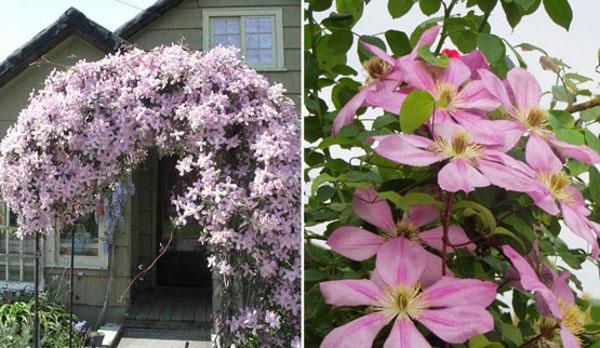
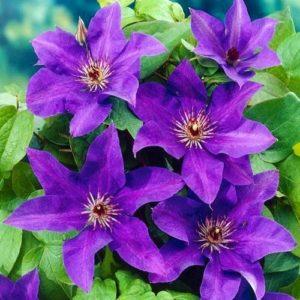
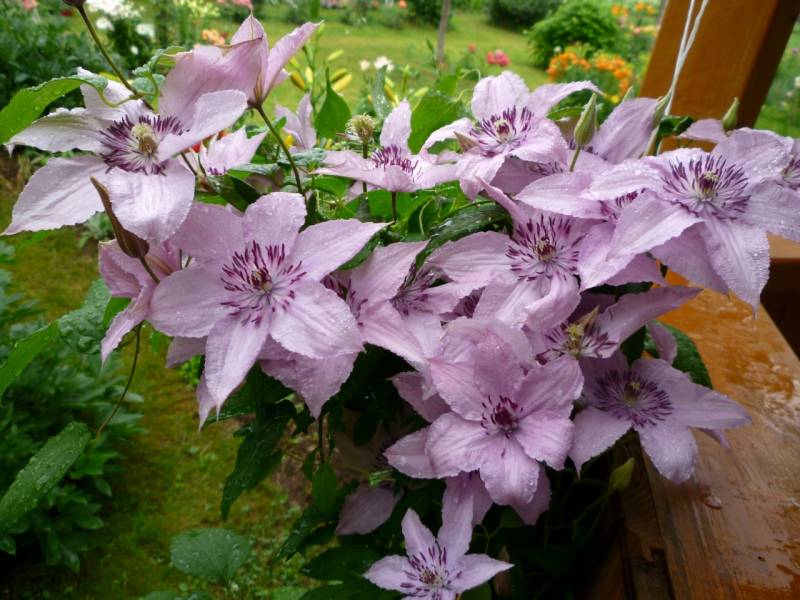
Hegley Hybrid belongs to the Jackmanii group. It is a compact, twining, large-flowered vine that is undemanding in growing conditions. In temperate climates, the first buds appear in late July, and the flowering period continues until early September. Clematis buds range in diameter from 12 to 18 cm. The Hybrid's petals are characteristically light pink with a slight lilac tint. The anthers are purple-burgundy.
Since this variety belongs to Group 3, it requires drastic pruning in winter. However, the plant is highly frost-resistant with proper care and preparation for the cold season. It is rarely affected by diseases and pests. Hagley Hybrid is not listed in the Russian State Register.
Application in landscape design
Clematis of this variety are used for landscaping fences and hedges. The large-flowered variety is ideal for decorating building walls. To create a more lush and striking bush, use special support trellises.
Planting technology
The plant's growth and health depend on choosing the right location and following proper planting practices. Since clematis is a perennial plant, this consideration requires special attention.

The optimal place for plants
Although seedlings of this variety demonstrate a high survival rate, this doesn't mean that absolutely any location is suitable for planting. Direct sunlight is unsuitable for this clematis variety, as it will cause the petals to fade. They will turn almost white and lose their decorative appeal. On the other hand, heavily shaded locations are also avoided. Clematis actively grows foliage there, but produces very few, small buds.
The ideal location for clematis is a site that receives full sun in the morning and shade in the afternoon.
Preparing soil and seedlings
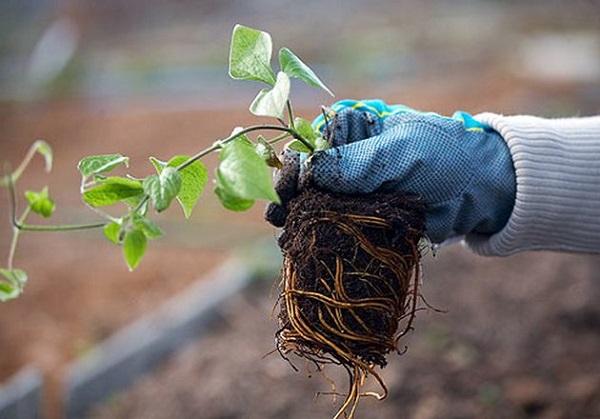
To grow a luxurious, profusely blooming bush, it's essential to select high-quality seedlings and properly prepare the soil for clematis. Fertile, light soil is ideal for the plant. Avoid heavy or salty soils.
The approximate composition for the culture is as follows:
- sand;
- garden soil;
- humus.
Add 2 small handfuls of wood ash and 150 grams of superphosphate as fertilizer. Mix the remaining ingredients in equal parts.
Important! Never use fresh manure to prepare the soil.
When purchasing a seedling, pay attention to the following characteristics:
- absence of disease and injury;
- roots that are at least 5 centimeters long;
- the seedling must be at least 2 years old;
- The presence of live buds on 2 shoots is required.
Experienced gardeners recommend purchasing seedlings with a closed root system, and doing so at specialized stores or nurseries.
Landing dates and plan
With proper care, a plant can grow and bloom in one location for about 30 years. Add enough nutrient solution to the planting hole to allow only additional feeding through the root circle. This work is carried out in the spring, after the threat of frost has passed and stable warm weather has set in. If for some reason this cannot be done in the spring, the seedlings are planted in the fall before the end of September to allow the plants time to adapt to the new location before the onset of cold weather. Clematis must be covered for the winter. In northern regions, only spring planting is permitted.
The work is carried out according to the following algorithm:
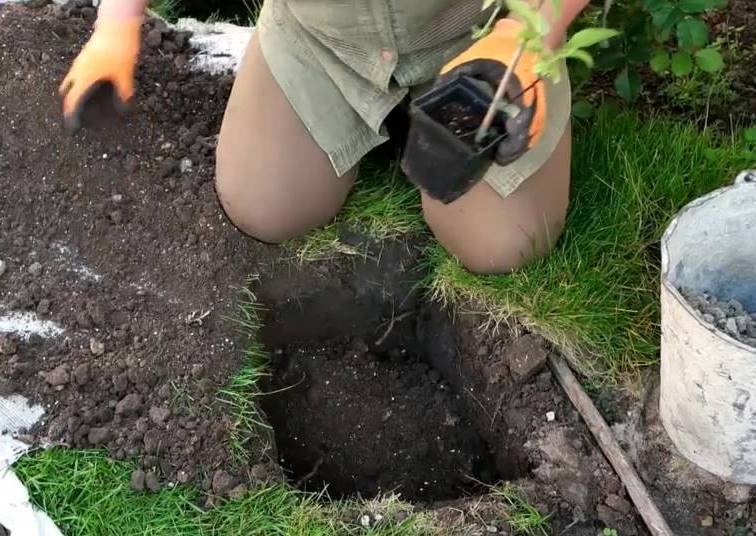
- The hole is dug to a depth of 50 cm, its width will depend on the size of the root system.
- Broken brick or crushed stone is placed at the bottom for drainage. This will prevent water stagnation and root rot.
- Next, pour a bucket of water into the hole.
- Fill the hole halfway with prepared soil mixture containing nutrients and pour in the same volume of water again.
- Make a small mound in the center of the hole, and place the seedling on it. Carefully straighten the roots so they point downwards, and cover with the remaining soil.
- After this, compact the soil around the clematis with your hands.

Warning: When planting this variety of clematis, do not plant the root collar deeper than 10 cm.
After completing the work, water the plant generously again and tie up the shoots.
Further care
Caring for the Hegley Hybrid clematis is straightforward, even for inexperienced gardeners. All the plant needs is timely watering, disease prevention, fertilizing, pruning, and preparation for winter.
Irrigation
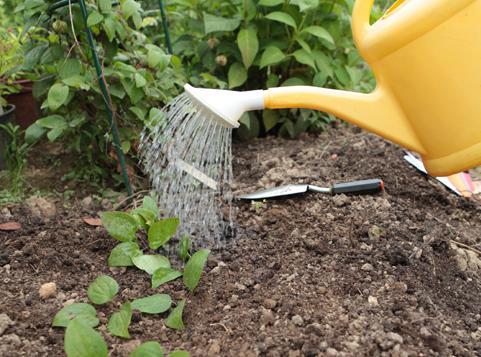
This variety is moisture-loving, so water it at least three times a week. Two buckets of water are poured under each plant, but care must be taken to ensure that the water does not stagnate, otherwise the roots will rot.
Adding nutrients to the soil
A characteristic feature of this variety is its slow growth, so nutrient additions are carried out throughout the growing season. This is done according to the following schedule:
- Spring – nitrogen-containing complexes are used to stimulate crop growth.
- During the period of bud formation, complex fertilizers are used.
- At the end of the flowering period, phosphorus-potassium compounds and a little wood ash are added.
Pruning, shaping and tying to supports
Since this clematis variety belongs to pruning group 3, it requires drastic pruning. Without rejuvenating treatments, the plant will lose its decorative appeal and the gardener will not expect abundant flowering. Branches older than three years must be removed annually. A three-tier pruning is preferred, with no more than three shoots remaining on each tier. To ensure the vine maintains a lush, bushy appearance, it is tied to a support. It's best to use special support trellises, which can be made at home.
Weeding and removing weeds
To prevent weeds from robbing the plant of nutrients, weed regularly. This is best done after rain and irrigation, loosening the soil along the way.
Protection from insects and infections
Without preventative measures and proper care, the plant is susceptible to diseases and pests, despite its strong immunity. Brown spots on clematis leaves indicate gray mold. The fungicide Fundazol is used for treatment. Leaves covered with brown spots are symptoms of rust. In this case, remove all damaged shoots, and treat the remaining shoots with copper sulfate.
Spider mites are a common pest that can damage the vine's ornamental appearance. When they infest, all branches of the plant become covered in a fine web, preventing buds from blooming. Garlic infusion can be helpful in this case. In severe cases, acaricides are used.

Preparing for winter
Despite its increased frost resistance, it's still necessary to prepare the plant for winter. This is especially true in northern regions. Remove dried and diseased clematis shoots. Afterward, treat the clematis with copper-containing preparations to prevent fungal diseases. Before the first frost, cover the plant with dry fallen leaves, place a box on top of it, cover it with plastic, and make holes in the sides for air circulation.
How to propagate clematis Hegley Hybrid
There are several methods for propagating Hegley Hybrid clematis in your garden. These include rhizome division, layering, or cuttings.
Gardeners' reviews
Alina Vasilyevna Ryabtseva, 43: “I liked the unpretentiousness of clematis; even in bad weather and variable climates, it doesn’t require special care and doesn’t get sick.”
Galina Stepanovna Orlova, 56, Ryazan: "A very beautiful clematis, and most importantly, it's not fussy. We covered the bushes with mulch for the winter. As a result, the buds didn't freeze, and the vine delighted us with abundant blooms in the spring."
Related posts:
 Description and pruning group of clematis President, cultivation and care
 Description of the burning clematis, planting and care in open ground, propagation
 Description and pruning group of clematis Rouge Cardinal, cultivation and propagation
 Description and characteristics of the clematis variety Kaiser, planting and care, pruning group
 Description of clematis varieties, planting and care, propagation methods
 Description and characteristics of the clematis variety Comtesse de Bouchaud, planting and care instructions
 Description and characteristics of Manchurian clematis, cultivation techniques
 Description and pruning group of Clematis Mountain, planting technology and care