
- Characteristics of the Rosie Cloud variety
- Selection
- Characteristic
- Pros and cons of growing
- Examples of use in landscape design
- Planting and caring for the plant
- Preparing the bulbs and the area
- Schemes and optimal time for planting bulbs
- Watering and fertilizing
- Weeding
- Preventive and curative treatments
- Trimming
- Preparing for winter
- Flower breeding: the intricacies of the procedure
- Gardeners' reviews of the crop
Daffodils are among the first to open the blooming season in flowerbeds and garden plots. The beauty of these early blooms is especially captivating after a cold winter. The Rosie Cloud daffodil belongs to the double group; its lush crown of complex pink-peach shades gives the flower a full, full appearance. Let's look at the variety's specific features, planting instructions, care, and pruning guidelines.
Characteristics of the Rosie Cloud variety
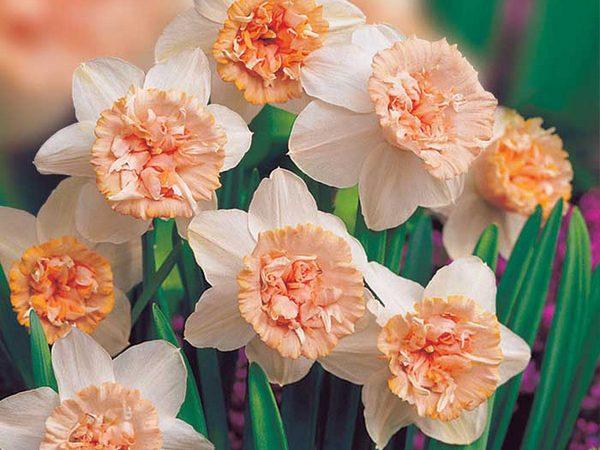
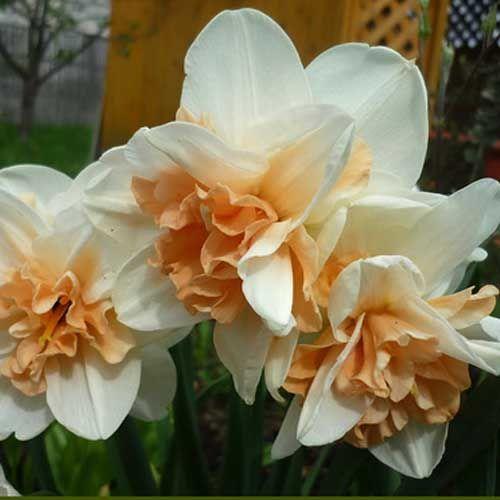
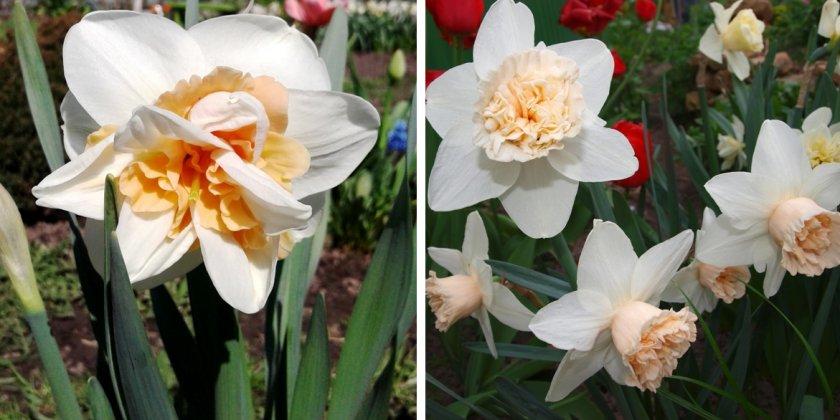
Rosy Cloud stands out among other daffodils with its distinctively double crown and the delicate, pale salmon hue of its lush center. Blooming occurs in April-May, depending on weather conditions and region. Flowering lasts up to 7-8 days.
Rosie Cloud is consistently ranked among the most beautiful and exquisite spring flowers and has a pleasant aroma.
Selection
Rosy Cloud was bred in the Netherlands and is a favorite among gardeners worldwide. It was registered in 1968.
Characteristic
Rosie Cloud is a bulbous perennial in the Amaryllis family, growing to 30-40 centimeters. The rich green foliage forms a dense rosette at the ground. The flower sits atop a leafless stem. When open, the bloom measures 8-10 centimeters. Some growers report that some specimens grow up to 11 centimeters.
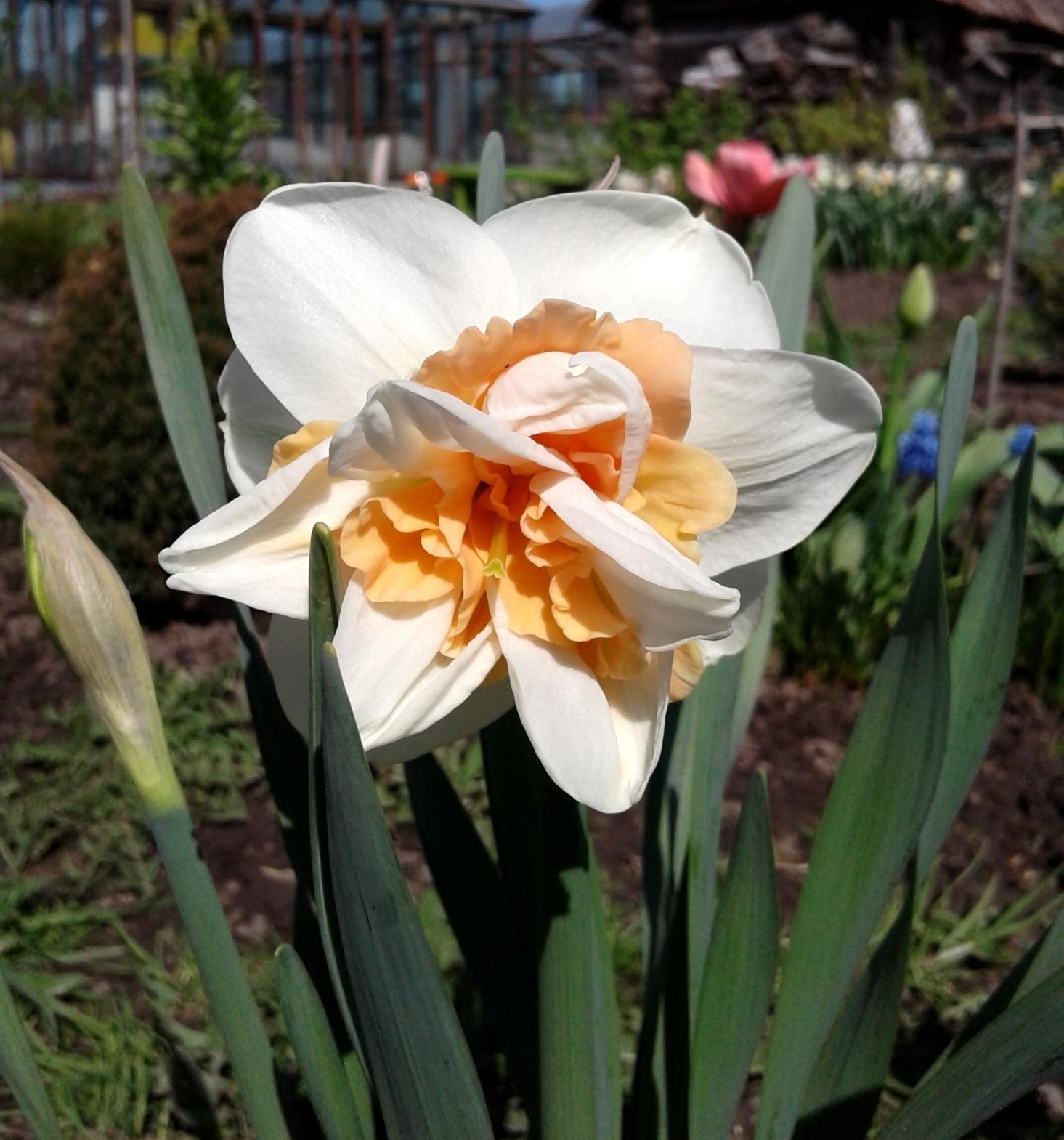
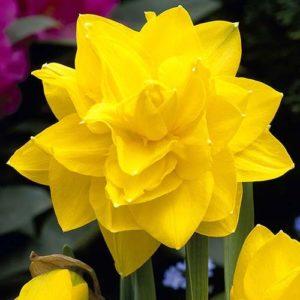
The perianth segments are ivory-colored. The variety is distinguished by the density and compactness of the crown. The double center of the true Rosy Cloud blooms with segments forming a triangle. When fully opened, the lush crown almost conceals the base of the flower.
Note: The color of the daffodil crown depends on the shade of the area, weather conditions, and may differ from year to year.
Pros and cons of growing
The advantages of Rosie Cloud make narcissus popular among gardeners:
- lasts up to 5 days in a vase – suitable for cutting and making bouquets;
- does not require much labor when growing;
- tolerates temperatures down to -25°, which is relevant for many Russian regions;
- one of the most beautiful varieties of daffodils.
Difficulties can arise if the spring is too long—insufficient warmth, cold rains, and soil conditions slow down vegetation. The soil must be monitored, preventing stagnant water, and loosened to allow the bulbs to aerate.
Examples of use in landscape design
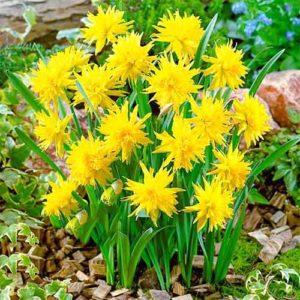
Daffodils adorn gardens when most ornamental plants are barely beginning to grow. Rosie Cloud is planted singly or in groups. They are often combined with other daffodils (Popeye, Call of Love) and tulips. Rosie Cloud looks stunning against a backdrop of conifers and shrubs, and is used as an early plant for rock gardens. After flowering, the basal foliage retains its decorative appeal for some time, adding greenery to the garden.
Planting and caring for the plant
Rosie Cloud follows the same growing guidelines as daffodils. Avoid planting it in areas where other bulbous plants have been growing. It takes at least a year for the soil to regenerate and common pests to die off.
Preparing the bulbs and the area
It's best to purchase bulbs from reputable seed suppliers, and check the expiration date. Bulb requirements:
- dense, heavy, without damage or signs of rot;
- size - from 5 centimeters, so as not to waste time on growing in the soil.
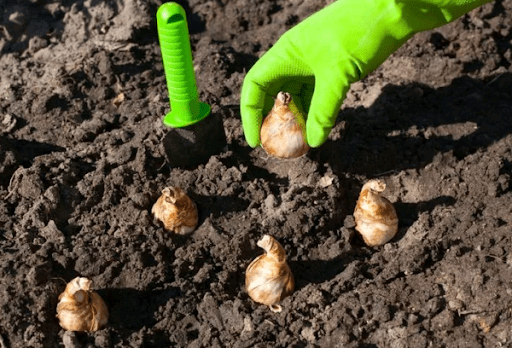
Rosie Cloud tolerates shade well, but it's best not to plant daffodils in dense shade. Good soil aeration is especially important to prevent the bulbs from rotting. Avoid planting daffodils in low-lying areas where water accumulates or where the groundwater table is high. Heavy soils can be lightened with humus, peat, sand, and black soil. Acidic soils should be limed to ensure a pH of no more than 7. A drainage layer should be laid during planting to allow excess moisture to drain away.
Before planting, inspect the bulbs and discard any damaged ones. Treat the bulbs with a weak solution of potassium permanganate or a fungicide.
Schemes and optimal time for planting bulbs
The planting time is determined based on climate and weather conditions (August-October). The heat should subside (temperatures should be 8-10°C), but there should still be enough time for rooting. When choosing the depth to plant the bulbs, consider the following factors:
- diameter of bulbs (depth – about 3 sizes);
- in heavy soils and in regions with warm winters, plant at a depth of 13-15 centimeters;
- In areas with frosty winters and light soils, the depth should be up to 25 centimeters.
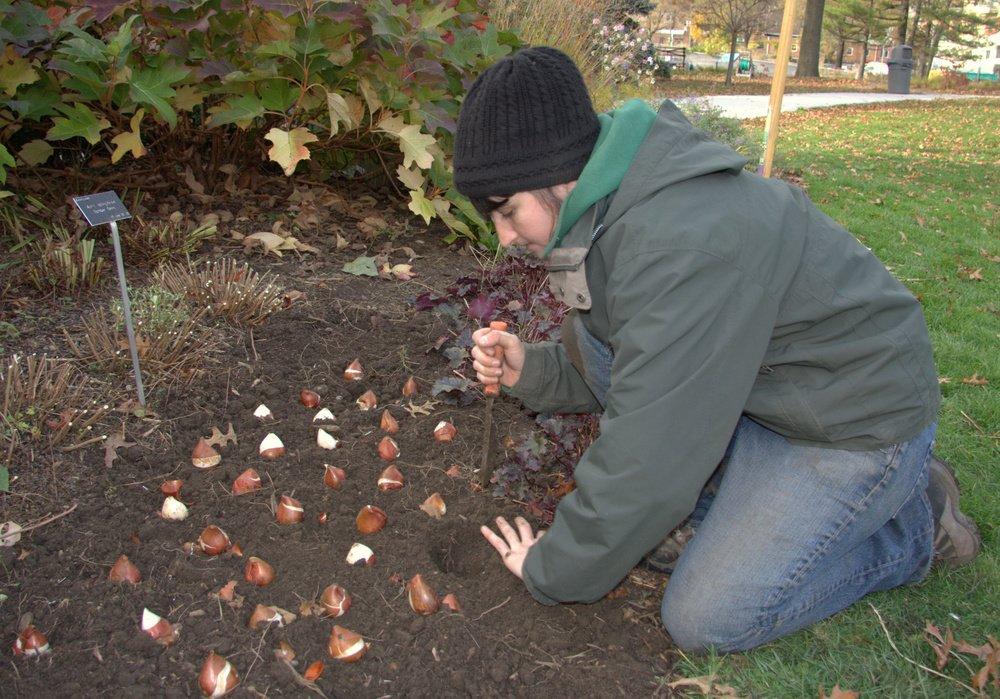
Average norms: depth – 15-20 centimeters, distance between plants – 10-20 centimeters.
Watering and fertilizing
Watering daffodils begins in early spring, taking into account the amount of melted snow. After a winter with little snow, watering should be more intensive. Subsequent watering occurs after the soil dries, keeping in mind that the bulb is buried deep.
Note: stagnant water and overwatering are dangerous for bulbous plants; dry soil around the daffodil should be thoroughly loosened.
Watering should not be stopped after flowering, as moisture is necessary for the formation of bulblets. Watering should be stopped when the green part of the bulbs fades, and the bulbs are ready to be dug up. During the growing season, Rosie Cloud receives several additional fertilizers:
- when sprouts appear from the soil – apply complex fertilizers;
- at the beginning of bud growth – superphosphate, potassium, urea;
- after flowering is complete – phosphorus-potassium.

Fertilizers are applied during watering, choosing a convenient form (liquid or granular).
Weeding
Weeds around the flowers are removed, as they create conditions for pests and diseases to thrive. The crust formed after watering is broken up. Thorough weeding and loosening the soil enrich the soil with oxygen, creating favorable conditions for bulb growth and the formation of bulblets.
Preventive and curative treatments
Daffodil diseases arise from poor agricultural practices. The main causes of problems are:
- Fungal diseases develop during rainy summers, excessive watering, and after planting due to poor bulb treatment.
- Pests attack when the soil is contaminated and there are no protective measures.
- Incorrectly chosen fertilizing scheme (excess nitrogen).
Narcissus most often suffers from various types of rot, fusarium wilt, nematodes, and spotting. In spring and fall, preventative soil treatment with Bordeaux mixture is performed. Fungicides are used for fungal diseases, and insecticides are used if pests appear.
Trimming
After flowering, the empty stem can be cut off immediately. The green part should die off on its own. While the foliage remains green, the bulb and offspring are actively growing. The leaves store nutrients for next year. Do not trample or remove the leaves until they have wilted naturally. Prune off the dried rosette.
Preparing for winter
Rosie Cloud can withstand temperatures down to -25°C; in colder regions, daffodils should be covered for the winter. Pre-winter preparation includes thoroughly loosening the soil and mulching with natural materials (up to 15 centimeters thick) such as straw, sawdust, and sunflower husks. In spring, remove the mulch as early as possible and loosen the soil.
Flower breeding: the intricacies of the procedure
Rosy Cloud can grow in one place for 3-5 years, after which the flowers become smaller due to a lack of nutrients. Some gardeners dig up the bulbs annually, but this is not necessary. Before digging up the bulbs, the rosette should be completely dry and easily separated. Daffodils should be dug up in dry weather, and watering should be stopped two weeks before harvesting.
The bulbs are dried for about 2-3 weeks at a temperature of 20-24°C, with the soil first cleared away and any damaged bulbs immediately removed. The planting material is stored in a dry, shaded area with good ventilation. Then, they are sorted, the bulblets are carefully separated, and stored (at a temperature of 8-17°C) until planting.
Rosie Cloud is not propagated by seed; new daffodils are produced by dividing the bulb (vegetatively). To obtain larger bulbs, it is recommended to plant the daffodils closer together and not plant them too deeply in the soil.
Gardeners' reviews of the crop
Gardeners who have managed to acquire high-quality planting material rave about Rosy Cloud. The flowers are so lushly double that they bend the stems slightly toward the ground. The color of the crown depends on the lighting—the center is different in shade and sun. According to gardeners, daffodils shouldn't be repotted more than once every three years—they thrive in one spot.
Difficulty with germination and bud formation occurs in cold springs—when there's little sun, low temperatures, and frequent rain. Rosie Cloud looks magnificent, with a peachy-pink crown delicately offset by the white lower petals. Narcissus blooms early, pleasing to the eye when most other plants are just beginning to grow. With proper care, the plant produces offspring easily and doesn't require constant, intense attention.
Related posts:
 The best eggplant varieties for growing in a polycarbonate greenhouse: planting and care
 The best grape varieties for growing in the Urals, planting and care rules in summer
 Methods for planting and propagating cherries at home
 How to propagate and grow peas, cultivation technology, and care in open ground
 How to properly plant peas in a greenhouse and open ground
 Description of varieties of sowing peas and cultivation, to which family they belong
 Planting and caring for daffodils in open ground, the best time and growing rules
 Is it possible to soak treated cucumber seeds before planting and how to do it correctly?