
Plants need certain micronutrients to grow. These are found in the soil. However, some soils have low mineral content. Therefore, farmers are looking for fertilizers that can help replenish these micronutrient deficiencies without harming plants or humans. Diammophoska is such a product. It is suitable for all soil types and plants.
Main characteristics
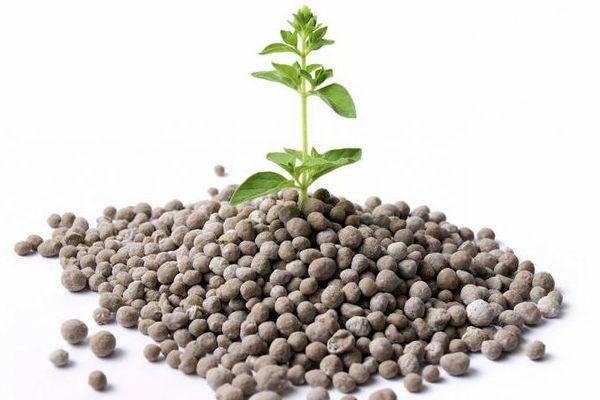
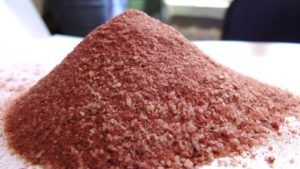
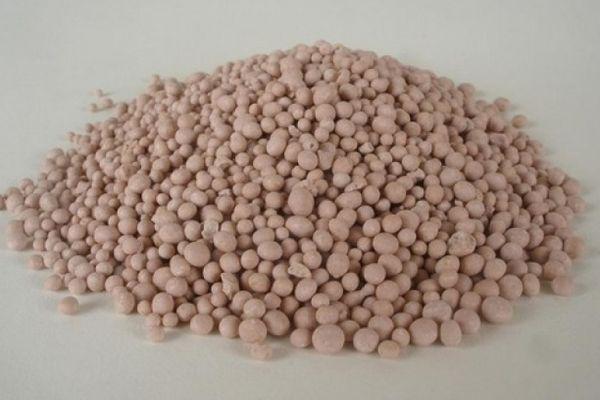
Many people wonder what color it is. mineral fertilizerGranules are available in white, pink, and red. The nitrogen-phosphorus-potassium composition has a neutral pH, making it suitable for use even in acidic soils. The main advantage of this complex fertilizer is that it can be applied in both fall and spring.
Directions for use
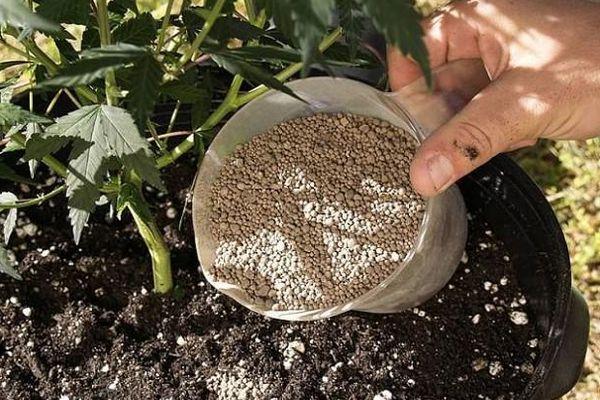
It's usually applied when digging the plot. Dry granules are sprinkled into the soil. Another method is when watering plants. Nitrogen acts as a powerful growth stimulant. Diammophoska is nitrate-free, which settles in the soil and various parts of plants.
Composition and release form
It contains three main active ingredients: potassium, phosphorus, and nitrogen. The latter element is present as ammonium. It also contains iron, zinc, sulfur, calcium, and magnesium. It's a good replacement for chlorine-containing fertilizers, which many plants cannot tolerate.
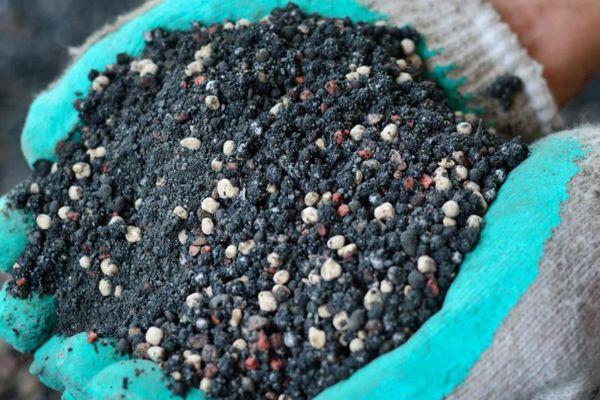
Diammophoska is a high-quality granulated fertilizer. All components are highly water-soluble, ensuring complete absorption by plants. Each granule contains all the necessary elements, perfectly balanced. This fertilizer is evenly distributed in the soil and is very economical to use.
Each bag is marked with numbers. These numbers represent the percentage of nitrogen, phosphorus, and potassium (in that order). 10:26:26 (this formula is most commonly used) and 9:25:25.
Another vital element is calcium. It ensures the flow of nutrients to plant roots. All plant species develop increased immunity to disease and better tolerate adverse climatic conditions. Without this nutrient, cell division and respiration are disrupted. Metabolism also cannot function properly. Plant leaves take on an unnatural purple hue and become deformed.
Pros and cons
Any fertilizer, even the best one, has its pros and cons. The advantages of diammophoska:
- safe for vegetables, fruits, flowers and shrubs;
- the nutrients are properly balanced;
- acts quickly (almost immediately after entering the soil, microelements disintegrate into ions and are easily absorbed into the soil);
- the granules are loose and practically do not cake;
- the harvested crop is stored much longer;
- gives excellent results in any soil;
- recommended for use in rainy regions (prevents nitrogen from being washed out of the soil);
- non-toxic to humans and the environment;
- good value for money;
- increases harvest volumes and improves the taste of fruits;
- easy to use;
- has a long shelf life;
- compatible with organic fertilizers;
- no foreign toxic impurities.
The disadvantages of DAFK include:
- chemical nature;
- limited dosage;
- the need for strict adherence to storage conditions.
Instructions for preparing the solution
Since DAFK can be diluted to feed any plant, it is used not only for outdoor plants but also for indoor ones. The dosage varies in these cases.
For garden plants: Mix 10 grams of diammophoska with ½ kilogram of rotted manure. Dilute the resulting mixture in 10 liters of water.
For indoor and garden plants: dissolve 1 gram in 1 liter of water. Water with this solution no more than twice a week.
How to use in the garden
Fertilizing strengthens roots and tops, improving fruit quality. However, it's recommended to use it only before fruit set. Otherwise, the tops will grow at the expense of the fruit. Application rates may vary for each crop.
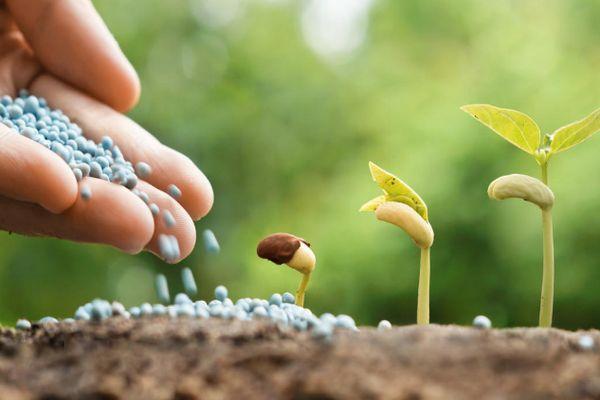
Nightshade crops (bell peppers, eggplants)
- dry fertilizer is added to the soil at a rate of 50 grams per 1 square meter;
- 30 grams is enough for a greenhouse;
- When planting, add no more than 5 grams into the hole.
Tomatoes
For irrigation, prepare a special solution (10 grams of diammophoska + ½ kilogram of rotted manure + 10 liters of water). This solution should be applied twice per season.
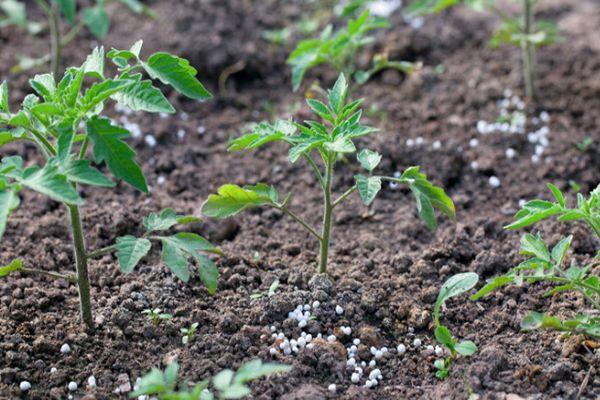
Potato
- When the soil is dug up for planting, 20 grams of granules are added per 1 square meter.
- Immediately upon planting, 5 grams of fertilizer are added to each hole.
Important! Using DAFK increases yields. Root crops look good and have a long shelf life.
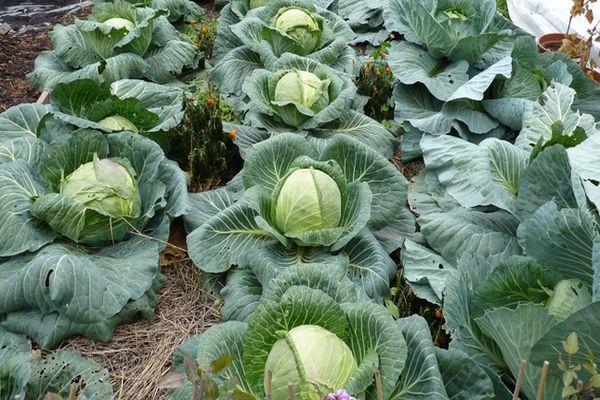
Cabbage
- For digging – 25 grams per 1 square meter.
- For seedlings – 5 grams in each hole.

The ovary forms well. The heads are slug-free, and the cabbage is pest-resistant.
Strawberry
- When loosening the soil in spring – 15 grams per 1 square meter.
- When the ovary appears, the fertilizer is diluted with water and watered under the roots.
The bushes will become strong and viable. The yield will increase significantly.
Shrubs and trees
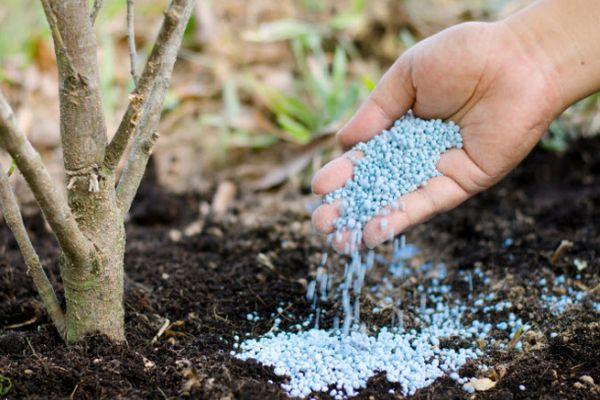
- 10 grams of fertilizer are added under annual shrubs.
- 20 grams of dry granules are used for adult bushes, as well as fruit trees: plums and apricots.
- For apple and pear trees, the dosage increases to 30 grams.
- Grapes are fertilized in a different way: Diammophoska is scattered over the snow (25 grams).
In such cases, fertilizers are used in dry form.
Seedling
The amount of mineral fertilizer depends on the location where the seedlings are planted. If young plants are rooted in open ground, the recommended amount is 3 to 5 grams per hole. When planting in a greenhouse, the amount will need to be increased to 5 to 7 grams per plant.
Lawn
- At the beginning of spring, the lawn is fertilized with ammonium nitrate (300 grams per square meter).
- In summer, Diammophoska is used in the same dosage.
- In autumn, take 150 grams of this fertilizer.
Winter crops
- To fertilize winter crops, use the strip method (depth – 10 centimeters).
- For wheat and barley – 8 centners per hectare.
- During autumn digging, the dose is halved (up to 4 centners per hectare).
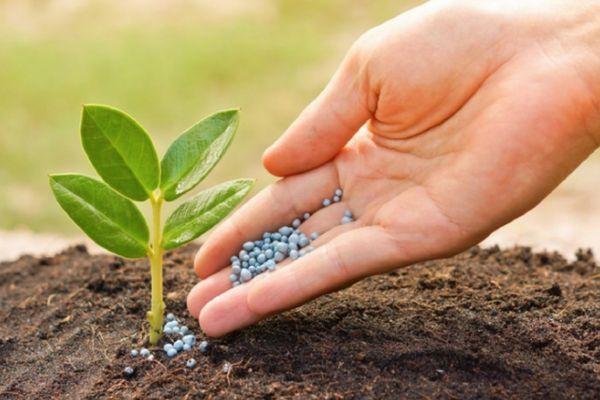
The fertilizer begins to work after the snow melts.
Flowers and houseplants
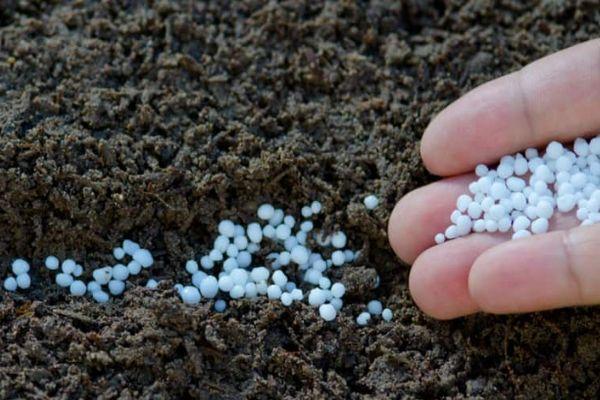
In such cases, 1-2 grams of this fertilizer is diluted in 1-15 liters of water. However, watering should be done no more frequently than every twelve days. This mixture is especially good for roses.
Precautionary measures
If precautions are taken and the dosage is not increased without authorization, Diammophoska will not harm either people or plants. When applying the fertilizer, ensure that dust from the granules does not enter the respiratory tract. A gauze mask or respirator is sufficient. Goggles will protect the eyes. Skin contact with Diammophoska is also avoided.
Wear protective clothing made of thick fabrics and rubber gloves. Wash your hands and face thoroughly with soap after work.
If a gardener inhales fertilizer dust, they should rinse their mouth and throat with clean water. Another recommendation is to drink plenty of fluids. This will help flush the chemicals from the body. For better stomach cleansing, induce vomiting. A doctor should be consulted. Even the slightest signs of poisoning should not be ignored.
Storage conditions
This fertilizer has proven itself to be excellent. It ensures rapid growth and high yields for all plant species. However, like any similar compound, Diammophoska requires proper storage conditions.
- Choose a dry, well-ventilated location. Fertilizer bags should not be exposed to direct sunlight.
- The optimal temperature is from 0 to + 30 degrees with a relative humidity of at least 50%.
- Under no circumstances should the integrity of the packaging be compromised or the granules be poured into other containers.
- Diammophoska should not be stored near food, medicines, livestock feed or pet food.
- Bags of fertilizer should be kept away from flammable substances and heating devices.
- Pay close attention to the manufacturing date. The maximum shelf life is 5 years.
- Care must be taken to ensure that children and pets do not have access to the area where the fertilizer is located.
Fruits and vegetables fertilized with Diammophoska can be safely consumed without the risk of high nitrate levels. This is an ideal solution not only for large farms but also for gardeners and homesteaders.
Related posts:
 Description of the best pepper varieties for greenhouses and open ground in 2025
 What fertilizers and when to use for feeding tomatoes in a greenhouse
 How to feed and what fertilizers are best for blueberries, soil acidification
 What is the best way to feed tomato seedlings to make them plump?
 Types and instructions for use of superphosphate fertilizer, composition and processing rules
 How to use and prepare manure as a fertilizer, its types and composition
 The best grape varieties for growing in the Urals, planting and care rules in summer
 Which tomato varieties are best for open ground?